
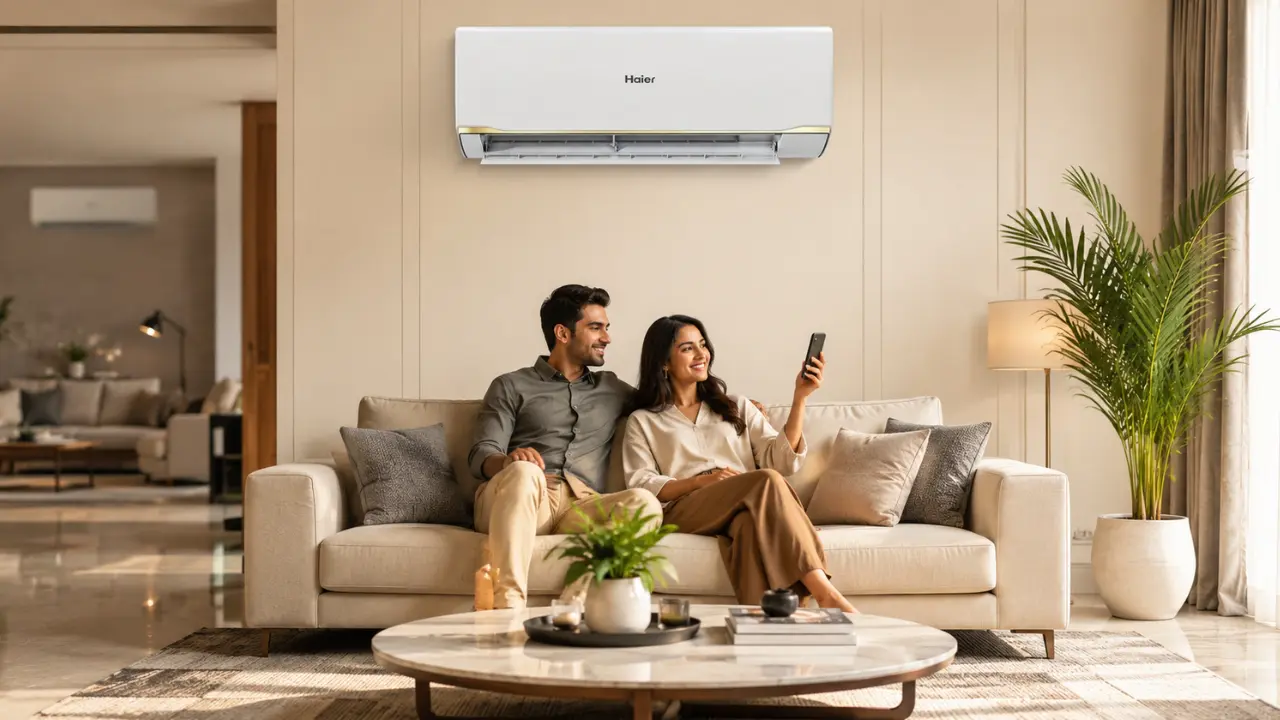

Most smart AC comparisons focus on features. Very few focus on behaviour.
That is the real difference.
A smart AC is not just a cooling machine anymore. It is part of how people sleep, work, relax, host guests, survive Indian summers, and manage electricity bills. The best smart AC brand is not the one with the longest specification sheet. It is the one that quietly adapts to everyday life without demanding attention.
And that changes how brands should be compared.
Most smart AC comparisons start in the wrong place.
Walk into any appliance store.
Within minutes, the conversation becomes predictable:
- Which AC cools fastest?
- Which one has AI mode?
- Which one saves more electricity?
- Which one works with Wi-Fi?
Useful questions.
But incomplete ones.
Because cooling performance in a showroom tells you almost nothing about what happens at 2:17 AM during peak summer when the room suddenly feels too cold, the compressor becomes noisy, or someone wakes up to adjust the temperature again.
Real AC decisions happen in lived moments.
Not specification charts.
That is where the difference between smart AC brands begins to show.
What Actually Makes an AC “Smart”?
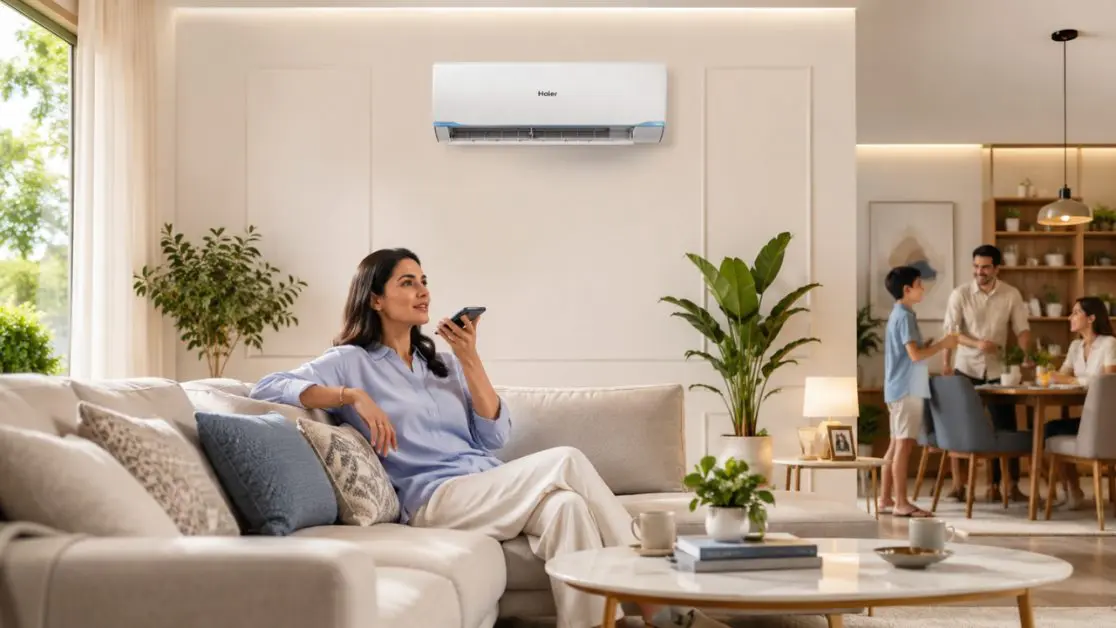
Many brands use the word smart loosely.
But there are layers to intelligence.
One option is connected convenience
This includes:
- App control
- Voice assistant compatibility
- Remote scheduling
- Smartphone diagnostics
These features matter because modern homes already operate through connected systems.
Lights. TVs. Doorbells. Speakers.
The AC becomes part of that ecosystem.
The second option is adaptive intelligence
This is more important.
Adaptive systems learn usage behaviour, monitor room conditions, adjust cooling automatically, and reduce unnecessary energy consumption.
This is where brands begin separating themselves.
A remote-controlled AC is convenient.
An AC that understands changing room conditions is intelligent.
The third option is lifestyle integration
This layer is often ignored.
The smartest ACs today are designed around how Indian homes actually function:
- Afternoon heat spikes
- Shared family rooms
- Work-from-home schedules
- Humid monsoons
- Power fluctuations
- Overnight temperature changes
Technology matters.
But context matters more.
Why Indian Homes Need a Different Kind of Smart Cooling
An apartment in Mumbai behaves differently from an independent home in Jaipur.
A top-floor Bengaluru flat cools differently from a shaded home in Chandigarh.
Yet many AC brands still sell “universal cooling.”
That rarely works.
Indian summers are no longer predictable
Heat arrives earlier.
Humidity lasts longer.
Night temperatures stay high.
This shifts what people expect from cooling systems.
Today, buyers increasingly prioritise:
- Stable overnight cooling
- Faster pull-down temperatures
- Energy efficiency
- Quiet operation
- Smart automation
- Air quality support
The conversation has moved beyond tonnage.
Now it is about experience.
Where Haier Stands Out in the Smart AC Conversation
Some brands optimize for legacy trust.
Some optimize for aggressive pricing.
Haier increasingly optimises for modern living behaviour.
That distinction matters.
Haier focuses heavily on intelligent automation
Modern smart AC users do not want constant manual adjustments.
They want systems that reduce decision fatigue.
Features like AI-driven cooling logic, adaptive airflow, and intelligent energy optimisation are becoming more relevant because Indian households are becoming more dynamic.
Parents work hybrid schedules.
Children stay home longer during vacations.
Rooms stay occupied unpredictably.
Static cooling systems struggle in dynamic homes.
This is where Haier’s newer smart AC approach feels aligned with how people actually live.
Design has become part of the purchase decision
This shift is underrated.
Earlier, ACs were treated like invisible utility boxes.
Now they are visible lifestyle products.
Especially for:
- Minimal apartments
- Newly designed homes
- Premium living rooms
- Instagram-conscious interiors
Products like the Haier 1.7 Ton 5 Star Desert Rose Air Conditioner and the Haier 1.7 Ton 5 Star Gold Desert Rose Air Conditioner reflect that shift toward combining cooling with visual aesthetics.
Because modern appliances are increasingly judged twice:
First for performance.
Then for presence.
Smart Cooling Is Quietly Becoming an Energy Conversation
Electricity bills changed consumer behaviour more than advertising ever could.
People now notice efficiency patterns faster.
And smart AC brands know this.
What buyers increasingly compare today
Instead of asking only “How powerful is the AC?”, people now ask:
- Does it optimize cooling automatically?
- Does it avoid overcooling?
- Does it maintain stable temperatures?
- Does it reduce unnecessary compressor stress?
- Does it handle long usage hours efficiently?
These are system questions.
Not feature questions.
And systems thinking changes buying decisions.
Energy efficiency is now emotional
Interesting shift.
Earlier, energy savings were financial.
Now they are psychological too.
People want comfort without guilt.
They want to switch on the AC without mentally calculating next month’s bill every night.
Smart AC brands that reduce this anxiety create stronger long-term trust.
That is why inverter intelligence, AI cooling logic, and adaptive performance matter more today than raw cooling claims.
Other Smart AC Brands Still Have Strong Advantages
This is not a one-brand market.
Different buyers optimize for different priorities.
One category focuses on legacy reliability
Some established AC brands win because families have used them for years.
Trust compounds slowly.
Especially in Indian households where appliance decisions often pass through multiple generations.
Another category focuses on aggressive feature stacking
These brands compete by offering:
- Larger feature lists
- Smart app ecosystems
- Voice integration
- Heavy launch pricing
The challenge?
Too many features sometimes create friction instead of simplicity.
A smart home should reduce complexity.
Not add another manual to read.
A third category focuses on affordability
Budget-conscious buyers still prioritise upfront pricing heavily.
And fairly so.
Because cooling is increasingly essential, not optional.
But the cheapest AC is not always the cheapest long-term system.
Maintenance.
Noise.
Energy consumption.
Inconsistent cooling.
These hidden costs appear later.
“Cheap appliances often charge interest through inconvenience.”
That is how most households experience it.
The Real Comparison Is Not Brand vs Brand
It is philosophy vs philosophy.
Some brands design products around machines.
Others design around people.
That difference changes everything.
Machine-first brands optimise specifications
They compete on:
- Cooling speed
- Compressor strength
- App features
- Capacity options
Important metrics.
But incomplete ones.
People-first brands optimise routines
They ask different questions:
- How does the room behave at night?
- How does airflow affect sleep?
- How does humidity affect comfort?
- How can cooling feel quieter?
- How can energy use become less stressful?
This is where smart cooling becomes lifestyle design.
Not appliance engineering.
What Modern Buyers Should Actually Compare Before Choosing a Smart AC
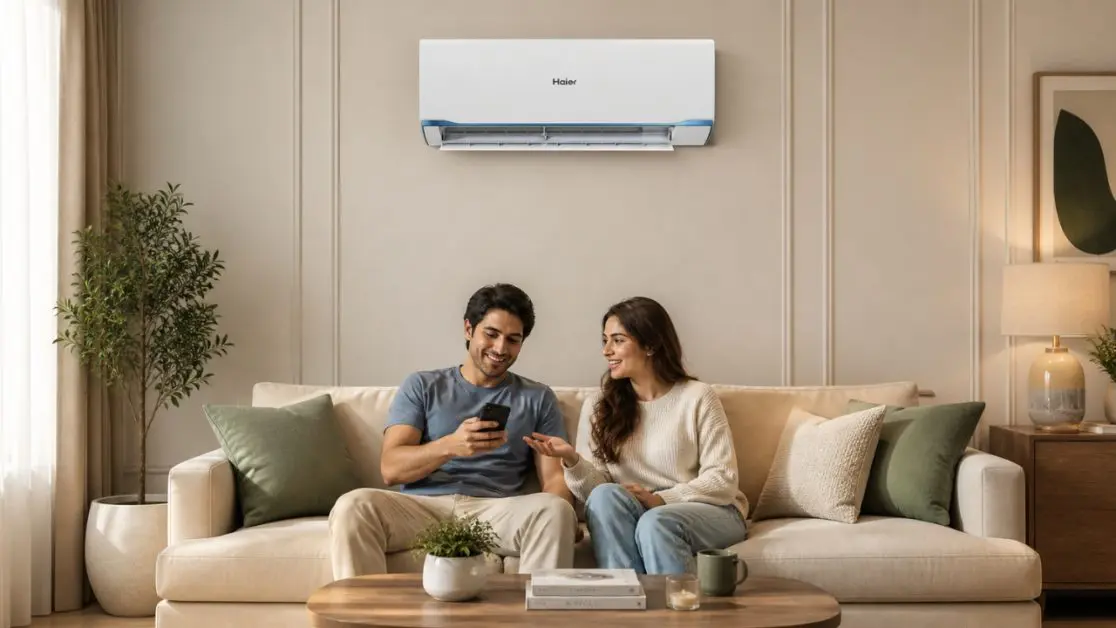
Most comparisons become clearer when filtered through daily life.
Compare based on room behaviour
Ask:
- Does the room receive direct sunlight?
- Is it occupied all day?
- Is cooling needed mostly at night?
- Is humidity a bigger problem than heat?
The room changes the ideal AC more than marketing does.
Compare based on household patterns
A bachelor working remotely uses cooling differently from a family managing multiple schedules.
Usage patterns matter.
Compare based on noise tolerance
This gets underestimated constantly.
A slightly quieter AC changes sleep quality more than most feature upgrades.
Compare based on long-term ownership
Think beyond purchase day.
Evaluate:
- Energy behaviour
- Smart automation usefulness
- Ease of maintenance
- Service ecosystem
- Real comfort consistency
Because the real cost of an AC appears over years.
Not invoices.
Why Smart ACs Are Becoming Infrastructure
Ten years ago, smart cooling felt premium.
Today, it feels inevitable.
Not because people suddenly became obsessed with technology.
Because life became more demanding.
Homes now function as:
- Offices
- Classrooms
- Entertainment zones
- Fitness spaces
- Recovery spaces
And temperature quietly shapes all of them.
A room that cools unevenly affects concentration.
A noisy compressor affects sleep.
Humidity affects comfort more than people realise.
Cooling systems influence mood silently.
That is the hidden system most comparisons miss.
Haier vs Other Smart AC Brands: The Bigger Insight
The future of smart ACs is not about adding more features.
It is about removing more friction.
That is the real competition now.
The best smart AC brands will not win because they advertise harder.
They will win because people stop noticing discomfort.
Because the room feels right without constant adjustment.
Because the machine adapts quietly.
Because good technology eventually disappears into experience.
And that may be the most important shift happening in Indian homes right now.
Smart cooling is no longer about controlling temperature.
It is about designing better everyday living.
Frequently Asked Questions
Is Haier a good smart AC brand compared to other major AC brands in India?
Yes. Haier has increasingly focused on intelligent cooling, automation, energy optimization, and modern lifestyle integration. While other brands may compete on legacy trust, pricing, or feature count, Haier’s approach emphasizes reducing manual adjustments and improving everyday comfort.
How do I choose between Haier and other smart AC brands?
Start with your usage patterns rather than feature lists. Consider:
Room size and sunlight exposure
Daily usage hours
Sleep comfort requirements
Energy efficiency goals
Noise sensitivity
Smart automation needs
The best AC for your home is the one that fits your lifestyle, not necessarily the one with the most features.
Are smart ACs worth paying extra for?
For many households, yes. Smart ACs can improve comfort, automate temperature management, reduce unnecessary energy consumption, and provide greater convenience through app and voice controls.
What matters more: cooling speed or long-term comfort?
Long-term comfort is usually more important. Fast cooling helps initially, but stable temperatures, quiet operation, humidity management, and overnight comfort affect daily living far more.
What actually makes an AC “smart”?
A truly smart AC typically combines:
App-based control
Voice assistant compatibility
Scheduling features
Intelligent diagnostics
Adaptive cooling algorithms
Energy optimization systems
The most advanced systems adjust automatically based on room conditions and usage patterns.