

Smart Practices Every Indian Kitchen Should Follow
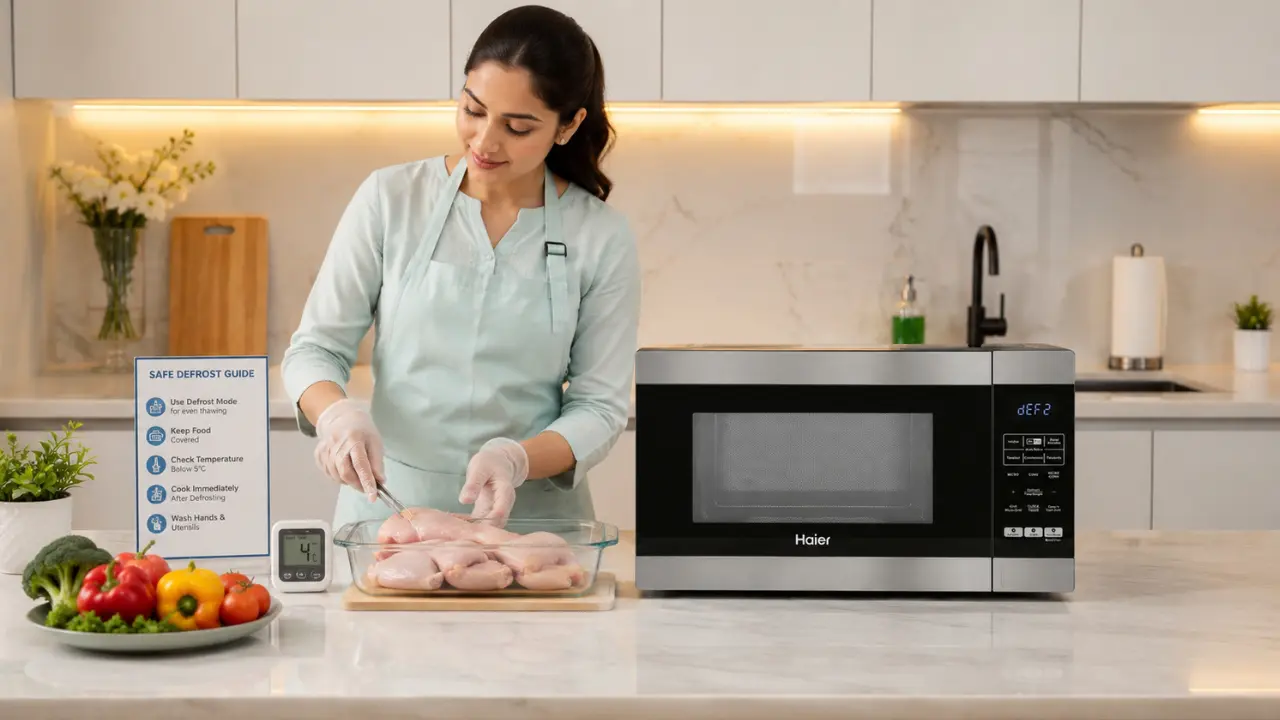
You pull frozen chicken out of the freezer at 7:30 at night because dinner was planned for 8. Sounds familiar? It does happen. Frequently.
The temptation is there. Throw it in the microwave, push some buttons and get cooking.
There’s just one problem.
Defrosting is more than making frozen food pliable enough to cut. Improper defrosting can lead to uneven temperatures where parts of your food start cooking while other parts are still frozen. Food safety issues start there.
Thankfully, today’s convection microwaves make the task much easier. Used properly, you can defrost your food faster and more cleanly, without sacrificing food quality.
Here’s how.
Why Safe Defrosting Matters More Than Most People Think
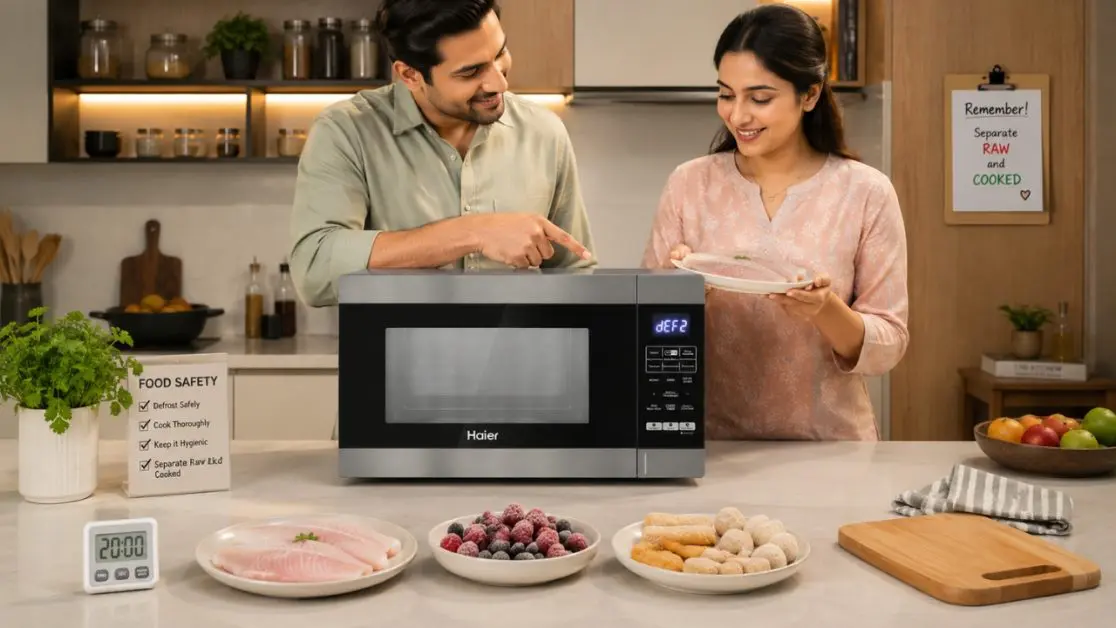
Frozen food is totally fine as long as it’s been stored properly.
The problem starts when you try to thaw it.
Warmth brings bacteria back to life. If your food sits too long in the dreaded bacteria breeding temperatures, you’re putting yourself at risk.
That’s why the food police recommend thawing food in a controlled environment, instead of on your counter for hours on end.
Microwave defrosting, when done correctly, cuts down thawing time and helps you cook smarter.
What Actually Happens During Microwave Defrosting?
Many people assume microwaves simply heat frozen food.
Not exactly.
Modern microwave defrost functions operate at carefully controlled lower power levels rather than full cooking power. Instead of rapidly heating the surface, energy is distributed more gradually, allowing frozen food to thaw with greater consistency.
That means:
- Better moisture retention
- Less overcooked edges
- Reduced waiting time
- More even thawing before cooking
Of course, technique still matters.
Common Microwave Defrosting Mistakes You Should Avoid
Almost every household has made at least one of these.
Using Full Power
High power may appear faster.
Instead, it often cooks the outer layer while the centre remains frozen solid.
Forgetting to Turn the Food
Microwave energy doesn’t always reach every section equally.
Turning or rearranging food halfway through improves defrosting consistency.
Leaving Food Inside After Defrosting
This one is surprisingly common.
Once defrosting finishes, food should be cooked immediately.
Allowing partially thawed meat or seafood to remain inside the microwave for long periods isn’t recommended because certain areas may already have reached temperatures suitable for bacterial growth.
Defrosting Large Food Blocks Without Separation
If chicken pieces or frozen vegetables are stuck together, separate them as soon as they loosen.
Doing this allows remaining frozen portions to thaw much more evenly.
Food Safety Tips Every Home Should Follow
Rather than guessing, keep these simple habits in mind.
Before Defrosting
- Use microwave-safe containers only.
- Remove unsuitable packaging if required.
- Check that food is properly sealed before freezing.
- Freeze portions separately whenever possible.
During Defrosting
- Use the dedicated Defrost programme instead of normal cooking mode.
- Rotate or flip food midway.
- Pause if thinner sections begin warming faster.
- Break apart food once it softens enough.
After Defrosting
- Cook immediately.
- Never refreeze raw food without cooking first.
- Clean the microwave cavity if any juices spill.
- Wash cutting boards, knives and hands thoroughly.
These small habits make a surprisingly big difference.
Different Foods Need Different Defrosting Approaches
Not every frozen ingredient behaves the same way.
| Food Item | Recommended Microwave Practice |
| Chicken | Turn frequently and cook immediately |
| Fish | Defrost gently to preserve texture |
| Mutton | Use lower power and allow resting time before cooking |
| Frozen vegetables | Often cook directly without complete thawing |
| Bread | Short defrost cycle prevents drying |
| Ready-to-cook snacks | Follow package instructions carefully |
Understanding these small differences improves both safety and cooking results.
Why Power Control Makes Defrosting More Reliable
This is where modern microwave technology becomes genuinely useful.
Instead of operating at a single intensity, multiple power levels allow food to thaw more gradually depending on its type.
For example:
- Dense meats benefit from slower thawing.
- Delicate seafood requires gentler heating.
- Bread needs only light warming.
- Frozen desserts require minimal power.
The Haier 22L Convection Microwave with Kids Special Recipes (HIL2201CSSH) offers 10 Multi Power Levels, allowing greater flexibility for different ingredients rather than relying on one fixed setting.
That additional control helps improve cooking precision while supporting safer food preparation.
Convenience Should Never Compromise Hygiene
Indian kitchens are busy.
Morning tiffins.
Evening snacks.
Late-night dinners.
Weekend baking.
Everything seems to happen at once.
That’s why appliances that simplify food preparation without compromising hygiene become genuinely valuable.
The Haier 22L Convection Microwave with Kids Special Recipes (HIL2201CSSH) combines practical convenience with features that support everyday cooking, including:
- Stainless Steel Cavity for easier cleaning
- 4 Combi Functions for simultaneous cooking, baking and browning combinations
- 205 Auto Cook Menus
- Kids Special Recipes built into the Auto Cook Menu
- 10 Multi Power Levels for flexible cooking control
Rather than manually adjusting every cooking parameter, users can rely on preset programmes for many everyday recipes.
A Cleaner Microwave Is Also a Safer Microwave
Cooking is only half of food safety.
Cleaning your microwave is the other half.
Spills, splashes and leftovers that aren’t wiped away can lead to odours and bacteria. Here are some quick tips to ensure your microwave stays fresh:
Wipe down the inside of the microwave after each use.
Clean the microwave turntable often.
Dry the inside of your microwave if you’ve cooked something with a lot of steam.
Avoid letting grease build up.
Microwaves with stainless steel interiors are easier to clean on a day-to-day basis as food residue will be easier to wipe away.
Haier 22L Convection Microwave with Kids Special Recipes (HIL2201CSSH) and Haier 20L Convection Microwave with Mirror Glass Design (HIL2002CSSH) come with a Stainless Steel Cavity that is built to last, hygienic and easy to clean.
Beyond Defrosting: A Microwave That Supports Everyday Cooking
Let’s be honest.
Most families don’t buy a convection microwave just for defrosting.
They want one appliance that handles multiple kitchen tasks without making everyday cooking complicated.
That’s exactly where Haier’s convection microwave range becomes practical.
Depending on your cooking needs, you can choose between models offering features such as:
Haier 22L Convection Microwave with Kids Special Recipes (HIL2201CSSH)
- 205 Auto Cook Menus
- Kids Special Recipe options
- 4 Combi Functions
- 10 Multi Power Levels
- Stainless Steel Cavity
Ideal for families looking for greater recipe variety and flexibility.
Haier 20L Convection Microwave with Mirror Glass Design (HIL2002CSSH)
- Elegant Mirror Glass Design
- Digital Touch Control
- 66 Auto Cook Menus
- Oil-Free Cooking support
- Stainless Steel Cavity
A suitable choice for modern kitchens where functionality and aesthetics are equally important.
Final Thoughts
Microwave defrosting is safe & simple.
It’s just a matter of knowing the good habits to develop – and choosing a microwave with those habits built-in.
Dedicated defrost settings. Power level options that give you control. Rotating food while it thaws and cooks. Then cook it right away. These are all steps you can take to help ensure food safety without sacrificing flavor or texture.
And MicrowaveOven.com’s variety of everyday cooking features are designed to make these tasks simpler. Take the guesswork out of preparing weekday meals. Make sure your ingredients are defrosted (and ready to go) for holiday meals. Or whip-up speedy after-school treats. Features like multiple power levels, Auto Cook Menuses and hygienic stainless steel interiors can help you cook with confidence and ease.
After all, who doesn’t love convenience? But nothing beats the comfort of knowing that the food you serve your family is safe to eat.
Frequently Asked Questions
Is it safe to defrost food in a microwave?
Yes. Microwave defrosting is safe when you use the Defrost setting, rotate or flip the food during thawing, and cook it immediately afterward. This minimizes the time food spends in temperatures where bacteria can multiply.
Is microwave defrosting safer than leaving food on the kitchen counter?
Yes. Leaving food on the counter allows the outer layers to warm while the center remains frozen, creating ideal conditions for bacterial growth. Microwave defrosting is much faster and keeps thawing under better control.
Why is proper defrosting so important?
Improper thawing allows parts of the food to enter the “danger zone” where bacteria multiply rapidly. Safe defrosting helps reduce food safety risks while preserving texture and taste.
Can bacteria grow while food is defrosting?
Yes. As frozen food warms, bacteria that were inactive during freezing can begin multiplying if the food remains at unsafe temperatures for too long.
Why shouldn’t I use full microwave power to defrost frozen food?
Full power often cooks the outer edges while the center remains frozen. Lower power levels thaw food more evenly and help preserve moisture.
What does the Defrost mode actually do?
Defrost mode uses lower, carefully controlled power levels instead of full cooking power, helping food thaw gradually and evenly.