
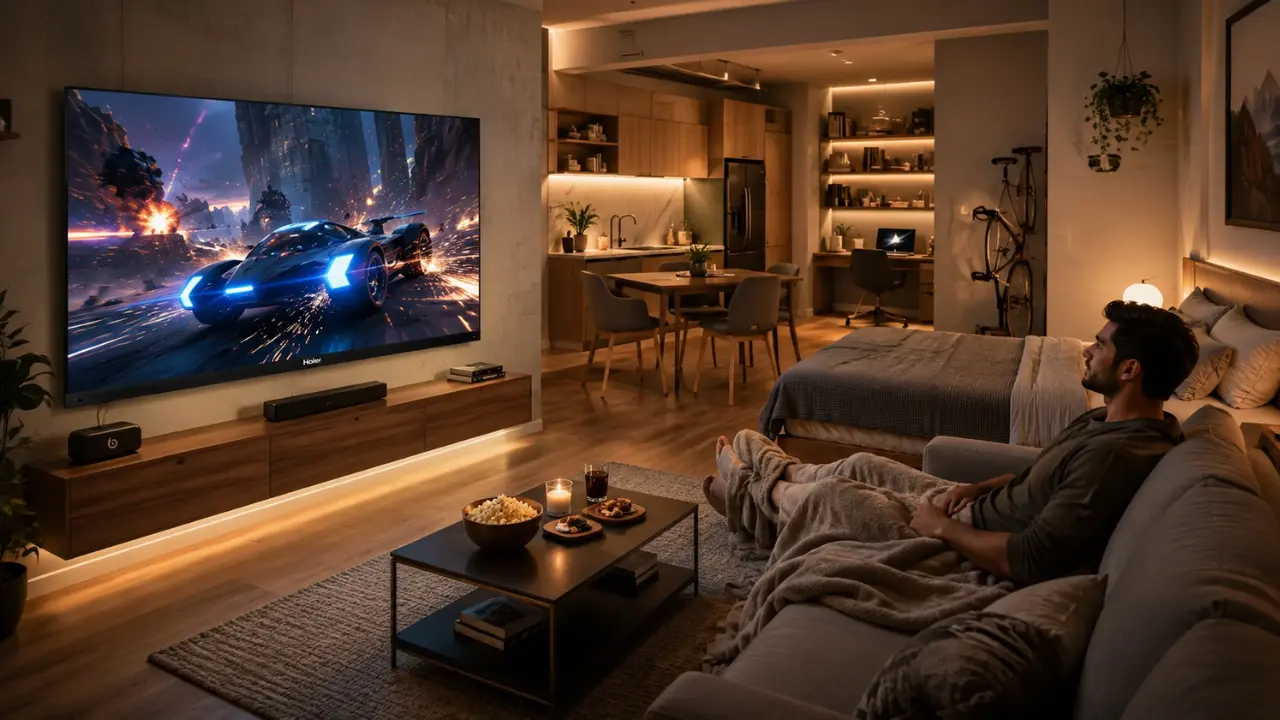

In a studio apartment, there’s no room for anything to do two jobs.
By afternoon the dining table is a desk, and it is a busy one.By afternoon the dining table is a desk and it’s a busy one. The sofa can be used as a guest bed. One corner is for storage, one for a reading corner, and the television is somewhere in the middle, to entertain, stream, play music and, at times, save a boring Sunday evening.
So when selecting and setting up a smart TV in a small house, you need to think a little more than you would if you were searching for a wall.
If executed well, a television can help to visually tie a room down without taking up too much space. If not done properly, it can take over the apartment, leave awkward angles to view and litter the space with wires that resemble a spaghetti strand.
Then, how do you start?
Start With the Way the Apartment Is Actually Used
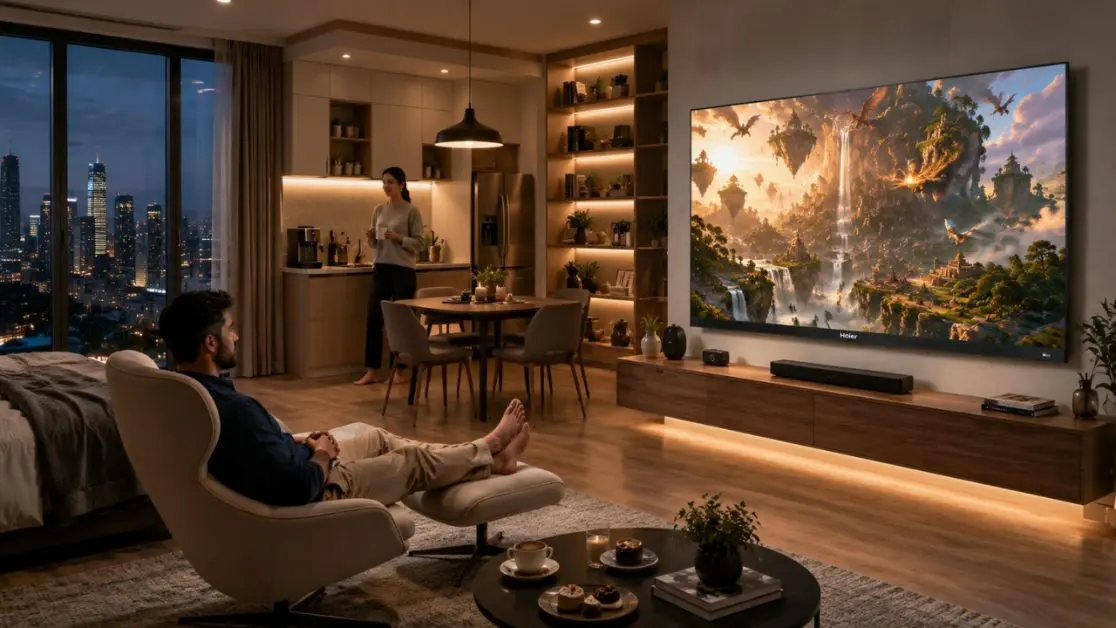
Always check floor plans as they can be deceiving. Reality is revealed by everyday behavior.
When deciding on a screen or drilling a hole in a wall, observe where people tend to sit. Is most viewing done from the sofa? Do the TV and the bed point in the same direction? Will the screen be used at meal times, while gaming and/or working from home?
If you’re looking for a space to keep your TV, it should complement the primary seating area while not overwhelming the entire apartment.
Think about these helpful questions:
- Is the screen easy to see from a distance of more than one zone?
- Is the display going to be in direct sunlight during the day?
- Is there adequate room for ventilation surrounding the television?
- Are there any roomy places to hide power and connectivity cables?
- Will it block any movement within the apartment?
- Will the wall support the mounting system?
It is a simple exercise and it is often discovered that the most obvious wall is not the most useful.
Create a Visual Zone Without Building a Wall
Open-plan living is the defining feature of most studio apartments. The advantage is flexibility. The drawback? Every area can begin to look like one large, undefined room.
A smart TV can help create a clear entertainment zone.
Use a Compact Media Wall
A slim television panel, floating console or narrow storage unit can visually separate the entertainment area from the sleeping or dining space. It provides structure without the bulk of a full cabinet.
Keep the design restrained. Too many shelves, décor pieces and visible gadgets will make a small room feel busier than it is.
A cleaner arrangement may include:
- One wall-mounted television
- A narrow floating console
- Concealed cable channels
- A small indoor plant or one decorative object
- Closed storage for remotes, controllers and accessories
That is enough. Studio apartments punish clutter rather quickly.
Let Furniture Support the Layout
A sofa placed with its back towards the bed can create a subtle division between sleeping and viewing areas. Similarly, a compact rug beneath the sofa and coffee table can define the living zone without adding any physical barrier.
The TV then becomes part of an organised layout rather than an isolated screen floating on a wall.
Should a Studio Apartment Always Have a Small TV?
Not necessarily.
A common assumption is that a compact apartment automatically needs a compact screen. The real deciding factors are viewing distance, wall space and the role the television plays in the home.
A larger display can work in a studio apartment when:
- The viewing wall is wide and largely unobstructed
- The seating distance is appropriate
- The screen has a slim, visually clean design
- The television replaces the need for multiple entertainment devices
- The layout is intentionally built around cinematic viewing
On the other hand, squeezing a large television onto a narrow wall simply because “bigger is better” can make the room feel lopsided.
| Apartment situation | Suitable TV approach |
| Bed and sofa share one viewing direction | Wall-mounted screen on the opposite wall |
| Seating position changes often | Flexible mount or central placement |
| Strong daylight enters the room | Avoid placing the screen directly opposite windows |
| Very limited floor area | Wall mounting with a floating console |
| Entertainment is a major priority | Larger immersive screen with planned viewing distance |
Think Vertically, Not Just Horizontally
Floor space is precious. Wall space is usually less contested.
Mounting the television can free the area below for closed storage, a compact work desk or nothing at all which, in a small apartment, can feel surprisingly luxurious.
However, mounting the TV too high is a frequent mistake. The display should feel comfortable during a full film, not just look impressive in a showroom-style setup. Ideally, the central portion of the screen should remain reasonably aligned with the viewer’s natural eye level while seated.
Neck strain is not cinematic immersion.
Make the Screen Part of the Décor
A television does not have to look like a large black rectangle awkwardly interrupting the room.
Choose a wall finish that supports the display rather than competing with it. Warm neutrals, subtle textured panels and muted greys generally work better than loud patterns immediately behind the screen.
Soft ambient lighting can also make evening viewing more comfortable. Place indirect lights around the room instead of pointing bright fixtures towards the display.
The next step is choosing a smart television that can genuinely become the apartment’s entertainment centre without adding unnecessary boxes, remotes and equipment.
One Smart TV. Countless Everyday Possibilities.
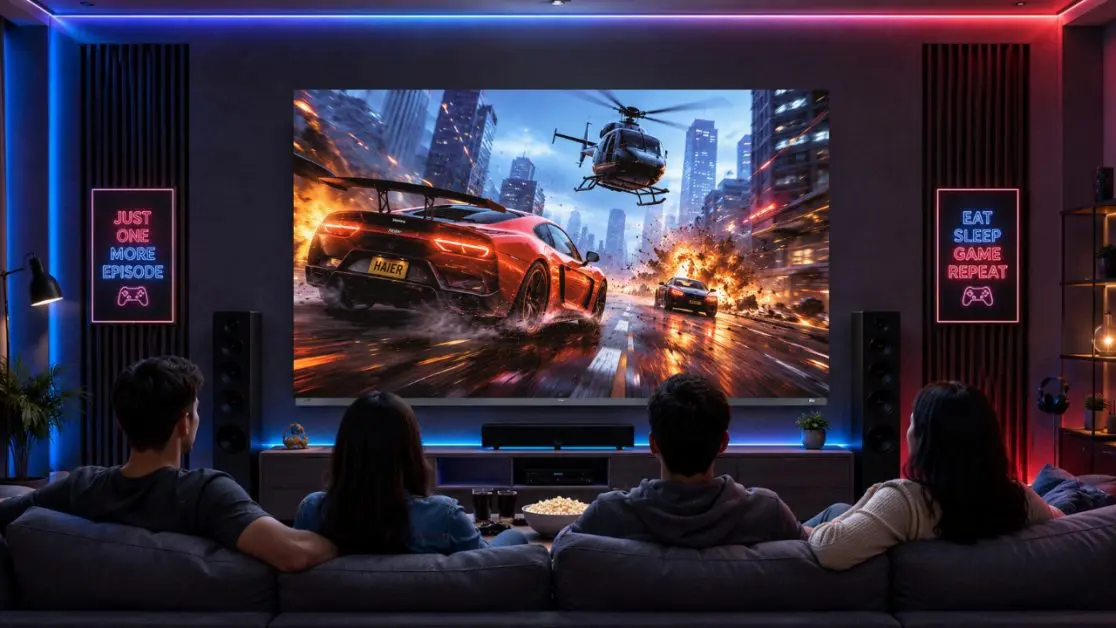
Here’s something people often realise only after buying a smart TV for a studio apartment it ends up replacing several other devices.
Instead of juggling a streaming stick, Bluetooth speaker, gaming monitor and separate casting device, one capable television can handle almost everything from movie nights to weekend gaming and even casual video calls through compatible devices.
That’s where premium features start making practical sense rather than sounding like marketing jargon.
For homeowners who want their television to become the centrepiece of a modern living space, the Haier New M96 Series 254 cm (100) QD-Mini LED AI Smart Google TV (H100M96FUX) offers technology that is designed to elevate both entertainment and everyday convenience. The model combines advanced picture processing, immersive sound and AI-driven optimisation to deliver a refined viewing experience.
Features That Add Real Value in Compact Homes
Rather than focusing on specifications alone, it’s worth looking at how they improve daily viewing.
AI That Adjusts Instead of Asking You To
Most viewers don’t want to keep changing picture settings every time they switch from cricket to Netflix or from a YouTube vlog to a wildlife documentary.
The Haier M96 Series introduces the AI Ultra Sense Processor developed with MediaTek. It intelligently analyses visuals, sound, gaming and entertainment to optimise the viewing experience in real time, reducing the need for constant manual adjustments.
For everyday users, that simply means:
- Better scene recognition
- Improved colour accuracy
- Sharper motion handling
- Enhanced contrast and depth
- More consistent picture quality across different content
The technology quietly works in the background, allowing viewers to focus on what they’re watching rather than how the TV is configured.
Bright Indian Homes Need Better Picture Performance
Many Indian apartments receive abundant natural light during the day.
A television that performs beautifully in a dark showroom may not always deliver the same experience near large windows or balconies.
The Haier M96 Series combines QD-Mini LED technology, Dolby Vision IQ and HDR10+ to help maintain detailed visuals, balanced brightness and richer colours under varying lighting conditions. Dolby Vision IQ further adjusts picture performance according to the room’s ambient lighting for a more comfortable viewing experience.
Whether you’re catching a morning news bulletin or watching a late-night thriller, the display adapts to changing surroundings rather than expecting you to keep changing settings.
Sound That Fills the Room Without Filling It With Speakers
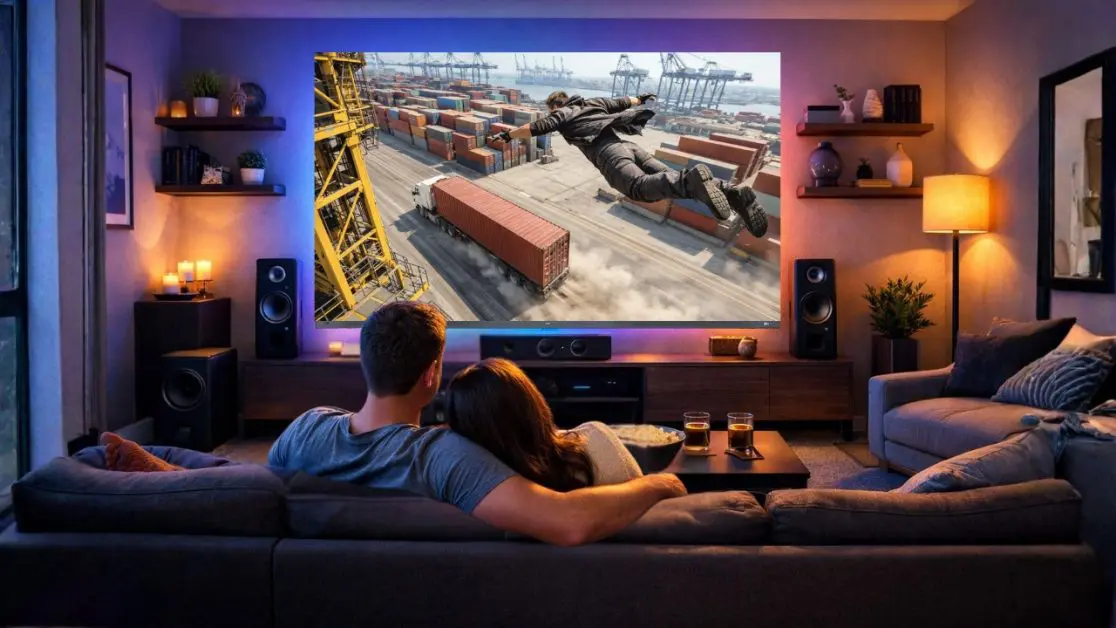
Space is limited inside a studio apartment.
Adding multiple external speakers isn’t always practical.
That’s why integrated audio quality matters just as much as display performance.
The Haier M96 Series incorporates Sound by KEF, supported by a 6.2.2 channel speaker system and Dolby Atmos, delivering layered sound with enhanced clarity, bass and spatial depth. Together, these technologies create a more immersive entertainment experience without requiring additional audio equipment.
For viewers, this can make everything from dialogue-heavy dramas to live concerts and sports broadcasts feel richer and more engaging.
Entertainment, Gaming and Smart Living From One Screen
A television today is expected to do much more than stream movies.
Depending on the day, it could become:
- A gaming display
- A music hub
- A fitness companion
- A smart home controller
- A family entertainment centre
The Haier M96 Series supports these evolving needs with features including:
- Google TV for personalised content recommendations
- Hands-Free Voice Control for convenient operation without relying entirely on the remote
- 144Hz refresh rate for smoother fast-moving visuals
- AMD FreeSync Premium Pro to support compatible gaming experiences with reduced tearing and smoother gameplay
- Built-in smart connectivity options designed for modern entertainment ecosystems
For someone living in a studio apartment, reducing device clutter while expanding functionality is always a welcome combination.
Small Spaces Deserve Big Experiences
There’s an old belief that only large homes deserve premium entertainment systems.
Honestly, that’s becoming outdated.
A thoughtfully designed studio apartment can feel every bit as luxurious when every appliance has been chosen with purpose. Instead of filling the room with unnecessary gadgets, investing in one feature-rich smart television often creates a cleaner, more enjoyable living environment.
The goal isn’t simply owning a bigger screen.
It’s creating a space where watching films, following cricket, enjoying family time, streaming your favourite series or relaxing after work feels effortless every single day.
When advanced picture intelligence, immersive sound, AI-powered optimisation and smart connectivity come together in one television, the experience naturally becomes more complete.
If you’re planning to upgrade your home entertainment setup, exploring the Haier New M96 Series 254 cm (100) QD-Mini LED AI Smart Google TV (H100M96FUX) is well worth considering. With AI-powered picture optimisation, Dolby Vision IQ, HDR10+, premium KEF audio, Dolby Atmos, Google TV and smooth 144Hz performance, it is designed to bring premium entertainment into modern Indian homes while complementing contemporary living spaces.
Frequently Asked Questions
How do I choose the right TV size for my studio apartment?
Base the decision on your viewing distance, available wall width, seating arrangement, and how important entertainment is to you. A studio apartment does not automatically require a small TV, but the screen should not overwhelm the room or block movement.
Is a large TV too much for my small studio apartment?
Not necessarily. A large TV can work when the viewing wall is wide, the seating distance is comfortable, and the screen replaces several other entertainment devices. It may feel overpowering if squeezed onto a narrow or cluttered wall.
Where should I put my TV if I watch from both my bed and sofa?
Choose a central wall that faces both areas, or use a flexible mount that lets you adjust the viewing angle. Test the sightline from each position before drilling holes.
Should I buy a smaller TV just to save space?
Only if the smaller screen suits your viewing distance and habits. Wall mounting a larger, slim TV may use less floor space than placing a smaller television on a bulky cabinet.
How do I know which wall is best for my TV?
Observe how you actually use the apartment. Consider your main seating position, sunlight, nearby power points, cable routes, wall strength, ventilation, and walking paths.