
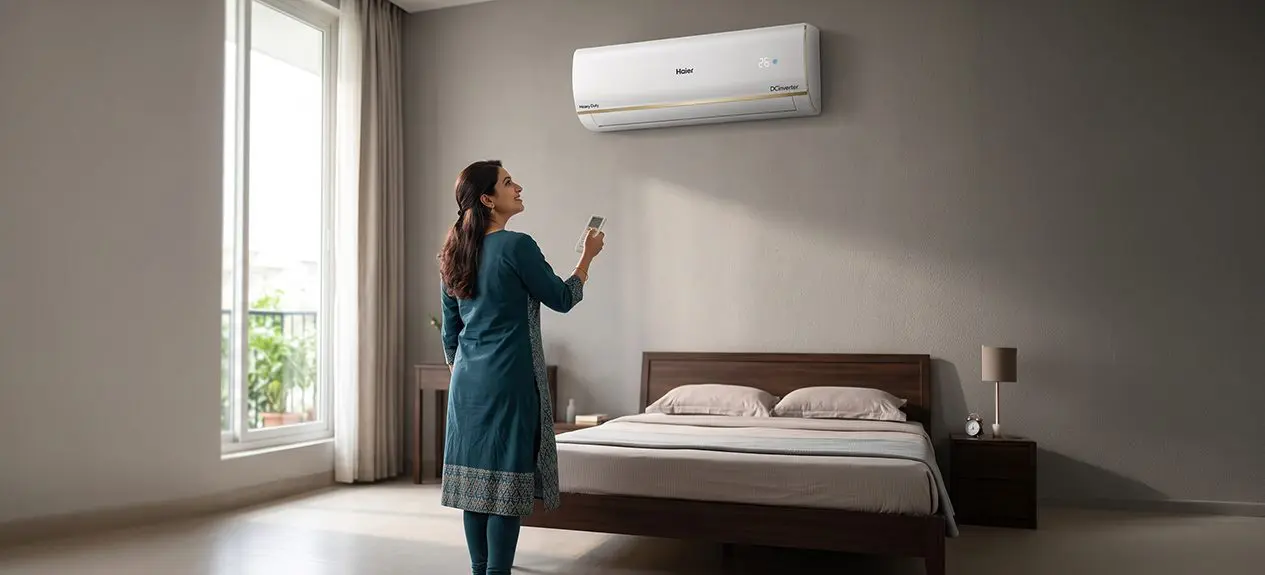

An air conditioner is considered to be the hardest-working appliance in homes during the sweatiest of seasons. Whether you use it daily or only when the temperature rises, you naturally expect it to keep your home cool and comfortable for years to come. Understanding the air conditioner’s lifespan can help to set the right expectations.
But an AC’s lifespan is dependent on multiple considerations. Knowing what affects an AC’s lifespan helps you take better care of it and avoid unnecessary repairs, especially if you are choosing the best AC for long-term use.
Here we will explore the factors that influence how long an air conditioner lasts, the alarming signs regarding its longevity, and what steps can be taken to keep it running efficiently for as long as possible. Now, let’s get to know what the actual reasons are behind an air conditioner’s lifespan.
Factors that determine the lifespan of an Air Conditioner
The AC lifespan depends on more than just the brand. How you use it, the climate it operates in, installation quality, and regular maintenance all play an important role. And the care it receives over the period of time can affect its durability and performance. The following are some of the affecting factors:
- Usage: Overworking your air conditioner during the peak summers or keeping your AC running continuously at a low temperature can shorten its lifespan.
- Climate: Hot weather, high humidity, and a dusty environment around you can put more stress on the system. These ultimately could lead to corrosion, dirt buildup, and increased workload and affect the split AC’s lifespan.
- Installation Quality: Bad installation will cause refrigerant leakage, wrong airflow, and drainage problems. Professional installation of your air conditioning will guarantee trouble-free operation.
- Maintenance: Keeping the AC’s air filters clean, checking coils, refrigerant levels and servicing the unit can help maintain cooling performance.
- Build Quality: strong components, corrosion-resistant hardware, quality copper coils and reliable compressor technology are more able to support demanding daily use.
Signs that your air conditioning unit may need to be replaced
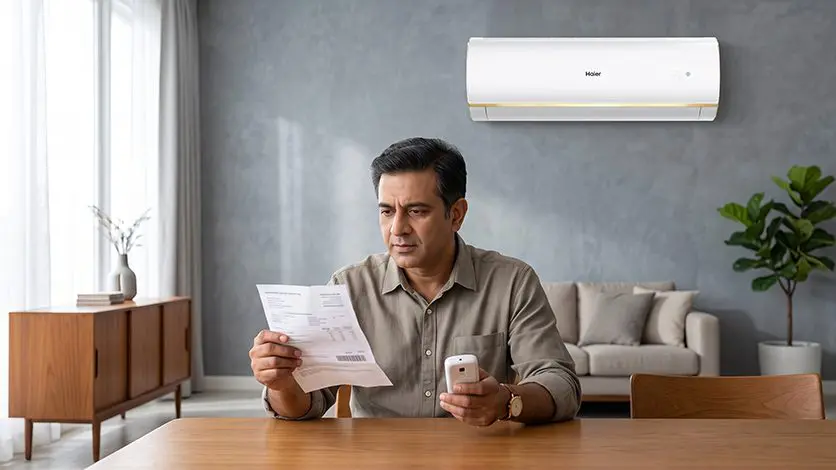
If your air conditioner starts to behave differently, you might want to pay a little closer attention. Here are some of the common warning signs that it might be time to replace your air conditioner:
- Frequent repairs: If you are complaining to a technician quite frequently with different problems, the costs of repairs can add up. An AC that needs repairs is often better to replace than fix.
- Poor cooling: Is it taking a long time to cool the room, or is it not able to maintain the set temperature? Or even if it leaves some areas warmer than others, even after being serviced? It is possible the AC has come close to its lifespan.
- High electricity bills: Have your electricity bill spiked up without using the AC more than usual? You might be witnessing this because now it is less energy efficient and uses more power for the same amount of cooling.
- Strange noises: Grinding, rattling, buzzing or banging noises are unnatural. These noises clearly tell that some internal parts are worn or damaged.
- Refrigerant problems: If your AC is experiencing frequent refrigerant leaks or requires frequent refrigerant refills, it could be a sign of a larger issue with the system. Older units with discontinued refrigerants can also be costly and hard to maintain, so it’s wise to buy a new AC for long-term use.
How Haier AC Features Help Extend Your AC Lifespan
A Haier air conditioner is built to last for years of reliable cooling, but the features it comes with will also determine how long it lasts. Here are some features of Haier that can help you maintain your AC lifespan:
- AI IDU Frost Auto Clean: The indoor unit automatically cleans the evaporator by frost technology. This gets rid of dust, mould and bacteria and cleans the cooling coil.
- ODU Cyclone Clean: The outdoor fan reverses to clean dust off the condenser when the unit is off. This does not allow the dust to settle, and ultimately serves to heat transfer and the servicing process.
- Electricity Monitoring: Makes a note of power consumption in real time by means of the Haismart App. Energy monitoring helps users cut down on unnecessary load and can make their AC more efficient.
- HEXA Inverter Technology: The electronic expansion valve, Full DC motors, and Full DC PCB make the performance smooth and efficient. It provides the unit with convenient cooling in extreme temperatures. It is because of the reduction of stress on the compressor.
- Triple Inverter+++ Technology: Makes use of TLFM Inverter Control, PID Inverter Control, and A-PAM Inverter Control for accurate control of temperature, systematic compressor process, and stable performance towards fluctuations.
Read more: What Are AI-Powered Self-Cleaning AC Systems, and How Do They Work?
When should you repair and/or replace your AC?
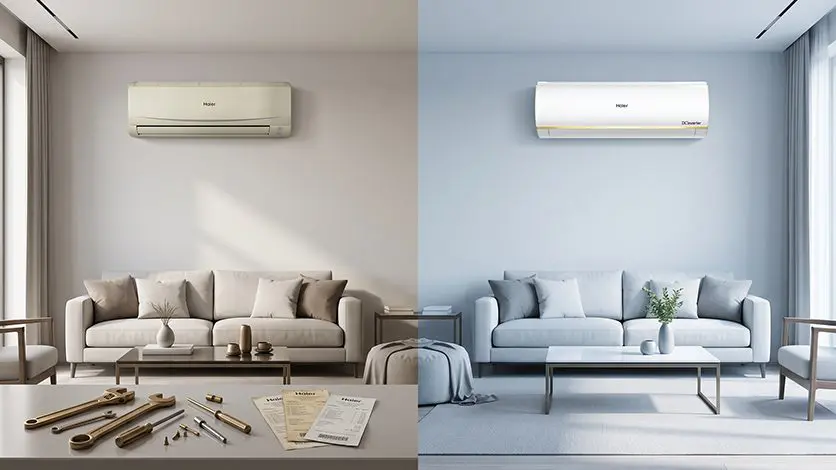
Deciding whether to repair or replace your air conditioner can sometimes be difficult. Some problems can be fixed with a little repair work, while others mean your AC’s lifespan is over. The comparison table below will help you make a practical decision based on your air conditioner’s current condition in a cost-effective manner:
| Position | Recommendation |
| AC has been continuously used for 10-15 years | Older units are less efficient and cost more to maintain. Get rid of it. |
| AC has started giving out odours, mould and persistent dust accumulation | Opt for a service at first. Still there? Replace the unit. |
| The outside unit is covered in rust and corrosion | Minor corrosion is permissible. If the AC is badly rusted, it will affect its efficiency and lifespan. It is better to replace it. |
| Thinking of renovating your house/space | Is the AC new or older? If older, practical to replace it. If new, the AC requires services at regular intervals. |
| AC requires frequent repairs despite regular servicing. | It would be better to replace the unit. |
Guidelines for Picking the Best AC for Long-Term Use
A good air conditioner does more than just cool your room. When well-maintained, it should run efficiently for years. Here are the points you need to watch carefully to make the right decisions:
- Choose an AC with self-cleaning functions. Indoor frost self-cleaning and outdoor auto-cleaning reduce dust, mould and dirt build-up.
- Select the correct AC capacity for your room. An AC that is too big or too small has to work harder than necessary. It can shorten the life span of the air conditioner.
- Buy Haier, buy reliable after-sales service. With Haier, you get quick installation, honest maintenance and reliable customer service to keep your AC running smoothly for years to come.
- Make sure you make the right choice by opting for an AC with Inverter Technology. As it adjusts the compressor speed to suit your cooling requirements.
- Ensure it can handle the climate in your area. For those living in hot summer climates, select an AC unit that provides cooling capabilities even when outdoor temperatures get very high.
Conclusion
There are a few things that determine the air conditioner’s lifespan. How to use, care for and build. By grasping the early warning signs, choosing a model that comes with durable features, and ensuring routine maintenance, you can keep your AC running efficiently for many years to come.
With the right knowledge of when buying and maintaining your air conditioner, you can conveniently enjoy uninterrupted cooling, reduced repair costs and improved long-term performance.
FAQs
Are non-inverter ACs less durable than inverter ACs?
Yes, the life span of non-inverter ACs is less than that of an inverter AC. The non-inverter ACs are usually the start-stop type and have an average lifespan of 8 to 12 years. While inverter ACs run continuously at adjusting speeds, giving a life span of 12 to 20 years.
How often should I service my AC to ensure it lasts longer?
Ideally, a service is recommended one to two times a year to maximise the lifespan of your AC.
When to replace your AC unit?
There are lots of situations that would prove this. If your AC unit has been in service for over ten to fifteen years, has had to be serviced many times in a short period of time, or you are getting an increased bill with the same amount of work being done by the AC, then it might be time to replace your AC unit.
How much time can a split AC run in India?
Split ACs in India have a lifespan of 10 to 15 years. But this highly depends on usage and maintenance.
How does running AC all day affect its life expectancy?
So if your AC runs all day, it may not affect the compressor directly. If this process continues over the coming days, wear and tear could be the overall outcome. This would directly affect the air conditioner’s lifespan and how well it works.
Does the compressor’s lifespan of 10 to 12 years align with its warranty?
Yes, the compressor has a life of 10 to 12 years. This is what manufacturers usually offer.