
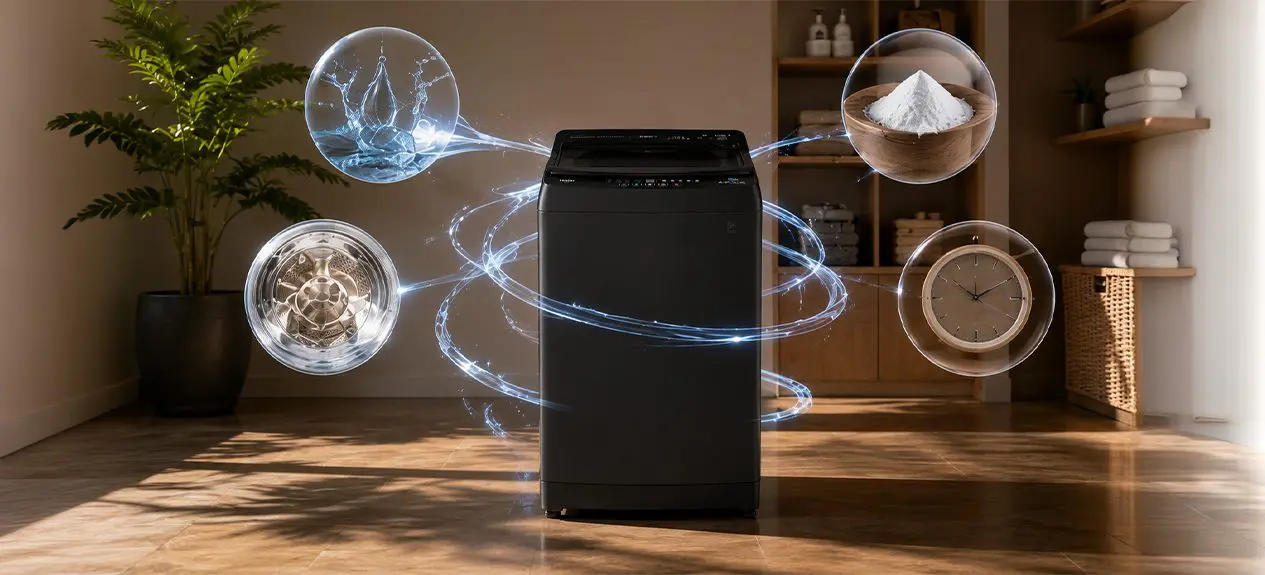

Finding stains still on the clothes after a full wash cycle is frustrating, and it happens more often than most people admit. When a washing machine not cleaning clothes properly becomes a repeated problem at home, the cause is usually something identifiable, not some mystery fault. The whole appliance rarely breaks down all at once. Everyday habits, water conditions, and a handful of overlooked settings are behind most complaints of this sort, long before any real hardware issue enters the picture.
This blog looks at what typically goes wrong, how it shows up, and what keeps a wash cycle performing the way it is meant to over the years.
What Lies Behind A Washing Machine Not Washing Properly
A washing machine cleans clothes with four simple things: water, detergent, movement, and enough time. If one of these falls short, washing quality drops much faster than people expect. Before assuming the machine has a fault, check these basics first, as many issues start there. A low water level, too much or too little detergent, or the wrong wash program can leave clothes less clean.
Many households keep using the same cycle for every load without checking fabric needs. That simple habit often causes the washing machine not to wash properly, even when the machine itself has nothing technically wrong with it.
What Usually Causes Poor Cleaning Results
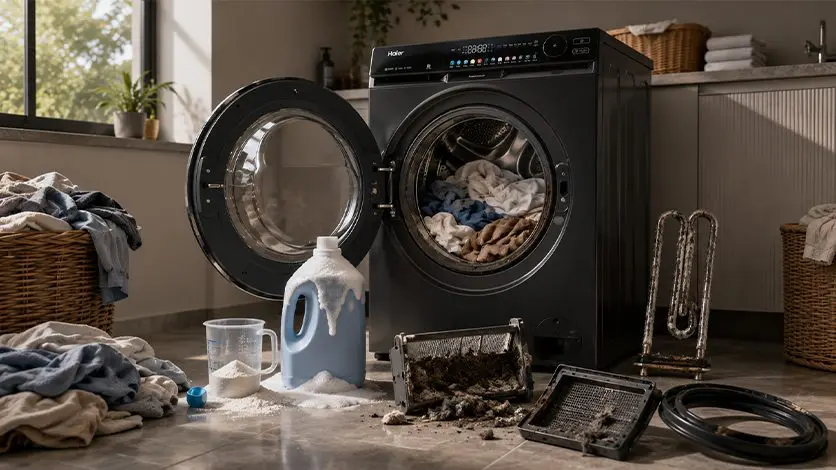
The following causes come up again and again during service visits and troubleshooting calls, and most of them are easy enough to fix once spotted:
- Overloading the drum: One extra load crammed in to save a trip cuts down water circulation by a fair margin. Clothes cannot move freely inside, so detergent never spreads through the fabric the way it should.
- Wrong detergent quantity: Too little leaves grime behind on the fabric. Too much builds up foam and residue that traps dirt rather than washing it out.
- Clogged lint filter: A filter packed with thread and fluff pushes dirty water straight back into the drum during rinse.
- Hard water deposits: Mineral buildup on heating elements and drum walls stops detergent from dissolving and working the way it should.
- Wrong wash cycle or temperature: Cold water struggles against oily stains, and a fast cycle rarely gives grease enough time to loosen up.
- Worn pulsator or motor wear: Older units with a tired agitator, or a spin that has slowed down, lose the mechanical push clothes need for a proper wash.
Want to understand exactly how hard water wears down a washing machine over time?
Read this blog: How Hard Water Affects Washing Machine Performance
Why A Washing Machine Making Clothes Dirty Is Often A Drum Issue
Sometimes the complaint has nothing to do with clothes staying dirty. It is about a washing machine making clothes dirty that went in perfectly clean. This points back to the drum almost every time. Leftover detergent scum, mould building up around the rubber gasket, or a musty drum interior can pass grime and odour straight onto fresh laundry. Running an empty hot cycle with a drum cleaner once a month, and drying the gasket after each wash, keeps this from turning into a regular habit at home.
Want to stop musty smells from building up inside a front load washer?
Read this blog: How to Prevent Musty Smells in Front Load Washers
Symptoms, Causes, And Fixes At A Glance
| Symptom | Likely Cause | What Helps |
| Stains left after a full cycle | Overloaded drum or too little detergent | Reduce the load size, measure detergent properly |
| Grey or dull-looking clothes | Hard water mineral buildup | Use a water softener or run a descaling cycle |
| Damp, sour smell in laundry | Clogged filter or mouldy gasket | Clean the filter weekly, dry the gasket after use |
| Rough or scratchy fabric | Excess detergent or a short rinse | Cut the detergent dose, pick an extra rinse |
The Haier Approach To Tackling These Washing Problems
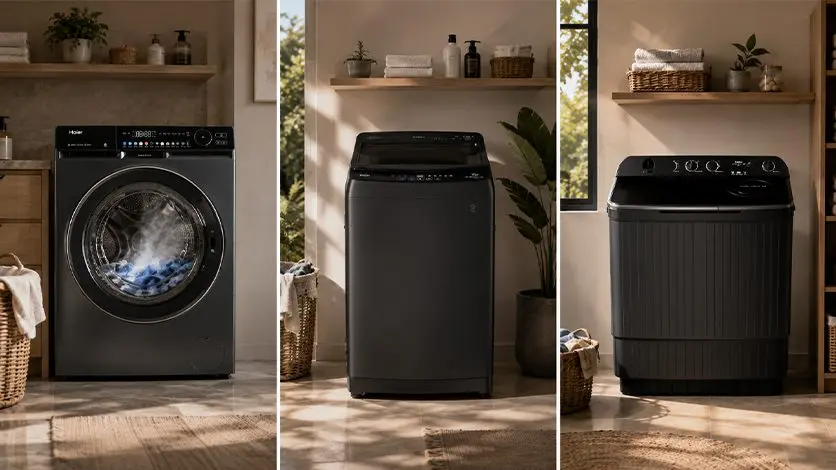
At Haier, we build our machines around the actual problems laundry runs into, not just spin speed numbers on a spec sheet. Our Front Load range uses a 525mm Super Drum paired with a Direct Motion Motor, giving clothes more room to move so detergent spreads through evenly with each cycle. Dual Spray and Steam go after detergent residue and stubborn grime directly, and Ultra Fresh Air stops the drum from holding onto moisture and smell between washes.
For homes that prefer a top-loading design, our Top Load washing machines carry the Oceanus Wave Drum, built to copy natural wave motion for a gentle yet thorough wash. The 2X Magic Filter catches lint before it gets a chance to settle back on clothes, and Softfall Technology keeps the lid from slamming down over years of daily use. Select models come with an advanced in-built heater too, useful in hard water areas where mineral deposits tend to cause the most trouble.
We also build for households that manage their wash cycles more by hand. Our Semi-Automatic washing machines include a Thunder or Vortex Pulsator for strong multi-directional water flow, a Magic Filter that keeps lint from resettling, and castor wheels that make cleaning underneath the unit far simpler. An Anti Rat Mesh at the base guards the machine’s inner parts as well, something owners in ground-floor homes tend to value.
Habits That Keep Wash Quality Steady Over Time
A washing machine rarely stops cleaning well overnight. It happens slowly, one skipped step at a time, and these small lapses tend to build up over months without anyone noticing:
- Missed filter cleaning, left for months at a stretch
- Guessed detergent measures instead of an actual measurement
- Hard water conditions in the area left unaddressed
A few simple habits reverse this drift just as gradually:
- Sorting loads by fabric type and how soiled they are
- Measuring detergent properly instead of guessing each time
- Running a maintenance or self-clean cycle every few weeks
Once these habits are in place, the chances of a washing machine not cleaning clothes properly drop by a good margin, and most loads come out looking the way they are supposed to.
Conclusion
A washing machine that stops cleaning well does not always mean something serious has gone wrong. In many homes, the real reason is a clogged filter, hard water, or small habits people ignore for too long. These problems are simple enough to fix if noticed early. Using the right load size, measuring detergent properly, and cleaning the machine every few weeks helps keep washing performance steady.
Picking a washing machine with a well-designed drum and good filtration also makes daily use easier. Good maintenance matters, and it shows over time. Clean clothes become the normal result, not something you keep chasing.
Frequently Asked Questions
Why is my washing machine not cleaning clothes properly?
Reduced cleaning performance usually comes down to overloading, incorrect detergent quantity, a clogged filter, hard water buildup, or a wash cycle that does not match the fabric. Checking these basics first often reveals the real cause behind the problem.
What are the most common reasons clothes come out dirty after a wash cycle?
The usual reasons include an overloaded drum restricting water flow, wrong detergent quantity, a clogged lint filter sending soiled water back into the drum, hard water deposits, and a cycle that does not suit the fabric or soil level.
Can overloading the washing machine prevent clothes from getting clean?
Yes, overloading restricts how freely clothes move inside the drum, which stops detergent from reaching every part of the fabric evenly. Reducing the load size allows water and detergent to circulate properly, improving the overall wash result.
Does using too much or too little detergent affect cleaning performance?
Both extremes affect performance. Too little detergent leaves dirt and grime behind, while too much builds up foam and residue that traps grime rather than removing it. Measuring detergent based on load size gives more consistent results.
Does hard water make it harder for your washing machine to clean clothes?
Yes, hard water leaves mineral deposits on heating elements and drum surfaces, reducing how well detergent dissolves and works. Over time, this buildup lowers cleaning performance and can also affect the machine’s internal components.