
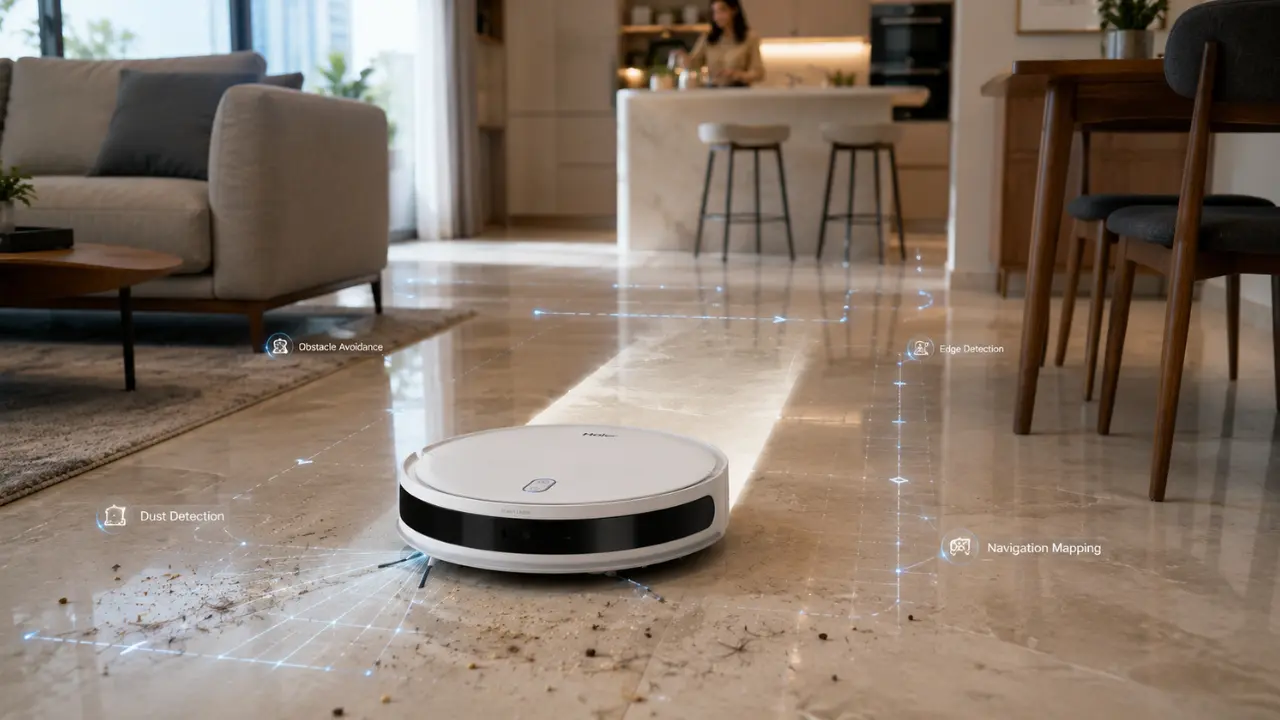

Ever noticed something? You press the Start button and when you return the floor appears tidier than you had thought.You press Start and when you come back the floor is cleaner than you thought it would be. It seems as though the robot was sensing the way to go first. It escaped from your dining chairs, crept under the sofa, went back to an unmissed corner and then quietly slipped back to its mooring.
The short trip isn’t arbitrary. Far from it.
Each cleaning ‘session’ is really hundreds (or thousands) of small decisions made in real time. A robot vacuum will do so much more work inside your home than you see on the floor, from mapping out your home to adjusting how it moves and sucks up dirt.
Knowing this process also helps you to decide on the right robot vacuum. But as soon as you understand what is going on within each cleaning cycle, you will soon realize that machine intelligence is as important as suction power.
It Doesn’t Begin with Cleaning. It Begins with Understanding the Room.
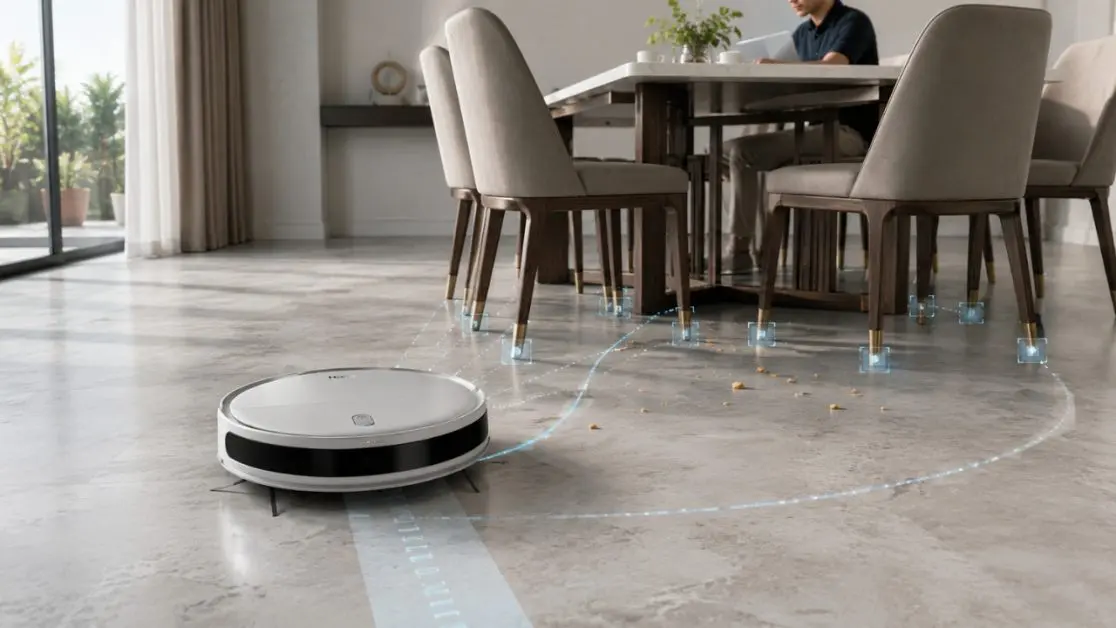
Before collecting even a single speck of dust, a robot vacuum first tries to understand its surroundings.
Suppose a blind person were to enter a house. It would be very hard if you were trying to clean, because you won’t be able to tell where the furniture is, or where the walls end, or where the stairs start.
The same problem is faced by a robot vacuum.
The first few moments of each cleaning cycle are spent on navigation, which is why.
If the model has Laser Navigation, it surveys the area and draws a virtual floor plan of the room.
Instead of moving randomly, it establishes an organised cleaning route that improves overall coverage while reducing unnecessary movement. Haier’s CIVIC X11 and CIVIC X11 PRO use Laser Navigation technology along with intelligent obstacle detection for more precise cleaning.
At this stage, the robot is already:
- Detecting walls and furniture
- Identifying open floor space
- Planning an efficient cleaning pattern
- Locating possible obstacles
- Calculating the shortest practical route
Cleaning hasn’t started yet.
Planning has.
A Typical Cleaning Cycle Happens in Stages
Rather than performing one task continuously, a robot vacuum switches between multiple operations throughout the cleaning session.
| Cleaning Stage | What Happens Internally | Why It Matters |
| Room Mapping | Laser sensors scan surroundings | Reduces unnecessary movement |
| Route Planning | Cleaning path is generated | Better floor coverage |
| Dust Collection | Brush and suction remove debris | Captures everyday dirt |
| Mopping (where enabled) | Water tank supplies controlled moisture | Helps remove light stains |
| Obstacle Detection | Sensors identify furniture and objects | Prevents collisions |
| Battery Monitoring | System tracks remaining charge | Avoids incomplete cleaning |
| Dock Return | Automatically returns for charging | Ready for the next session |
When these stages work together smoothly, cleaning feels effortless from the user’s perspective.
Dust Collection Is More Than Just Powerful Suction
Many people think that the more suction there is, the better the cleaning.
Not quite.
The suction is just one of the factors.
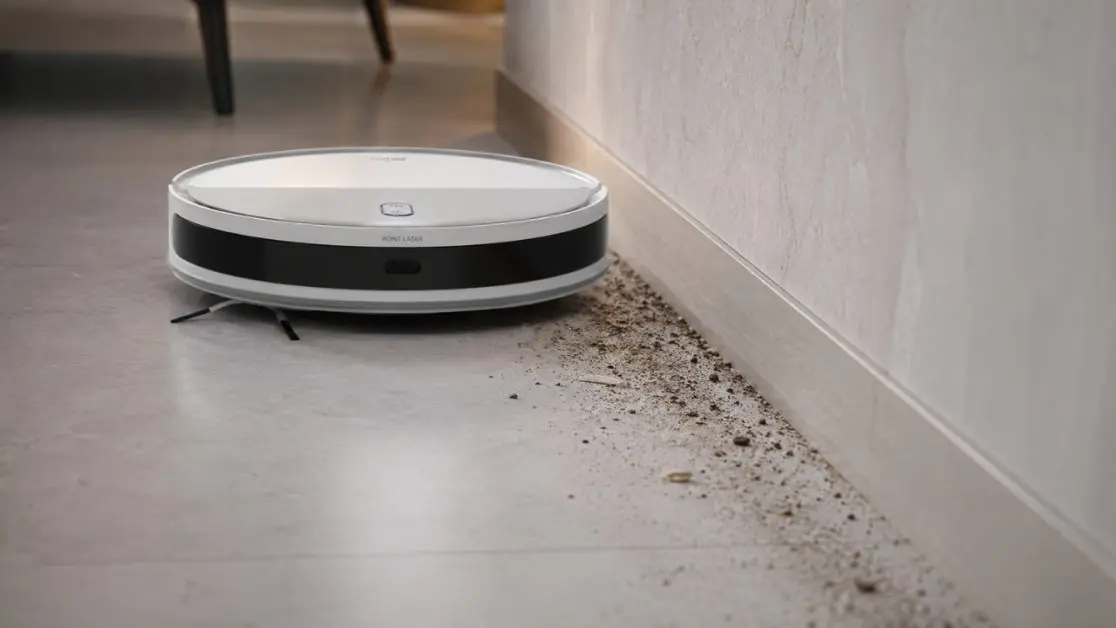
To do a good job of collecting dust, crumbs, pet hair and fine particles, a robot vacuum needs to push them in the direction of the cleaning path before the suction motor can get them.
This is where coordinated movement is important.
An intelligent cleaning pattern will help to provide more coverage of the floor area with less missed areas than repetitive traveling.
Haier CIVIC X11 provides powerful suction up to 5000Pa, which can be used to clean up a variety of surfaces such as tiles, marble, hardwoods floor, carpets, other common floor materials.
In Indian houses where dust is easily and rapidly deposited near the entryways, entryways, and living areas, ongoing suction in conjunction with organised airflow generally yields superior on a daily basis outcomes than suction alone.
Vacuuming and Mopping Can Work Together
Here’s something many first-time buyers appreciate after a few weeks of use.
Vacuuming removes loose dirt.
Mopping handles the fine residue left behind.
Instead of completing these jobs separately, certain robot vacuums combine them into one cleaning cycle.
The Haier CIVIC X11 series supports 2-in-1 vacuuming and mopping, allowing the machine to sweep and mop simultaneously during compatible cleaning sessions. The integrated 250ml dustbin and 300ml water tank support both dry and wet cleaning modes.
Benefits of a combined cleaning cycle include:
- Less time spent cleaning the same room twice
- Better management of everyday dust accumulation
- Improved convenience for routine maintenance
- Consistent cleaning across multiple rooms
For households with children or busy work schedules, combining these two processes can significantly reduce the effort required to maintain clean floors.
Memory Makes Every Future Cleaning Smarter
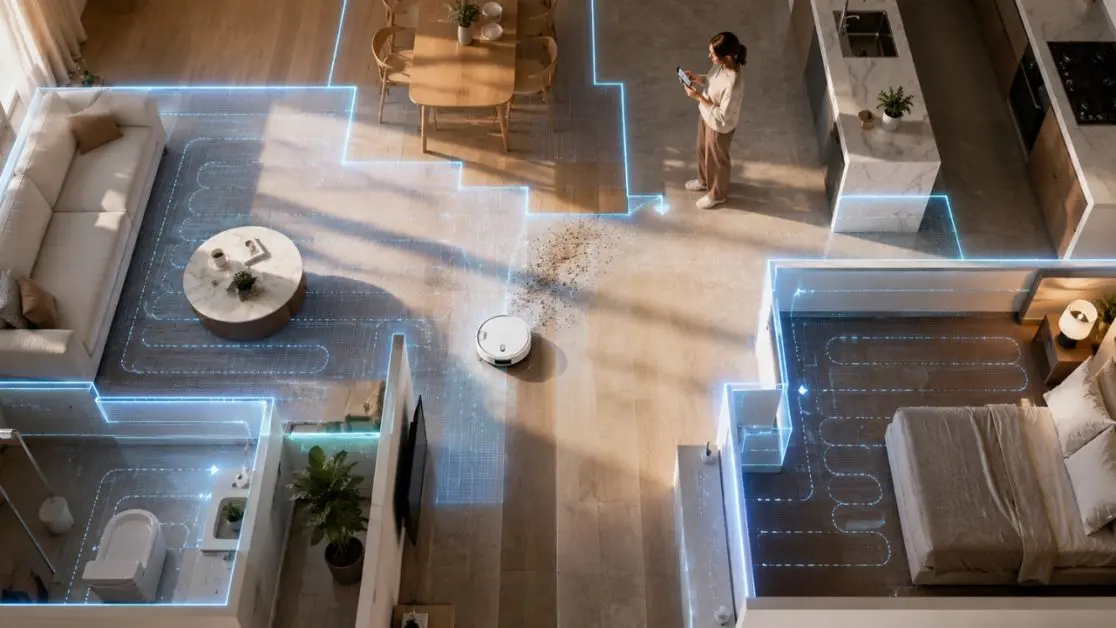
The first cleaning session teaches the robot about your home.
The next few sessions build on that knowledge.
This is where map memory becomes genuinely useful.
Rather than rediscovering every room each time, compatible robot vacuums can remember previously mapped layouts, allowing faster and more organised cleaning during future cycles.
The Haier CIVIC X11 and Haier CIVIC X11 PRO come with 5 Maps Memory function that allows the system to save a variety of floor layouts, and automatically identify obstacles during operation. This can be especially helpful for multi-level homes or rooms with various layouts.
The robot starts to make your home familiar over time, rather than every cleaning session is a new start, which results in an organized and efficient cleaning routine.
Battery Management Happens Quietly in the Background
There’s something that’s overlooked all too often.
The robot monitors its own battery while it is working to clean. It isn’t simply running until the power drops to zero. Rather, it continually monitors the charge that is left in the system and will stop the cleaning cycle as late as possible when it detects that there is not enough charge left.
This is more important than many people think, particularly if they live in a larger apartment or home.
Both the Haier CIVIC X11 and the Haier CIVIC X11 PRO have a battery capacity of 2600mAh, and run for up to 120 minutes under specified operating conditions. The robot will return to the charging station after cleaning or after it has to be charged, it will prepare for the next cleaning session.
During every cleaning cycle, the battery system helps by:
- Monitoring available power throughout the session
- Managing energy consumption across different cleaning tasks
- Returning automatically to the charging dock
- Staying ready for future scheduled cleaning sessions
The result? Less manual intervention and a smoother everyday cleaning experience.
Smart Controls Keep You in Charge Even When You’re Away
Let’s be honest. Modern homes don’t always follow a fixed schedule.
Some days you’re working from home. Other days you’re stuck in traffic or travelling between cities. Cleaning shouldn’t have to wait until you’re physically present.
That’s why connected controls have become an important part of today’s robot vacuums.
The Haier CIVIC X11 range supports True IoT Control through the Mobile App, TV App, as well as Google Assistant and Alexa compatibility, allowing users to start, stop or schedule cleaning more conveniently.
Depending on your routine, you can:
- Schedule cleaning before you leave for work
- Start a cleaning session remotely
- Control the robot through voice commands
- Manage routine cleaning without constantly handling the device
It’s a small convenience on paper. In everyday life, though, it saves time surprisingly often.
A Cleaning Cycle Doesn’t End Until the Job Is Truly Finished
Many people assume the cleaning cycle ends when the robot stops moving.
Actually, there’s one final step.
The robot returns to its charging dock, preparing itself for the next task.
If you’re using the Haier CIVIC X11 PRO, the process becomes even more hands-free thanks to its Auto Empty Dust Box. Instead of requiring you to empty the onboard dustbin after every cleaning session, the robot transfers collected debris into a larger 3.5L auto-empty station, reducing the frequency of manual emptying.
For busy households, that’s one less routine chore to think about.
Why This Matters for Indian Homes
Indian homes deal with a unique mix of cleaning challenges.
There’s everyday dust from open windows, footprints during the monsoon, crumbs after family meals, and if you have pet hair that somehow finds its way into every corner.
A robot vacuum needs to handle these situations consistently, not just clean well once.
Here’s where features like laser navigation, strong suction, wet-and-dry cleaning, intelligent map memory and automatic charging work together.
Everyday situations where these technologies prove useful:
| Household Situation | How the Cleaning Cycle Helps |
| Daily dust accumulation | Planned cleaning routes improve floor coverage |
| Homes with pets | Picks up pet hair during routine cleaning |
| Busy professionals | Scheduled cleaning reduces manual effort |
| Multi-room homes | Multi-map memory supports organised navigation |
| Hard floors with light stains | Vacuuming and mopping happen in a single cycle |
Rather than relying on guesswork, the robot follows a structured process every time it cleans.
Choosing a Robot Vacuum Means Looking Beyond Specifications
Numbers like suction power, battery capacity or runtime are important. No doubt about that.
But they’re only part of the story.
A good robot vacuum combines navigation, movement, cleaning performance, obstacle detection and intelligent software into one seamless workflow. When these systems work together efficiently, every cleaning cycle becomes faster, smarter and more consistent.
Haier’s CIVIC X11 is designed to deliver powerful everyday cleaning with features such as Laser Navigation, 5000Pa suction, 2-in-1 vacuuming and mopping, 5 Maps Memory, and True IoT Control. For households looking for even greater convenience, the Haier CIVIC X11 PRO builds on these capabilities by adding an Auto Empty Dust Box, making regular maintenance even easier.
Frequently Asked Questions
1. What happens inside a robot vacuum before it starts cleaning?
The robot first scans its surroundings, maps the room, identifies obstacles and plans an efficient cleaning path before beginning vacuuming or mopping.
2. Does a robot vacuum vacuum and mop at the same time?
Some models do. The Haier CIVIC X11 and CIVIC X11 PRO support 2-in-1 vacuuming and mopping, allowing both functions to operate during compatible cleaning sessions.
3. Why is laser navigation important in a robot vacuum?
Laser navigation helps create a more accurate map of the home, improves cleaning efficiency and reduces unnecessary movement around furniture and obstacles.
4. How does the Haier CIVIC X11 PRO reduce maintenance?
The CIVIC X11 PRO includes an Auto Empty Dust Box that automatically transfers collected dust into a larger dust container, reducing the need for frequent manual emptying.
5. Can I control the Haier robot vacuum remotely?
Yes. The Haier CIVIC X11 series supports True IoT Control through the Mobile App, TV App, Google Assistant and Alexa, making it easier to start, schedule or manage cleaning remotely.