
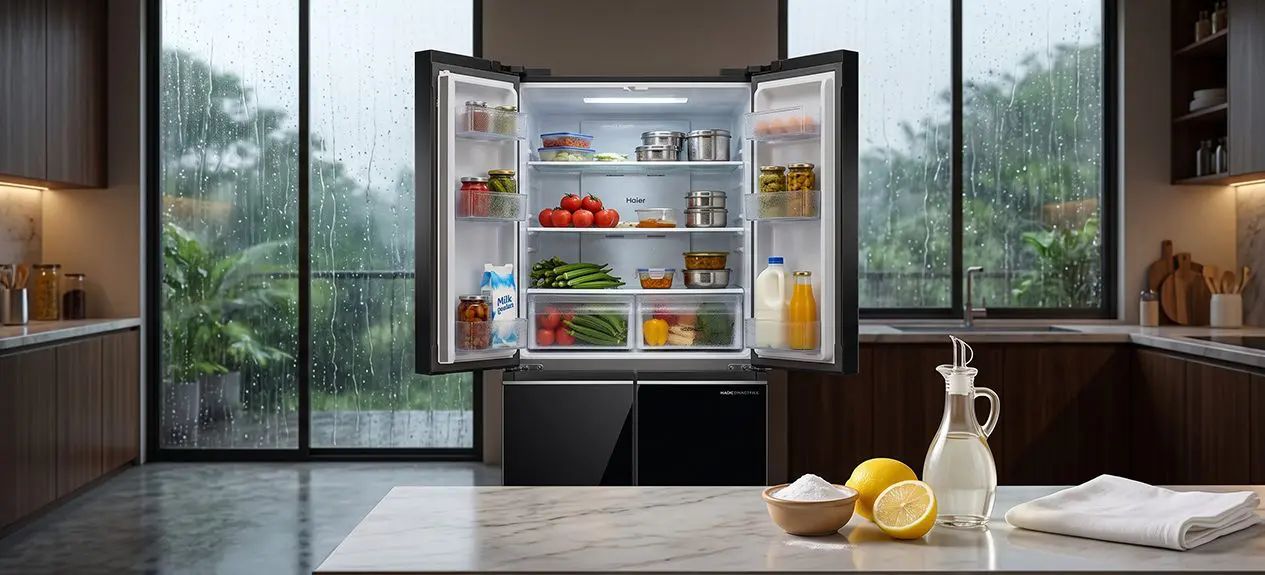

The monsoon season brings a needed break from the Indian summer heat. However, it also triggers some frustrating household headaches. Suddenly, everyday appliance issues become a lot more noticeable. If you have opened your fridge lately only to be hit by an unpleasant scent, you are not alone. High humidity levels, damp vegetable hauls, and constant temperature shifts can quickly turn your appliance into a trap for stubborn smells.
An appliance rarely creates these smells on its own. Instead, the culprit is usually trapped moisture, hidden spills, or forgotten leftovers releasing odor molecules into an enclosed space. Because rainy weather makes the air so heavy, these smells linger much longer and hit you the moment the door swings open.
The good news? You do not have to resort to harsh chemical sprays for refrigerator odor monsoon problems. With a bit of deep cleaning, smarter food storage, and a few household staples, you can eliminate bad smell from fridge naturally.
Why Do Refrigerator Odors Get Worse During Monsoon?
Humidity is the primary reason why kitchen smells become so aggressive during the rainy season.
This also happens every time you open the fridge door. Warm, moisture-heavy air rushes inside, condensing on the cold shelves, walls, and plastic containers. Add wet monsoon vegetables to the mix, and you get a breeding ground for dampness. Spills that would normally dry up quickly stay wet for days.
At the same time, strong-smelling foods such as curries, fish, cheese, onions, garlic, and leftovers can release odour molecules into the refrigerator air.
If these foods aren’t stored properly, the smell can circulate through the refrigerator and settle on other surfaces.
1. Start by Removing the Source of the Smell
Deodorizers are great, but they cannot perform miracles if something is actively rotting in the back corner. Before you try any natural remedies, you have to find the root cause.
Take a close look at your inventory and check for:
- Forgotten leftovers hiding in opaque containers
- Slimy or spoiled fruits and vegetables in the crisper drawer
- Expired dairy items
- Sticky residue underneath leaking jars
- Hidden spills tucked under the drawers
A deodorizer will only mask the issue temporarily if a spill is left to sit. Take everything out and inspect each container individually.
2. Give the Interior a Deep Scrub
Pull out all the removable shelves and bins. Wash them in the sink according to your manufacturer’s guide.
Next, grab a soft cloth and a mild cleaning solution to wipe down the interior walls, door seals, and corners.
Be extra thorough with the tracks underneath the drawers, as food juices love to pool there unseen. Once you are done scrubbing, wipe everything completely dry with a fresh towel before putting your food back. Getting rid of moisture is the golden rule when exploring natural ways to remove fridge odor. Deodorizers work ten times better on clean, dry surfaces.
3. Dry Wet Vegetables Before Storage
Monsoon produce often arrives at your doorstep soaked from the rain or covered in condensation.
Placing wet veggies straight into the crisper creates an instant humidity trap. Take a few minutes to pat your greens and veggies dry with a clean kitchen towel before putting them away. Also, avoid washing everything ahead of time. Most fruits and vegetables actually stay fresh much longer when stored dry and washed right before cooking. Better storage habits mean fewer odors down the road.
4. Don’t Overload the Refrigerator
It is tempting to pack the fridge full during rainy weeks, but an overloaded appliance blocks internal air vents. When cold air cannot circulate evenly, pocket zones of warm air form, speeding up food spoilage.
Furthermore, tightly packed jars make it incredibly easy to miss leaks and spills. Give your containers some breathing room so air can flow freely. This simple shift makes it much easier to spot older leftovers before they start to smell.
5. Ventilate the Refrigerator After Cleaning
Do not rush to restock the shelves the second you finish wiping them down.
If you have the appliance turned off or empty during a deep clean, leave the door open for a brief period. This allows any trapped humidity or cleaning scents to escape into the room.
How Haier Helps Manage Refrigerator Odours
While daily cleaning habits do the heavy lifting, advanced appliance technology can make moisture management much easier. Haier refrigerators come with features like the Deo Fresh technology to keep your internal environment crisp and fresh.
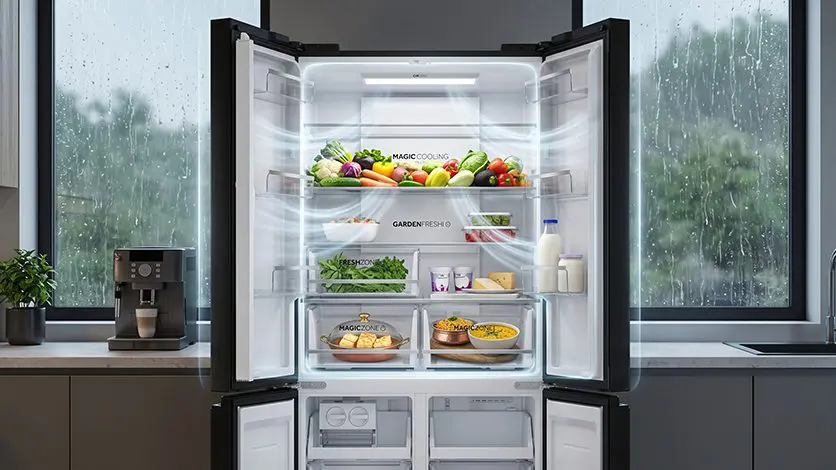
Our specialized Deo Fresh Technology works continuously behind the scenes to absorb and neutralize stray odor molecules. This is an absolute lifesaver when you are storing aromatic leftovers alongside delicate dairy products.
For even stronger protection, premium Haier models feature H-Deo Fresh. This system pairs odor absorption with antibacterial action, designed to eliminate up to 99.99% of bacteria and common smells on applicable models.
We also offer models featuring ABT and ABT Pro technologies for high-tier antibacterial protection. These smart features are built to assist your daily kitchen hygiene; they do not replace the need to clear out spoiled food, but they give you a massive advantage during damp monsoon months.
Read More: Which Refrigerator Features Are Actually Worth Paying For?
A Simple Monsoon Routine for Refrigerator Odor Control
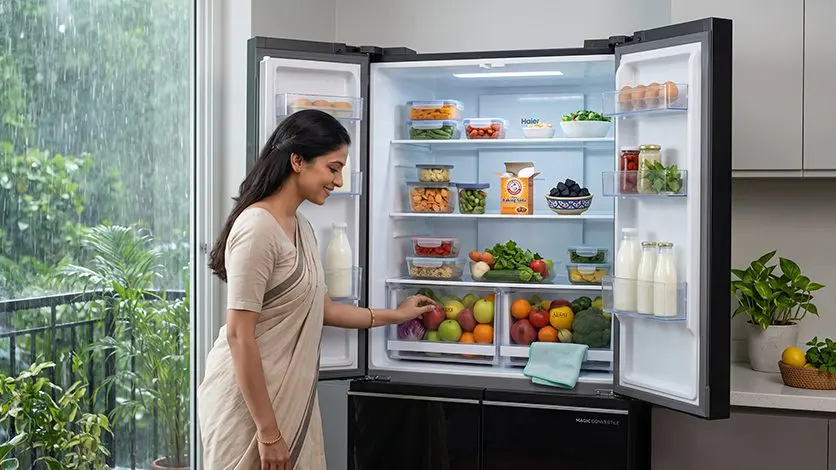
When the rainy season hits its peak, keep your appliance fresh by following this simple checklist:
- Purge: Toss out expired food and old leftovers.
- Scrub: Wipe down the walls, shelves, and bins.
- Dry: Eliminate all surface moisture with a clean cloth.
- Inspect: Check the rubber door gasket for trapped dampness or mold.
- Seal: Move pungent ingredients into airtight glass or plastic containers.
- Neutralize: Keep a small bowl of baking soda for fridge smell or set up an activated charcoal refrigerator deodorizer on a middle shelf.
This dual action tackles the root causes of humidity while mopping up floating odor molecules.
Final Thoughts
Monsoon humidity definitely works against your kitchen appliances, but managing the fallout does not require complex or expensive solutions.
Start with a clean slate by tossing spoiled ingredients and drying the interior. From there, rely on time-tested remedies like baking soda for fridge smell or a dedicated activated charcoal refrigerator deodorizer to catch lingering aromas. Keeping your food sealed, drying your groceries, and giving your shelves breathing room will stop smells from returning.
For a helping hand, Haier’s built-in Deo Fresh, H-Deo Fresh, and ABT Pro technologies provide an extra layer of defense against bacteria and stale air. By combining smart food habits with targeted appliance tech, you can keep your refrigerator fresh, clean, and pleasant to use all year round.
FAQs
How does Haier’s Deo Fresh Technology automatically neutralize monsoon fridge odors?
Monsoon humidity creates stubborn, musty smells inside your fridge. Haier’s Deo Fresh Technology solves this with a built-in carbon filter that continuously absorbs and neutralizes odor molecules. It works silently in the background to keep your food smelling clean without any manual effort
Why do refrigerator odors become much stronger during the monsoon season?
Rainy weather spikes atmospheric humidity, which accelerates the natural decay of fresh food. Every time you open the door, damp air rushes inside and traps smell-causing gases. This moisture speeds up bacterial activity, making everyday food odors much stronger and harder to clear.
What is the role of Haier’s Anti-Bacterial Technology during humid rainy months?
High humidity acts as an open invitation for mold and bacteria to grow on fridge surfaces. Haier’s technology uses antimicrobial agents in the linings and door gaskets to stop these microbes from multiplying. This extra layer of protection keeps your groceries hygienic and stops smells before they start
How do Haier’s Multi-Air Flow and convertible cooling features help manage indoor fridge freshness?
Multi-Air Flow uses targeted vents to circulate cold air evenly, eliminating the warm spots where bacteria breed. Paired with convertible cooling, you can instantly turn your freezer into a fridge. This extra space lets you spread out groceries so cool air can circulate freely and prevent moisture buildup.
How frequently should a refrigerator be cleaned during the rainy season?
Give your fridge a quick wipe-down every two weeks during the heavy rains. Damp air enters daily, meaning mold can form much faster on shelves and gaskets than it does in winter or summer. A bi-weekly check ensures you catch spoiled produce and wipe away trapped moisture before it ruins your food.