
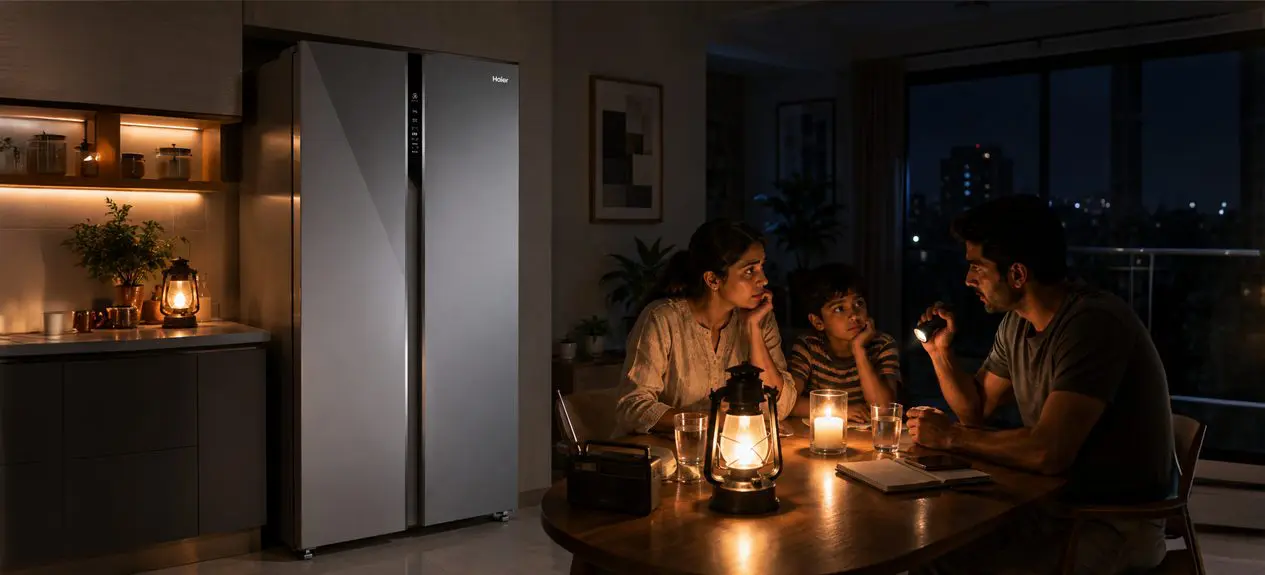

You’re in the middle of cooking dinner when suddenly the lights go out. The hum of your refrigerator stops. You stand there wondering how long your food will stay cold, whether your milk is safe, if those vegetables will spoil before power comes back. In Indian households, this isn’t a rare scenario. Power cuts happen regularly, sometimes lasting hours, sometimes the entire day. And every time it happens, the same question runs through your mind: is my food still safe?
Why Power Cuts Are a Real Threat to Your Refrigerator
Power cuts aren’t just inconvenient. They create a genuine problem for food preservation. Your refrigerator maintains food safety through constant cooling. The moment electricity stops, that cooling stops too, temperature rises. Bacteria that were dormant in the cold suddenly start multiplying. The longer the power cut lasts, the higher the risk of foodborne illness.
The challenge is that you can’t always predict how long the power will be out. A minor grid issue might last thirty minutes. A transformer failure could mean eight hours without electricity. In monsoon, storms can knock power out for an entire day. Your refrigerator doesn’t care about these distinctions. It just cares that it’s not cooling anymore.
Understanding the Temperature Danger Zone
Food stays safe in your refrigerator because the temperature is between 0 and 4 degrees Celsius. At these temperatures, harmful bacteria grow very slowly. But the moment your fridge stops running, temperature starts climbing. Within two hours of a power cut, your fridge interior reaches room temperature, which during summer in India is often above 30 degrees Celsius. At these temperatures, bacteria multiply rapidly.
The critical window is the first four hours. If power returns within four hours and your fridge door stayed mostly closed, your food is probably still safe. Beyond four hours, you need to be more cautious. After eight hours without power, anything that can spoil easily, like fish, meat, cooked foods, dairy, and eggs, should be considered unsafe and discarded.
How to Protect Your Food During a Power Cut
The first thing you need to do when power goes out is resist the urge to open your refrigerator door. Every time you open it, cold air escapes and warm air rushes in. This speeds up temperature rise inside. Treat your fridge like a cooler. Closed doors mean it stays cold longer. With the door shut, a well-insulated fridge can maintain safe temperatures for a surprisingly long time.
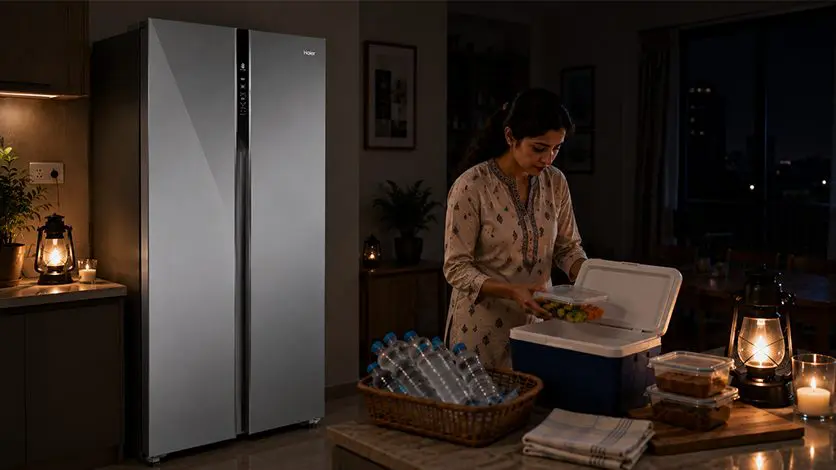
Move perishable items to the coldest part of your fridge if you know the power cut might be long. The back of the fridge is usually coldest. Group foods together. This creates insulation and helps retain cold. If you have freezer space, move some items from the fridge compartment to the freezer. Frozen items stay cold longer than refrigerated items.
Fill bottles with water and freeze them before monsoon season or before the hot months. During a power cut, these frozen water bottles become emergency cold sources. Place them in your fridge to help maintain lower temperatures. They’ll melt slowly and keep everything around them colder for longer.
Keep a cooler with ice ready during seasons when power cuts are likely. Once power goes out, transfer highly perishable items to the cooler. Use ice from your freezer or buy ice if possible. This buys you extra time beyond what your fridge can provide.
Why Some Refrigerators Handle Power Cuts Better
Not all refrigerators are equal when power suddenly disappears. Better insulation, higher quality door seals, and larger capacity help fridges retain cold longer. But there’s another factor that makes a real difference: inverter capability.
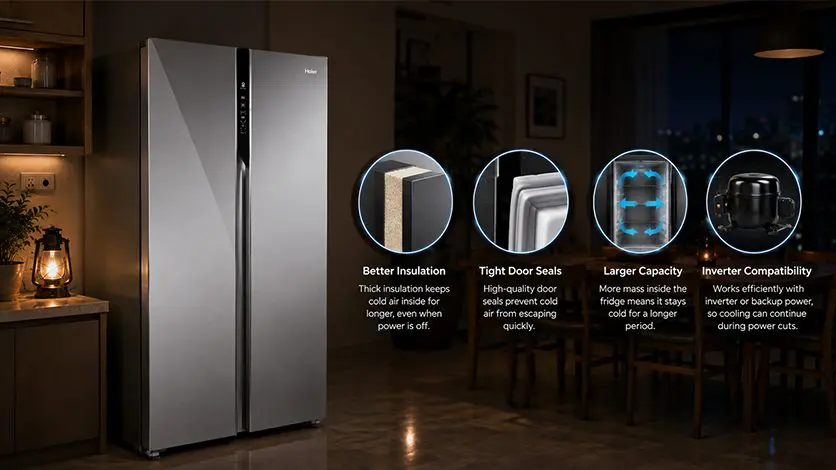
Some refrigerators, including certain Haier models, come with inverter-ready features or integrated inverter compatibility. This means the compressor can run on backup power from an inverter or generator without damage. During a power cut, if you have a home inverter or backup power system, your fridge can keep running. This completely changes the game. Instead of hoping your food stays safe for four to eight hours, your refrigerator just keeps working like nothing happened.
Haier refrigerators with inverter compatibility are designed to work with India’s common backup power solutions. This feature acknowledges a reality of Indian households: power cuts are frequent, and people use inverters to maintain essential appliances. A fridge that works seamlessly with inverter power means your family never faces the stress of wondering if your food is spoiling.
Taking Action Now
Power cuts will happen. You can’t prevent them, but you can prepare for them. Start by checking your fridge’s insulation and door seals. Freezing water bottles now means they’re ready when needed. If power cuts are frequent in your area, consider upgrading to a refrigerator designed for this reality, one that works efficiently with inverter backup systems.
The peace of mind knowing your food stays safe during power cuts is worth the investment. Your family’s health depends on food staying at safe temperatures, and that’s something you shouldn’t leave to chance.
FAQs
How long does a refrigerator keep food safe without electricity?
A well-insulated fridge with the door closed can maintain safe temperatures for about four hours without power. Beyond four hours, perishable items like meat, fish, cooked foods, and dairy start becoming unsafe. After eight hours without power, it’s generally safer to discard these items to avoid foodborne illness.
What temperature does a fridge reach during a power cut?
Once power stops, your fridge temperature starts rising immediately. Within two hours, it typically reaches room temperature, which during Indian summers can be 30-35 degrees Celsius. At these temperatures, bacteria that cause food poisoning multiply rapidly. This is why the first four hours after power loss are the most critical.
Which foods should I worry about most during a power outage?
Meat, fish, poultry, eggs, cooked foods, and dairy products are most dangerous during power cuts because they spoil quickly at warm temperatures. Leftover curries, stored dahi, paneer, and prepared meals also deteriorate rapidly. Vegetables, fruits, and condiments are more forgiving and can often be safely stored for longer without power.
Can I use my refrigerator with a home inverter during a power cut?
Some refrigerators are inverter-compatible, but not all. Older compressor models can be damaged by inverter power. Modern fridges, particularly those with inverter-ready designs, work safely with backup inverter systems. Check your manual or contact the manufacturer before connecting your fridge to an inverter. Haier offers models specifically designed for inverter compatibility.
What’s the best way to keep food cold when power goes out for more than four hours?
Close your fridge door completely and avoid opening it. Use a cooler with ice to transfer highly perishable items. If you prepared frozen water bottles beforehand, place them in your fridge to help retain cold longer. These combined methods extend food safety significantly beyond what your fridge alone can provide during extended outages.
Should I throw away all my food after a power cut?
Not necessarily. Most foods can be safely stored even after several hours without power. Items like vegetables, fruits, grains, and condiments are fine. The concern is perishables like raw or cooked meat, fish, dairy, and eggs. When in doubt, use your senses. If something smells off or looks unusual, discard it. When it comes to health, it’s better to be safe.
How can I prepare my home for frequent power cuts?
Keep water bottles in your freezer ready to act as cold sources during outages. Maintain your fridge’s door seals and insulation. Consider upgrading to a refrigerator that works with home inverter systems. Stock ice trays and have a cooler available. During monsoon or seasons with frequent power cuts, avoid storing large quantities of highly perishable items.