
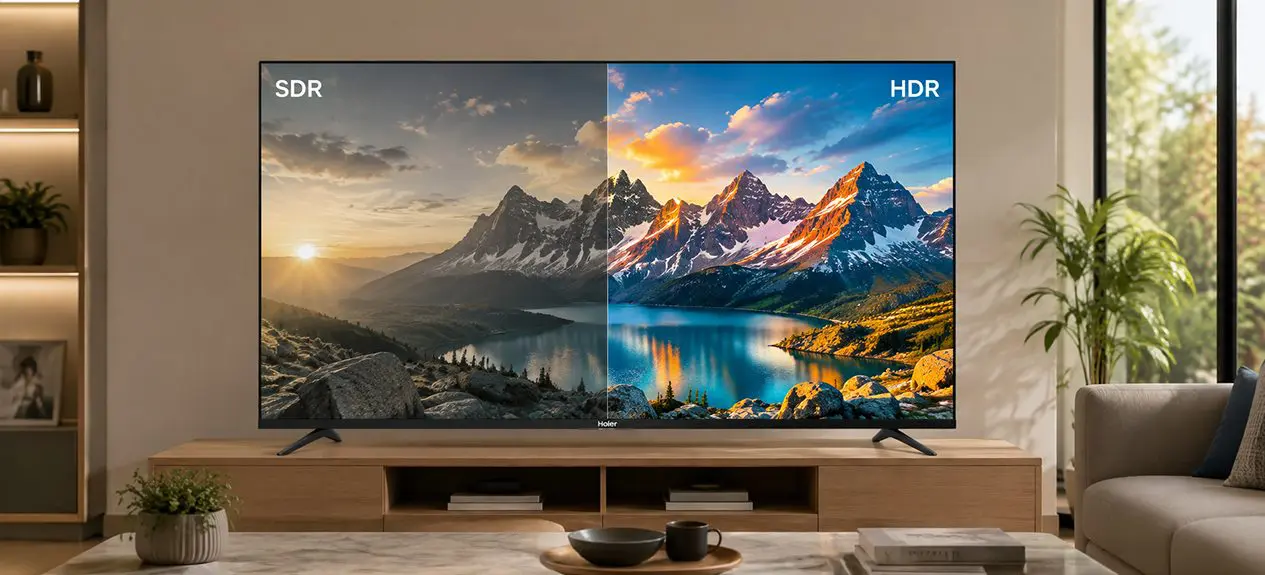

A TV can have a sharp screen and still produce very different-looking pictures depending on what format it is actually playing. That’s where the difference between HDR and SDR comes in. Both affect how brightness, contrast, and color show up on screen, but they work with different ranges of picture information to begin with.
SDR has been the standard for television for years, and it still handles everyday content perfectly well. HDR takes things further by widening the gap between darker and brighter areas. This guide breaks down the High dynamic range vs standard dynamic range comparison, where the difference actually becomes noticeable, and which one may suit how you tend to watch.
Understanding Standard Dynamic Range
SDR, or Standard Dynamic Range, is the traditional picture format behind regular television broadcasts, older films, and a huge amount of everyday content. It works within a fairly standard range of brightness, contrast, and color, giving you a balanced picture for normal viewing.
That doesn’t mean SDR lacks quality. On a good TV, SDR can still look clear and enjoyable. It just has less room to separate the brightest and darkest parts of an image. A sunlit area might not come across as intensely bright as it should, and fine detail in a very dark scene can be tricky to make out.
For news, regular TV shows, older content, and everyday viewing, SDR still holds up fine and is still the most widely supported format.
What is a High Dynamic Range?
HDR stands for High Dynamic Range. It allows compatible TVs and content to work with a much wider range of brightness, contrast, and color information than SDR.
Instead of squeezing the whole picture into a narrower range, HDR gives the brightest highlights room to actually pop, while still holding onto detail down in the shadows. This is especially useful in scenes where both extremes show up together, like sunlight streaming into a dark room, or bright lights against a night sky.
It is important to remember that HDR is not the same thing as resolution. A TV can be 4K and still be playing SDR content, while an HD or Full HD TV can support HDR too. Resolution affects the amount of detail in the image, while HDR changes how brightness and color get represented.
Benefits of HDR Picture Quality
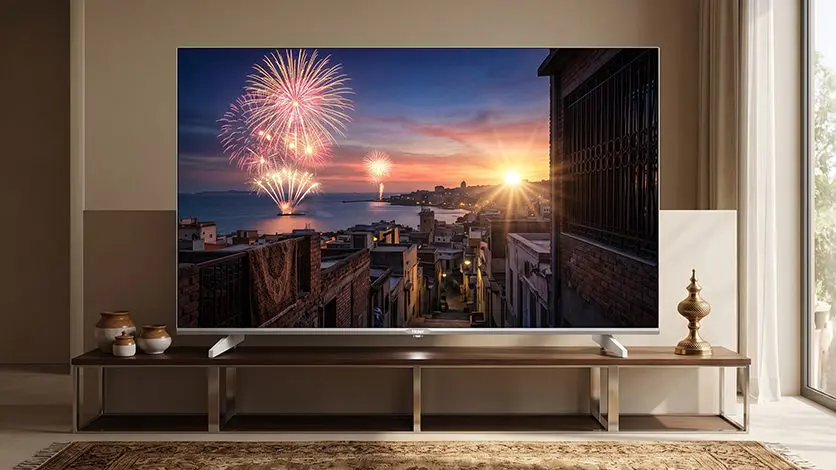
The HDR TV benefits come down to the extra picture range available in compatible content.
- Brighter highlights: Reflections, sunlight, fireworks, and other bright elements come through more distinctly.
- Better shadow detail: Darker scenes hold onto more texture instead of just looking like one flat, dark area.
- Richer color depth: HDR can show more nuanced color and smoother transitions between tones.
- More realistic-looking scenes: The wider gap between light and dark gives compatible content a real sense of depth.
The result is not just a brighter screen. Good HDR picture quality is about keeping balance across the whole scene, so highlights stand out without drowning out the detail around them.
Want to explore how HDR can improve the experience for films and entertainment? Read this blog: Benefits of HDR in LED TVs for Movie Enthusiasts.
HDR vs SDR: What’s the Difference?
The SDR vs HDR comparison is easiest to follow once you look at how each format handles the same picture elements differently.
| Picture Element | SDR | HDR |
| Brightness range | Standard range | Wider range of brightness |
| Contrast | More limited separation | Greater contrast between light and dark |
| Color depth | Standard color information | Richer and more detailed color |
| Shadow and highlight detail | Less detail at the extremes | More detail in supported content |
| Content support | Widely available, including older content | Requires compatible content and TV support |
| Everyday viewing experience | Well suited to regular television and standard content | More dynamic with supported films, streaming and games |
The biggest point worth taking from the HDR vs SDR comparison is that neither format changes the content itself. HDR just gives compatible displays more information to work with, so they can reproduce a wider range of light and color.
Where the Picture Difference Becomes Noticeable
The difference gets easier to spot in scenes that ask more from the display. A dark film scene with streetlights in the distance, a sunset with subtle shifts in color, or sunlight bouncing off water; these contain a mix of very bright and very dark areas within the same frame.
This is where HDR picture quality tends to show its strengths. Bright objects stay more defined, while the shadows around them hold onto more visible detail. SDR can still look good in the same scene, but the range between these extremes is narrower.
Visually rich documentaries, night sequences, outdoor scenes, and films with dramatic lighting are usually where people notice the difference most clearly.
HDR vs SDR for Gaming: Which Delivers a Better Experience?
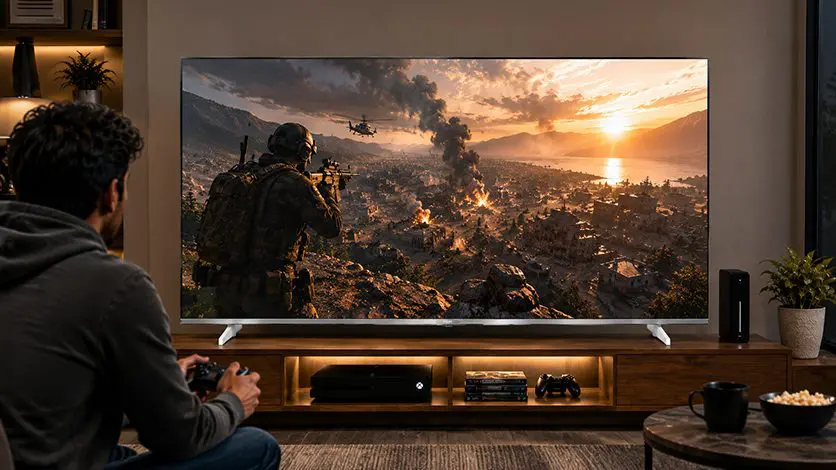
The gap between HDR and SDR for gaming really shows up in supported games, especially the ones with detailed environments and dramatic lighting.
HDR lets bright moments, sunlight, explosions, reflections, actually pop, while still holding onto detail in the shadows around them. This is what gives the picture real depth, instead of just cranking up brightness across the whole screen.
However, HDR is only one part of a good gaming setup. Refresh rate, response time, display technology, and HDMI connectivity all shape the experience too. For the compatible games and hardware, HDR adds a layer of realism, and for games that don’t support it, SDR still gets the job done.
HDR10+: How Dynamic HDR Adjusts the Picture Scene by Scene
HDR comes in a few different formats, with HDR10 being one of the most widely used. HDR10+ builds on this by using dynamic metadata to adjust picture information scene by scene.
A bright outdoor sequence and a darker indoor scene don’t really need the exact same picture treatment. With HDR10+, compatible content can pass along extra information that helps the TV fine-tune brightness and contrast as scenes shift.
This helps preserve detail across content that moves back and forth between light and dark environments a lot.
Want to understand how dynamic HDR works while streaming content? Read this blog: What Is HDR10+ and How It Enhances Streaming Experiences.
How Haier Brings HDR to Different Viewing Setups
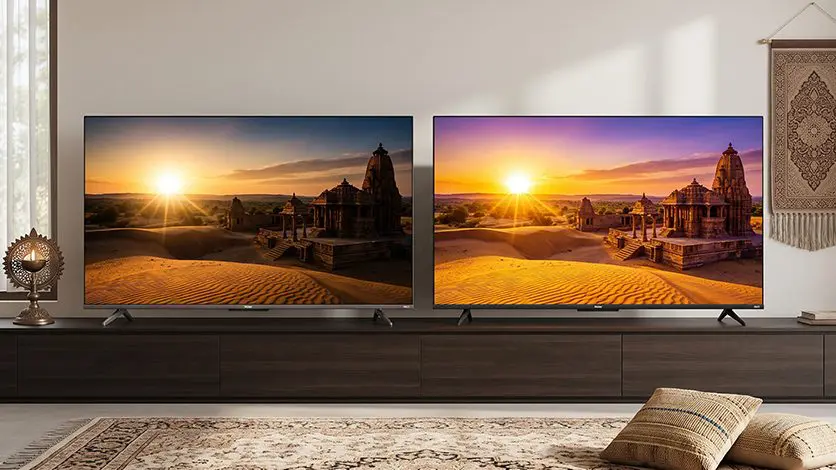
At Haier, HDR is available across different display technologies, so viewers can choose a TV based on screen size, viewing habits, and the kind of picture experience they’re looking for.
The Haier New M70 Series MiniLED AI Smart Google TV supports HDR10+ alongside Mini LED display technology. Together, they allow scene-by-scene HDR adjustments while the smaller LED backlights give more precise control over brightness and contrast, making it a strong fit for films, streaming, and visually demanding entertainment.
The New P7 Pro Series HQLED AI Smart Google TV also features HDR10+. Here, dynamic HDR works alongside QLED technology to bring vibrant color and detailed contrast to everyday streaming, films, and entertainment.
This means the HDR format is only one part of the overall picture. The display technology behind the screen plays just as big a role in how that HDR content looks in the end.
Conclusion
Choosing between HDR and SDR is less about picking a winner and more about understanding what your TV is being asked to show. SDR still handles a huge amount of everyday content, while HDR comes into its own when a scene has more visual range to explore, from the glow of city lights at night to the fine color shifts in a sunset.
If picture quality is high on your list, HDR gives compatible content more room to look closer to the way it was intended to be seen. And with HDR10+ available on selected Haier TVs, you can enjoy scene-by-scene picture adjustments that bring out changing levels of contrast and detail as the content unfolds.
FAQs
Is HDR always better than SDR?
Not necessarily, HDR offers a wider range of brightness, contrast, and color with compatible content, while SDR remains suitable for everyday broadcasts and content not produced in HDR.
How do Haier Smart TVs handle HDR content to maximize picture depth and clarity?
Haier Smart TVs support HDR formats such as HDR10+ and combine them with advanced display technologies and picture processing to enhance contrast, color, and scene detail.
What advanced technologies do Haier TVs use to adapt HDR performance to changing room lighting?
Haier TVs use technologies such as Dolby Vision IQ, which can optimise picture settings based on ambient lighting conditions for clearer viewing.
How does HDR improve picture quality compared to standard SDR feeds?
HDR expands the range between bright and dark areas, helping supported content show brighter highlights, better shadow detail, richer colors, and greater depth.