
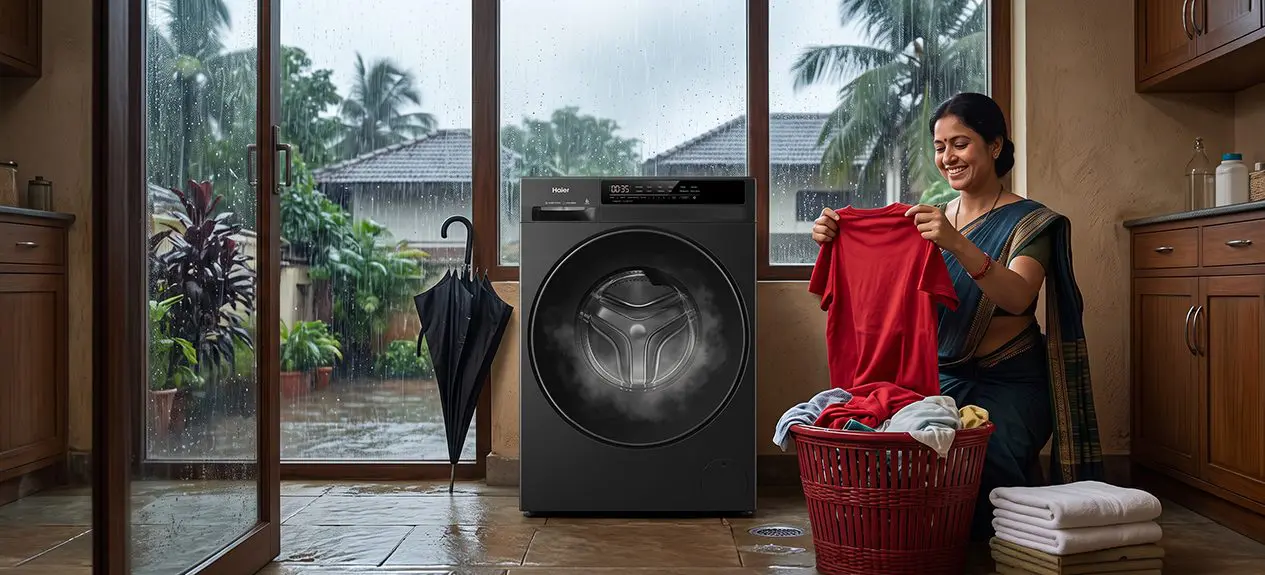

Monsoon throws laundry off track in almost every Indian home. Clothes take longer to dry out and towels stay wet for hours. Rain delays ruin the daily schedule and wet clothes languish in the basket too long. A full wash cycle won’t cut it in high humidity when you want dry, fresh clothes afterward. Odours build up, and microbes multiply in the fabric. Rainy days demand a different washing approach.
That’s why hot water wash monsoon hygiene has become a real household concern. Picking the right temperature makes a measurable difference to how clean clothes feel once the rains set in.
Why Monsoon Laundry Requires a Hygiene-First Approach
Rainy season laundry brings problems a regular wash cycle often can’t fix. Umbrellas, raincoats, uniforms, and cotton kurtas soak up moisture before they even reach the machine. Indoor drying slows down considerably during monsoon, so that trapped moisture stays in the fabric far longer than usual. Clothes left damp for hours start growing bacteria, and mild fungal growth shows up more often than people realise. Towels turn damp, and bedsheets feel clammy against the skin, even right after a wash.
Storing clothes while they’re still slightly damp produces that musty smell within hours. A normal wash removes visible dirt well enough, but monsoon laundry needs closer attention at three stages: drying, washing, and storage.
Hot Water Wash Benefits for Hygiene
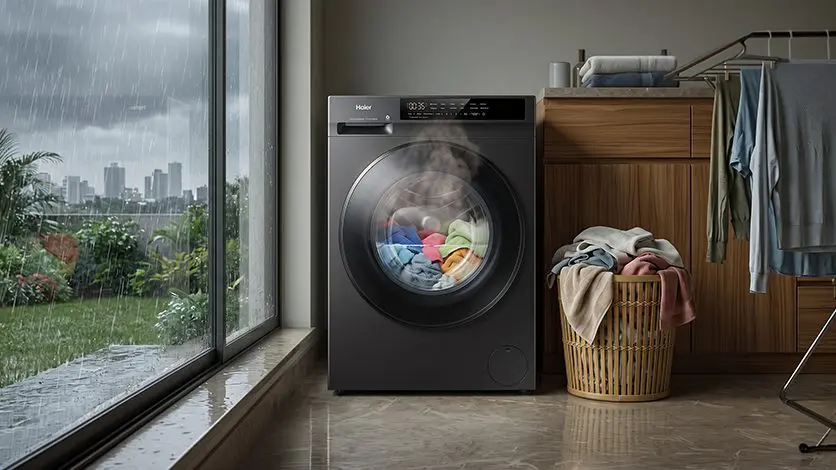
Heat changes how detergent behaves during a wash cycle. The hot water wash benefits show up in small, practical ways, not one dramatic change. Here’s what happens:
- Warmer water dissolves detergent more evenly, spreading it through fabric fibres instead of leaving residue on the surface.
- Heat loosens body oils, sweat, and allergens stuck to towels, bedsheets, and clothes you wear often.
- Clothes feel noticeably fresher post wash, which matters when monsoon drying keeps things damp for hours.
- A well chosen hot water cycle washing machine setting supports the drum’s cleaning action too, pulling out grime cooler washes tend to leave behind.
- Most modern machines control temperature automatically once you pick the right program, so there’s less fiddling involved.
Want to know which washing machine features actually make a difference during the rainy season?
Read this blog: Washing Machines with Hygiene Boosters for Monsoon Freshness
Washing Machine Temperature Settings That Work
Not every load needs the same heat, and getting washing machine temperature settings right matters more than cranking up the dial. Everyday cottons and synthetics do fine on warm. Heavily soiled items and bedding benefit from higher heat. Delicates should stay on the cooler end no matter how dirty they look, because heat wears down certain fibres with repeated washing.
| Load type | Suggested temperature range | Typical use case |
| Delicates, silk, wool blends | Cold to lukewarm | Everyday delicate wear, monsoon outerwear linings |
| Regular cottons, synthetics | Warm | School uniforms, casual wear, mixed loads |
| Towels, bedsheets, heavily soiled items | Hot | Monsoon dampness, sweat, general deep hygiene needs |
Treat this as a rough guide. Fabric care labels always come first.
Which Fabrics Are Safe for a Hot Wash, and Which Are Not
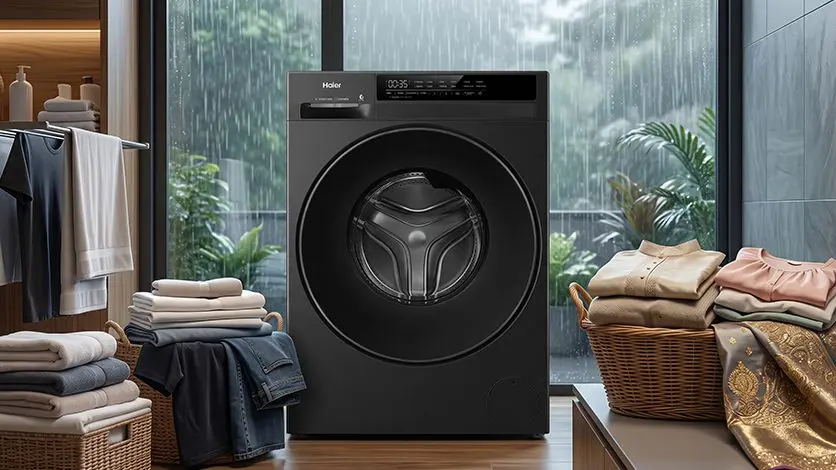
Choosing the right load for a hot wash clothes setting protects both hygiene and fabric longevity. Some categories handle heat without any problem. Others need a gentler approach, even during peak monsoon dampness.
- Cotton towels, bedsheets, and pillow covers generally survive hot cycles without issue, benefiting from the deeper clean heat provides.
- Everyday cotton clothing and gym wear can usually take warm to hot settings, depending on soiling.
- Silk, wool, and delicate synthetics need to stay on cold or lukewarm, since heat causes shrinkage or fibre damage.
- Sarees with zari work and heavily embroidered garments do better on gentle programs, not a standard hot cycle.
- Dark or heavily dyed fabrics should stick to moderate temperatures, or colour fades sooner than expected.
Best Wash Cycle for Rainy Season Loads
Finding the best wash cycle for rainy season loads comes down to matching the program to how the fabric was used, not just how it looks. A cycle built for stain removal or deep cleaning suits monsoon soiled clothing far better than a quick wash. Machines with dedicated hygiene focused programs take much of this guesswork away, applying the right mix of heat, spin, and rinse automatically.
Haier’s Approach to Hygienic Monsoon Laundry
At Haier, our machines are built around one idea: monsoon hygiene needs more than a standard wash. Features across the range target dampness, bacteria, and odour directly.
Front Load Washing Machines get Steam technology that penetrates fabric at high heat, tackling bacteria and mites in the fibres, backed by Anti-Bacteria Treatment. Essence Wash pre-mixes detergent and sprays it onto clothes, reaching fibres deeper than a plain soak. Dual Spray flushes the drum door and gasket after every cycle, cutting foam residue and mould spots. The 525mm Super Drum gives clothes room to move, while Self Clean and Ultra Fresh Air keep the drum clear of moisture and odour.
Top Load Washing Machines carry an in-built heater for germ elimination, giving a genuine hot wash without a separate water heater. Ultra Fresh Air circulates air inside the drum too, cutting moisture buildup during humid spells.
Semi-Automatic Washing Machines suit households preferring manual control, letting you fill the tub with hot water directly when needed. Strong filtration and efficient spin cut drying time, a real advantage when humidity slows things down.
The goal stays the same across every category: dependable hygiene at home, without extra complexity in an already demanding season.
Simple Hygienic Laundry Practices During Monsoon
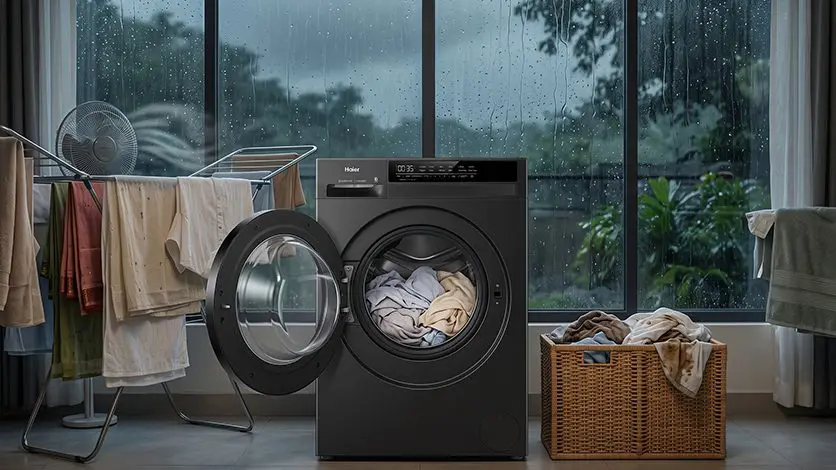
Good hygienic laundry practices go beyond picking the right water temperature. A few daily habits make a real difference when rain makes drying difficult.
- Don’t overstuff the washing machine. Clothes packed too tightly can’t let water and detergent circulate. If they aren’t moving freely, cleaning performance suffers, especially for heavier loads like towels and bedding.
- Separate clothes that have been rained on and are heavily soiled from lighter, everyday wear when you can. Mud, sweat, and outdoor damp call for a different washing program, not a mix with barely worn clothes.
- Remove laundry from the washer promptly once the cycle ends. Leave wet clothes in the drum for a few hours and unpleasant odours build up fast, worse still when the air around is already humid.
- The washing machine itself needs regular attention too. Moisture and residue build up in detergent drawers, door gaskets, lint filters, and drums over time. Cleaning these areas keeps washing performance up and cuts down on unwanted smells.
- Drying during monsoon needs equal attention. Pick an appropriate spin setting to extract as much water as possible, then lay clothes out flat instead of leaving them bunched up. Make sure there’s adequate air circulation indoors so moisture can escape properly.
These steps sound routine on paper. They matter far more once humidity sticks around for weeks at a stretch.
Conclusion
Monsoon laundry isn’t solved by dumping in extra detergent or running a longer cycle. Moisture, humidity, fabric type, temperature, and drying time all shape how clean clothes end up.
A washing machine with a hot water cycle helps a great deal with tougher fabrics during the rains, think towels, bedsheets, heavily soiled cottons. But too much heat on every load damages fabric and shortens its life.
Selective heating works better. Pick the right temperature for each load, use a hot wash clothes program only where the fabric allows it, keep the machine clean, and take clothes out soon after the cycle finishes. Clothes stay cleaner and fresher, and delicate fabrics get the gentle treatment they need.
FAQs
Does washing clothes in hot water kill germs and bacteria?
Hot water reduces many common bacteria and loosens allergens cold water tends to leave behind. It works best on cottons, towels, and bedding, boosting detergent action more than cooler washes during humid, bacteria heavy conditions.
Which fabrics are safe to wash in hot water?
Cotton towels, bedsheets, and everyday cotton clothing generally handle hot washes well. Silk, wool, delicate synthetics, and embellished fabrics like zari sarees should stay on cold or lukewarm to avoid damage.
What water temperature is best for hygienic monsoon laundry?
Warm to hot settings suit towels, bedsheets, and heavily soiled monsoon wear, while everyday cottons do fine with moderate warmth. Delicates should remain cooler regardless of soil level, fabric care labels being the main guide.