
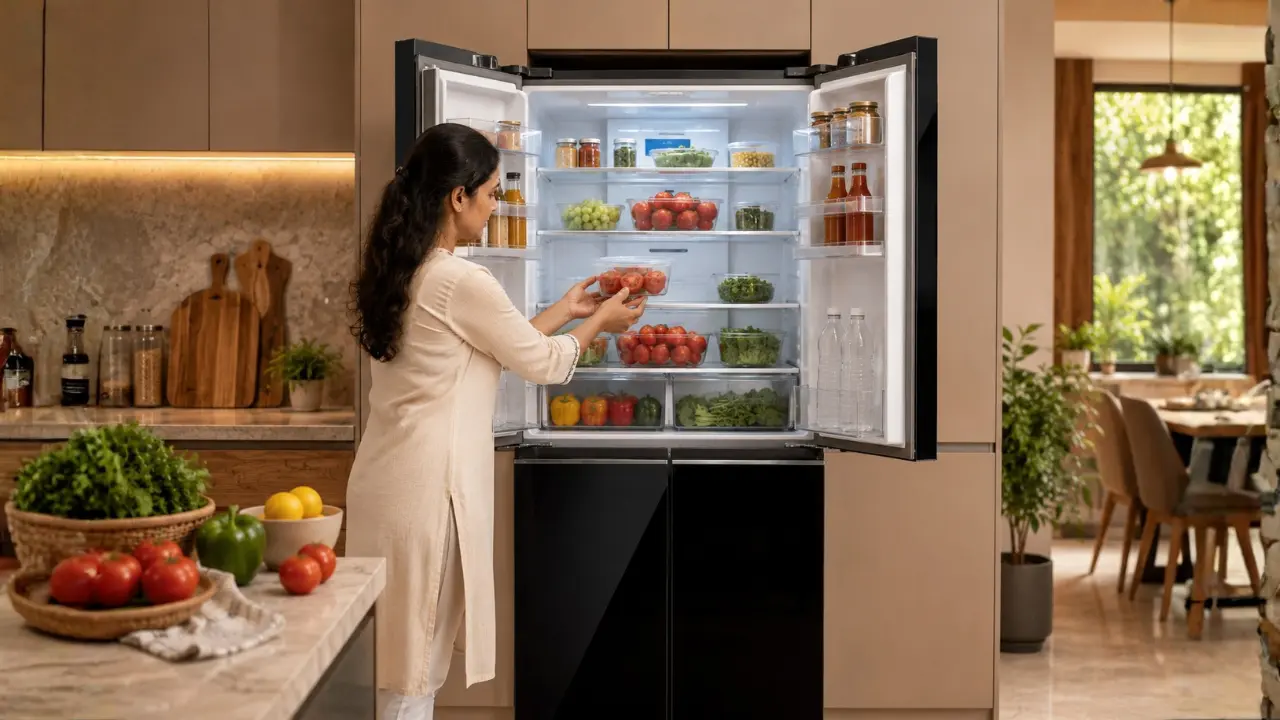

There is a familiar kitchen dilemma. You buy a fresh batch of tomatoes, some firm, some almost ripe only to find a few turning overly soft before they make it into the next curry.
The problem is not always how long tomatoes are kept. Quite often, it is where and how they are stored.
Tomatoes continue changing after harvest, so the right storage approach depends heavily on their stage of ripeness. A tomato that still needs time to ripen should not necessarily be treated the same way as one that is already soft, red and ready for tonight’s tadka.
For Indian households, where tomatoes routinely move between salads, gravies, chutneys, dals and curries, getting this small detail right can make everyday food management much easier.
First, Check the Tomato Before Deciding Where It Goes
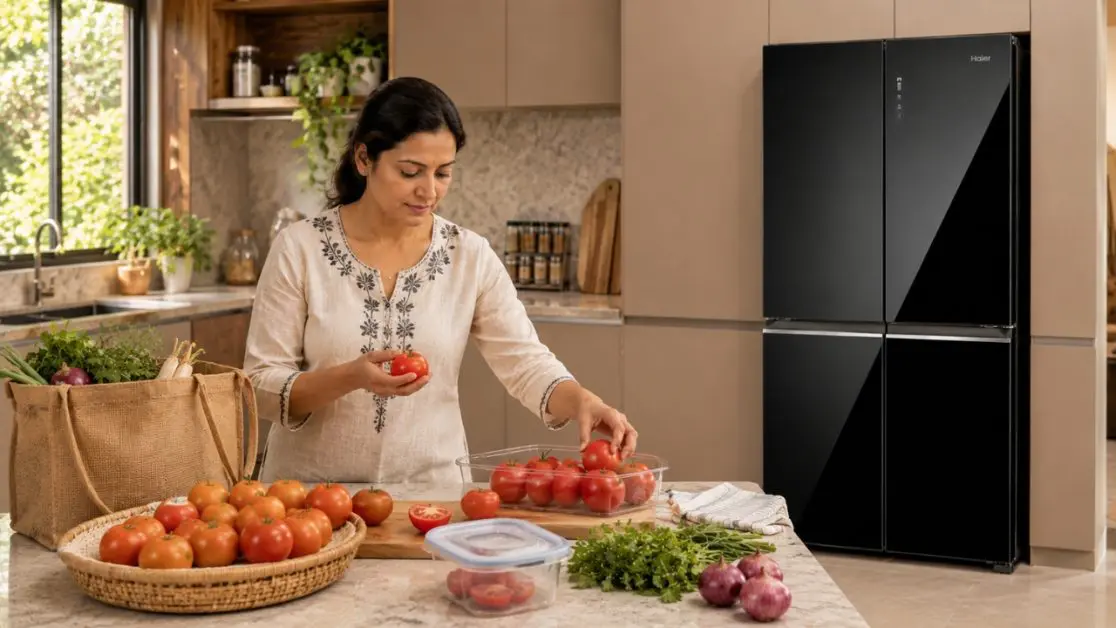
Instead of automatically putting the entire bag into the refrigerator, spend a few seconds sorting it.
Still firm or slightly unripe?
Keep these tomatoes at room temperature, away from excessive heat and direct sunlight. This gives them time to ripen naturally.
Fully ripe?
If they are going to be used shortly, they can remain outside in a relatively cool part of the kitchen. When you need to hold ripe tomatoes for longer, refrigeration becomes useful because cooler conditions slow further ripening.
Cut already?
That changes things. Once a tomato has been cut, it should be refrigerated promptly in a clean, covered container rather than left exposed on the kitchen counter.
Simple enough but this sorting habit is where better tomato storage really begins.
Why Refrigerating Every Tomato Immediately Is Not Always the Answer
The refrigerator is extremely useful for food preservation, but it should not become the automatic destination for every fresh ingredient.
Tomatoes are particularly sensitive to their ripening stage. Putting firm, underripe tomatoes into cold storage too early can interfere with the natural development of their characteristic flavour and texture.
A more practical routine looks like this:
- Allow underripe tomatoes to ripen at room temperature.
- Keep them away from a sunny kitchen window or other hot areas.
- Check the batch regularly instead of waiting until several become overripe.
- Move ripe tomatoes into the refrigerator when you are not planning to use them immediately.
- Refrigerate cut tomatoes in a covered food-safe container.
Think of the refrigerator as the next stage of storage, not necessarily the first one.
Indian Weather Makes Tomato Storage a Little More Complicated
Advice such as “leave tomatoes on the counter” sounds straightforward until the counter happens to be in an Indian kitchen during a hot afternoon.
Room conditions matter.
A kitchen in Bengaluru during mild weather and one experiencing peak summer heat elsewhere may provide very different environments for fresh produce. High ambient temperatures can accelerate ripening, meaning tomatoes that looked perfectly firm yesterday can become considerably softer rather quickly.
During warmer periods, inspect tomatoes more frequently. If they are already ripe and you cannot use them soon, refrigeration is the sensible option.
The aim is not to follow one rigid rule throughout the year. It is to respond to the condition of the food in front of you.
A Better Way to Arrange Tomatoes in the Refrigerator
Once tomatoes need refrigeration, storage becomes an organisation issue too.
Do not simply push them into whichever corner happens to have space.
Give fresh produce its own place
A dedicated fruit and vegetable section makes it easier to organise produce instead of allowing tomatoes to disappear behind milk cartons, leftovers and containers.
Haier’s Lumiere 630L French Door Refrigerator (HRB-700KGU1), for instance, provides dedicated fruit and vegetable storage as part of its large-capacity configuration. Its specifications include a 630-litre total capacity, with up to 528 litres of fresh-food space in its convertible configuration, making it suitable for households that regularly bring home substantial quantities of fresh ingredients.
That space can matter in an Indian household. A weekly vegetable run can easily mean tomatoes sitting alongside coriander, chillies, carrots, lemons, leafy vegetables and several containers of prepared food.
Avoid crushing them
Tomatoes may look sturdy, but ripe ones bruise easily. Avoid stacking heavy vegetables or containers directly over them.
Keep softer tomatoes where they can be seen and reached first. That also makes it much harder to forget the two ripe ones hiding underneath everything else.
Keep damaged tomatoes separate
One split, leaking or mouldy tomato should be removed from the batch. Inspect stored produce periodically and use the ripest pieces first.
It is basic kitchen management, admittedly, but it saves food.
Should You Wash Tomatoes Before Storing Them?
Unless you are preparing them immediately, storing tomatoes dry is generally the more practical approach.
Wash them before use under clean running water. If you do wash tomatoes earlier, dry them thoroughly before storage rather than putting them away dripping wet.
A useful household routine is:
- Sort tomatoes according to ripeness.
- Remove visibly damaged pieces.
- Keep unripe ones in a suitable room-temperature location.
- Refrigerate ripe tomatoes when additional storage time is needed.
- Wash them properly before preparation.
Five small steps. Far less frustrating than discovering a forgotten tomato that has collapsed at the bottom of a vegetable bag.
What About Half a Tomato Left After Cooking?
This happens constantly. A recipe needs one-and-a-half tomatoes and the remaining half sits on the chopping board.
Do not leave it there.
Place cut tomato in a clean, covered container and refrigerate it promptly. Keeping cut produce covered also helps protect it from contact with other foods and keeps the refrigerator better organised.
Try to plan the next meal around opened or cut ingredients. That half tomato can go into breakfast poha, an omelette, sandwich filling, dal or the next gravy instead of becoming tomorrow’s food waste.
When Refrigerator Design Starts Making a Difference
Good food-storage habits matter first. Refrigerator design can then make those habits easier to maintain.
This is where the Haier Lumiere 630L goes beyond simply offering a large cold compartment. Its 103-litre convertible section can be adjusted depending on whether the household needs additional fridge or freezer capacity. Haier describes the refrigerator as providing up to 85% fridge space when configured accordingly.
The product also features My Zone, with preset modes shown for categories including Fruit & Veg, Cheese and Cool Drink. The product’s display allows different temperature modes to be selected for different sections.
For families whose storage needs change through the week perhaps after a large grocery purchase, before guests arrive, or after meal preparation that flexibility can be more useful than simply having a bigger refrigerator.
Haier also equips this model with ABT Pro Technology, which the product information describes as helping absorb odours and impurities while maintaining freshness. Smart Sense AI connects through the Haismart app, enabling refrigerator control along with food-management functions such as storage tracking and shared shopping lists.
That combination of organised space and adaptable storage is particularly relevant when fresh produce forms a substantial part of everyday cooking.
Common Tomato Storage Mistakes Worth Avoiding
A few habits cause more trouble than people realise:
- Refrigerating every tomato immediately: Let firm, underripe tomatoes develop first.
- Leaving ripe tomatoes out for too long: Especially risky during warmer weather.
- Forgetting what is already stored: Arrange tomatoes so ripe ones remain visible.
- Overcrowding the produce area: Ripe tomatoes can get crushed beneath heavier items.
- Keeping damaged pieces with good ones: Remove spoiled produce promptly.
- Leaving cut tomatoes uncovered: Refrigerate them in a covered container.
- Buying more than the household can realistically use: Storage helps, but sensible purchasing matters just as much.
The Best Storage Rule Is Surprisingly Simple
There is no single location that is ideal for every tomato.
Firm and underripe? Give it time outside the refrigerator.
Ripe but not needed yet? Refrigerate it.
Cut? Cover and refrigerate promptly.
More importantly, organise tomatoes according to when they need to be eaten. Use the softest first and let firmer ones wait their turn.
For households that keep a broad mix of fresh produce and prepared foods, a refrigerator designed around flexible organisation can make that routine considerably easier. The Haier Lumiere 630L French Door Refrigerator combines dedicated fruit and vegetable storage, a convertible section, My Zone presets, Smart Sense AI and ABT Pro Technology within a four-door layout.
Because, ultimately, storing tomatoes properly is not about making them sit in the refrigerator indefinitely. It is about keeping them in the right environment at the right stage and making sure the next tomato you slice is still worth putting into the curry.
Frequently Asked Questions
1. Should tomatoes be stored in the refrigerator?
Firm, underripe tomatoes are generally better kept at room temperature while they ripen. Once tomatoes are fully ripe and you are not planning to use them immediately, refrigeration can help slow further ripening.
2. How should ripe tomatoes be stored?
Keep ripe tomatoes in a suitable produce section of the refrigerator when they need to be stored for longer. Avoid placing heavy vegetables or containers over them, as ripe tomatoes can bruise easily.
3. Should tomatoes be washed before refrigerating?
It is usually more practical to store tomatoes dry and wash them under clean running water before use. If you wash them beforehand, dry them thoroughly before putting them away.
4. How should cut tomatoes be stored?
Cut tomatoes should be placed promptly in a clean, covered food-safe container and refrigerated. Avoid leaving sliced or partially used tomatoes exposed on the kitchen counter.
5. Can tomatoes be stored with other vegetables?
Yes, but they should be arranged carefully. Keep tomatoes where they will not be crushed by heavier produce and check the batch regularly for damaged or overly soft pieces.