

A new bunch of coriander is purchased in the evening. Green, crisp, fragrant and makes even a normal dal, chutney or poha look fabulous. However, a few days later, you take something out of the refrigerator and discover something quite different: limp stems, curled leaves with dry edges.
The refrigerator was supposed to keep it cold. So what happened?
The herbs are quite fragile. Their thin leaves and tender stems will lose moisture easily, as opposed to many vegetables. Cold stores do not prevent deterioration, but slow it down, but these do not compensate for poor wrapping or excess air movement and unsuitable location.
The good news? Some adjustments in the preparation and storage of herbs can make a difference.
First, Understand What Is Happening to Your Herbs

Fresh herbs contain a considerable amount of water. After they’re cut, they don’t get any more water from their roots, but they lose water from their leaves.
Moisture loss from the surface of herbs can be accelerated when they are exposed by circulating cold air in a refrigerator. Leaves become flabby and begin to wilt.
There’s more to it. Don’t add too much moisture.
Because tightly-packed wet herbs in a container can turn slimy or bad smelling, they should be bought separately. The key to successful refrigeration is thus rather a delicate balance; enough moisture to prevent the herbs from becoming dry, but not so much that they are still damp when refrigeration is completed.
The Most Common Reasons Herbs Become Dry
If coriander, mint, curry leaves or similar greens repeatedly dry out in your refrigerator, look at how they are being stored before assuming that something is wrong with the appliance.
1. They Are Going Straight Into the Fridge Uncovered
Leaving herbs loose on a refrigerator shelf exposes a large leaf area directly to circulating air.
That open bunch of coriander may look perfectly fine on day one. Gradually, however, moisture escapes and the leaves begin losing their characteristic crispness.
A container, food-safe storage bag or suitable wrapping provides an additional barrier between delicate leaves and the refrigerator environment.
2. The Leaves Are Already Damaged
Bruised and crushed leaves generally deteriorate faster.
This often begins before the herbs even reach home. A bunch squeezed beneath vegetables in a shopping bag or roughly handled during washing has already experienced physical damage.
Before refrigeration:
- Remove yellow, bruised or decaying leaves.
- Trim damaged stem ends where appropriate.
- Handle delicate leaves gently.
- Avoid crushing a large bunch into a small container.
A little sorting at this stage can save trouble later.
3. Herbs Are Stored While Dripping Wet
Here is where refrigerator storage gets slightly tricky.
Drying out is undesirable, but excess surface water is not ideal either. If herbs are washed before storage, drain them thoroughly and remove excess water before putting them away.
A practical approach is to place the herbs between clean kitchen towels or paper towels and gently remove surface moisture without pressing or bruising the leaves.
4. They Are Kept in the Wrong Part of the Refrigerator
Not every centimetre of a refrigerator provides exactly the same storage environment.
Frequently opening the door, overcrowding shelves or placing delicate produce where it receives strong direct airflow can affect storage conditions. Herbs deserve a defined place rather than whichever empty corner happens to be available.
Produce storage areas can make everyday organisation considerably easier.
A Better Routine for Coriander, Mint and Other Everyday Herbs
Indian cooking rarely treats herbs as decoration alone. Coriander goes into chutneys, curries and garnishes. Mint finds its way into raita, drinks and biryani. Curry leaves begin countless tadkas.
So, storing them properly is worth those extra two minutes after grocery shopping.
Try this routine:
- Sort the bunch first. Discard leaves that are visibly damaged or deteriorating.
- Wash only when appropriate. If you do wash before storage, remove excess surface moisture carefully.
- Avoid leaving herbs completely exposed. Use a suitable container, bag or wrapping.
- Do not compress them unnecessarily. Delicate leaves need enough room to avoid being crushed.
- Keep herbs organised. Store them in a suitable refrigerator area instead of moving them around every time space becomes tight.
- Check stored herbs periodically. Remove deteriorating leaves before they affect the rest of the bunch.
Simple? Yes. But consistency matters more than complicated kitchen hacks.
Different Herbs May Need Slightly Different Handling
One storage trick cannot automatically be applied to everything labelled “herbs”.
Coriander
Coriander has delicate leaves and stems and can lose its freshness relatively quickly. Protecting it from excessive drying while avoiding trapped surface moisture is important.
Mint
Mint can also wilt when left exposed. Handle the leaves gently because bruising makes a fresh bunch look tired surprisingly quickly.
Curry Leaves
Curry leaves are used differently from leafy coriander or mint, but they can still lose moisture and aroma during prolonged storage. A clean, suitably enclosed storage arrangement is preferable to leaving them loose on a shelf.
The broader principle remains unchanged: reduce unnecessary moisture loss without creating an excessively wet storage environment.
Refrigerator Design Matters More When Fresh Produce Is a Daily Habit
For households that routinely stock fruits, vegetables, herbs, dairy products, beverages and prepared foods at the same time, storage is not simply about litres. Organisation and flexibility begin to matter just as much.
This is where the Haier Lumiere 630L French Door Refrigerator (HRB-700KGU1) becomes particularly relevant.
Its 630-litre total capacity is designed for substantial household storage, while the refrigerator can provide up to 528 litres of fridge space in its convertible configuration. The product also offers a flexible convertible section, allowing storage configuration to be adjusted when more refrigeration or freezer space is required.
For a household returning from a large weekly vegetable-and-grocery run, that flexibility can be genuinely useful.
Give Fresh Ingredients a More Considered Storage Space
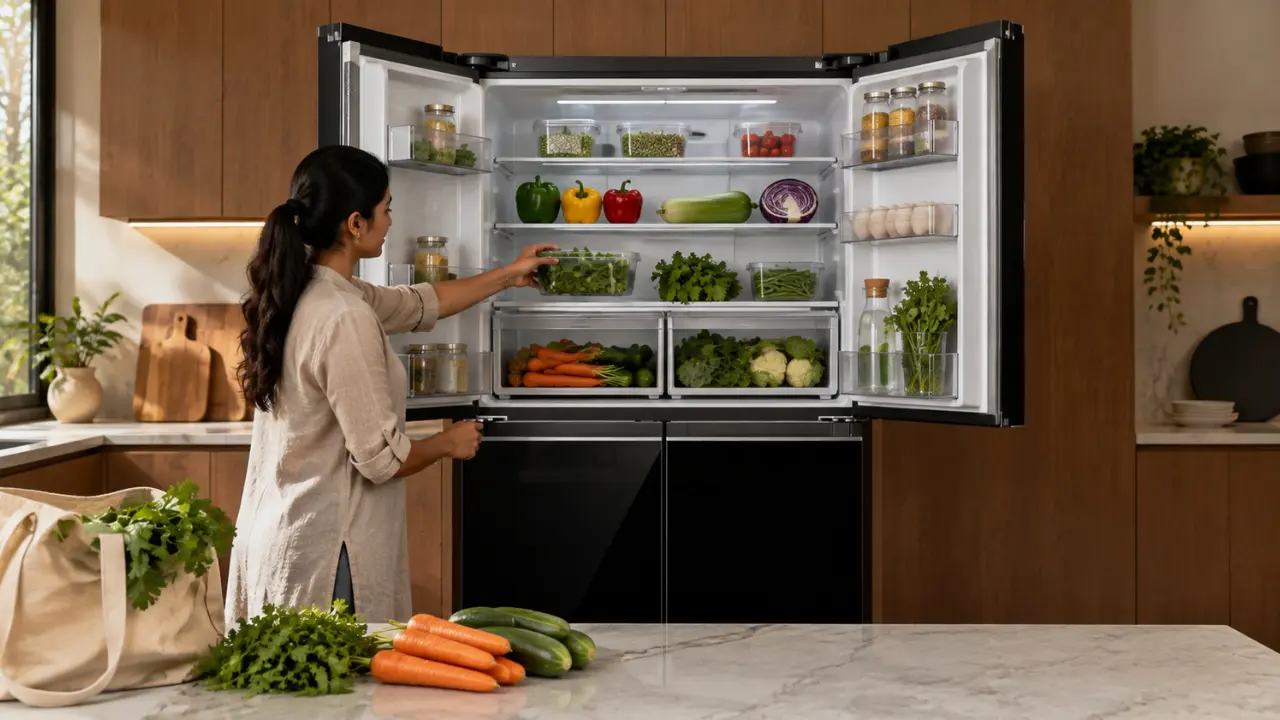
The Lumiere’s My Zone provides preset modes for different storage categories, including Fruit & Veg, Cheese and Cool Drink. The refrigerator also includes dedicated fruit and vegetable cases. That means fresh produce does not necessarily have to compete for space with bottles, leftovers and larger food containers.
There is also ABT Pro Technology, which Haier describes as technology that absorbs odour and impurities and helps maintain freshness. For an Indian refrigerator that may simultaneously contain cut onions, chutneys, dairy products, vegetables and yesterday’s curry, managing the overall storage environment is certainly relevant.
Importantly, these refrigerator features complement good storage habits; they do not replace them. Coriander left exposed or herbs stored dripping wet can still deteriorate. The appliance and the user’s storage routine need to work together.
Smart Storage Goes Beyond Shelves
Another interesting part of the Lumiere is Smart Sense AI with Haismart connectivity.
According to Haier’s product information, users can connect the refrigerator with the Haismart app to remotely control functions, input and track storage, create shopping lists and share those lists with family members. Smart Sense AI is also designed to understand usage patterns and adjust temperature accordingly for energy saving.
That may sound unrelated to a bunch of mint at first, but think about the larger problem: food gets forgotten.
When groceries are better organised and managed, ingredients have a better chance of being used while they are still fresh rather than rediscovered at the back of the refrigerator days later.
A Small Herb Problem Often Reveals a Bigger Storage Problem
Repeatedly finding dried coriander in the fridge is rarely solved by lowering the temperature further.
Instead, look at the entire storage routine. Are delicate leaves exposed? Are washed herbs being stored too wet? Is fresh produce squeezed between containers? Are ingredients disappearing into an overcrowded refrigerator?
Correcting these habits can help you get more from the food you already buy.
And when the household itself has outgrown the available refrigerator space, choosing an appliance with flexible, well-defined storage becomes worth considering. With its 630-litre capacity, convertible storage, My Zone presets, ABT Pro Technology and Smart Sense AI connectivity, the Haier Lumiere 630L French Door Refrigerator brings together features aimed at making everyday food organisation more adaptable for modern Indian households.
Because sometimes keeping coriander fresh is not really about coriander. It is about giving every ingredient the right place and treating refrigerator storage as part of food care, rather than the final step after grocery shopping.
Frequently Asked Questions
1. Why do herbs dry out in the refrigerator?
Fresh herbs naturally lose moisture after being cut because they no longer receive water from their roots. Cold air circulating inside the refrigerator can accelerate this moisture loss, especially when herbs are left uncovered.
2. How can I keep coriander fresh for longer?
Remove damaged or yellow leaves, drain excess moisture and store coriander in a suitable container, bag or wrapping. Avoid leaving it completely exposed or packing it while dripping wet.
3. Should coriander be washed before storing it?
Coriander can be washed before storage, but excess surface moisture should be removed first. Storing herbs while they are very wet can encourage sliminess and deterioration.
4. Why does mint wilt quickly in the fridge?
Mint has delicate leaves that can lose moisture quickly when exposed to cold circulating air. Bruising can also accelerate deterioration, so gentle handling and suitable storage are important.
5. How should curry leaves be stored in the refrigerator?
Remove damaged leaves and keep the usable curry leaves in a clean, suitably enclosed storage arrangement. Avoid leaving them loose on a refrigerator shelf for extended periods.