
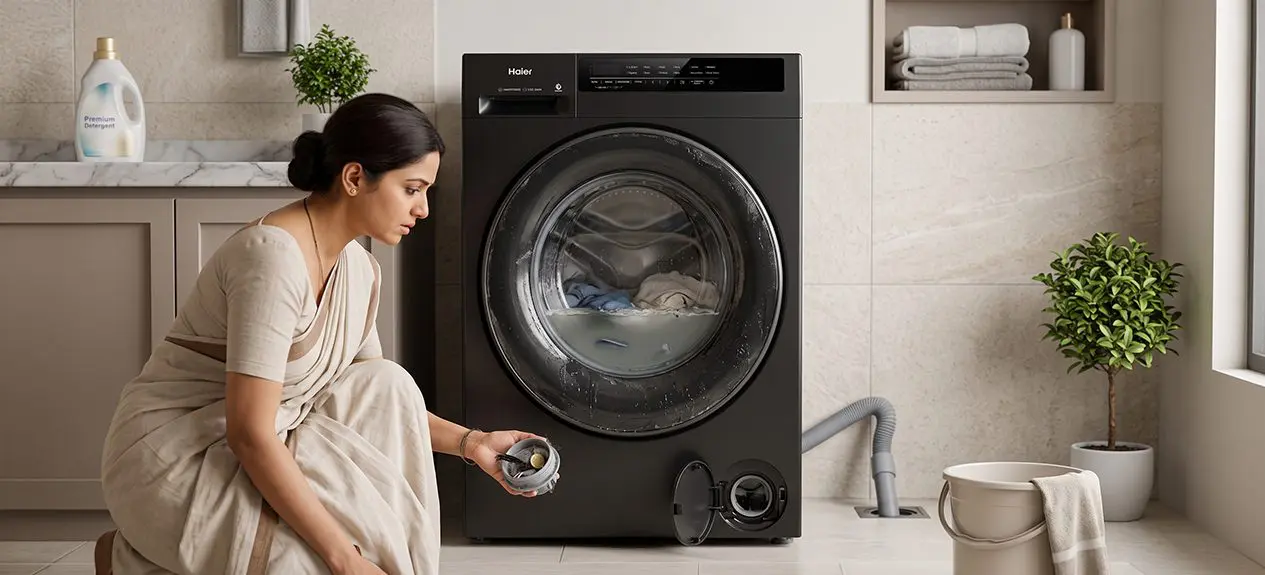

A washing machine finishing its cycle without draining the water is a common household concern. In most homes, a washing machine drainage problem traces back to a handful of everyday causes, a blocked filter, a bent hose, or a pump under more strain than it should carry. Few of these situations call for an immediate service visit.
This guide sets out five fast checks that resolve most cases, along with an explanation of what a machine’s display is signalling when it flags an issue.
Common Causes Behind a Washing Machine Drainage Problem
Before addressing the fixes, it is worth understanding why water fails to leave the drum in the first place. Most machines rely on a straightforward sequence: water exits through a filter, travels through a hose, and is pushed out by a pump. A disruption at any point in this sequence halts the cycle. Some of the most frequent washing machine not draining water causes are outlined below.
- A clogged lint or debris filter blocking the outlet
- A kinked, twisted, or blocked drain hose
- Overloading the drum beyond its rated capacity
- A worn-out or jammed drain pump
- Small items such as coins, buttons, or tissue paper lodged in the pump housing
- An imbalanced load triggering a safety pause mid-cycle
None of these causes is unusual, and none of them means the machine is failing. They are simply maintenance points that need occasional attention, much like a car needs its oil filter checked.
5 Fast Ways to Troubleshoot Standing Water in Your Washing Machine
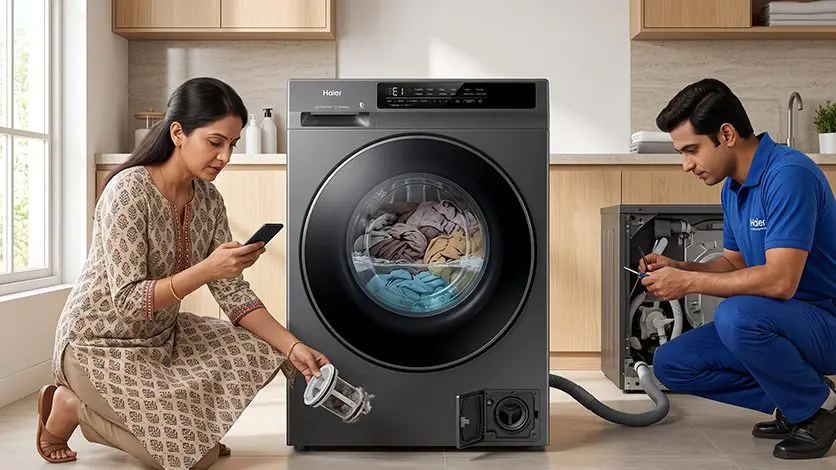
Here is where to start when you need to troubleshoot standing water in washing machine drums quickly, without waiting days for a technician.
1> Check and Clean the Drain Filter
The filter is usually the first place to look, and it solves the problem more often than any other step. It sits near the base of the machine, behind a small access panel. Lint, hair, coins, and fabric threads collect there over time. Switch the machine off first. Place a shallow tray underneath to catch residual water, then unscrew the filter cap slowly, since pressure inside can push water out fast. Clean it thoroughly and screw it back before running a rinse cycle to confirm the water flows out properly.
2> Inspect the Drain Hose for Kinks or Blockages
Pull the machine slightly away from the wall and look at the hose running from the back to your drainage pipe. Hoses get pinched when appliances are pushed too close to a wall, or when furniture shifts against them. A bent hose restricts flow the same way a bent garden pipe would. Straighten it out, and if it looks worn, cracked, or brittle, it is worth replacing rather than waiting for it to fail during a wash.
3> Avoid Overloading the Drum
Cramming in one extra towel to finish a load faster is a habit many of us share, but it puts real strain on the drainage system. Overloaded drums do not spin evenly, which affects how well water gets pushed toward the pump. Split heavy loads like blankets or bath towels into two smaller batches instead of one packed cycle. It protects the motor too, not just the drain path.
4> Watch for an Automatic Washing Machine Drainage Error on the Display
Modern washing machines are built to flag problems before they become bigger ones. An automatic washing machine drainage error typically appears as a code or a blinking indicator on the control panel when the sensor detects that water is not leaving the drum within the expected time. Do not ignore the alert or keep resetting the cycle. Rather, treat the alert as a reminder to check the filter and hose first, as that will take care of most of these alerts. If you cleaned both and still get the code, it’s usually the pump.
5> Get the Drain Pump Checked by a Professional
If filter cleaning and hose inspection do not solve it, the drain pump itself may be worn, jammed, or facing an electrical fault. Pumps are not typically a DIY repair, since they involve wiring and sealed housings. At this stage, reach out to an authorised service technician rather than attempting a full teardown, particularly if the machine is still under warranty.
Want a washing machine that keeps drainage issues from becoming a recurring problem?
Read this section: Haier’s Take on Smoother, Trouble-Free Laundry
Washing Machine Water Draining Troubleshooting: When to Call for Service
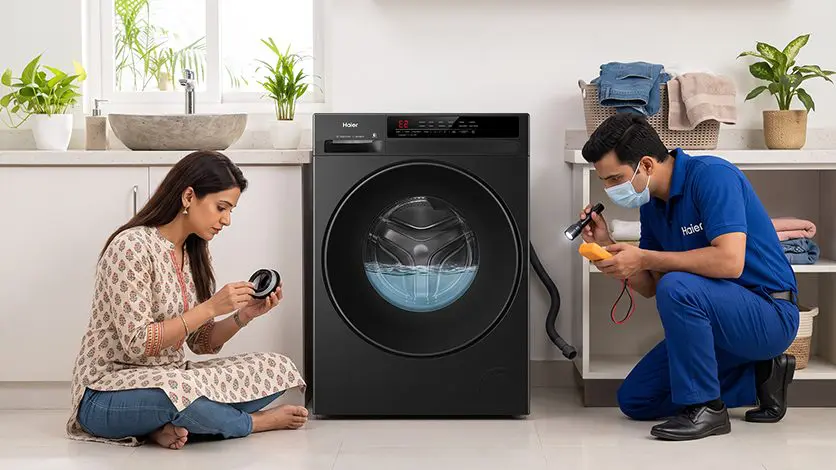
Some symptoms are easy to fix at home, while others need a trained hand. This quick reference for washing machine water draining troubleshooting breaks down what to expect at each stage.
| Symptom | Likely Cause | Quick Action |
| Water stays after full cycle | Clogged filter | Clean filter, rerun rinse |
| Slow draining, gurgling sound | Kinked or blocked hose | Straighten or clear hose |
| Machine pauses mid-cycle | Overloaded drum | Redistribute or reduce load |
| Error code on display | Sensor-detected blockage | Check filter and hose first |
| No drainage despite clear filter and hose | Pump fault | Contact a service technician |
Working through these steps in order usually narrows down the cause within minutes, saving both time and an unnecessary service visit.
Haier’s Take on Smoother and Trouble-Free Laundry
At Haier, we do not believe laundry day should involve guesswork. Repeated troubleshooting is frustrating for any household. We therefore build our appliances with accessible components. Routine checks, such as clearing a filter, remain quick as a result. They are not meant to become a chore.
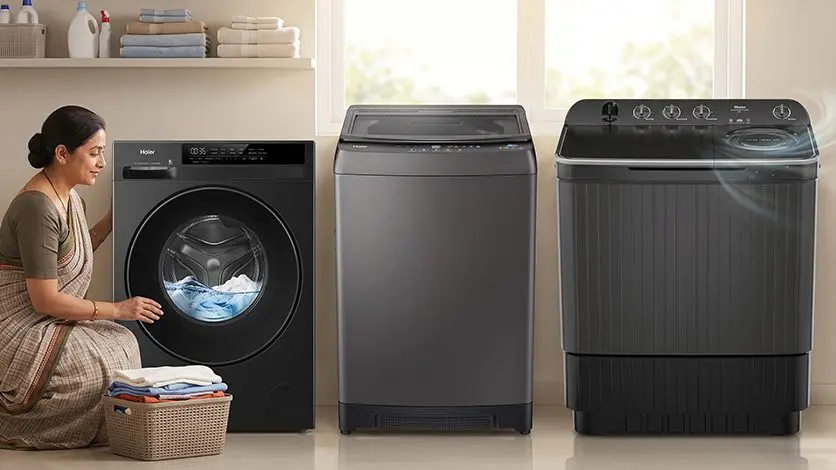
Take our front-load washing machine range. The Haier 12Kg F11 Front Load Washer & Dryer runs on a Direct Motion Motor. It connects straight to the drum, with no belt or pulley in between. That cuts mechanical strain and keeps operation smoother across years of use. Its Essence Wash technology pre-mixes detergent and sprays it directly onto fabric. Less residue builds up inside the drum this way. Smart Dosing and Ultra Fresh Air work alongside it, keeping the interior drier between washes. This supports the overall drainage and hygiene experience instead of working against it.
Our top load washing machines range tells a similar story. The Haier 8 Kg Oceanus Wave Drum Top Load Washing Machine comes with a Dual Magic Filter. It catches lint and debris before either can travel further into the system. Pair that with the Oceanus Wave Drum, built to mimic natural water movement, and fabric care stays gentle while water flow stays balanced.
Households that prefer manual control are not left out either. Our semi-automatic washing machine range, including the Haier Semi Automatic Washing Machine 14 KG 196BK, comes equipped with a Magic Filter of its own. It catches threads and lint during the wash cycle itself. We add an Anti Rat Mesh at the base too, protecting internal components from unwanted intrusion. A spray rinse system supports thorough rinsing before draining begins. Across every category we build, our focus stays fixed on dependable performance that asks less of you.
Conclusion
Can you replace a washing machine drain hose?
Yes, a drain hose can usually be replaced at home. It is secured with clamps at both ends. Match the original diameter and length, switch off the machine first, and confirm a leak-free connection before the next wash.
How do Haier washing machines signal drainage or filtering issues on their display?
Our machines use on-screen indicators and alert codes to flag drainage concerns early. The display highlights restricted water flow, prompting a filter check or hose inspection before the issue affects the rest of your wash cycle.
What does the pump do in a washing machine?
The pump pushes used water out of the drum through the drain hose once a wash or rinse finishes. It works closely with the filter, which is why a blocked filter often gets mistaken for a failing pump.
What features do Haier washing machines include to simplify maintenance and debris management?
We build the Magic Filter into our top load and semi-automatic ranges, alongside accessible drain filters on front load models. These are positioned for easy reach, keeping routine cleaning a quick task rather than a chore.