
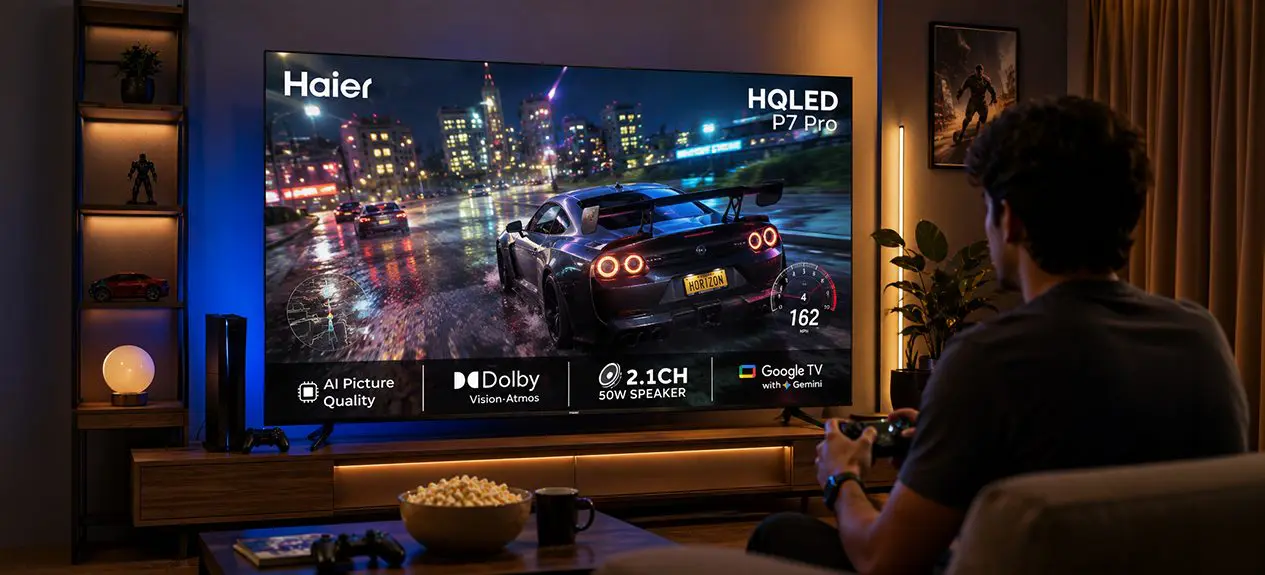

Buying a TV for gaming or sports is about more than just choosing the biggest screen or the highest resolution number. Fast-moving content places different demands on a display, which is why 4K resolution and refresh rate tend to get talked about together. A 120Hz 4K TV brings sharp picture detail and faster screen updates into one package, making it particularly relevant for gaming, live sports, and other content where motion is the whole point.
But is it worth upgrading for every household? That depends on what you watch, how you play, and whether your devices support 120Hz.
Understanding the 4K and 120Hz Combination
The two specifications handle different parts of the picture. 4K refers to resolution, meaning the number of pixels that create the image on screen. More pixels mean sharper detail, particularly on bigger displays and supported content.
A 120Hz refresh rate TV, on the other hand, can refresh the image up to 120 times per second. This helps the screen keep up with fast movement more smoothly.
Together, a 120Hz 4K TV offers detailed visuals and improved motion handling. One specification does not replace the other. A 4K picture can look sharp, while 120Hz helps movement within that picture appear more fluid.
Where a Higher Refresh Rate Makes the Biggest Difference
A higher refresh rate shows up when there is a lot happening on screen. Fast-paced games, cricket, football, racing, and action sequences all involve quick movement that can challenge a lower-refresh-rate display.
With more frequent picture updates, fast-moving objects look smoother and easier to track, and quick camera pans feel less abrupt. This difference matters a lot less for slower content such as news or dialogue-heavy shows, which is exactly why 120Hz gets talked about in the context of gaming and sports far more than everyday television viewing.
Gaming at 120Hz: Is the Upgrade Worth It?
For anyone who plays games regularly, a 120Hz TV can make a genuinely noticeable difference, as long as the game and console actually support higher frame rates. The screen updates more often, fast movement feels smoother, and motion blur during quick gameplay drops off noticeably.
This is especially useful in racing games, sports, action games, or anything competitive where the picture is constantly changing. A 120Hz gaming TV does not automatically make every game run at 120 frames per second. The console, game, and TV all need to support the relevant output.
For casual gamers, a standard refresh rate is probably still enough. The upgrade becomes more worthwhile when high-frame-rate gaming becomes something you use on a regular basis.
Using a 4K 120Hz TV with PS5 and Xbox
Shopping for a 4K 120Hz TV to pair with a PS5 or Xbox? Don’t just look at the refresh-rate number on the specification sheet. The TV should support both 4K resolution and 120Hz, while the HDMI connection, console, and the specific game all need to support the required output too.
Compatible PS5 and Xbox games can take advantage of higher frame rates, but not every game runs at 4K and 120Hz at the same time. Some offer different performance or resolution modes you can toggle between depending on what you’d rather prioritize.
The practical benefit of a 4k 120hz TV for PS5 or Xbox is having the capability available for games to support it. It gives your console setup room to take full advantage of high-frame-rate content whenever it’s available.
Why 120Hz Works Well for Live Sports?
Sports place a different demand on a TV, because you’re constantly tracking fast-moving action across the screen. In cricket, the ball crosses the entire frame in seconds. Football brings rapid player movement and quick camera changes, while motorsports layer speed on top of near-constant panning.
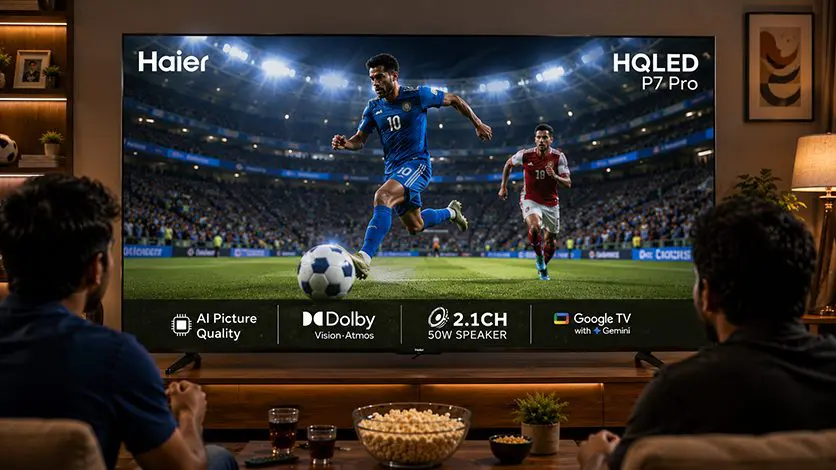
A 120Hz TV can make all of this motion feel noticeably smoother, which makes it easier to follow the action. This becomes even more relevant on a larger screen, where motion tends to stand out more across a wider field of view.
The improvement does not change the sport itself, but it can make fast sequences look more fluid and easier to keep up with.
Want to go deeper on how refresh rate affects gaming and live sports?
Read this blog: The Benefits of 120Hz Refresh Rates for Gaming and Sports.
120Hz vs 60Hz: The Practical Difference
| Feature | 60Hz TV | 120Hz TV |
| Screen updates | Up to 60 times per second | Up to 120 times per second |
| Everyday viewing | Well suited | Well suited |
| Fast-moving sports | Standard motion handling | Smoother motion handling |
| Supported gaming | Standard gameplay | Better suited to high-frame-rate gameplay |
| Ideal for | Casual entertainment | Gaming and fast-paced content |
A 60Hz TV still does the job for films, regular shows, and everyday streaming. A 120Hz TV starts to earn its price when fast motion is a regular part of your viewing or gaming routine.
4K 120Hz Monitor vs TV: Choosing the Right Setup
The 4K 120Hz monitor vs TV decision comes down to how and where you play.
A 4K 120Hz monitor may suit you better if:
- You mostly play PC games at a desk
- You sit close to the screen
- The display is primarily for individual use
A 120Hz 4K TV may suit you better if:
- You prefer console gaming from the sofa
- You want a bigger screen
- The same display is used for sports and shared viewing
- Gaming is part of your living room setup
So, in a 4K 120Hz monitor vs TV comparison, neither option is better. The right choice depends on the setup around it.
How Haier Brings 120Hz to Gaming and Sports?
Haier brings 120Hz refresh rate TVs built for households that want one screen to handle both fast-paced gaming and live entertainment.
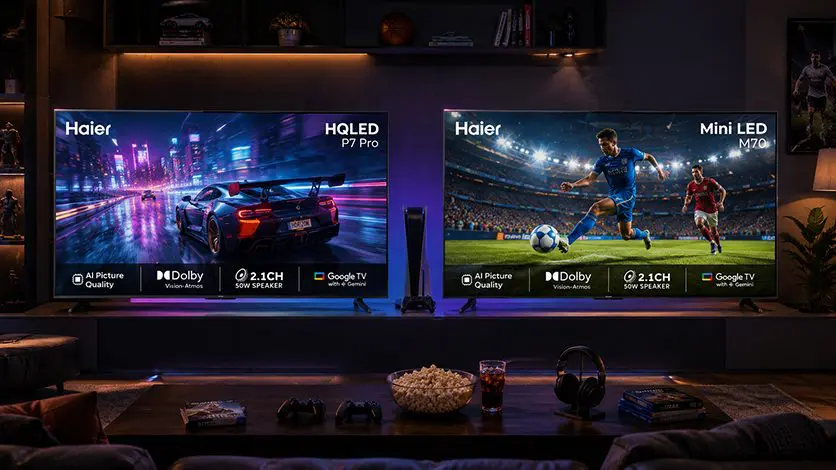
The Haier C90 OLED 165cm (65) Google TV | Dolby Vision IQ includes MEMC 120Hz (Motion Estimation, Motion Compensation). This technology improves motion clarity by enhancing fluidity in fast-moving scenes. A 120Hz refresh rate makes motion smoother and reduces blur.
The Haier C90 OLED 194cm (77) Google TV | Dolby Vision IQ also brings MEMC 120Hz for motion clarity. This OLED TV offers smoother gameplay by syncing the monitor’s refresh rate with the GPU’s frame rate and includes Low Framerate Compensation for better performance at lower frame rates. It ensures a smoother motion and reduces blur.
Who Should Consider a 120Hz 4K TV?
A 120Hz 4K TV earns its place when sharp detail and smooth motion both matter to you. For regular gamers and sports viewers, the combination makes fast-paced content feel noticeably more fluid, without giving up any of the detail you’d expect from a 4K display.
If most of your viewing consists of films, news, and everyday shows, or if gaming is only an occasional thing, a 60Hz TV is still enough.
There is no single best TV for sports and gaming that fits every household. The right choice comes down to how often fast-moving content is part of your routine, and whether your devices can make use of 120Hz.
Still deciding which specifications suit your viewing habits?
Read this: How to Choose a TV for Gaming and Sports
Conclusion: Is a 120Hz 4K TV Worth the Upgrade?
A 120Hz 4K TV is most worthwhile when sharp detail and smooth motion both matter to you. For regular gamers and sports viewers, the combination can make fast-paced content feel noticeably more fluid, while retaining the detail expected from a 4K display.
For households focused mainly on everyday viewing, a lower refresh rate is still sufficient. The point isn’t chasing 120Hz because it’s the bigger number, but choosing it because the way you use your TV gives those extra picture updates a real purpose.
Explore Haier’s range of 120Hz TVs to find a screen that brings smoother gaming, clearer sports action, and detailed 4K entertainment together in one setup.
FAQs
What advanced gaming and low-latency features come standard on Haier’s high-performance televisions?
Haier high-performance TVs offer features such as Gaming 120Hz, HDMI 2.1, VRR and ALLM to support smoother gameplay and reduced input delay with compatible devices.
Is a 120Hz 4K TV worth the investment for casual viewers?
For casual viewing, a 60Hz TV is often sufficient. A 120Hz 4K TV becomes more worthwhile if you also watch sports, action content or play games regularly.
Can a 120Hz TV improve the viewing experience for standard movies and daily TV shows?
It can help certain motion-heavy scenes appear smoother, but standard movies and everyday TV shows may not show as dramatic a difference as sports or high-frame-rate gaming.
Do 120Hz TVs consume significantly more electricity than standard 60Hz models?
Not necessarily, TV power consumption depends on factors such as screen size, panel technology, brightness settings and usage, rather than refresh rate alone.