
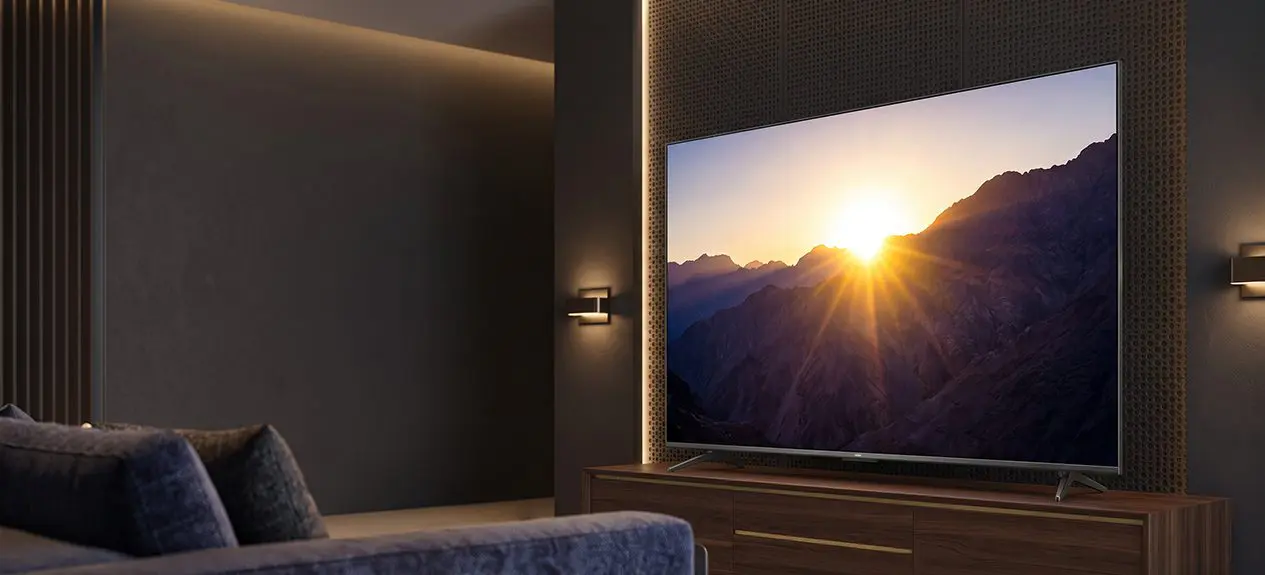

HDR can make a TV picture look lifelike, but only if the display can handle the extremes that HDR content demands. A single scene might have bright sunlight, deep shadow, vivid colors, and fine detail in the dark areas, all at once. The challenging part for any TV is controlling that range without allowing the bright areas to wash out the rest of the picture.
This is where a mini LED TV has a technical edge. Instead of relying on broad, imprecise backlighting, mini LED technology gives the display much finer control over how light gets distributed across the screen. Pair that with dynamic HDR formats, and you get stronger contrast, brighter highlights, and dark scenes that actually hold onto their detail.
Why HDR Performance Depends on Backlight Control
HDR is often associated with brightness, but brightness on its own doesn’t create a convincing HDR picture. If a TV simply makes the entire screen brighter, darker areas can start to lose their depth, while bright highlights may end up looking blown out and uncontrolled.
Good mini LED HDR performance really comes down to whether the TV can manage different light levels in different parts of the screen at the same time. A bright window in a dark room needs the window to stay intense while the shadows around it stay dark enough to keep their detail.
That takes precise backlight control. The better a TV can manage light across the picture, the closer it gets to reproducing the full contrast range that HDR content is designed to deliver.
How Mini LED Technology Improves HDR Picture Quality
The real difference is in the backlight. A standard LED TV lights the screen using larger LEDs, while mini LED technology uses much smaller LEDs. This allows the backlight to be controlled with a lot more precision.
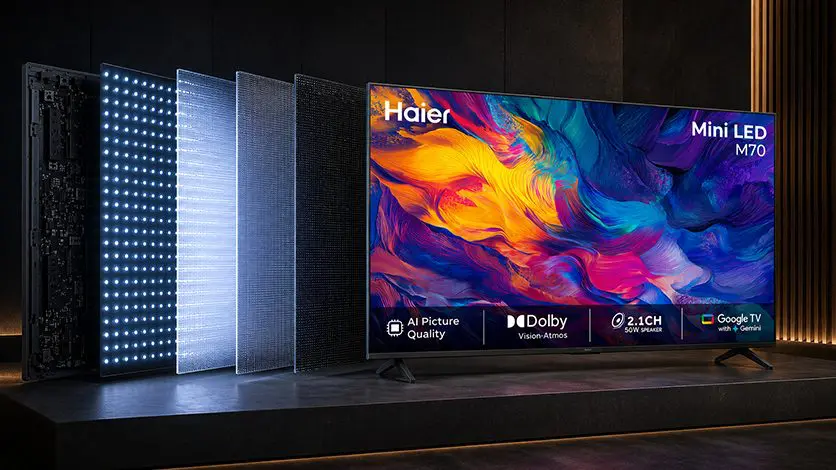
A mini LED backlight TV can therefore manage bright and dark areas within the very same frame far more effectively. Rather than treating large sections of the screen as one area of light, the display has far more opportunities to adjust illumination based on what is happening in the scene.
For HDR viewing specifically, this can improve:
- Highlight brightness
- Contrast between light and dark areas
- Detail in darker scenes
- The overall sense of depth in the picture
Want to go deeper on how this backlight technology actually works?
Read: What Is a Mini LED TV and How Does It Work
Local Dimming Zones: The Key to Better HDR
One of the most important parts of local dimming zone TV technology is the ability to control different sections of the backlight independently.
Imagine a night-time city scene. Streetlights and building windows need to stay bright, while the sky and darker parts of the image should not be lit up unnecessarily. Local dimming allows the TV to treat these areas separately, rather than using the same brightness level across the whole screen.
This matters a lot for HDR specifically, since HDR content often contains extreme brightness differences within a single frame. More precise local dimming zones TV control helps reduce unwanted light in darker areas, while maintaining the intensity of highlights.
Why More Precise Dimming Improves Contrast
When the backlight can respond more precisely to the picture, the gap between bright and dark areas gets a lot clearer. A moon against a night sky stands out more distinctly, sunlight entering a dark room can feel more realistic, and small details in shadows are far less likely to disappear.
This is the reason mini LED HDR performance can stand out. The improvement does not come from brightness alone. It comes from having control over where that brightness gets applied.
Brightness and Black Levels: Where Mini LED Helps HDR Stand Out
HDR asks a TV to perform well at both extremes of the brightness range. It needs enough peak brightness to give flames, reflections, and sunlight real impact, while still holding onto depth in the darker areas.
A mini LED TV is built to balance both of these demands through precise backlight control. Bright areas get more light, while dimming technology pulls light back in the darker parts of the frame.
The result is a picture with a lot more visual separation. Highlights appear more pronounced, blacks gain greater depth, and the transition between light and shadow feels more natural. This becomes especially noticeable in films and premium streaming content where the picture has been mastered specifically with HDR in mind.
Mini LED vs OLED HDR: How Do They Compare?
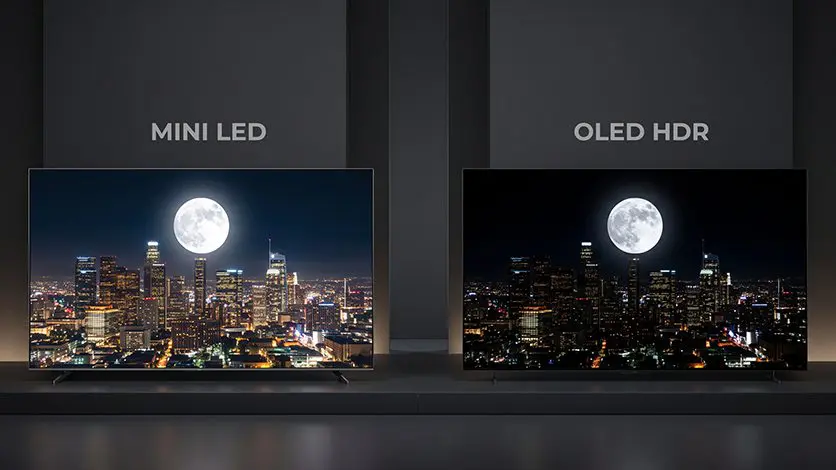
The mini LED vs OLED HDR discussion is not about one technology being automatically better for every home. Both approach picture quality differently.
| Feature | Mini LED | OLED |
| Light source | Mini LED backlight | Self-lit pixels |
| Brightness | Strong peak brightness | Depends on panel capability |
| Black levels | Enhanced through local dimming | Pixel-level black control |
| Bright-room viewing | Strong HDR impact | Varies by model and environment |
| HDR performance | High brightness and controlled contrast | Deep contrast and detailed dark scenes |
OLED controls light at the individual pixel level, which gives it excellent black levels. Mini LED takes a different route entirely, using a tightly controlled backlight with local dimming zones instead.
If strong HDR brightness matters to you, especially in a larger or brighter living room, mini LED is a compelling option. If pixel-level black control is what you care about most, OLED is likely the better fit. The right option comes down to your room, viewing habits, and what kind of picture quality you personally value.
How HDR10+ Works with Mini LED
Mini LED and HDR10+ perform two different jobs, which is why they work so well together.
The mini LED backlight controls how light gets distributed behind the screen. HDR10+ handles the other half by providing dynamic picture data that can adjust contrast and detail from scene to scene.
A dark sequence followed by a brightly lit outdoor scene does not need the same picture settings, and HDR10+ allows the TV to respond to these changes dynamically, while the mini LED backlight provides the physical light control needed to reproduce those adjustments.
Together, they can help maintain better balance as content changes, rather than locking in one fixed HDR setting for an entire film or show.
How Haier Mini LED TVs Handle HDR
Haier pairs mini LED display technology with advanced HDR formats and intelligent processing to improve the way supported content is displayed.
The Haier New M96 Series 254cm (100″) QD-Mini LED AI Smart Google TV uses intelligent dimming technology to optimise each scene with more precise light control. This helps deliver more vivid highlights, stronger contrast, and deeper blacks. Its HDR10+ support adds another layer on top by adjusting contrast and detail scene by scene as content changes.
The New M92 Series 164cm (65″) QD-Mini LED AI Smart Google TV goes a step further with dynamic picture optimisation. Along with QD-Mini LED technology and HDR10+, it includes Dolby Vision IQ, which adjusts the picture based on the ambient light in your room, so the image keeps adapting as the lighting around you changes throughout the day.
In both cases, the HDR experience isn’t riding on one feature alone: display technology, backlight control, and dynamic HDR processing are all working together to shape the final picture.
Is a Mini LED TV the Best HDR TV for Movies?
There is no single “best HDR TV for movies” for every viewer, but mini LEDs bring a few strengths that make it well suited to cinematic content.
Films tend to swing between very dark and very bright scenes, which is where precise backlight control becomes useful. A mini LED TV can deliver impactful highlights while still holding onto contrast and detail in the darker areas.
Mini LED is worth considering if you:
- Watch a lot of HDR films or premium streaming content
- Prefer a large-screen setup
- Watch in a bright or mixed-light living room
- Want strong highlights alongside genuinely deep dark areas
- Care about dynamic HDR formats like HDR10+
For these viewing habits, the combination of brightness and controlled dimming can make a mini LED a strong option.
Why Mini LED Is Becoming Important for HDR Viewing
As more and more content gets mastered in HDR, display technology needs to handle a wider range of brightness and contrast with greater accuracy. Mini LED technology offers a practical way to get there by giving the backlight far more precision to work with.
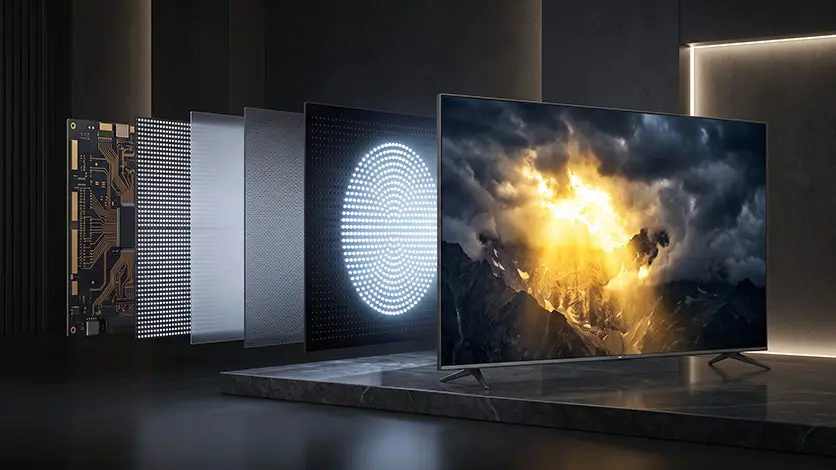
The whole conversation is shifting away from just making screens brighter to managing brightness intelligently across the picture. That is why mini LED HDR performance has become such a key thing to look at for viewers shopping for a premium television.
Curious about the growing role of this technology in modern TVs?
Read this blog: The Rise of Mini-LED: A Brighter Future for TVs
Conclusion
A great HDR picture is not created by brightness alone. The difference comes from how precisely a TV can handle light when a scene moves from a dark corridor to a sunlit landscape, or from a quiet night sequence to a burst of fireworks. This is where Mini LED earns its place.
Ready to experience what more precise backlight control can bring to your favourite films and shows? Explore Haier’s Mini LED TV range and find a display designed for brighter highlights, deeper contrast, and more detailed HDR viewing.
FAQs
What is a Mini LED TV?
A Mini LED TV uses much smaller LEDs in its backlight, allowing more precise control over brightness across different areas of the screen. This can improve contrast, highlight detail and black levels.
How do Haier’s flagship Mini LED Smart TVs, such as the M96 Series, elevate HDR performance?
Haier’s M96 Series combines QD-Mini LED technology with advanced HDR formats to deliver stronger contrast, detailed highlights, and more precise picture adjustments across different scenes.
Why is HDR performance so heavily dependent on the TV’s backlight system?
HDR relies on the TV’s ability to show bright highlights and deep dark areas at the same time. A more precisely controlled backlight helps manage this contrast without losing detail.
Can Mini LED TVs achieve higher peak brightness levels compared to other display technologies?
Mini LED TVs can achieve high peak brightness levels, particularly because their backlight uses many smaller LEDs for concentrated light output. Actual brightness performance varies by model and display technology.