
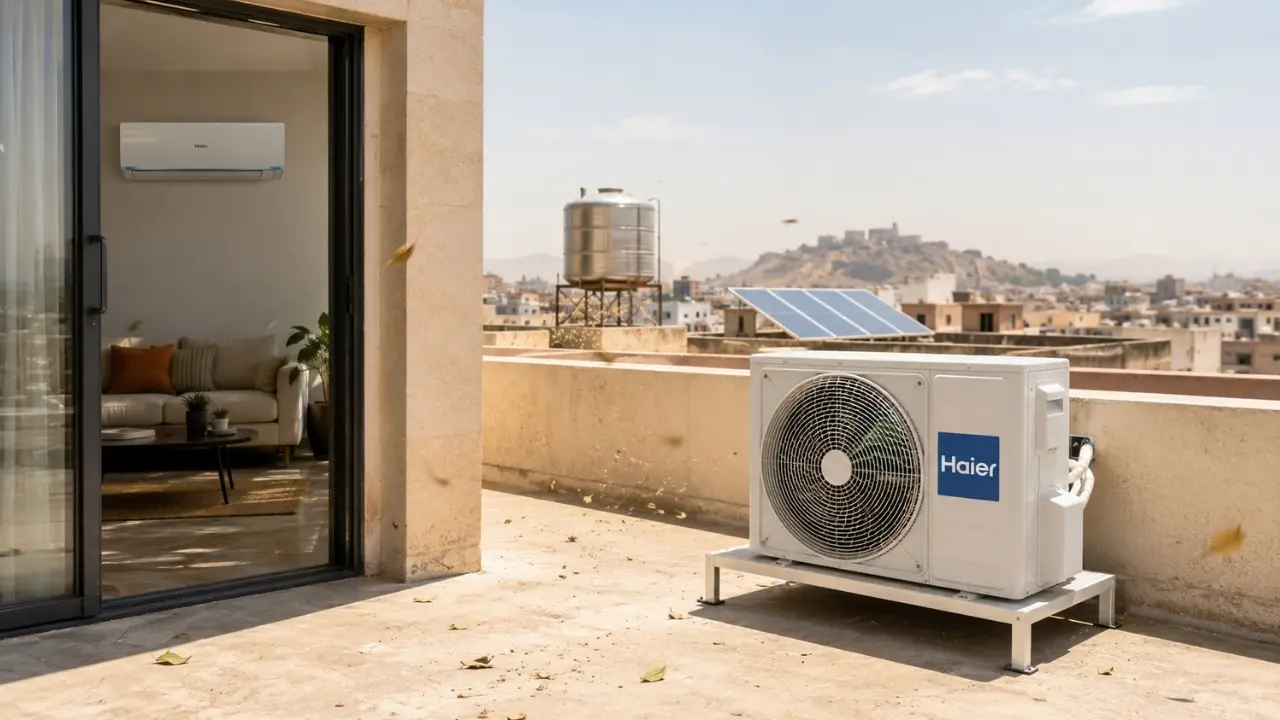

The indoor unit gets most of the attention. It sits neatly on the wall, delivers the cool air and responds every time you reach for the remote.
Meanwhile, the outdoor unit does the difficult part of the job from a balcony, terrace or exterior ledge often surrounded by heat, dust, moisture and changing weather.
That distinction matters in India. A split air conditioner may have to operate through scorching summer afternoons and then deal with humid, rain-heavy months soon afterwards. So, when evaluating an AC, cooling capacity inside the room is only part of the story. How the system is engineered to perform under demanding outdoor conditions deserves equal attention.
Why the Outdoor Unit Matters More Than It Looks
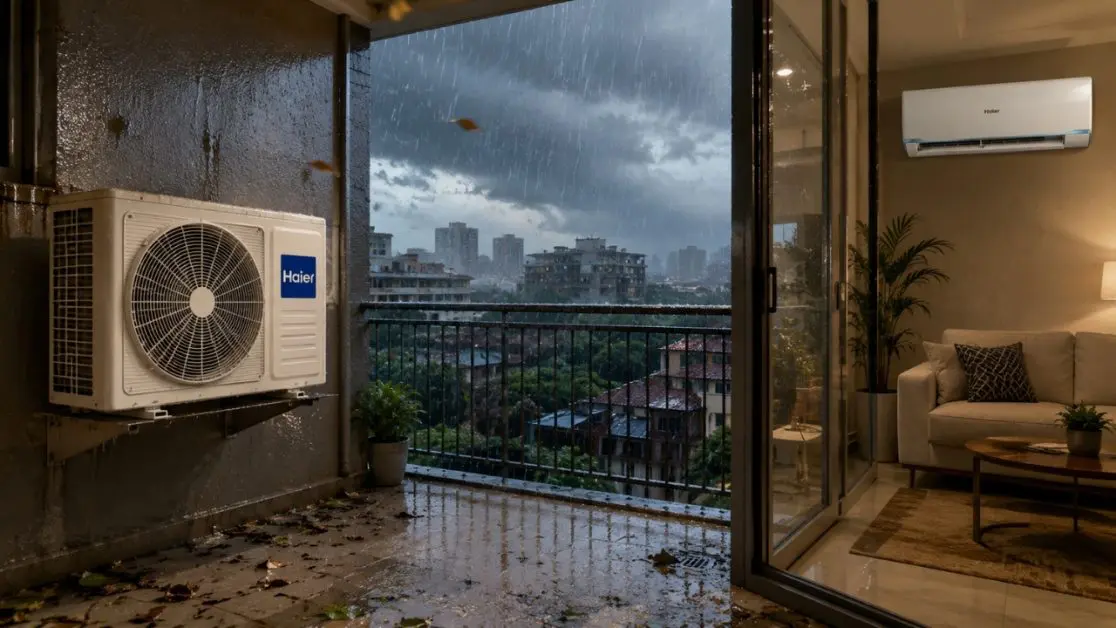
A split AC works by transferring heat from indoors and releasing it outside. The outdoor unit houses important components involved in this process, including the compressor, condenser and fan assembly.
When ambient temperatures climb, releasing heat becomes more demanding. Add dust and debris around the condenser, or prolonged exposure to moisture during the monsoon, and the outdoor environment can influence how effectively the system operates.
This is why a capable outdoor unit is not simply a metal box designed to sit outside. Its heat-management design, component protection, heat exchanger construction and maintenance features all matter.
For Indian households, three conditions are particularly worth considering:
- Extreme summer temperatures, especially during prolonged heatwaves
- Dust and airborne debris that can accumulate around heat-exchange surfaces
- Humidity and rain exposure, which make corrosion protection important over extended use
The objective is not to make an outdoor unit immune to weather. Rather, good AC engineering helps it continue performing reliably within the conditions for which it has been designed.
Extreme Heat: The Real Test Begins Outside
Picture a May afternoon. The wall outside is hot, the balcony floor is hotter, and the outdoor air itself offers little relief.
Yet that is precisely when an air conditioner is expected to work hardest.
The Haier 1.7 Ton 5 Star Desert Rose Air Conditioner (HSA20DSD-NAI5NB-I) and Haier 1.7 Ton 5 Star Desert Rose Air Conditioner (HSA20DSD-GAI5NB-I) are specified to provide cooling operation at ambient temperatures of up to 60°C. Haier attributes this capability to technologies including its Conformal Coating and Hyper PCB protection.
That specification is particularly relevant for Indian summers because the conditions immediately surrounding an outdoor unit can be punishing.
What Supports High-Ambient Cooling?
The Desert Rose models bring several elements together rather than relying on one isolated feature.
HEXA Inverter technology uses advanced DC technology for powerful, energy-conscious cooling. The product information also specifies stable operation at 60°C and 90% cooling capacity at 48°C.
Then there is the physical construction of the heat-transfer system. Both models use a copper compressor and copper heat exchanger, along with 100% grooved copper as listed among their features.
In practical terms, the outdoor unit has been designed as part of the cooling performance not treated as an afterthought.
Rain Is Only Half the Monsoon Story
People naturally associate the monsoon with water. For an outdoor AC unit, though, another long-term consideration is corrosion.
Repeated exposure to humid air and moisture makes protective measures around heat-exchange components valuable. The Desert Rose range addresses this with Super Anti-Corrosion protection and Indoor & Outdoor Blue Fins.
The product presentation also identifies multiple protective elements around the outdoor unit, including:
- Blue Fin coating
- Protection lacquer coating
- High-level cover coating
- Anti-corrosive tube plate
The aim is straightforward: provide added protection to components that routinely face outdoor environmental conditions.
It is an easily overlooked feature when buying an AC because, admittedly, anti-corrosion protection does not feel quite as exciting as rapid cooling. After several seasons of Indian weather, however, it becomes much easier to understand why outdoor-unit protection deserves attention.
Dust Can Quietly Interfere With Heat Exchange
Heat is one challenge. Rain is another. Dust simply refuses to wait for either season.
Outdoor condenser fins can encounter dust and other debris over time. Accumulation around the heat exchanger is undesirable because effective heat exchange depends on maintaining suitable airflow across the condenser.
Haier approaches this differently with ODU Cyclone Clean.
What Does ODU Cyclone Clean Do?
After shutdown, intelligent programme control enables the outdoor fan to run in reverse. This reverse-spin action is designed to remove debris from the condenser and heat-exchange fins, supporting efficient heat transfer and sustained energy savings.
It is a useful example of maintenance being considered within the product design itself.
The broader AI for Service system also incorporates cleaning functions for both the indoor and outdoor units. Indoors, Frost Self Clean complements the outdoor cleaning approach, giving the system a more comprehensive cleanliness strategy.
Of course, built-in cleaning features should not be interpreted as a reason to ignore proper installation or recommended maintenance. They are there to support the AC’s performance between those interventions.
A Tough Outdoor Unit Still Needs the Right Installation
Weather-resistant engineering cannot compensate for poor installation.
Even an AC designed for demanding conditions needs an outdoor unit positioned according to the manufacturer’s installation requirements. Air must be able to move appropriately around the unit so that heat can be released effectively.
Homeowners should also avoid treating the outdoor unit like spare balcony storage space something that happens more often than one might imagine.
Keep the surrounding area reasonably clear and pay attention to:
- Unusual sounds or vibration
- Heavy debris accumulation around the unit
- Physical obstruction around airflow areas
- Visible signs of damage
- Any noticeable decline in cooling performance
The Desert Rose product documentation also specifies installation by Haier/authorised centres as part of its stated warranty conditions.
Outdoor Durability Is Only Useful When Indoor Comfort Keeps Up
A robust outdoor unit solves only one side of the equation. Ultimately, homeowners buy an AC for comfortable rooms.
This is where the Haier Desert Rose 1.7 Ton 5 Star range connects outdoor resilience with its broader cooling system.
Alongside its high-ambient cooling capability, the range offers Supersonic Cooling in 10 seconds, using KTS and PKC technology, plus a 20-metre air flow supported by improvements to the fan, motor and air duct.
There is also 7-in-1 Convertible cooling, allowing capacity adjustment from 40% to 110%, including Intelli modes that predict cooling requirements and adjust fan speed.
And then comes the intelligence layer.
AI-ATMOX analyses the environment and usage habits to support smarter comfort. AI Climate Control evaluates real-time weather and indoor conditions, while AI Human Detection monitors presence to help avoid unnecessary energy use. AI ECO can automatically adjust operation when appropriate, with Haier stating energy savings of up to 56% through its AI savings functionality.
So the proposition is broader than “an AC that survives hot weather”. It is a system designed to adapt its cooling while also addressing what happens outside the room.
What Should You Check When Buying an AC for Indian Weather?

Instead of looking at tonnage and star rating alone, ask a few more specific questions:
- What maximum ambient temperature is the AC designed to operate in?
- What protection is provided for outdoor components?
- Does the heat exchanger use copper?
- Are the fins designed with anti-corrosion protection?
- How does the outdoor unit deal with dust and debris?
- Is inverter technology used to manage changing cooling demand?
- What installation and maintenance conditions does the manufacturer specify?
These questions reveal quite a lot about how thoughtfully the complete air-conditioning system has been engineered.
Built for the Weather Outside, Designed for Comfort Inside
An outdoor unit rarely gets noticed when everything is working properly. Perhaps that is the point.
For Indian homes dealing with intense summer heat followed by humid monsoon conditions, however, its engineering deserves closer scrutiny. High-ambient cooling, component protection, corrosion resistance and cleaner heat-exchange surfaces can all contribute to dependable AC operation.
The Haier 1.7 Ton 5 Star Desert Rose Air Conditioner (HSA20DSD-NAI5NB-I) and Haier 1.7 Ton 5 Star Desert Rose Air Conditioner (HSA20DSD-GAI5NB-I) bring those considerations together with cooling up to 60°C ambient temperature, ODU Cyclone Clean, Super Anti-Corrosion protection, copper construction and HEXA Inverter technology.
Add AI-powered comfort management, smart control through the Hai Smart App, 7-in-1 Convertible cooling and rapid cooling capability, and the Desert Rose range becomes an option worth considering for households that expect their AC to handle not just the room but the demanding Indian weather sitting right outside it.
Frequently Asked Questions
1. How do Haier Desert Rose AC outdoor units handle extreme summer heat?
The Haier 1.7 Ton 5 Star Desert Rose Air Conditioner is designed to provide cooling even when the outdoor ambient temperature reaches up to 60°C. Haier uses features such as Conformal Coating, Hyper PCB and its cooling-fin design to support operation in demanding high-temperature conditions.
2. How is the outdoor unit protected during humid and rainy weather?
The Desert Rose range features Super Anti-Corrosion protection with Indoor & Outdoor Blue Fins. The product information also highlights protective lacquer coating, high-level cover coating and an anti-corrosive tube plate, helping provide additional protection against challenging outdoor conditions.
3. What is ODU Cyclone Clean in Haier ACs?
ODU Cyclone Clean is designed to help keep the outdoor condenser cleaner. After the AC shuts down, intelligent programme control runs the outdoor fan in reverse to help remove debris from the condenser and heat-exchange fins. This supports efficient heat transfer and sustained energy savings.
4. Does the Haier Desert Rose AC use a copper heat exchanger?
Yes. The specifications for the Haier 1.7 Ton 5 Star Desert Rose Air Conditioner list a copper heat exchanger and copper compressor, while the product features also specify 100% grooved copper.
5. Why does outdoor unit maintenance matter even with self-cleaning features?
Outdoor AC units regularly encounter dust and debris. Features such as ODU Cyclone Clean can help reduce debris accumulation, but correct installation and recommended maintenance remain important for dependable operation. Haier’s stated warranty conditions also specify installation through Haier or authorised centres and include maintenance-related requirements.
6. Is the Haier Desert Rose AC suitable for demanding Indian summers?
Its specifications are clearly designed with high-temperature operation in mind. The Desert Rose range offers cooling at ambient temperatures of up to 60°C, along with HEXA Inverter technology, Supersonic Cooling in 10 seconds and a 20-metre air flow. These features make it particularly relevant for households looking for cooling performance during severe summer conditions.
7. Which Haier Desert Rose models include these outdoor-unit features?
The provided product information covers the Haier 1.7 Ton 5 Star Desert Rose Air Conditioner (HSA20DSD-NAI5NB-I) and Haier 1.7 Ton 5 Star Desert Rose Air Conditioner (HSA20DSD-GAI5NB-I). Both list features including ODU Cyclone Clean, HEXA Inverter, high-ambient cooling and anti-corrosion protection.