
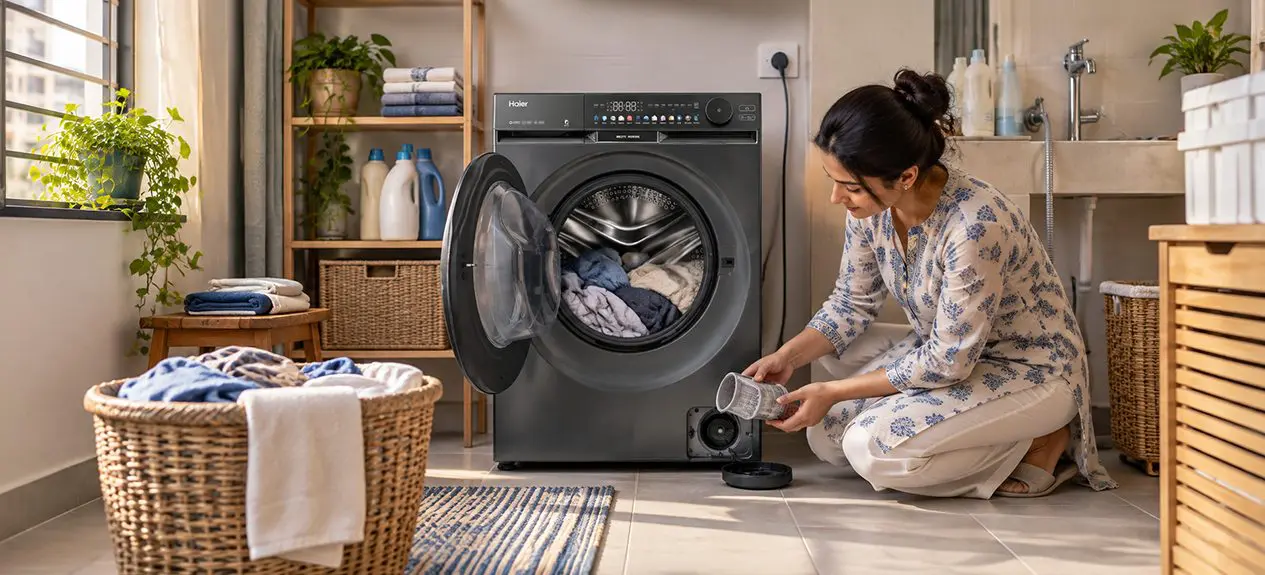

A washing machine may be used for many years, but it is not only the model or the price that decides how long it lasts. Build quality is a factor, but water quality, laundry volume, how often it is used, installation, and regular maintenance can affect how long the machine performs well. Hard water can cause problems over the long term, but overloading the drums and frequent cycles put added stress during normal use. Some machines break down after a few years, some keep running for more than ten years.
Understanding these differences helps you judge washing machine lifespan more realistically and spot when repeated repairs are becoming less practical than replacing the machine.
Average Washing Machine Lifespan
Most fully automatic washing machines run eight to twelve years under normal household use. Semi-automatic units sometimes last longer on paper, since their mechanics are simpler, though they demand far more manual handling per wash.
Warranty periods offer a useful way to judge the average life of a washing machine, even if the comparison stays imperfect. A motor covered for five years is not destined to fail at year six, but a twelve-year warranty signals a different level of confidence than a five-year one. It remains one of the clearer ways to compare durability claims without guesswork.
A washing machine may be used for many years, but it is not only the model or the price that decides how long it lasts. Build quality is a factor, but water quality, laundry volume, how often it is used, installation, and regular maintenance can affect how long the machine performs well. Hard water can cause problems over the long term, but overloading the drums and frequent cycles put added stress during normal use. Some machines break down after a few years, some keep running for more than ten years.
Understanding these differences helps you judge washing machine lifespan more realistically and spot when repeated repairs are becoming less practical than replacing the machine.
Top Load vs Front Load Longevity
Front-load and top-load machines differ mechanically in ways that show up directly in how long each one is expected to run. The table below sets out the main points of difference.
| Aspect | Front Load | Top Load |
| Motor technology | Generally more advanced | Generally simpler |
| Parts exposed to water and detergent | Fewer, sealed drum design | More, constant pulsator contact |
| Drum orientation and bearing | Horizontal drum on a sealed bearing | Vertical pulsator design |
| Haier motor warranty | Twelve years | Ten years |
| Haier comprehensive warranty | Multi-year cover | Multi-year cover |
That two-year gap in motor warranty is not just a marketing number. It reflects a real mechanical difference between how the two drum designs handle water and load weight.
Semi-Automatic vs Fully Automatic
Semi-automatic machines ask the user to do more of the work at almost every stage, while fully automatic units run the wash, rinse, and spin sequence without supervision. That difference in involvement shows up clearly in how each type is built and warranted.
| Aspect | Semi-Automatic | Fully Automatic |
| Wash, rinse, and spin process | Manual, around nine separate steps | Automatic, about two steps |
| Monitoring during a cycle | Continuous monitoring needed | No monitoring required |
| Water usage | Filled and drained by hand, so wastage is common | Measured to load size, limiting wastage |
| Comprehensive warranty | Typically two years | Typically two to four years |
| Motor warranty | Five years on the wash motor, five years on the spin motor | Ten years on top load, twelve years on front load |
Haier’s own warranty terms follow this same pattern across its semi-automatic, top load, and front load ranges, with motor cover increasing as the design takes over more of the manual work.
What Affects How Long a Washing Machine Lasts
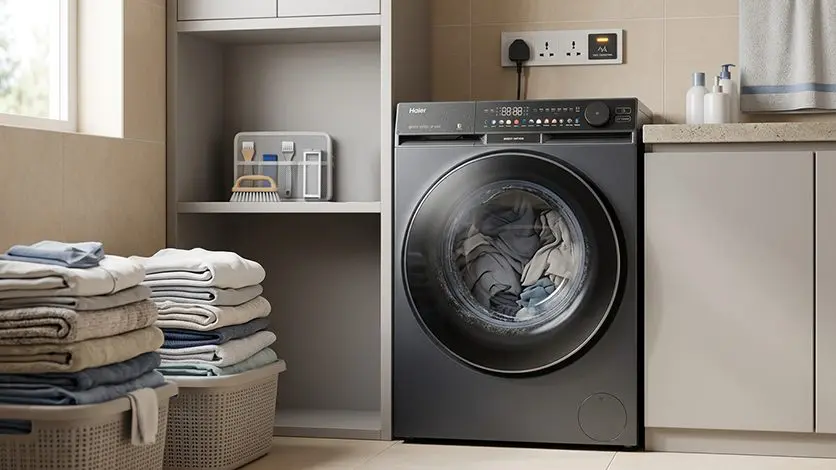
Several factors decide whether a machine reaches ten years or struggles to survive five, and most sit within a household’s own control.
- Water hardness speeds up scale buildup inside the drum and heating element, straining the motor.
- Overloading the drum regularly creates uneven pressure on the motor bearing and drum spider.
- Frequency of use matters too, since a machine run twice daily wears faster than one used occasionally.
- An unlevel installation vibrates more during spin cycles, loosening internal fittings over time.
- Frequent voltage fluctuations, common across Indian households, can damage the control board and motor.
- Skipping basic maintenance, such as filter cleaning, shortens washing machine life expectancy noticeably.
Warning Signs Your Washing Machine Is Wearing Out
A washing machine rarely fails without warning. It usually sends signals for months before it stops working.
- Unusual noise or grinding during the spin cycle often points to a worn bearing.
- Rust that you see around the drum opening or the detergent drawer can eventually cause leaks.
- Water leaking from the base or door seal during a normal wash.
- A wash cycle that takes longer time to finish than it once did.
- Clothes coming out only partly spun even on full speed setting.
- Error codes appearing often, especially ones rare in earlier years of use.
When to Repair and When to Replace
Understanding the average life of a washing machine sets realistic expectations before assuming one fault ends the machine. Age alone rarely answers the repair-or-replace question. A five-year-old machine with a failed control board is usually worth repairing. A nine-year-old machine needing its second motor repair within a year usually is not.
A common guideline compares repair cost against a comparable new machine. When a single repair crosses roughly a third of that figure, replacement generally becomes the sensible route.
| Machine Age | Typical Condition | General Guidance |
| 0 to 5 years | Minor faults, usually still under warranty | Repair |
| 5 to 10 years | Occasional wear, motor and drum still sound | Repair if covered, weigh cost otherwise |
| Over 10 years | Frequent breakdowns, parts harder to source | Replacement usually makes more sense |
Ten years is not automatically too old for a washing machine to keep running. It marks the stage where repair costs and breakdown frequency tend to climb together.
What to Do With an Old Washing Machine
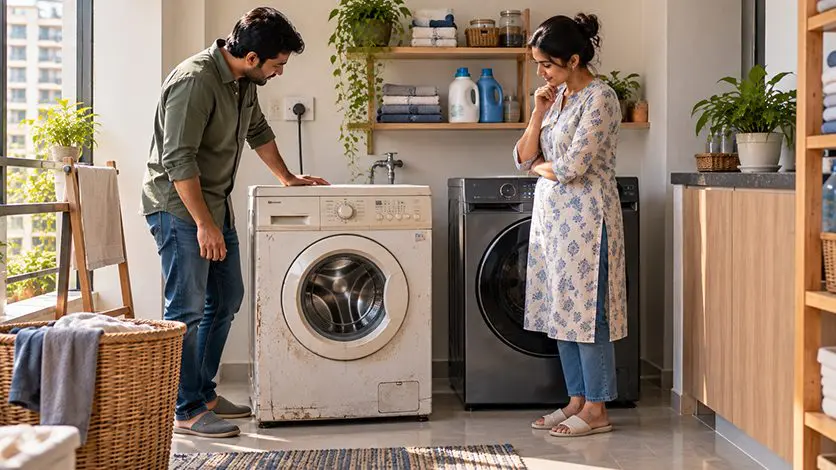
Replacing a washing machine does not mean the old one has to end up abandoned. Several practical routes exist for old washing machine replacement, and most recover some value.
Exchange, Resale and Recycling
Considering old washing machine replacement early, before a complete breakdown, usually means a better resale or exchange value. Exchange schemes are common across large appliance retailers in India, letting a buyer offset part of a new machine’s cost.
Reselling the machine independently works too, if it still runs. Condition, brand, and age shape what a buyer pays, and a unit under five years old typically sells faster than one already needing repairs.
For machines beyond repair, authorised e-waste recyclers remain the responsible choice, since washing machines contain metal, plastic, and electronic parts that should never enter household waste. Many recyclers now collect old appliances directly from home.
How to Extend Your Washing Machine’s Life
A handful of consistent habits directly affect washing machine life expectancy over several years of use.
- Match the load size to the drum’s actual capacity instead of routinely overloading it.
- Use the detergent quantity recommended for the load weight, since excess leaves damaging residue.
- Run a tub clean or self-clean cycle about once a month to help prevent scale buildup.
- Keep the machine level on a solid, dry surface to minimise vibration during spin cycles.
- Leave the door or lid open for a short time after each wash to allow the drum to dry out.
- Get the machine serviced on a periodic schedule rather than waiting for a fault.
How We Engineer Haier Washing Machines to Last Longer
At Haier, we treat durability as an engineering decision, not a line in marketing copy. Our Direct Motion Motor connects straight to the drum, removing the belt and pulley system that wears out inside conventional machines. Fewer moving parts mean less friction, less vibration, and a motor built to run smoothly for years.
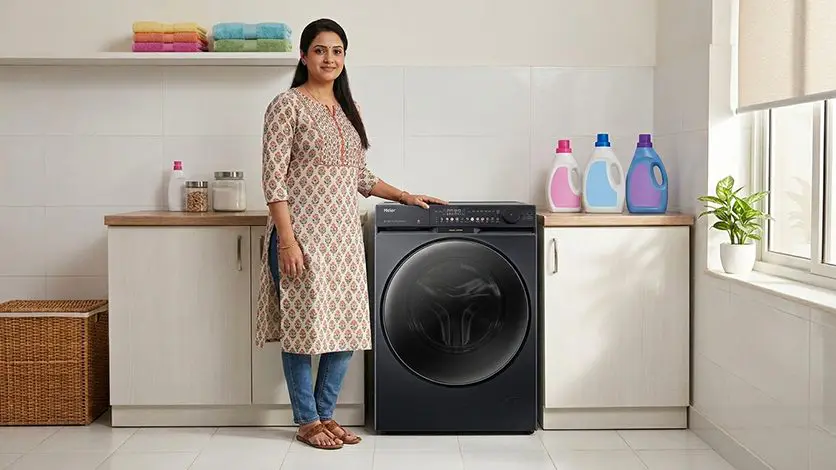
Our 525mm Super Drum reduces tangling and evens out load distribution during a wash, lowering strain on the motor bearing across cycles. On our top-load range, Anti-Scaling Technology uses smart nano-material balls that continuously clean the inner tub wall, preventing the buildup that shortens working life in hard water areas.
We build in details that matter years later, not only on day one. Toughened glass doors resist impact and scratching better than standard plastic panels, and rat-guard mesh on our semi-automatic range protects internal wiring where that risk is real. Our front-load washing machines are built around the Direct Motion Motor and Super Drum, our top-load washing machines carry Anti-Scaling Technology, and our semi-automatic washing machines remain a durable option for households that prefer manual control.
Conclusion
A washing machine does not have a fixed expiry date, and several everyday factors decide how long it stays useful. Build quality matters, but so do water conditions, washing frequency, load size, installation, and basic care. Hard water and repeated overloading can create problems much earlier than expected. Small changes in noise, vibration, leaks or cleaning performance should not be ignored for too long. Also, if you select a machine with a durable motor, you can avoid frequent repairs. With sensible use and regular care, a washing machine can remain reliable for many years before replacement becomes necessary.
FAQs
How long does a washing machine last on average?
Most fully automatic washing machines last eight to twelve years with normal use. Semi-automatic units can run longer mechanically but need more manual handling. Water quality, load habits, and maintenance decide how close a machine gets to that range.
Can a washing machine last 20 years?
It is possible, though uncommon for machines in regular use today. Older, simpler designs sometimes ran that long due to fewer electronic parts. Modern machines with sensors and control boards rarely reach twenty years without a major part replacement.
Is a 10-year-old washing machine too old?
Not automatically, since a ten-year-old machine running efficiently with only occasional repairs can keep working well. Concern grows once breakdowns turn frequent or parts become harder to source, both common around this age.
What are the signs a washing machine is failing?
Grinding noises during spin, visible rust near the drum, water leaks from the base, longer wash cycles, incomplete spinning, and frequent error codes are common signs. These issues build up gradually, giving fair warning before a complete breakdown.
Is it worth repairing an old washing machine?
It depends on the repair cost compared with a new machine, and how often repairs recur. A single repair on a machine under eight years old is usually worthwhile. Frequent repairs on an older unit usually mean replacement makes more sense.
What can I do with an old washing machine?
Options include exchanging it with a retailer while buying a new machine, reselling it if still functional, or handing it to an authorised e-waste recycler. Recycling becomes the better choice once repair no longer makes economic sense.