
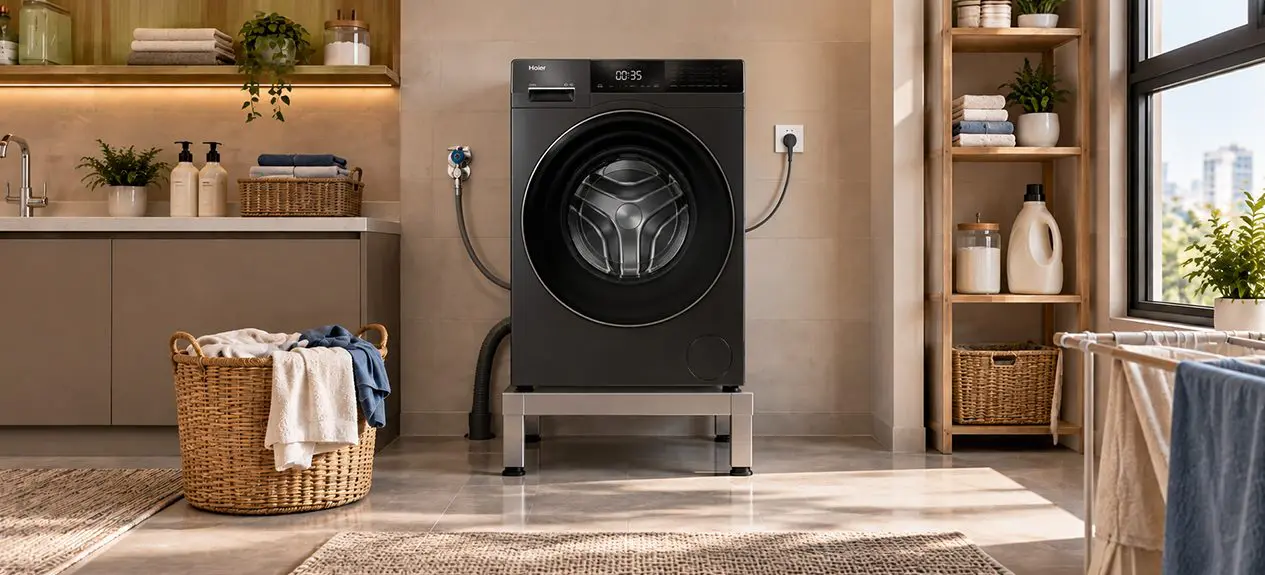

A washing machine does not always need a stand, but the right setup can prevent floor damage and make loading easier. Your floor type, machine height, and spin movement matter here. A stand becomes useful when vibrations are strong, the floor stays damp, or bending down repeatedly makes laundry uncomfortable.
This guide covers what a washing machine stand does, how it differs from a pedestal or trolley, and how to install one correctly.
What Is a Washing Machine Stand or Pedestal?
A washing machine stand simply raises the appliance above the floor, usually using metal or strong plastic. A pedestal also lifts it, but comes taller and often includes storage. The difference matters when choosing between easier loading, better floor clearance, and available space at home. Both separate the base from direct floor contact. A washing machine base stand is the plainer version: no storage, no styling, a stable platform.
Front-load machines benefit more, since their doors sit low and loading means bending. A stand works with front-load washing machines too, and this segment usually gets raised first, because the drum door stays closer to the floor than a top loader’s lid.
Why Put a Washing Machine on a Stand?
Should you put your washing machine on a stand? For most households, yes, particularly where daily use causes back or knee strain. It isn’t mandatory, but it solves three specific problems.
- Easier Loading and Better Ergonomics
Bending to knee height repeatedly to load and unload laundry adds up over months. Raising the machine by 20 to 30 centimetres changes the reach angle into the drum, mattering most for front-load washers, where the door opens low.
- Protection From Water and Floor Damage
Washing machines leak occasionally. Hoses loosen, drain pipes back up, condensation collects underneath. Floor contact means moisture stays against the base for hours before anyone notices. A raised stand keeps air moving underneath, protecting the appliance and floor alike.
- Stability and Vibration Control
This one gets underestimated. A machine on an uneven surface will walk, rock, or vibrate hard during high-speed spins. Some of that comes from the floor, some from the motor. Haier’s Direct Motion Motor connects straight to the drum, with no belt or pulley in between, cutting a common source of friction and lowering vibration at the source. A level stand works alongside that: good motor design lowers vibration, a solid base stops what remains from becoming a rocking machine.
Stand vs Pedestal vs Trolley
The names sound similar, but washing machine stands and pedestals differ in height, design, storage, and everyday convenience.
| Type | What it is | Best for |
| Stand | Fixed or semi-fixed platform, usually the most affordable | Stability over mobility |
| Pedestal | Taller, often enclosed, sometimes with a storage drawer | Height and looks more than movement |
| Trolley | A washing machine trolley or washing machine stand with wheels, letting you shift the machine for cleaning behind it without lifting it | Households that need to move the machine occasionally |
Choosing the Right Height and Size
You can raise a washing machine stand height, but only within practical limits. Most stands increase the height by 10 to 40 centimetres, depending on the design. Your height should guide the choice, along with available room depth. A stand comfortable for someone 5’2″ may feel too low for someone above six feet, so measure the setup before buying.
An adjustable washing machine stand solves this by letting you set the height after installation, useful in shared or rented homes. Size matters as much as height too. The footprint should match or slightly exceed the machine’s base, with no overhang, since a narrower stand looks fine in photos but performs badly in use, as extra weight at the edges puts uneven pressure on the platform.
How to Install a Stand Safely
Installation isn’t complicated, but skipping steps is where problems start. Begin with a flat, dry surface and confirm the stand’s maximum load rating first. A washing machine base stand rated below the machine’s filled weight, appliance plus a full wet load, isn’t a safe match.
1> Weight Capacity and Locking Wheels
Check the stated weight limit against the machine’s dry weight plus roughly 6 to 10 kg for absorbed water. If using a washing machine stand with wheels, confirm the wheels lock before the machine runs, since unlocked wheels under a spinning machine are a common cause of stands sliding mid-cycle. Certain Haier semi-automatic models ship with built-in castor wheels on the base itself, cutting the need for a separate wheeled stand entirely.
2> Levelling and Anti-Vibration Tips
Once positioned, use a spirit level to check the stand rests flat, front to back and side to side. Adjustable feet, where available, should turn until the bubble centres. Rubber anti-vibration pads between the machine and stand absorb residual motion during high RPM spins, which matters more with larger drums moving more mass through each cycle, so a level, padded base earns its place here.
Want the full installation checklist, from water connections to electrical setup?
Read this blog: How to Install a Washing Machine: A Step-by-Step Guide
Safety Dos and Don’ts
- Confirm the stand’s weight rating before installation, not after.
- Use a spirit level rather than a visual check alone.
- Lock all wheels before every wash cycle on a mobile stand.
- Leave clearance around the machine for hoses and ventilation.
- Avoid placing a stand on carpet, uneven tile, or any shifting surface.
- Avoid mixing stand brands or sizes with a machine they weren’t built for.
- Avoid skipping the levelling step, even when the stand looks straight by eye.
How Haier Builds for Stability and Everyday Care
Stability isn’t an accessory feature for us. It is engineered in from the drum outward. Our Direct Motion Motor connects straight to the drum, with no belt or pulley between them, cutting a major source of friction and keeping vibration low from first spin to last. Paired with the 525mm Super Drum, we deliver more capacity along with a tangle-free result and a smoother spin. The tempered glass door resists scratches, and adjustable levelling feet keep performance steady whatever stand you choose. We build across formats too, since not every home needs the same setup.
| Category | Best suited for | Notable feature |
| Front Load | Low vibration, fabric care priority | Direct Motion Motor, 525mm Super Drum |
| Top Load | Easier, quicker loading | Oceanus Wave Drum, built-in heater on select models |
| Semi-Automatic | Flexible, budget-conscious setups | Built-in castor wheels for repositioning |
Whichever category fits your home, the principle stays the same. A well-engineered machine and a well-chosen stand work together, not as substitutes for each other.
Conclusion
A washing machine stand is not essential, but it can make daily laundry easier in Indian homes. It reduces bending, keeps the machine off damp floors and helps control movement during spinning. Choose a height that is appropriate for the main user, make sure it is able to support the weight of the machine, and set it down on a flat, dry surface. This is where the little things count, especially for long-term stability and daily use.
FAQs
Should I put my washing machine on a stand?
It isn’t compulsory, but a stand helps with ergonomics, floor protection, and stability, especially for front-load machines. If bending to load laundry causes discomfort, a stand is a practical addition.
What is the ideal height for a washing machine stand?
There is no fixed number, but most stands add 10 to 40 centimetres. The right height brings the door close to hip level for the main user, so measure against your own height rather than a standard figure.
Can I put a front-load washing machine on a stand?
Yes, front-load machines are commonly placed on stands, often more than top-load ones. Their doors sit lower, so raising the machine improves access and cuts bending during loading.
Do washing machine stands reduce vibration?
A stable, level stand reduces wobble from an uneven floor. It works best alongside a machine already engineered for low vibration, since the stand controls the surface, not the motor’s internal motion.
How much weight can a washing machine stand hold?
This varies by stand, so check the manufacturer’s load rating. It should exceed the machine’s dry weight plus the extra 6 to 10 kg that water adds during a wash, to avoid overloading the platform.
Are stands with wheels safe for washing machines?
Yes, as long as the wheels lock securely before each wash. Unlocked wheels can let the stand shift during high-speed spins, so locking and a flat surface underneath are both necessary.