


Choosing a microwave really comes down to how you will actually use it in the kitchen. Some households want an appliance mainly for reheating meals and defrosting ingredients, while others are after something that can bake, grill, roast or turn out crispy snacks. Getting clear on the differences between the three major types makes it far easier to land on the right appliance for everyday cooking.
The solo grill convection microwave categories each offer a different level of cooking flexibility. A solo model sticks to microwave cooking, a grill microwave adds browning and grilling on top of that, and a convection microwave brings together microwave heating and hot-air circulation for baking and roasting. Capacity, cooking habits, available kitchen space and budget all deserve consideration before settling on one.
The Three Main Microwave Types
Solo, grill and convection cover the three primary microwave categories available today. Every microwave oven relies on electromagnetic waves to heat food, but grill and convection models build in separate heating systems that widen what the appliance can actually do.
The right pick has less to do with how many functions a model offers and more to do with whether those functions actually line up with how the household cooks day to day.
Solo Microwave
A solo microwave is the most basic of the three, built specifically around microwave-based cooking. It suits households after quick heating and straightforward, everyday food preparation without much fuss.
What It Does and Who It Suits
So, what is a solo microwave exactly? It’s a microwave built primarily for reheating, defrosting and cooking food using microwave energy alone, with no dedicated grill element or convection system attached.
Solo microwaves handle reheating cooked meals, warming beverages, defrosting frozen ingredients and running through simple microwave recipes without any trouble. They also tend to be more affordable than grill and convection models, which makes them a sensible pick when advanced cooking functions aren’t really needed in the first place.
Grill Microwave
A grill microwave takes the basic functionality of a solo model and adds a heating element for browning and crisping food. That extra step matters for dishes where surface texture plays a real part in how the finished result turns out.
What It Adds Over a Solo
The question of what is a grill microwave really comes down to that dedicated grill element. Microwave energy still does the main cooking or heating, while the grill element takes care of browning and crisping the surface afterward.
Grill microwaves work well for sandwiches, kebabs, paneer, vegetables and similar dishes where a browned exterior adds something to the dish. That said, they’re not built to match the broader baking range that convection models offer.
Convection Microwave
A convection microwave brings microwave cooking together with a heating element and fan that circulates hot air through the cooking cavity. That combination lets it handle a far wider range of cooking tasks than either a solo or grill-only model can manage.
Baking, Grilling and All-in-One Cooking
If you’re wondering what is a convection microwave, it’s essentially an appliance that pairs microwave heating with convection cooking. The circulating hot air enables baking and roasting, while the microwave and grill functions remain available for other kinds of preparation.
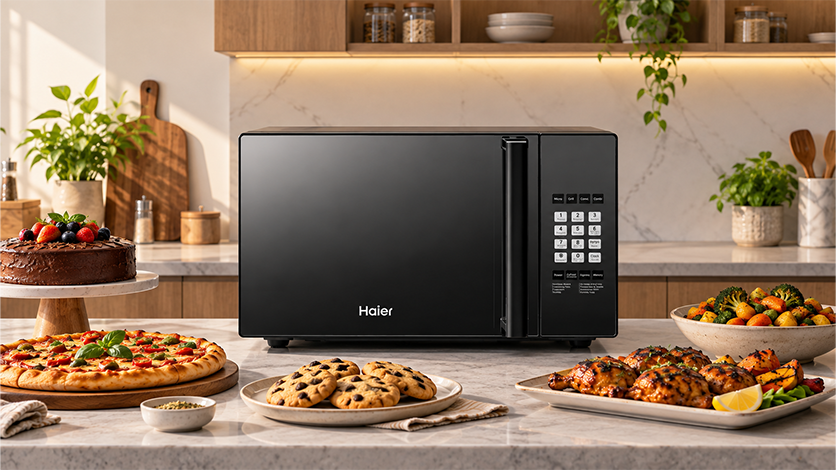
This makes convection microwaves a solid fit for cakes, cookies, pizzas, roasted vegetables, grilled dishes and plenty of everyday meals besides. Combination modes can even draw on multiple heating methods within the same cooking cycle.
For households after this kind of broader functionality, our Haier 30L Convection Microwave with In-Built Air Fryer brings together microwave, grill, convection, air frying and motorised rotisserie functions in one unit. It also comes loaded with 36 dedicated air-fryer menus and 305 preset auto-cook menus.
What Is Charcoal Mode?
Charcoal mode is a specialised cooking function found on select microwave models. It’s designed to create a high-heat grilling effect that produces a more intense grilled or roasted finish than standard settings typically manage.
The exact heating method and which recipes suit it best vary from one appliance to the next, so it’s worth checking the manufacturer’s instructions before relying on it heavily.
Solo vs Grill vs Convection: Comparison
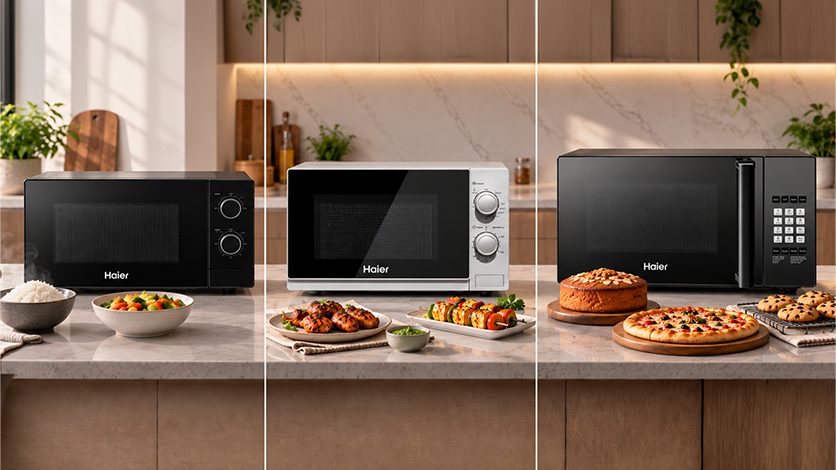
The gap between these three types becomes much clearer once cooking capability, cost and the kind of food each one is expected to handle enter the picture.
Cooking Capability
Solo models stick to reheating, defrosting and basic microwave cooking. Grill models bring surface browning and crisping into the mix, while convection models push further still into baking and roasting territory.
In that sense, solo vs convection microwave really boils down to a choice between basic microwave cooking and a much wider range of cooking versatility.
Along the same lines, convection vs grill microwave comes down to whether baking and roasting matter to you. A grill microwave does the job when browning or grilling is the main requirement, while convection makes more sense once several cooking methods need to be covered by one appliance.
Price and Running Cost
Solo microwaves generally sit at the lower end of the price range simply because they carry fewer heating systems. Grill models cost a bit more due to that added grill element, and convection models typically command the highest price of the three, given the extra heating and air-circulation hardware built in.
Running costs come down to cooking time, power draw, the mode selected, how much food is being cooked, and how often the appliance gets used. A more versatile microwave can still be worth the extra spend if its added functions mean fewer separate kitchen appliances cluttering the counter.
Which Microwave Type Should You Buy?
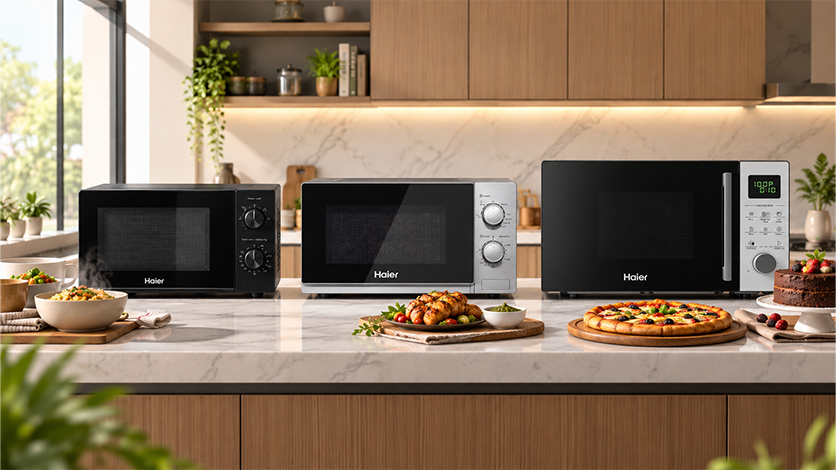
The right microwave really depends on striking a balance between cooking needs, budget and available kitchen space. Rather than paying for functions that might rarely get used, it’s worth thinking through which cooking methods actually show up in your regular routine.
By Cooking Needs and Budget
A solo microwave suits households that mostly reheat food, defrost ingredients and stick to basic microwave cooking. It delivers straightforward functionality without the added cost that comes with grilling or convection.
A grill microwave makes sense when browning and crisping matter, but baking and roasting aren’t part of the regular routine.
A convection microwave fits households after baking, roasting, grilling and microwave cooking all in one appliance. Models that throw in extras like air frying and rotisserie add even more flexibility on top of that.
Ultimately, the best microwave type for home use comes down to the cooking tasks the appliance actually needs to handle, rather than how many features happen to be listed on the box.
Type Selection Checklist
Picking the right microwave ultimately comes down to matching its cooking capability with what the household genuinely needs. A solo model works well for basic reheating and microwave cooking, a grill model brings browning and crisping into the picture, and a convection model is built for households after broader cooking versatility.
For anyone weighing is a convection microwave worth it, the answer largely hinges on how often those extra cooking functions would actually get used. If baking, roasting, grilling and multi-purpose cooking come up regularly, the added functionality more than justifies the investment. For households that mostly reheat food, a simpler solo microwave should cover the bases just fine.
FAQs
What is the difference between solo, grill and convection microwaves?
A solo microwave sticks to reheating, defrosting and basic microwave cooking. Grill models bring browning and crisping into the mix, while convection models go a step further by circulating hot air for baking and roasting too.
Which type of microwave is best?
It really depends on what you actually cook. Solo works for basic heating needs, grill suits browning and grilling, and convection makes more sense for households that bake and roast on a regular basis.
What does solo mean in a microwave?
“Solo” simply means the microwave relies on microwave energy alone for reheating, defrosting and cooking. There’s no dedicated grill or convection system built in.
Is a convection microwave worth it?
It’s worth the investment when baking, roasting, grilling and multi-purpose cooking come up often enough to matter. If reheating is mostly what you’ll use it for, those extra functions probably won’t get much use.
Is a solo microwave worth buying?
Yes, especially for households that mainly reheat food, defrost ingredients and stick to basic microwave cooking. It covers those needs without the added cost that comes with grill or convection features.
What is charcoal mode in a microwave?
Charcoal mode aims to recreate a high-heat grilling effect similar to charcoal-style cooking. How it actually works, and which recipes suit it, tends to vary from one model to the next.
Is a convection microwave as good as an oven?
A convection microwave handles a good chunk of baking and roasting tasks while still doubling as a microwave. That said, a dedicated oven usually offers more capacity and works better for frequent large-batch baking.
Which type of microwave is good?
A solo microwave covers basic reheating and cooking well, while grill and convection models step in when you need more from the appliance. The right pick really comes down to how it’ll actually be used.
Which microwave type is best?
No single type works best across the board. Solo, grill and convection each serve different cooking needs, so the right choice depends on what functions you need, your budget and how much kitchen space you have.
What is a convection microwave?
A convection microwave pairs microwave heating with a fan and heating element that circulates hot air through the cavity. That combination lets it take on extra tasks like baking, roasting and browning, on top of standard microwave cooking.