
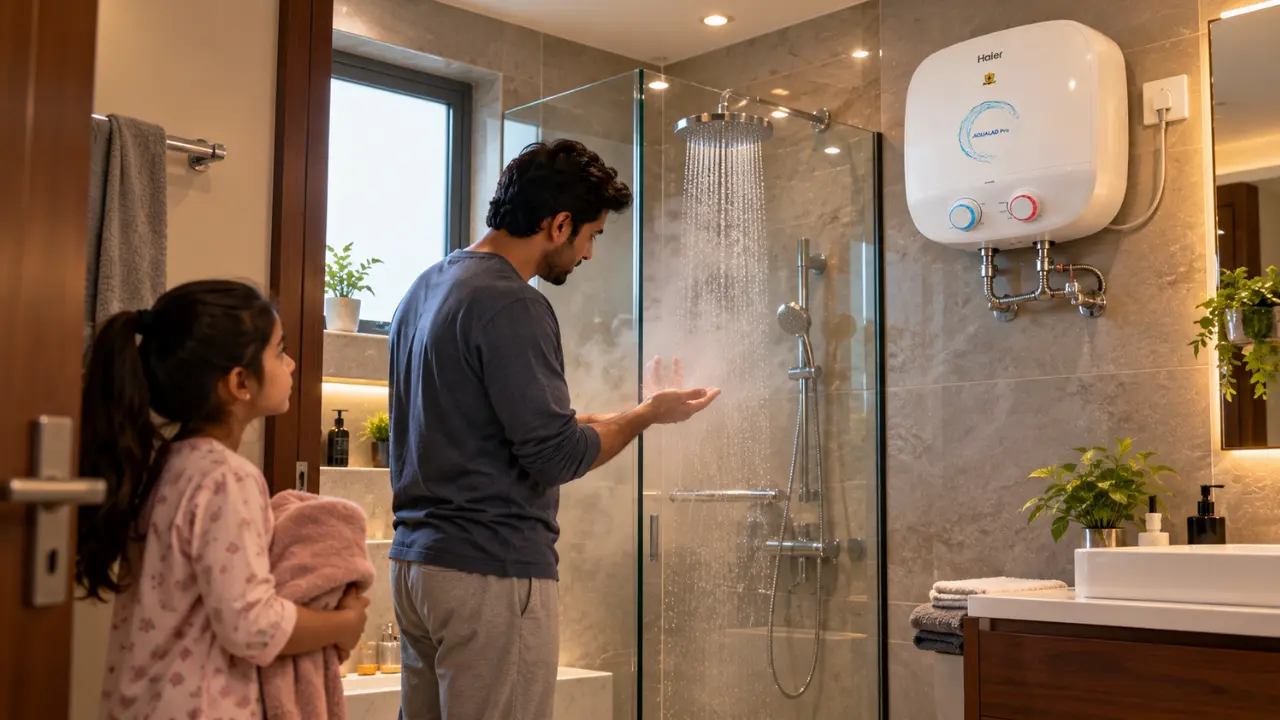

A water heater sits quietly on the bathroom wall, usually getting attention only when the water is not hot enough. Yet it combines three things that deserve careful handling: electricity, water and heat.
So, are geysers safe?
Yes, a properly selected, professionally installed and correctly maintained electric water heater can be safe for regular household use. The important bit is that safety does not depend on a single feature. Electrical protection, temperature control, pressure management, water resistance, installation and maintenance all work together.
For Indian households comparing options and wondering which type of geyser is safe, this guide explains what actually matters rather than relying on a generic “safe” label.
What Can Make a Water Heater Unsafe?
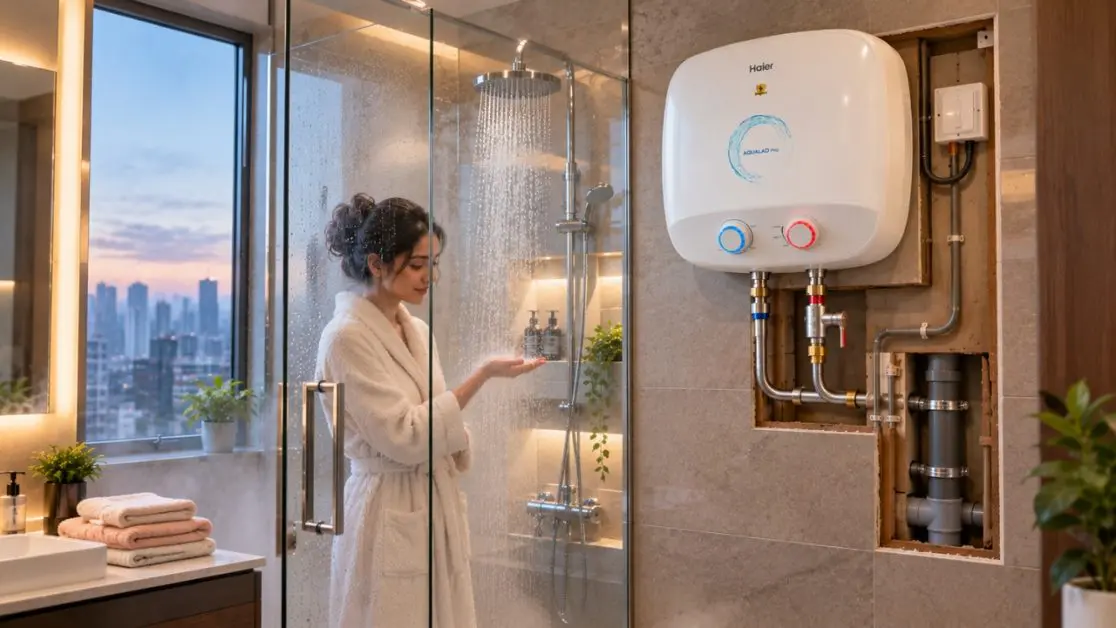
Most safety concerns around electric water heaters fall into a few practical categories.
Electrical leakage
Bathrooms are wet environments, which makes electrical protection especially important. Faulty wiring, damaged components or improper earthing can increase electrical risk.
This is why buyers should look beyond capacity and heating speed and examine the appliance’s built-in electrical safety provisions.
Excessive water temperature
A thermostat controls heating during normal operation. A good safety design should also consider what happens if normal temperature regulation does not work as intended.
Very hot water is not merely uncomfortable; it can create a scalding risk. Children and older family members require particular care around hot-water outlets.
Pressure build-up
Storage water heaters operate with water under pressure. The appliance, valves and plumbing therefore need to be suitable for the water pressure at the installation location.
This becomes particularly relevant in multi-storey and high-rise buildings.
Water entering electrical areas
A water heater is routinely exposed to moisture and splashes. Appropriate water-resistance protection is therefore another specification worth checking.
The lesson is fairly straightforward: the safest geyser is not simply the one with the biggest tank or highest wattage. It is one designed with multiple layers of protection and installed correctly.
Which Type of Geyser Is Safe?
There is no universal answer based solely on whether a heater is storage or instant.
When assessing which type of water heater is safe, check the actual safety systems built into the model. For an electric storage water heater, useful areas to examine include:
- Protection against electrical leakage
- Temperature and overheating safeguards
- Pressure-relief provisions
- Water-resistance rating
- Suitability for the building’s water pressure
- Tank and heating-element construction
- Correct electrical and plumbing installation
In other words, shop by safety architecture, not just by product category.
That distinction matters.
Seven Safety Features Worth Checking Before You Buy
1. Protection Against Electric Shock
Electrical safety should sit near the top of the checklist.
Haier’s AQUALAD PRO water heaters, for example, feature Shock Proof technology. According to Haier’s product information, this technology is designed to lower the rated voltage to a safer voltage in the event of leakage.
It addresses one of the concerns buyers naturally have when an electrical appliance is installed in a bathroom.
2. Overheating Protection
A thermostat should not simply heat water and hope for the best.
The Haier AQUALAD PRO uses Dual Thermal Proof (TTS). Under the product’s described operation, the heating element stops heating when the temperature reaches 75°C. If that first protection fails and the temperature continues rising to 95°C, the thermostat automatically cuts power.
That two-stage approach illustrates an important principle when choosing a geyser: redundancy matters. A secondary safeguard provides another layer of protection if normal temperature control fails.
3. Pressure Management
Water pressure is easy to overlook while shopping because it is not as visible as capacity or design.
It shouldn’t be.
A pressure-management system helps the appliance deal with operating conditions safely. The AQUALAD PRO includes an MUV Valve, described by Haier as combining an anti-vacuum device, pressure relief, a non-return valve and water drainage functions.
Both the 15L and 25L models are also specified for 8-bar rated working pressure.
For households in high-rise buildings, checking the water heater’s pressure rating against actual installation requirements is especially important.
4. Water Resistance
Water around a bathroom appliance is unavoidable. Water entering areas where it should not be is another matter.
The Haier AQUALAD PRO carries an IPX4 water-resistance rating.
An IP rating should not be interpreted as permission for careless installation, though. Correct positioning and professional installation remain essential.
5. Tank and Heating Element Construction
Water heaters work repeatedly under heat, water and pressure, so internal construction matters over the long term.
The AQUALAD PRO specifications list a Titanium Tank, Titanium heating element and magnesium rod.
These are useful specifications to consider alongside the appliance’s dedicated safety systems when comparing water heaters.
6. Bacteria Proof System
Water-heater safety can also be considered from a water-hygiene perspective.
Haier’s AQUALAD PRO features a Bacteria Proof System (BPS). When BPS mode is selected, the heater takes the water temperature to 80°C to inhibit bacteria, according to Haier’s product information.
Because water at elevated temperatures can cause burns, users should still handle hot water carefully and follow the operating instructions supplied with the appliance.
7. Reliable Hot-Water Circulation
Water movement inside a storage tank is not something most people think about while taking a shower.
Haier’s RSC U-turn Flow Technology is designed to reduce stagnant-water deposition, encourage circulation and maintain water freshness.
It is another example of why looking inside the specification sheet can tell you considerably more than judging a geyser by capacity alone.
Safe Geyser Use Starts Before You Switch It On
Even a water heater with multiple protection systems depends on correct installation.
A few habits should be non-negotiable:
- Have electrical and plumbing work carried out by appropriately qualified professionals.
- Ensure the electrical connection and earthing meet the appliance’s installation requirements.
- Do not use damaged switches, wiring or power connections.
- Never modify or bypass supplied safety components.
- Use the valves and fittings specified for the appliance.
- Keep switches and electrical connections appropriately positioned away from direct water exposure.
- Follow the manufacturer’s installation, operating and maintenance instructions.
- Arrange inspection if you notice leakage, unusual noises, inconsistent heating, tripping or other abnormal behaviour.
And one more thing: do not treat a safety feature as a substitute for safe installation.
A heater can have sophisticated internal safeguards, but unsuitable wiring or plumbing can undermine the entire setup.
What About Geyser Safety in High-Rise Apartments?
Apartment living creates another consideration: water pressure.
Pressure conditions can vary according to building design and water-supply arrangements. Rather than assuming any storage heater will do, buyers should check the rated working pressure of the model they are considering.
Haier’s 15L and 25L AQUALAD PRO models have an 8-bar rated working pressure, with the product information specifically positioning this capability for high-rise applications.
The appropriate installation still depends on the actual site conditions, so plumbing requirements should be checked before installation.
15L or 25L: Does Capacity Affect Safety?
Not directly.
Capacity is primarily about how much hot water you need. Safety depends much more on the appliance’s protection systems and installation.
For households considering Haier’s AQUALAD PRO range, there are 15-litre and 25-litre options. Both models carry a 4-star rating and share key specifications such as Shock Proof, overheat and over-pressure protection, BPS, IPX4 water resistance, a Titanium Tank and 8-bar rated working pressure.
Choose capacity according to your household’s hot-water requirements rather than assuming that a larger tank is automatically better.
A Quick Water Heater Safety Check for Indian Homes
Before buying or continuing to use an electric geyser, ask yourself:
- Does it provide electrical leakage protection?
- Is there a secondary overheating safeguard?
- Does it incorporate pressure-management provisions?
- Is its rated working pressure appropriate for my building?
- Does it have an appropriate water-resistance rating?
- Has it been professionally installed?
- Are the wiring, earthing, plumbing and valves in proper condition?
- Am I following the manufacturer’s operating and maintenance guidance?
If several answers are unclear, that is a reason to check not guess.
Why Haier AQUALAD PRO Makes Safety a Core Part of the Package
A water heater is used almost every day, so safety features should not feel like optional extras hidden deep inside a specification sheet.
The Haier AQUALAD PRO 4 Star Water Heater, available in the product information in 15L and 25L capacities, brings together several layers of protection: Shock Proof technology, Dual Thermal Proof, an MUV Valve, IPX4 water resistance, BPS, 8-bar rated working pressure and a bi-capillary dual thermostat. The models also feature RSC Technology, PUF insulation, a Titanium Tank and Titanium heating element.
For buyers asking which geyser is more safe, that is a better way to make the decision: examine how the appliance handles electrical leakage, excess temperature, pressure and everyday bathroom conditions rather than trusting a single safety claim.
Haier also lists a 4-year warranty on the product and 10-year warranty on the tank for these AQUALAD PRO models.
Ultimately, good water-heater safety is layered. Choose the right appliance, get the installation right, follow the operating instructions and maintain the system properly. Do those things together, and your geyser can remain what should be a convenient part of the morning routine, not something you have to worry about.
Frequently Asked Questions
1. Which type of geyser is safe for home use?
A water heater with multiple built-in safety provisions is preferable. Look for protection against electrical leakage, overheating and excessive pressure, along with suitable water resistance and a pressure rating appropriate for your home. Correct installation and earthing are equally important.
2. Which geyser is more safe: instant or storage?
Safety cannot be decided by the geyser type alone. Both instant and storage water heaters should be evaluated on their individual safety features, electrical installation and suitability for the intended application. For storage models, features such as temperature cut-off and pressure management are particularly important.
3. What safety features should I check before buying a water heater?
Look for electrical shock protection, overheat protection, pressure-management provisions, an appropriate water-resistance rating and a suitable rated working pressure. The Haier AQUALAD PRO models, for instance, include Shock Proof technology, Dual Thermal Proof, an MUV Valve, IPX4 water resistance and 8-bar rated working pressure.
4. Is a geyser safe to use in a high-rise apartment?
It can be, provided the water heater is suitable for the building’s water-pressure conditions and is installed correctly. Haier’s 15L and 25L AQUALAD PRO water heaters are specified with an 8-bar rated working pressure and are designed with high-rise applications in mind.
5. How does Haier Shock Proof technology improve water heater safety?
According to Haier’s product information, Shock Proof technology is designed to convert the rated voltage to a safer voltage in the event of electrical leakage. This provides an additional layer of protection against electric shock.
6. Is it safe to leave a geyser switched on for a long time?
A water heater should always be operated according to the manufacturer’s instructions rather than being left switched on unnecessarily. Temperature-control and overheat-protection systems provide safeguards, but responsible usage, sound wiring and regular maintenance remain important.