


You open the washing machine expecting that familiar “fresh laundry” smell. Rather, there’s a slight musky aroma. Perhaps the rubber seal has a little grime on it. Perhaps freshly washed clothes simply do not smell as clean as they used to.
Usually, this is the time when people recall something obvious, the appliance that cleans the clothes has to be cleaned as well.
Over time, dust, lint, fabric fibres, moisture and everyday dirt can build up in a washing machine. Thankfully, it is not necessarily a Sunday afternoon to clean your washing machine at home. Knowing what you can clean, what you cannot mix and what your machine can do are important.
A quick answer before delving into the specifics:
May I use vinegar and baking soda to clean the washing machine? Not automatically. Vinegar is acidic, baking soda is alkaline; mixing them neutralises most of them. Even more critical, appliance manufacturers could have certain cleaning directions as there may be particular components that would not be appropriate for cleaning with acids or abrasives. Before using vinegar, baking soda or household cleaning sprays in your washing machine, refer to the user manual.
What Parts of a Washing Machine Actually Need Cleaning?
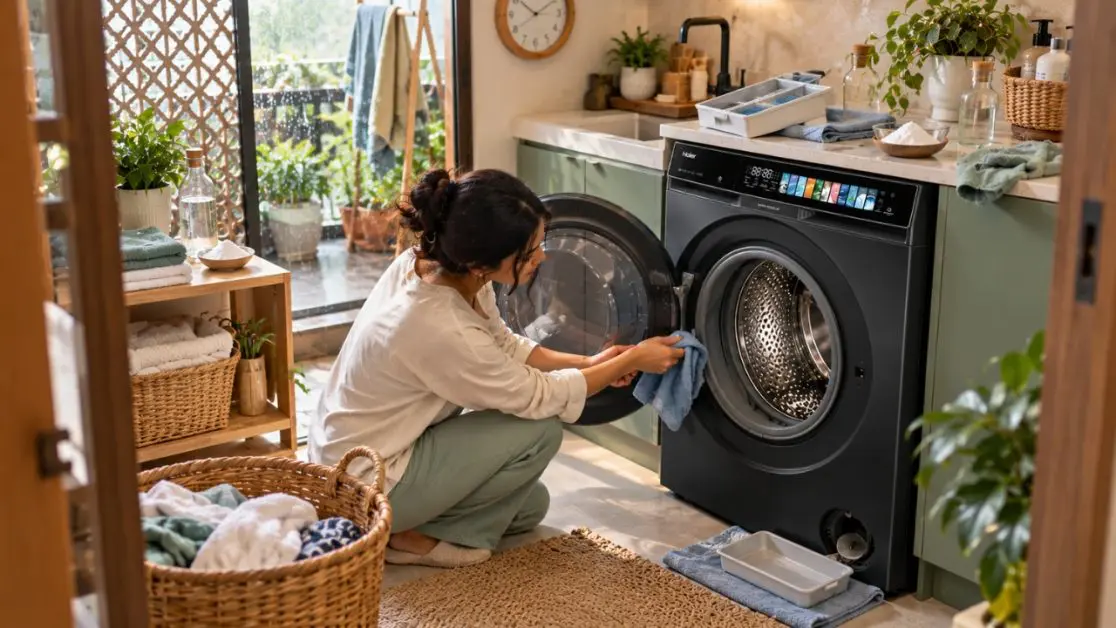
A washing machine is more than the stainless-steel drum you can see through the door. Several areas repeatedly come into contact with detergent, dirty laundry and moisture.
Pay attention to:
- Drum: where detergent film, fibres and residue can accumulate.
- Door gasket or rubber seal: particularly important on front-load machines because water and small debris can remain in the folds.
- Detergent dispenser: liquid detergent and fabric conditioner can leave sticky deposits.
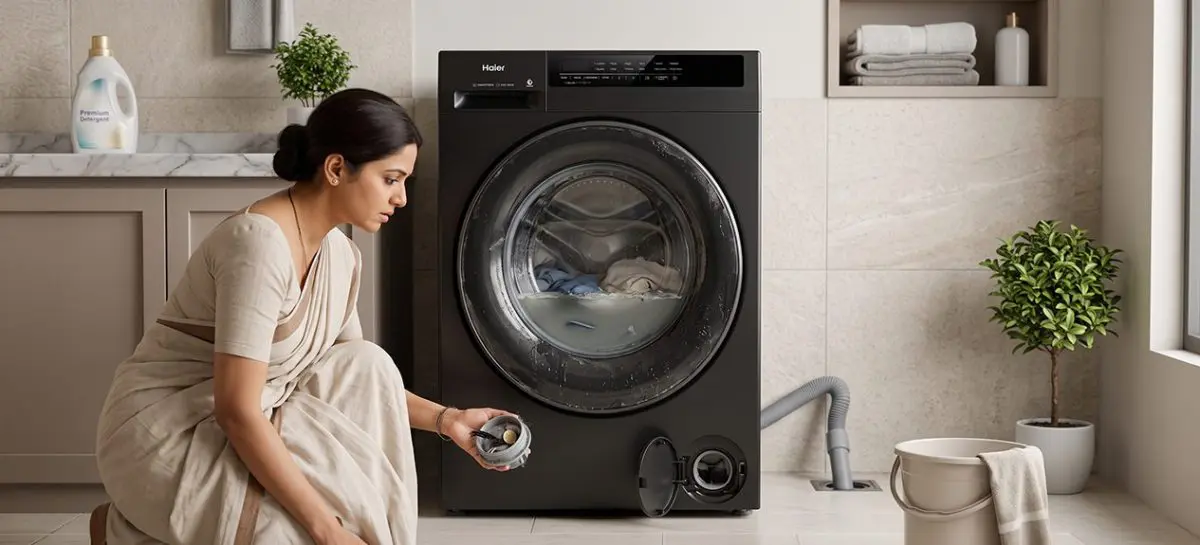
- Drain/pump filter: may collect lint and small objects, depending on the machine design.
- Door and surrounding surfaces: water splashes and detergent marks build up here surprisingly quickly.
- Exterior and control panel: usually requiring nothing more aggressive than careful wiping.
Cleaning all of these matters. Running an empty cycle and ignoring a dirty gasket or clogged filter only does half the job.
How Do You Clean a Washing Machine Drum at Home?
Start with the manufacturer’s recommended drum-cleaning function whenever your washing machine provides one.
Step 1: Empty the Machine Completely
Check the drum carefully. A sock hiding at the back rather defeats the purpose of an empty cleaning cycle.
Also inspect the gasket and remove any visible threads, hair or other loose debris.
Step 2: Use the Dedicated Drum or Self-Clean Programme
This is one area where newer washing machines can make maintenance much simpler.
For example, Haier’s F9 9 kg Front Load Washing Machine (HW90-DM14F9BKU1) includes a dedicated Drum Clean programme among its 14 programmes.
The Haier 10 kg Fully Automatic Front Load Washing Machine (HW100-DM14F9BKU1) similarly lists a Self Clean programme among its 16 wash programmes.
That is useful because you are not left guessing which wash settings should be used for routine internal maintenance.
Follow the instructions provided for your model rather than improvising temperatures, cleaning agents or cycle combinations.
Step 3: Wipe Away Remaining Moisture
Once the cleaning cycle finishes, wipe the accessible inner surface and door area with a clean, soft cloth.
Do not forget the gasket. Gently pull back its accessible folds and check for trapped moisture or debris, without forcing or damaging the rubber.
Step 4: Let the Interior Dry
If the manufacturer’s guidance permits it, leaving the door slightly open after use can help residual moisture evaporate.
Simple? Yes. But this everyday habit can matter because a constantly damp washing-machine interior is hardly ideal.
How to Clean the Washing Machine Filter
The filter is one of those components people often remember only when something starts behaving oddly.
Its location and removal mechanism vary significantly between models, so do not pull open a panel or unscrew something simply because an online video showed another machine doing it.
Before Opening the Filter
First:
- Switch off the washing machine.
- Disconnect it from the power supply where instructed.
- Check the user manual for the filter location and removal procedure.
- Keep a shallow tray and old towel nearby because residual water may escape.
- Never force a filter cover that does not open easily.
Once removed according to the manufacturer’s instructions, clear away accessible lint and debris and clean the filter as directed. Refit it securely before using the machine again.
Coins, buttons, threads and tiny forgotten objects have an uncanny ability to travel through laundry. Checking pockets before every wash remains the easier solution.
Does Vinegar and Baking Soda Clean a Washing Machine?
There’s a context for this popular internet cleaning trick.
Do not routinely pour vinegar and baking soda in a washing machine. The acid-base reaction generates lots of bubbles, but this does not necessarily mean that you’ve made a stronger washing-machine cleaner. A lot of their cleaning chemistry is neutralised in the process.
Another problem is that there are different types of seals, hoses, coatings and inside parts in washers, depending on their model.
How to Clean a Washing Machine With Vinegar and Baking Soda Safely

The safest rule is straightforward:
Use vinegar or baking soda inside your washing machine only when the manufacturer’s instructions for your specific model allow it.
If vinegar is permitted, follow the stated quantity, placement and programme. The same applies to baking soda.
Do not assume that more is better. Do not combine vinegar with chlorine-based bleach or other household cleaning chemicals. And do not substitute an online “hack” for the cleaning method specified in the appliance manual.
For machines with a dedicated Drum Clean or Self Clean programme, that manufacturer-provided function should be your starting point.
Do Not Forget the Detergent Drawer and Door Seal
The drum tends to get all the attention. The detergent dispenser quietly collects the evidence.
Cleaning the Detergent Dispenser
If your model allows the drawer to be removed:
- Take it out according to the manual.
- Clear away visible detergent and softener residue.
- Clean it using the method recommended for the appliance.
- Dry it before reinstalling.
Also inspect the cavity where the dispenser sits. Deposits can accumulate there as well.
Cleaning the Rubber Gasket
For front-load machines, inspect around and inside accessible gasket folds.
Use a soft cloth and an approved cleaning method to remove residue. Avoid sharp objects, aggressive scrubbing and unapproved chemicals that could damage the rubber.
There is a practical design consideration here too. Haier’s F9 9 kg model features Dual Spray, described as activating during the rinse cycle to help remove lint residue from the lid and gasket area. The same model also uses a 525 mm SuperDrum.
It does not remove the need for routine care, but features designed around frequently exposed areas can make day-to-day appliance upkeep more considered.
How Often Should You Clean Your Washing Machine?
There is no universal calendar that suits every household.
A family running frequent loads of children’s clothing, towels and bedsheets puts its machine through a different routine from someone washing twice a week.
Instead of waiting for a fixed date, watch for signs such as:
- a persistent musty smell;
- visible residue around the gasket or dispenser;
- lint or debris collecting in accessible areas;
- laundry not smelling as fresh after washing; or
- a maintenance reminder or cleaning instruction specified by your machine.
Your model’s manual should remain the primary reference for cleaning frequency and procedures.
Everyday Habits That Help Keep a Washing Machine Cleaner
Deep cleaning helps. Small habits between washes matter just as much.
Measure detergent correctly. Using extra detergent does not automatically produce cleaner clothes. Excess product can contribute to residue.
Remove washed clothes promptly. Leaving damp laundry sitting inside the drum for hours keeps the interior humid.
Check pockets. Receipts, tissues, coins and hair clips have no business going through a wash cycle.
Give the gasket a quick look. Thirty seconds now is easier than dealing with accumulated grime later.
Keep the drum reasonably ventilated when permitted. Follow the manufacturer’s safety and care guidance, particularly in homes with young children or pets.
Haier F9: When the Washing Machine Takes Some of the Guesswork Out
Maintenance is easier when the appliance itself has been designed with practical wash and cleaning functions.
Haier India’s current F9 front-load range includes 9 kg, 10 kg and 12 kg options, allowing households to choose capacity according to their laundry requirements. The 9 kg and 12 kg models feature One-Touch AI Wash, which is designed to sense factors including fabric type, load and dirt level when selecting wash settings.
The 10 kg F9 model adds a useful mix of features for everyday Indian households: a 5-star rating, Direct Motion Motor, 1400 RPM spin speed, smart functionality and 16 programmes, including Self Clean.
The 9 kg model, meanwhile, includes programmes such as AI Wash, Hygiene, Baby Care, Delicate, Saree, Eco, Quick and Drum Clean. That breadth matters because a washing machine is rarely dealing with one type of laundry in an Indian home. One load could be everyday cottons, the next delicate garments, and the one after that bedsheets or children’s clothes.
For larger laundry requirements, the Haier 12 kg F9 Front Load Washing Machine provides a 12 kg capacity along with 14 programmes, Direct Motion technology, smart functionality and a Self Clean programme.
So, rather than viewing machine cleaning as an occasional rescue job once odour or residue appears, it makes more sense to treat maintenance as part of normal laundry care. A machine that provides dedicated cleaning functions makes that routine easier to remember and considerably less mysterious.
Frequently Asked Questions
Can I put vinegar and baking soda in my washing machine to clean it?
Do not do so unless your washing machine manufacturer specifically permits these substances. Mixing vinegar and baking soda also causes an acid-base reaction that largely neutralises them. Follow your model’s recommended cleaning procedure instead.
Does vinegar and baking soda clean the washing machine?
Both are commonly used as household cleaning ingredients, but combining them is not necessarily an effective or manufacturer-approved washing-machine cleaning method. A dedicated Drum Clean or Self Clean programme should be used where provided, following the appliance instructions.
How do I clean a washing machine with vinegar and baking soda?
First check the manufacturer’s manual. If either substance is permitted, use it only in the specified amount and location. Avoid inventing mixtures or combining household chemicals inside the machine.
How do I know when my washing machine needs cleaning?
Musty odours, visible residue around the gasket, detergent build-up or accumulated debris are common cues to inspect and clean the machine. Follow the cleaning schedule recommended for your particular model.
Should I clean the washing machine filter myself?
Only when the manufacturer’s instructions explain how the filter is accessed and cleaned by the user. Switch the machine off first, follow the manual carefully and be prepared for residual water when opening an accessible drain filter.
Do Haier washing machines have a self-cleaning programme?
Selected Haier models do. For example, the F9 9 kg model lists Drum Clean, while the Haier 10 kg and 12 kg models referenced here include Self Clean among their programmes. Always check the specifications of the individual model before purchase.