
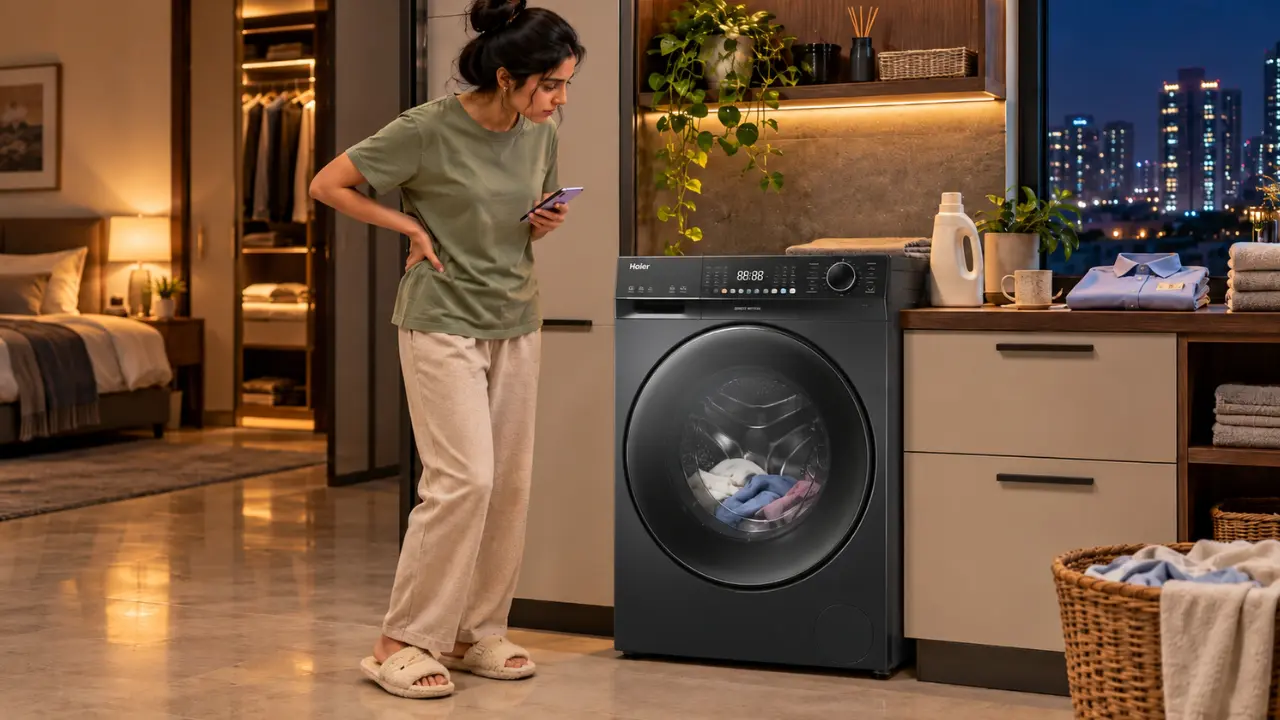

The washing machine display said 45 minutes. An hour later, your clothes are still inside, the drum is moving occasionally, and the timer seems to have developed a mind of its own.
Sounds familiar?
A washing machine taking longer than expected is a common household frustration, particularly when you have office clothes waiting to dry, school uniforms needed for tomorrow, or another load sitting in the laundry basket.
But here’s something worth knowing. A longer washing cycle doesn’t necessarily mean your machine is faulty.
Modern washing machines adjust their operations according to several factors, including fabric type, load weight, water availability and selected wash settings. Sometimes, the additional time is part of the washing process. Other times, it indicates something that needs attention.
Understanding the difference can save you unnecessary troubleshooting and help you get better results from every wash.
Is Your Washing Machine Actually Taking Too Long?
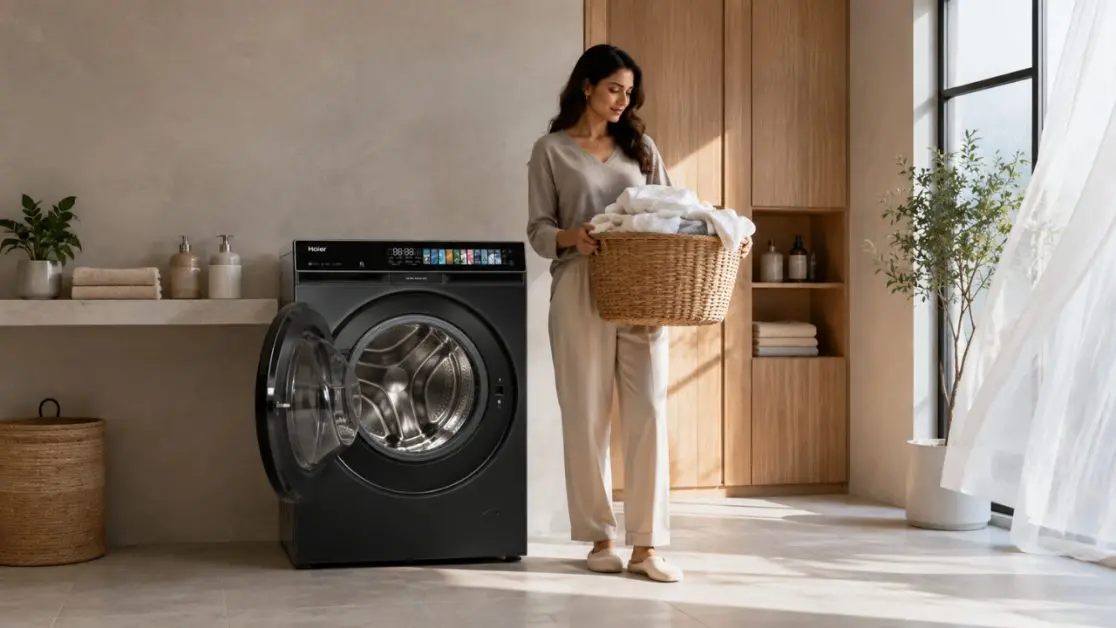
Before assuming something is wrong, consider the programme you’ve selected.
A quick wash programme is designed for relatively small loads of lightly soiled clothes. A cotton or hygiene programme, however, may involve longer washing, heating or rinsing stages.
Eco programmes can also take longer because they may use extended washing time to reduce energy consumption.
The important question isn’t whether your washing machine takes 30 minutes or two hours.
It’s whether the actual duration is unusually longer than the programme normally requires.
When Should You Pay Attention?
Watch for these situations:
- The displayed remaining time repeatedly increases instead of decreasing.
- The machine spends unusually long filling with water.
- The drum keeps attempting to spin without reaching the expected speed.
- Water remains inside even after the draining stage.
- The same programme suddenly takes much longer than it did previously.
- The machine pauses repeatedly or displays an error code.
Occasional changes in cycle duration can be normal. Consistent delays, however, deserve a closer look.
7 Reasons Your Washing Machine Is Taking Longer Than Expected
1. You’ve Loaded More Clothes Than the Drum Can Handle
It’s tempting to squeeze in those last two towels. After all, running another wash means more time and effort.
Unfortunately, overloading can create the opposite result.
When clothes are tightly packed, they cannot move freely inside the drum. This may affect washing performance and make it harder for the machine to distribute the load evenly during spinning.
Some washing machines respond by making additional attempts to balance the load.
The result? A cycle that seems to drag on.
What you can do:
- Follow the recommended load capacity for your selected programme.
- Avoid forcing additional clothes into an already full drum.
- Wash bulky blankets and heavy towels according to the machine’s instructions.
- Remember that the rated capacity may not apply to every wash programme.
A little breathing space inside the drum can make a noticeable difference.
2. Water Is Entering the Machine Too Slowly
Imagine filling a bucket through a tap that barely produces a steady stream.
It takes longer, doesn’t it?
Something similar happens when your washing machine receives insufficient water.
Low household water pressure, a partially closed inlet tap or a restricted inlet filter can delay the filling stage.
This can be particularly relevant in Indian homes where water pressure varies between floors or during certain supply hours.
Start with a few simple checks:
- Make sure the water inlet tap is fully open.
- Check whether the inlet hose is bent or twisted.
- Observe whether other taps are experiencing unusually low pressure.
- Follow the user manual when checking the inlet filter.
If the problem continues despite normal household water pressure, professional inspection may be necessary.
3. Too Much Detergent Is Creating Excess Foam

More detergent doesn’t automatically mean cleaner clothes.
In fact, using excessive detergent can make washing less efficient.
When too much foam develops, some washing machines may adjust their operation or introduce additional rinsing to manage the suds.
This can extend the overall cycle.
The problem becomes more noticeable when regular hand-washing detergent is used in a machine designed for low-foam detergent.
For better results, choose a detergent suitable for your washing machine and follow the recommended quantity based on load size, soil level and water hardness.
And yes, that extra capful of detergent probably isn’t helping.
4. The Washing Machine Is Struggling to Balance the Load
Ever noticed your washing machine rotating slowly several times before beginning its final spin?
It may be attempting to distribute the clothes evenly.
When heavy garments collect on one side of the drum, the machine can experience an uneven load.
Common examples include:
- Washing one heavy bedsheet with a few lightweight garments.
- Mixing thick bath towels with delicate clothing.
- Washing a single bulky blanket.
- Loading several heavy jeans unevenly.
Depending on the machine’s design, it may attempt to redistribute the load before spinning.
If balancing remains unsuccessful, the machine may reduce its spin speed or delay the spinning stage.
For recurring problems, check that the appliance is correctly levelled and positioned on a stable floor.
5. Your Selected Wash Programme Requires More Time
Not every wash needs the same treatment.
A lightly worn cotton T-shirt and a heavily soiled bedsheet have very different cleaning requirements.
Similarly, programmes involving higher temperatures, additional rinsing or specialised fabric care may require more time.
For example, selecting a hygiene programme for everyday office wear may be unnecessary when a suitable regular wash programme would do the job.
This is where understanding your washing machine’s settings becomes useful.
Choose programmes according to the fabric care label, soil level and washing requirements rather than automatically selecting the most intensive option.
6. The Drainage System May Be Restricted
Sometimes, the washing stage finishes normally, but the machine takes unusually long to drain.
A partially blocked drain filter, restricted outlet hose or drainage problem may prevent water from leaving efficiently.
You might notice:
- Water remains inside the drum.
- A humming sound during drainage.
- The machine stopped before the final spin.
- An error message related to drainage.
If your washing machine has a user-accessible drain filter, consult its manual before attempting maintenance.
Always switch off the appliance and disconnect it from the power supply before permitted cleaning. Be prepared for residual water and never open a filter while the water may still be hot.
If drainage problems persist, contact an authorised service professional.
7. The Machine Is Taking Longer to Heat Water
Some washing programmes require the appliance to heat water to a selected temperature.
During winter, incoming water may be colder than usual, increasing the time required to reach that temperature.
A higher temperature setting can also extend the programme compared with a cold-water wash.
However, if the machine repeatedly fails to heat water or takes unusually long despite normal conditions, its heating system may require professional inspection.
Avoid opening electrical components or attempting internal repairs yourself.
How Haier F9 Washing Machines Make Laundry Management Smarter
Understanding what affects washing time is useful. Having a washing machine that can intelligently manage wash settings makes the process more convenient.
Haier India’s F9 Front Load Washing Machine range brings together intelligent washing functions, flexible programmes and practical features designed for modern households.
The range includes three capacity options:
- Haier F9 9 Kg Front Load Washing Machine (HW90-DM14F9BKU1)
- Haier 10 Kg Fully Automatic Front Load Washing Machine (HW100-DM14F9BKU1)
- Haier 12 Kg F9 Front Load Washing Machine (HW120-DM14F9BKU1)
Each model offers features that help users manage their laundry requirements without unnecessarily complicated programme selection.
One-Touch AI Wash: Let the Machine Handle the Settings
Choosing the right programme isn’t always straightforward.
Should you increase the washing time? Adjust the water level? Change the spin speed?
Haier’s One-Touch AI Wash helps simplify these decisions.
The technology automatically senses factors such as fabric type, load and dirt level to select appropriate washing parameters.
Rather than manually adjusting multiple settings for every load, users can rely on intelligent programme selection.
This is particularly convenient for busy Indian households dealing with different types of laundry throughout the week.
Importantly, AI Wash is designed to optimize washing parameters, not guarantee that every load finishes within a fixed duration.
Eco Wash: Washing Time That Serves a Purpose
A longer cycle isn’t necessarily inefficient.
Haier’s F9 range features Eco Wash technology, which uses automatic weighing to match water levels and washing time with the laundry load.
The objective is to support water and energy conservation while maintaining suitable washing performance.
This distinction matters because an intelligently managed wash isn’t simply about finishing as quickly as possible.
It’s about using appropriate resources for the clothes being washed.
Direct Motion Motor for Smooth Washing Performance
Excessive vibration can become frustrating, especially when the washing machine is installed near a bedroom or living area.
Haier’s F9 models feature Direct Motion Motor technology.
The motor connects directly to the drum, eliminating the conventional belt-driven arrangement and supporting smoother, quieter operation with reduced vibration.
For households that regularly wash clothes during early mornings or evenings, this is a practical advantage.
The range also includes a Night Wash feature designed for quieter washing operation.
More Control Over Your Laundry Schedule
Haier’s F9 washing machines offer additional functions that make everyday laundry management more flexible.
Depending on the model, these include:
- Quick wash programmes for suitable smaller loads.
- Extra Rinse for additional rinsing when required.
- Delay functions for scheduling wash cycles.
- i-Time functionality on selected models.
- Smart connectivity for convenient laundry monitoring and control.
The models also feature an AI Colour Panel, providing an interactive interface for operating the washing machine.
Together, these features help users select and manage washing programmes according to their daily requirements.
Choosing the Right Haier F9 Capacity for Your Household
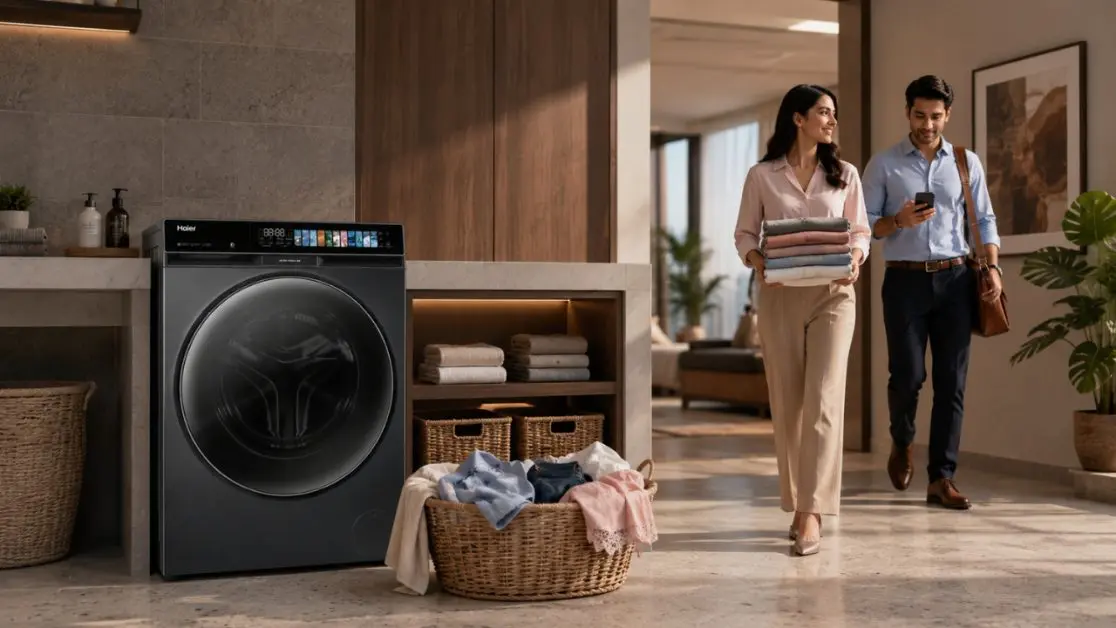
Capacity matters when purchasing a washing machine, particularly if your existing appliance frequently struggles with large loads.
The Haier F9 range offers three options worth considering.
Haier F9 9 Kg Front Load Washing Machine
Model: HW90-DM14F9BKU1
The 9 kg model is worth considering for households that regularly wash mixed everyday clothing, towels and bedsheets.
It features One-Touch AI Wash, a Direct Motion Motor and multiple washing programmes.
Its 1400 RPM maximum spin speed also provides flexibility for suitable fabrics and programmes.
Haier 10 Kg Fully Automatic Front Load Washing Machine
Model: HW100-DM14F9BKU1
For families managing larger weekly laundry loads, the 10 kg model offers additional rated capacity.
It combines intelligent washing features with specialised programmes, including options for delicate garments, baby clothes and everyday washing.
The machine also offers a maximum spin speed of 1400 RPM.
Haier 12 Kg F9 Front Load Washing Machine
Model: HW120-DM14F9BKU1
The 12 kg model is designed for households that require greater washing capacity.
Its larger rated load capacity can be useful when managing substantial family laundry, subject to programme-specific loading limits.
Features such as One-Touch AI Wash, Eco Wash and the Direct Motion Motor make it an option for users seeking intelligent washing with higher capacity.
All three models carry a 5-star rating in their listed specifications and offer a 4-year comprehensive warranty and 12-year motor warranty, subject to applicable terms and conditions.
A Simple Laundry Routine That Can Prevent Unnecessary Delays
You don’t need to become a washing machine expert to improve your laundry routine.
A few practical habits can help.
- Sort clothes before washing. Separate delicate garments, heavily soiled clothes and bulky items where appropriate.
- Choose the correct programme. Avoid using intensive settings when a regular wash is sufficient.
- Measure detergent carefully. Excess foam can interfere with efficient washing.
- Avoid overloading. Follow the recommended capacity for each programme.
- Check the water supply. Ensure the inlet tap is open and the hose is unobstructed.
- Maintain the appliance. Follow the manufacturer’s instructions for drum cleaning and filter maintenance.
- Monitor recurring delays. If the same programme consistently takes unusually long, arrange professional inspection.
These habits help maintain washing performance without unnecessary adjustments or repeated cycles.
Make Every Wash More Convenient With Haier India
A washing machine that takes longer than expected isn’t always malfunctioning. Sometimes, the machine simply needs the right load, sufficient water and an appropriate programme.
For households looking to simplify laundry management, Haier India’s F9 Front Load Washing Machine range offers intelligent features that help take the guesswork out of everyday washing.
With One-Touch AI Wash, Eco Wash, Direct Motion Motor technology and 9 kg, 10 kg and 12 kg capacity options, the range brings practical flexibility to modern Indian homes.
Explore Haier India’s F9 washing machine range and discover how intelligent washing technology can make your everyday laundry routine easier to manage.
Frequently Asked Questions
Why does my washing machine timer keep increasing?
The remaining time may change when the machine adjusts to load conditions, water filling, foam levels or spin balancing. Frequent or unusually large changes may indicate a problem requiring attention.
Can overloading make a washing machine cycle longer?
Yes. Overloading can affect drum movement and load distribution. Some machines may attempt additional balancing before spinning, increasing the overall cycle duration.
Does a quick wash programme clean clothes properly?
Quick wash programmes are generally intended for suitable smaller loads of lightly soiled clothes. Heavily soiled garments may require a more appropriate regular or intensive programme.
Why does my washing machine take longer during winter?
Colder incoming water can increase heating time when a warm or hot wash programme is selected. Other factors, including water pressure and load conditions, may also affect cycle duration.
When should I call a technician for a long washing cycle?
Seek professional assistance if the machine repeatedly stops, fails to drain, displays persistent error codes or takes substantially longer than usual despite correct loading and settings.