


Imagine your guests arriving in an hour, drinks ready, you open the freezer, and the ice tray is empty. It happens quite often, especially in the summer when people always want cold drinks. It may seem like a small part of using a refrigerator, but making ice can be very important when plans come together at the last minute.
Refrigerators have come a long way from just keeping food cold. That is how manufacturers are addressing everyday freezing needs today, with features such as turbo icing. Learning about these developments will help you move beyond storage capacity and consider how a refrigerator fits into your routine.
To appreciate the value of faster ice making, it is useful to consider how long the process normally takes in a conventional refrigerator.
How Long Does a Refrigerator Normally Take to Make Ice?
A normal refrigerator freezer will usually take around 3-4 hours to freeze water into ice cubes. The time to freeze water will vary from one appliance to another. The speed of ice formation depends on the temperature of the freezer, its cooling capacity and the amount of water in each tray. Big ice cubes take longer to freeze than small ones. And a freezer that’s already at the recommended operating temperature makes ice more efficiently than one that has just been turned on.
Fridge type also matters. Direct cool vs. frost-free refrigerators work differently in the cooling mechanism, and this can influence how temperature is maintained inside the freezer. Other factors that may slow the process are newly stored warm food, over-crowded compartments and frequent door opening. The fast ice fridge with special freezing functions can reduce the waiting time and make ice-making more convenient for daily use.
How Does Fast-Freezing Technology Speed Up Ice-Making?
Fast freezing technology is designed to shorten the freezing time by controlling the response of the refrigerator to excess cooling demand. Some refrigerators have a special fast freeze function that can change the performance of the refrigerator to speed the water to a frozen state instead of waiting for its normal operating cycle.
- Shorten the initial cooling delay. Some refrigerators have a fast-freeze feature that will pre-cool the compartment if you turn it on before placing water in the freezer. Or, you take the ice tray and put it in an existing freezing environment, instead of waiting for the temperature to drop.
- Rapid response to changes in freezer load. Additional cooling load is created by adding several trays of water. This load can be handled by a fast-freeze refrigerator, whose cooling cycle has been improved to reduce the temperature rise of newly placed items.
- Assists water across the ice-formation phase. Even after water has reached its freezing point, it gives up more heat as it changes from a liquid to a solid. The fast-freeze operation can facilitate the freezing process by providing colder conditions during this phase.
- Accelerated total freezing. The ice always starts forming at the edges of the tray, never in the middle. This extended cooling cycle serves to remove some of the residual heat. This allows the cubes to freeze more solid, not just look done when there is still liquid water in them.
In search of a unique feature? Read through 1-Hour Icing Technology – Fast Ice When You Need It
What Factors Affect How Quickly Ice Freezes in Your Fridge?
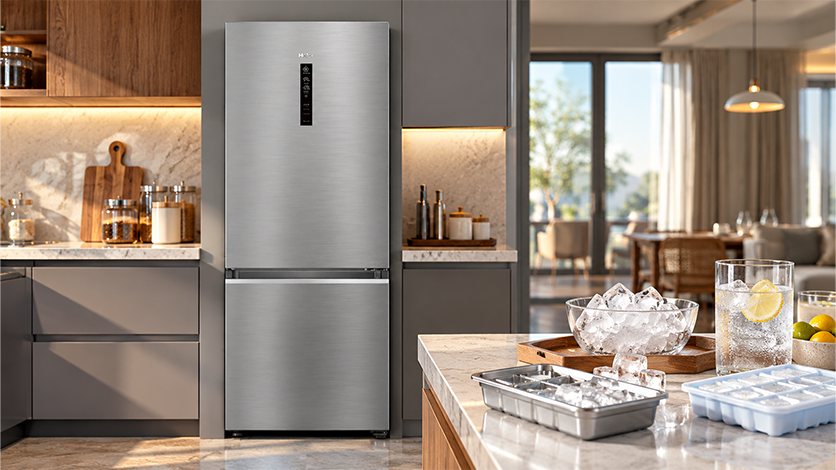
Even if you use the same ice tray and the same refrigerator, it takes different amounts of time to make ice. There are some factors that can influence how efficient a freezer is and how long a fridge takes to make ice. “Four things to think about here.
- Material size of ice tray. The material of an ice tray can affect the rate of heat transfer through it. Metal trays usually conduct heat better than the thicker plastic or silicone trays, but the design of the tray will also affect the time it takes to freeze.
- Amount of frost buildup. Manual-defrost freezers can have excess frost that can affect normal cooling performance and reduce usable space. The manufacturer advises regular defrosting to keep the freezer running as it should.
- Condition of refrigerator door seal. If the door seal is worn, loose or damaged, warm air can enter the freezer even when the door is closed. This increases cooling load and makes it more difficult to maintain the appropriate freezing conditions.
- Stable electricity supply. Frequent power outages may interfere with the freezing process, especially if the freezer begins to thaw between cooling cycles. A continuous power supply makes the refrigerator operate under more stable conditions.
How Can You Make Ice Faster Without Changing Your Refrigerator?
The way you use and maintain your refrigerator can make a big difference in how quickly you get your ice ready. Even if you don’t have a special fast-freezing technology feature, a few simple habits can help you avoid unnecessary delays when you’re getting ready to make ice.
- Do not make ice right after defrosting. If your refrigerator is of the manual-defrost type, allow the freezer to come back to its normal condition before replacing ice trays. Creating ice before the compartment is finished cooling can extend the wait time.
- Do not place the refrigerator in direct sunlight. And if your refrigerator is located near a sunny window, stove or other heat-generating appliance, it may need to work harder to maintain its internal temperature. Good air circulation and a cooler spot will support normal freezing performance.
- Never put hot containers in the freezer. Food just cooked adds heat to the cooling load of the refrigerator. Cool hot food quickly before putting it in the refrigerator or freezer. Never leave perishable food at room temperature for more than two hours.
- Ensure the freezer door closes properly. Sometimes the door can’t be closed all the way due to food packages or containers. Ensure the door is clear of obstructions. The freezer must be able to sustain the necessary cooling conditions to produce ice.
How Haier Refrigerators Make Ice Faster with Turbo Icing Technology
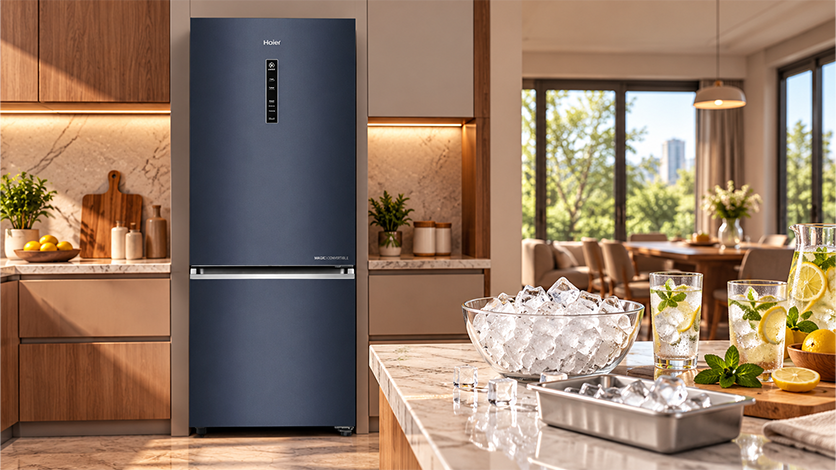
At Haier, we know that faster ice-making is just one part of making freezer use easier. We also see how well our fridges keep their cool and how easy it is to get the ice out when it’s done. That is why selected models include dedicated icing features, inverter technology and practical ice handling arrangements.
- Turbo Icing offers faster ice making for our bottom mount fridges
Our Turbo Icing technology can make ice in as fast as 49 minutes, 200% faster ice making under specified conditions. Along with handy temperature controls and convertible storage options, this feature has been added to our Haier 231 Litres Inverter Bottom Mounted Refrigerator.
- 1 Hour Icing for quick ice production
Our 1-Hour Icing Technology helps you spend less time waiting for a new batch of ice. Our Haier 355L 2 Star Inox Steel Bottom Mount Refrigerator also comes with Inverter cooling, which makes it perfect for families that make chilled drinks regularly or need ice all day.
- Triple Inverter and Dual Fan Technology for consistent cooling
We have Triple Inverter Technology that enables us to control compressor functioning according to cooling needs. With Dual Fan Technology, we can help disperse cold air in the refrigerator. Our Haier 445L 2 Star Black Glass Bottom Mount Refrigerator is equipped with these cooling features, plus 1-Hour Icing to satisfy your food storage and ice-making needs.
- Twist Ice Maker Makes Ice Handling Simple
Once the ice is ready, our Twist Ice Maker makes it easy to release the cubes without having to take them out one at a time. This feature is included in our Haier 325L 2 Star Graphite Black Bottom Mount Refrigerator with 1-Hour Icing Technology. The ice-making and collection process is a less complicated part of daily refrigerator use.
Conclusion
How cold the freezer feels is far from the whole story in terms of how fast ice is made. The outcome is affected by temperature stability, tray size, airflow and cooling performance.
Good freezer habits will improve ice-making efficiency, but technologies like Turbo Icing and fast-freeze cooling offer a little more convenience when shorter freezing times are required.
Frequently Asked Questions
How long does a fridge take to make ice?
Typically, the standard fridge freezer will take about 3 to 4 hours to turn water into ice cubes. However, the exact time will depend on the freezer temperature, the size of the ice tray and the cooling conditions. Some refrigerators with fast-freezing technology can make ice much quicker. For example, you can opt for Haier refrigerators with Turbo Icing technology, which can make ice in just 49 minutes under specified conditions.
What is fast-freeze or turbo icing?
Fast-freeze and turbo icing are technologies that are supposed to reduce the time it takes to freeze water or food. Fast-freeze is normally a feature to temporarily make the freezer colder. Turbo Icing is all about speeding up the creation of ice. Both aim to reduce waiting time, but their operation and performance are model-dependent.
What is fast freeze in a refrigerator?
Fast freeze is a function on the refrigerator that temporarily increases the cooling of the freezer compartment to freeze newly added food or water faster. This is great if you’re shopping for groceries, need to freeze some fresh food, or require more ice. Some models have an auto-reset feature that will revert them to normal operation after a period of time.
How does turbo freeze / fast freeze work?
A turbo freeze fridge either increases the cooling power or (depending on the design) temporarily reduces the target temperature of the freezer to speed up the freezing process. The compressor extracts the heat from the freezer section, and the cooling system maintains it at the proper temperature. It makes water and new food added lose heat faster than they would in regular freezing conditions.
Does fast-freeze use more electricity?
Yes, fast freezing may result in a temporary increase in your electricity bill, as the cooling system may have to work harder, or for longer. But how much more energy is used depends on the fridge’s compressor technology, the load in the freezer and the running time. This feature can be used only when you need to, so you can prevent waste of power.
How can I make ice faster in the fridge?
If you want ice faster, use smaller compartments in the trays, don’t fill above the recommended level, and make sure the freezer is at its normal operating temperature. Keeping the freezer door shut and making sure there is enough room for air to circulate can help too. If your fridge has a turbo icing or fast freeze refrigerator option, use it to speed up the icing process as per the manufacturer’s instructions.