
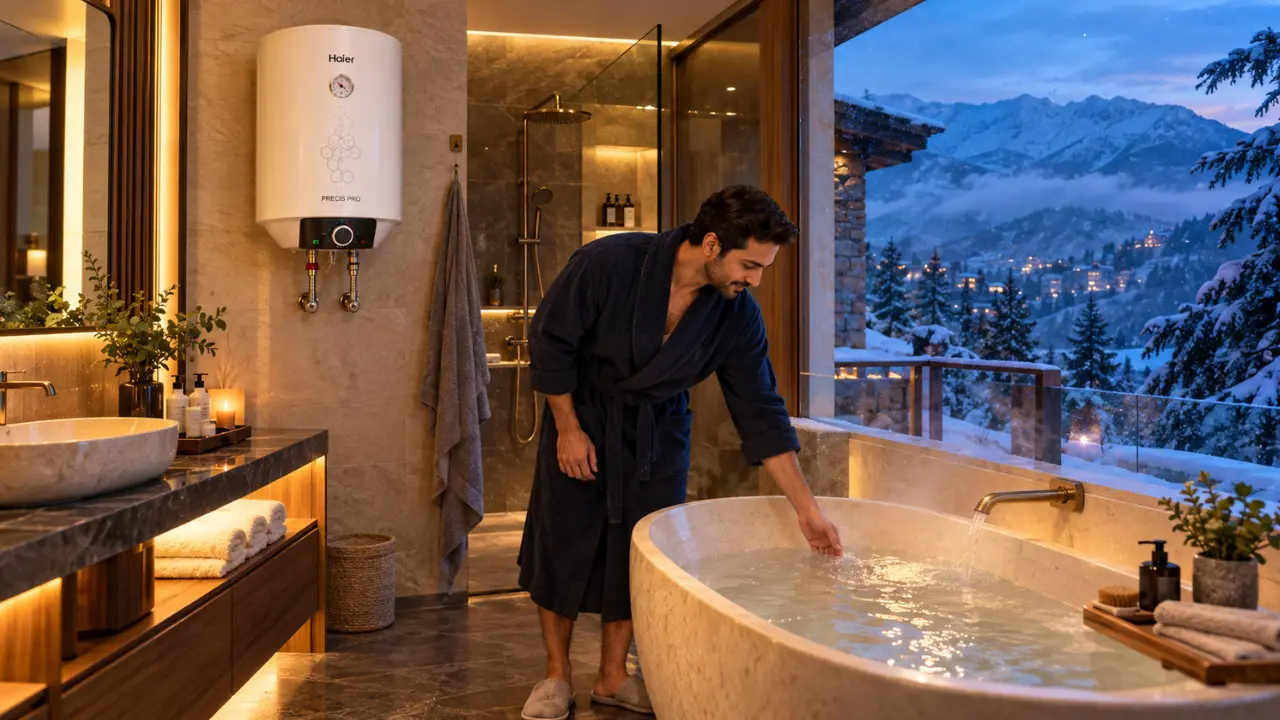

The thermostat is the device that regulates the temperature within the geyser.Thermostat is a device that controls the temperature inside the geyser.
You turn on the geyser, get to work and come back to find the water nice and hot. The heating has turned off although you have not touched the switch. If the water cools down a bit later, the geyser can begin to heat up again.
Ever wonder why that is?
The solution is a very small, but very important part: the thermostat.
A geyser thermostat is used to control the water temperature by turning the heating element on and off. It is used to avoid unnecessary heating, to promote efficient electricity consumption and to ensure safe operation of your water heater.
In Indian homes, where geysers are more likely to put in extra effort on cold winter mornings, it is important to be aware of this aspect while selecting or servicing a geyser.
What is a Thermostat in a Geyser?
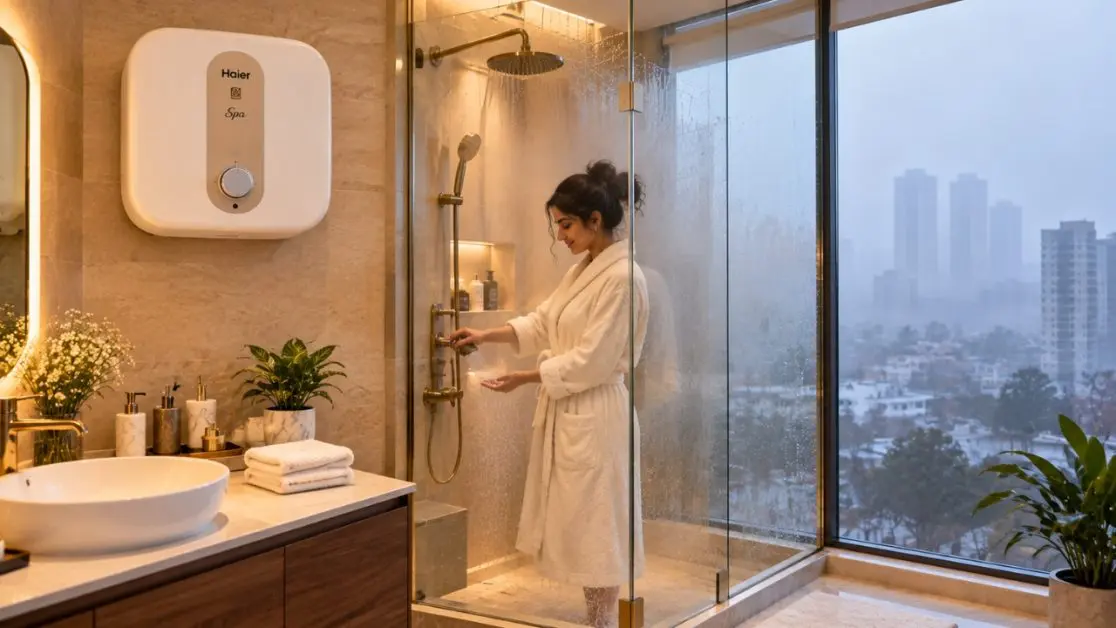
A thermostat in a geyser is a device which is used to regulate the temperature of the water in the geyser and to control the heating element.
It’s like the temperature controller for the geyser.
The thermostat turns off the heating circuit when the water reaches the desired temperature. When the temperature of the water then falls below a set threshold, it will resume heating.
This automatic control is especially helpful in storage water heaters, which have a water tank that is insulated and keeps water hot until it is needed.
How Does a Geyser Thermostat Work?
The thermostat has a few important roles:
- Take temperature readings in the storage tank.
- Turn off the heating element when the desired temperature is reached.
- Can be reheated if water has dropped low enough.
- Prevents the unnecessary heating from continuous electricity use.
- Provides reliable hot water supply when in use.
But a thermostat should not be the same as a special thermal safety cut-off. Both are sensitive to temperature but have different functions.
The thermostat controls normal heating cycles and the thermal cut-off offers extra protection against excessive overheating.
How Does a Geyser Thermostat Work?
Suppose a normal morning in Delhi during the winter. The water that comes in is cold and a few family members have to get hot water before going to work or school.
Once you turn on the geyser, a series of actions start to take place inside the geyser.
Step 1: The Heating Element Starts Working
The heating element is a conductor through which electricity passes, causing it to heat up.
This heat is transferred to the water around the tank.
The time needed to heat the water will depend on the initial water temperature, the size of the tank, and the power of the heating element.
Step 2: The Thermostat Monitors Temperature
The thermostat detects the change in temperature as the water warms up.
This sensing mechanism can be a capillary tube, temperature sensitive components or electronic sensors, depending on the design of the geyser.
The principle is the same, only measure the temperature and decide if more heating is required.
Step 3: Heating Stops at the Set Temperature
When the water is at the desired temperature, the thermostat breaks the circuit that powers the heating element.
Heating stops automatically.
It’s important to note, however, that this does not always indicate that the entire geyser has gone off. The appliance can continue to be plugged into the power source even if the heating element is not in use.
Step 4: Heating Resumes When Required
Even with an insulated hot water tank, the heat is lost over time.
As the temperature drops below the thermostat’s switching point, the heating element is free to turn on once more.
The difference between switching off and switching on temperatures ensures that the system does not switch on and off rapidly every time the temperature fluctuates a little.
It will continue automatically as long as the geyser is on.
So, why is a thermostat important for geyser safety?

It’s convenient to have hot water. Too hot water can, however, lead to serious burns.
That’s why the need for temperature regulation is not to be taken for granted.
A well-designed thermostat will keep the water temperature in the appliance within the desired operating limits. It also minimizes the chances of over-heating in normal operation.
Still, a thermostat alone shouldn’t be considered a complete safety system.
Modern water heaters can also include other protective elements that react when the standard temperature control mechanism is not working.
Understanding Dual Thermal Protection
Haier India has introduced Dual Thermal Proof (TTS) technology in certain of its water heaters such as 15L Square Spa Ivory, Square Ivory and PRECIS models.
The system has 2 temperature based protection.
As per the product design given:
- First Level Protection: Heating element will not heat beyond 75°C.
- Second level protection: If the first level protection fails and the temperature reaches 95°C, the second level thermal protection automatically shuts off the heating power.
This multi-layered system gives protection in addition to the standard heating cycle.
It is especially pertinent, since electrical appliances should never rely solely on one protection device.
These temperatures are intended to represent the temperatures that the models specify as protective temperatures, but not as recommended bathing temperatures.
Is there a way using a Geyser Thermostat to save electricity?
Yes. A working thermostat is able to regulate the use of electricity by shutting off the heating element when it reaches the desired temperature.
There is however a crucial difference.
A thermostat does not decrease the amount of energy that is needed to heat a specified volume of water by a specified temperature. Rather, it ensures that the heating element doesn’t run needlessly.
Let’s take, for example, a 15 litre storage geyser.
If it is already at the desired temperature, it would be a waste of electricity to keep it warm.If it’s already hot enough, further heating would cause it to overheat.
The thermostat stops that process.
What other factors affect the use of electricity?
There are a number of factors that influence the amount of electricity a geyser consumes:
- High energy settings: Higher settings will typically use more energy to heat water.
- Storage capacity: The greater the amount of water stored, the more energy will be needed to raise the temperature by the same amount.
- Insulation quality: The higher the quality of the insulation, the slower it will lose heat and the less reheating will be needed.
- Frequency of use: Hot water is used again and again, bringing in new cold water that needs to be heated.
- Water temperature of the incoming water: The colder the water in the winter months, the more heat will be needed.
This is why it is important that a geyser is well-insulated, as well as temperature-controlled.
Haier’s chosen storage water heaters have a PUF insulation to keep the heat in and minimise reheating.
Combined with insulation, the appliance can keep hot water stored more efficiently when combined with the thermostat’s regulation.
How Does Haier Combine Thermostat Technology With Water Heater Safety?

Temperature control is more useful if complemented by other protective measures.
Haier India water heater range comprises models with multiple safety and durability aspects.
There are three examples that are especially relevant when considering 15 litre storage geysers.
Haier 15L Square Spa Ivory 5 Star Water Heater (ES15V-S1I)
Haier Square Spa Ivory features a compact square design and protective and temperature control technologies.
It has the following main characteristics:
- Temperature related protection with bi-capillary dual thermostat.
- Dual Thermal Proof technology for additional overheating protection.
- Shock Proof technology to minimize electrical shock hazards under certain leakage conditions.
- Water splash resistant (IPX4).
- Corrosion resistant glass lined tank.
- 8 bar rated working pressure, for compatible high pressure installations.
- PUF insulation to support heat retention.
The model is also 5-star energy efficient.
If you’re looking for a water heater that has a square shape, is 15 litres in size and has several protective features, the Square Spa Ivory might be the right choice for your home.
Haier 15L Square Ivory 5 Star Water Heater (ES15V-SDI)
Others would like to see their water heating system more clearly and have more control over it.
Apart from the temperature protection system, the Haier 15L Square Ivory has other convenience features to meet this requirement.
These include:
- Bi-capillary dual thermostat.
- Dual Thermal Proof technology is used.
- LED display.
- Smart Timer functionality.
- Smart Memory feature.
- Remote control.
- Voltage fluctuation protection.
- 5-star energy efficiency rating.
It is especially useful for households with regular hot water schedules due to its timer and memory capabilities.
For instance, families that have a typical hot water usage pattern, such as needing hot water during certain hours in the morning, might find that a programmable hot water controller is more convenient than one that is manually operated.
It also features Shock Proof technology and an 8 bar pressure rating.
Haier 15L PRECIS ABS 5 Star Cylindrical Water Heater (ES15V-PRECIS)
Not all bathrooms are created equal.
If you’re looking for a traditional cylindrical water heater, Haier has the 15L PRECIS ABS 5 Star Water Heater.
The model incorporates temperature control along with some practical aspects:
- Bi-capillary dual thermostat.
- Dual Thermal Proof protection.
- Shock Proof technology.
- IPX4 water resistance.
- Glass-lined tank construction.
- 8-bar rated working pressure.
- PUF insulation for improved heat retention.
- 5 star energy rating.
It also features RSC U-turn Flow Technology that helps promote water movement and prevent stagnant water buildup in the tank.
The PRECIS offers an alternative to Haier’s square storage water heaters for buyers who would like to compare water heaters but are not interested in sacrificing the water heater’s dual thermal protection system.
How To Check For A Faulty Geyser Thermostat?
If the thermostat is faulty it can cause water temperature to be affected or it can disrupt the normal heating cycle of the geyser.
But not all heating issues are associated with the thermostat.
Similar symptoms can occur due to a damaged heating element, a loose connection, a tripped protective device, or any other internal fault.
Common Warning Signs
Keep an eye out for these changes:
- The water is very hot: The thermostat might not be turning off the heating element at the desired temperature.
- Water doesn’t heat up: A malfunctioning thermostat may cause the water to stay cold, but there is also the possibility of a heating element or electrical problem.
- Temperature fluctuations: If the temperature is not consistent, there could be an issue with the thermostat or sensor.
- Unexpected stop of heating: May have been caused by abnormal operating conditions, such as a thermal safety cut-off.
- The geyser keeps tripping its electrical protection; this is not something that should be done repeatedly, but rather by a professional.
One of the most significant indications is when water is running very hot even when the temperature setting is low.
In such cases, turn off the geyser’s electrical power, if it is safe, and schedule a professional service.
Do not try to “short out” a thermostat or thermal cut-off.
What is the best temperature to set a geyser?
Most adults find water temperatures between 37°C and 40°C to be a comfortable bathing temperature, but it depends on the person.
The temperature of water stored and the temperature that comes out of the tap, however, do not always match.
Storage water heaters can be heated to higher temperatures and hot water is often mixed with cold water when bathing.
While a moderate setting on the thermostat may help to minimize over-heating, storage temperatures should also take into consideration the hygienic requirements and the manufacturer’s operating instructions.
Here are some helpful tips for temperature management in practice
- Follow the temperature recommendations in your geyser user manual.
- Don’t set the temperature unnecessarily high.
- Before bathing children or elderly family members, always check the water temperature.
- Use correct hot and cold water mixing systems.
- Do not presume water from a storage geyser is safe to drink straight out of the geyser without testing the temperature.
If your geyser has a special high-temperature hygiene cycle, be sure to follow the instructions carefully.
For example, some Haier models have a Bacteria Proof System (BPS) mode which raises water temperature to 80°C to reduce bacteria.
Water at this temperature can cause serious scalding and should never be used directly for bathing.
Should I repair or replace my faulty Geyser Thermostat?
Having a faulty thermostat does not necessarily mean that the geyser has to be replaced.
A competent technician can sometimes see if the thermostat or another part needs repair.
The choice will be based on the state of the appliance, its age, availability of replacement parts, and the total cost of the repair.
If the water heater is relatively new, it might be more feasible to get professional repair.
When corrosion, multiple electrical issues and/or repeated heating issues occur with an older appliance, replacement might be warranted.
In either case, it is best to have trained service personnel replace the thermostat.
Water heaters are a combination of water, electricity and high temperatures. Repairs can cause serious safety hazards if done improperly.
How to Choose a Thermostat Controlled Geyser?
A thermostat is a must-have, but it’s not the only factor to consider when choosing a thermostat.
When choosing a storage water heater, keep in mind:
- Thermal control: Ensure that the appliance has a good thermostat and extra thermal protection.
- Safety provisions: Check for the right electrical protection, overheating protection and pressure protection features.
- Energy efficiency: Check the relevant BEE star rating.
- Storage capacity: Select the size that fits your family’s bathing needs.
- Water pressure compatibility: Make sure that the geyser’s working pressure is compatible with your building.
- Insulation: Factor in how well the tank will insulate between heatings.
- Service support: Check the manufacturer’s warranty and available servicing options.
Water pressure compatibility is an important factor to consider for Indian apartments, especially in high-rise residential buildings.
Likewise, homes with hard water should take into account the tank construction and maintenance.
The geyser must be chosen to fit the plumbing and electrical work in the house, and not the wall space available.
Make Every Heating Cycle Count With Haier Water Heaters
The thermostat might be concealed in your geyser, but its usefulness is clear when the geyser heats water, and then stops once the desired temperature is reached.
It controls the heating, aids to manage the electricity consumption, and cooperates with other protective elements to ensure safer operation.
The 15L Square Spa Ivory, Square Ivory and PRECIS water heaters from Haier India combine bi-capillary dual thermostat technology, Dual Thermal Proof protection and energy-efficient designs to fit various preferences in the home.
When choosing a geyser to replace an old unit or pick a geyser for a new bathroom, consider temperature control.
Before you decide on your water heater, look at Haier India’s range of water heaters to compare designs, features and specifications.
Frequently Asked Questions
1. Does a geyser thermostat automatically switch off the heater?
Yes. A functioning thermostat automatically stops the heating element when the water reaches the selected temperature. It may allow heating to resume when the water cools sufficiently.
2. Can a geyser work without a thermostat?
A heating element can generate heat without temperature regulation, but operating a geyser without its required thermostat is unsafe. Never bypass or remove the thermostat.
3. What happens when a geyser thermostat fails?
A faulty thermostat may cause overheating, insufficient heating, or inconsistent water temperature. The appliance should be inspected by a qualified technician.
4. Is a thermostat the same as a thermal cut-off?
No. A thermostat regulates normal heating cycles, while a thermal cut-off provides additional protection against abnormal overheating.
5. Do Haier water heaters have dual thermostat protection?
Selected Haier water heaters, including the 15L Square Spa Ivory, Square Ivory, and PRECIS models, feature bi-capillary dual thermostat technology and Dual Thermal Proof protection.
6. Does lowering the geyser thermostat save electricity?
A lower setting can reduce the energy required to heat water and may decrease heat loss during storage. Actual savings depend on water usage, insulation, and operating conditions.