
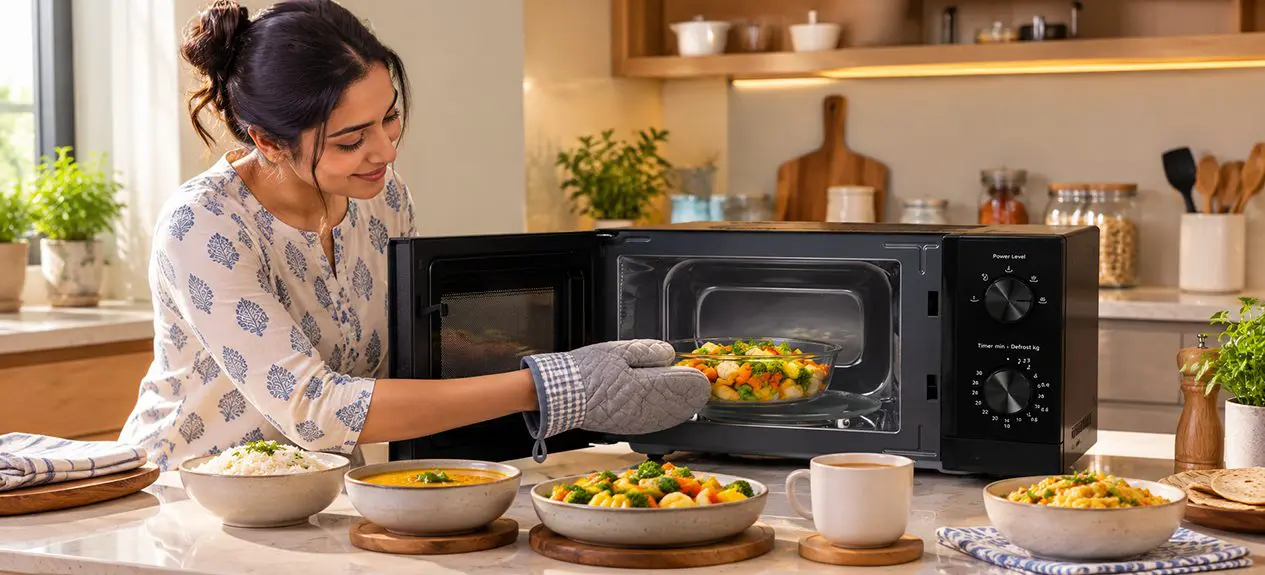

Most kitchens have a microwave. Far fewer cooks use it for more than warming tea or last night’s dal.
That’s a pity, because a microwave can do a lot more. With the right container and a few simple habits, everyday microwave cooking gets quicker and far less messy.
This is a practical guide to the microwave for beginners. It covers what the oven does well, what to avoid, and how to get even results.
What a Microwave Is Really For
So what is a microwave used for? Mainly speed. It heats food by making the water inside it vibrate, creating heat. The warmth spreads inward from the outer layers.
That makes it ideal for quick jobs. The most common microwave uses are:
- Reheating leftovers and drinks
- Defrosting frozen food
- Steaming vegetables
- Cooking rice, oats and other one-bowl dishes
- Making quick snacks
A microwave is not meant to replace the stove. Dry, crisp foods may not brown without a grill or convection mode. We’ll get to those shortly.
Everyday Tasks a Microwave Does Well
You don’t need special recipes. A few reliable habits cover most of what you’ll cook.
Reheating and Defrosting
Cover the food, stir halfway, and heat until it is steaming hot. Use the defrost setting for frozen items, and cook the food soon after it thaws.
Steaming Vegetables and Cooking Rice
Add a splash of water to chopped vegetables and cover the bowl with a vented lid. Two to five minutes is often enough. For rice, use a large bowl, since it bubbles up. Timing varies by oven, so check your manual or the auto menu.
Quick Snacks and One-Bowl Meals
Here are some things to make in a microwave on a busy day:
- Masala oats, upma or poha
- Steamed idlis, using a microwave-safe stand
- Boiled corn and baked potatoes
- Roasted papad
- A mug cake
What You Can Cook With Grill and Convection Modes
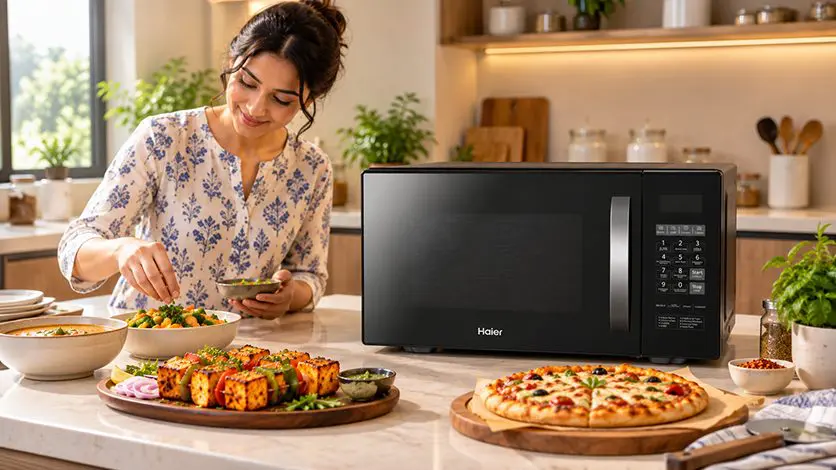
Not every microwave only microwaves. A solo model heats and does basic cooking. A grill model adds a heating element for browning. A convection model also circulates hot air, so it can bake and roast.
Grilling, Baking and Roasting
- Grill mode: paneer tikka, sandwiches, kebabs and toasted tops
- Convection mode: cakes, cookies, pizza, roast vegetables and chicken
In these modes, use heat-proof cookware and the oven’s rack. Always check your manual first.
Haier’s microwaves are grouped by type. Here is how they line up:
| Haier range | Capacity | Suited to | Warranty | Price band |
| Solo | 19L to 20L | Reheating, defrosting, everyday cooking | 1 year comprehensive, 3 years on magnetron | Between ₹5,000 and ₹7,000 |
| Vogue Solo | 20L | Everyday cooking with auto cook menus and a digital display | 1 year comprehensive, 3 years on magnetron | Between ₹6,500 and ₹7,500 |
| Grill | 20L | Grilling and browning | 3 years | Between ₹7,000 and ₹8,000 |
| Convection | 20L to 30L | Baking, roasting and grilling | 1 year comprehensive, 3 to 5 years on magnetron | Between ₹11,000 and ₹19,000 |
A few details help you choose:
- Solo range: includes a 19L model with inverter technology
- Vogue range: comes in Blueberry, Peach and Lemon
- Convection range: includes a 28L model with a dual heating element and a 30L model with an in-built air fryer
Price bands are indicative, so check each product page for current offers.
What You Should Not Put in a Microwave
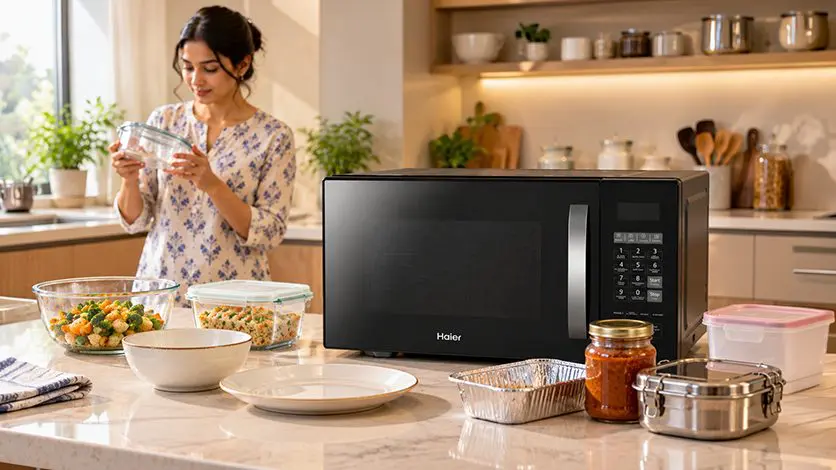
Some items can spark, melt or burst. Keep these out:
- Metal containers and aluminium foil, unless your manual allows them in a specific mode
- Sealed jars and bottles, since pressure can build up
- Whole eggs in the shell
- Takeaway boxes with metal handles
- Thermos flasks and travel mugs
- Plastic that isn’t labelled microwave-safe
Never run the oven empty either.
Microwave-Safe Cookware and Containers
Good microwave-safe cookware includes heat-resistant glass, plain ceramic and plates marked microwave-safe. Avoid ceramic with metallic paint or trim. If a dish has no label, check the manual or switch to glass.
Is It Healthy to Cook in a Microwave?
Microwaving is a widely used and generally accepted way to cook. Short cooking times and little water may help vegetables retain more nutrients. Microwaves don’t make food radioactive.
The main risk is uneven heating. Cold spots can remain in thick or dense food. Stir, let the food rest for a minute, and reheat leftovers until they’re steaming hot.
Beginner Tips for Better Results
A few habits make a big difference:
- Cover food with a vented lid to trap steam
- Cut pieces to a similar size
- Stir or turn halfway through
- Let food rest for a minute or two
- Start with short bursts and add time as needed
- Try the auto cook menus if your model has them
For more kitchen guides, you can browse the Haier blog.
Conclusion
A microwave is far more than a reheating box. With sensible containers and a few simple habits, it can steam, cook and snack its way through a busy week.
Start with the basics, learn your oven’s quirks, and add grill or convection modes once you’re comfortable.
FAQs
What can you actually cook in a microwave?
Quite a lot. Steamed vegetables, rice, oats, idlis, boiled corn and baked potatoes all work well. Models with grill or convection modes can also bake, roast and grill.
Is it good to cook food in a microwave?
It can be. Microwaving is a generally accepted cooking method, and short cooking times may help retain nutrients. Use suitable containers and heat food evenly.
What is a microwave oven used for?
It is mainly used to reheat food, defrost frozen items and cook quick meals. Grill and convection models add browning, baking and roasting.
What cookware is microwave-safe?
Heat-resistant glass, plain ceramic and containers labelled microwave-safe. Avoid metal and ceramic with metallic trim.
Can you grill or bake in a microwave?
Yes, if the oven has a grill or convection mode. A solo microwave heats and cooks but doesn’t brown or bake in the same way.
What should you never put in a microwave?
Never put metal containers or foil, sealed jars, whole eggs in the shell, or non-microwave-safe plastic in the microwave. Don’t run the oven empty.