
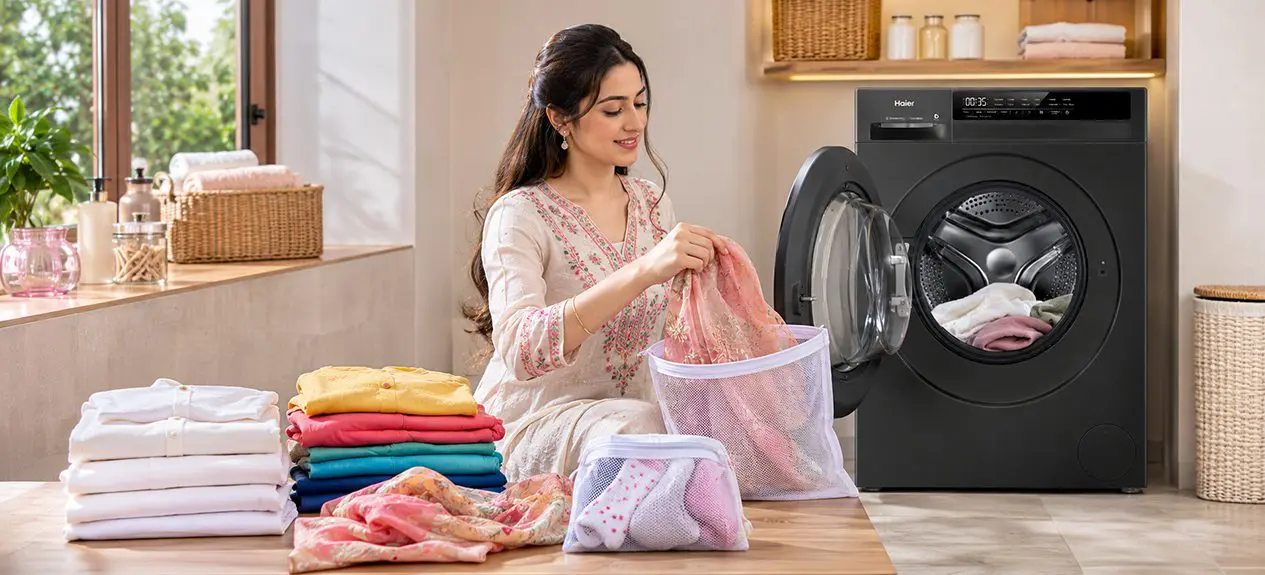

Laundry often starts with a mixed pile of shirts, towels, innerwear, kurtas and socks collected in one basket. Putting everything into the drum together may seem convenient, but different fabrics, colours and sizes need different care. This can lead to colour bleeding, fabric damage or small items getting lost during the wash. A few simple habits can help protect clothes in washing machine cycles without adding much effort to your routine. This guide explains how to sort laundry, use mesh laundry bags for smaller or delicate items, and choose suitable wash settings for better fabric care.
Why Sorting and Protecting Your Laundry Matters
Inside the drum, clothes move constantly through water, detergent and repeated contact with other garments. Loose dyes can run, and zippers can scratch delicate fabrics; heavier items can rub against lighter ones. Or little pieces can get stuck or lost in the cycle too. Sorting laundry into colours, fabric types, and weights helps to avoid colour transfer and excessive rubbing. Extra protection for delicates in a mesh bag.
These simple steps take around five minutes before a wash, but they help clothes retain their original shape, colour and condition over time.
How to Sort a Load Before Washing
Sort clothes by colour and fabric before washing. Check every pocket, close zips, and fasten hooks to prevent snags, scratches and accidental damage during the wash cycle.
- By Colour (Whites, Darks, Brights)
Start by learning to sort laundry by colour. Whites and light shades go together, darks and denim blues form a second group, and bright reds, pinks and oranges get their own load, since bright dyes can bleed in early washes. A new dark garment does best alone for its first wash. This one habit prevents most colour accidents in everyday laundry.
- By Fabric & Weight
Towels, jeans and bedsheets are heavy, and they rub hard against thin cotton, innerwear and kurtas. Keeping the two groups apart reduces friction. Towels also shed lint that clings to dark synthetics, so they suit a load of their own. Delicates such as lace, fine knits and silk blends form a third group, and they are the ones that go into mesh bags.
What Mesh Laundry Bags Do
Mesh laundry bags are zippered bags with fine holes. Water and detergent pass through them freely, while the clothes inside stay together and cushioned. The bag works as a barrier between fragile items and the zips, hooks, buttons and heavy fabrics around them.
Protecting Delicates, Woollens & Small Items
A mesh bag for socks and delicates suits lingerie, camisoles, thin knits, scarves, baby socks and other small pieces. Woollens fit in these bags too, and our woollen sweaters guide suggests a mesh bag for very delicate sweaters, turned inside out and kept away from denim, towels and zipped clothes.
Stopping Snags, Stretching & Lost Socks
- Hooks, lace and sequins stay inside the bag, away from zips and rough seams.
- Straps and elastic hold their position instead of twisting around other clothes.
- Pairs of socks stay together, so matching them after the wash takes seconds.
- Small items stay in one place instead of slipping to the bottom of the drum.
How to Use a Mesh Bag Correctly
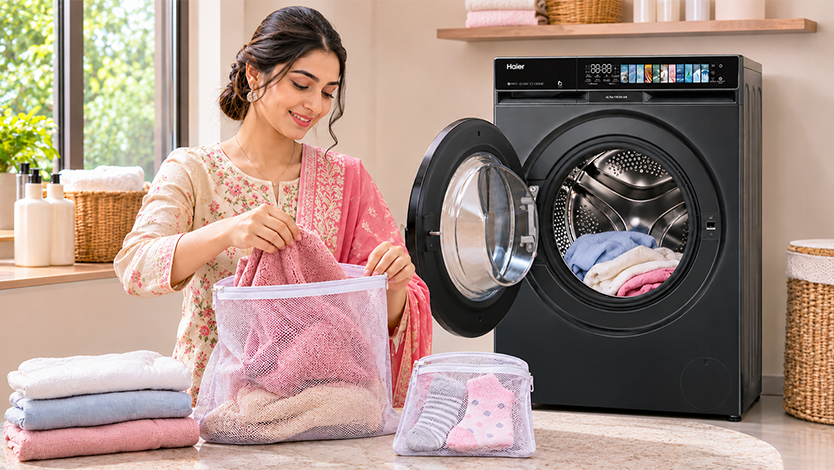
- Check the care label on each item first.
- Fasten hooks and close zips on the garments.
- Group similar items, with socks in one bag and lingerie in another.
- Leave some room in the bag so water and detergent can move through.
- Zip it fully and place it in the drum, spread out among the other clothes.
- Take the bag out when the cycle ends and dry the contents promptly.
A mesh bag for socks and delicates works best with fine holes and a smooth zip. Small bags suit socks and single bras, while a larger one suits sweaters and camisoles.
Machine Settings for Delicates
Choose the delicate, gentle or wool cycle, with cold water or a low-temperature setting and a low spin speed. Use a mild detergent, following the dosage instructions on the pack, and remove the clothes as soon as the wash finishes. Garments labelled hand wash only should be washed by hand, regardless of whether your washing machine has a dedicated cycle for delicate fabrics.
Want to know what each wash program on your dial is meant for?
Read this blog: Washing Machine Wash Programs Explained: Cotton, Delicate, Quick, Heavy & Saree Cycles
Quick Sorting & Protection Checklist
- Sort laundry by colour first, with whites, darks and brights in separate loads.
- Separate heavy fabrics from light ones.
- Put small and fragile items in mesh bags.
- Check pockets, zips and hooks.
- Pick the program that matches the most delicate item in the load.
| Load group | Haier program | Mesh bag |
| Whites and light colours | Cotton, as the label allows | For small items only |
| Darks and denim | Jeans, with cold water | Not needed |
| Bright colours and new clothes | Cotton, with cold water, washed alone at first | Not needed |
| Towels and bedsheets | Cotton, with warm water if the label allows | Not needed |
| Lingerie, socks and small items | Delicate/Silk, with cold water and low spin | Yes |
| Thin knits and woollens | Wool, with cold water and low spin | Yes, for fragile pieces |
How Haier Machines Protect Your Laundry
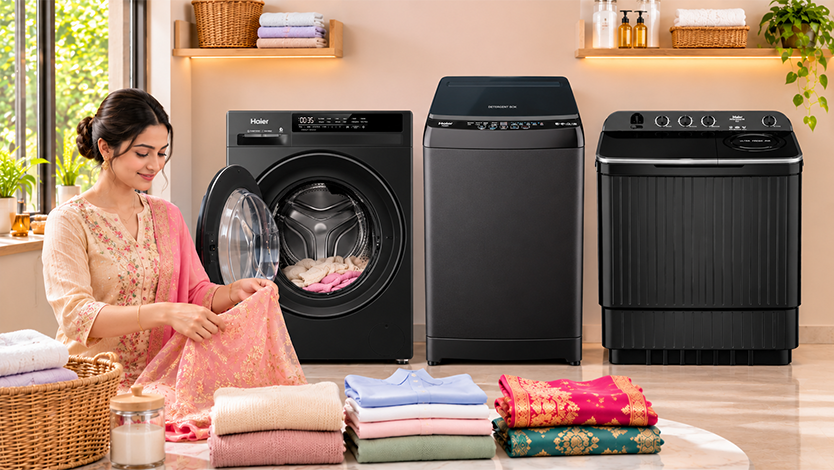
At Haier, we build delicate care into every machine type, so a sorted load and a bag of fragile pieces each have a suitable cycle. Our front-load washing machines, including the F9 10 kg, offer Delicate/Silk, Wool and Hand Wash programs, and the F9 series also lists Jeans and Saree programs. The 525mm Super Drum gives clothes room to move, and Dual Spray clears lint and foam after the wash.
Our top load washing machines use the Oceanus Wave Drum for improved fabric movement, and the Magic Filter collects lint so drainage stays smooth. For homes that prefer to handle each stage, the HTW120-196BK semi-automatic model offers Delicate, Gentle and Standard programs. Any of these lets you protect clothes in washing machine cycles with very little extra effort.
Conclusion
A little preparation changes how clothes come out of the wash. Sort by colour and weight, place the small and fragile pieces in a mesh bag, and match the program to the most delicate item. Load sorting laundry and mesh bags together keep colours steady, straps in shape and socks in pairs.
Frequently Asked Questions
Should you use a mesh laundry bag?
A mesh bag suits lingerie, lace, thin knits, baby socks and other small items. It keeps hooks and straps from catching and limits stretching. Sturdy clothes that the care label allows in a normal wash can go in without one.
How do you wash delicate clothes in a washing machine?
Place them in a mesh bag, choose the delicate or gentle program with cold or low-temperature water and a low spin, and add a mild detergent in the measured amount. Remove them soon after the cycle ends.
Which clothes should go in a mesh laundry bag?
Lingerie, camisoles, thin knits, scarves, baby clothes and socks benefit most. Woollens and items with hooks, lace or sequins also suit a bag. Group similar pieces together and leave room so water can pass through.
How should you sort laundry before washing?
Group clothes by colour first, then by fabric and weight. Keep towels, jeans and bedsheets apart from light cotton and delicates. Check pockets, close zips and fasten hooks before loading, and let the care label guide the program.
Do mesh laundry bags protect clothes?
Yes, they reduce contact between fragile items and zips, hooks and heavy fabrics. The bag limits snagging, stretching and twisting, and keeps small pieces together. It works best when it is not overfilled and the cycle is gentle.
Should you separate colours and whites when washing?
Yes. Whites and light shades stay brighter when washed apart from darks and bright colours, since loose dye can travel in the drum. New dark clothes do best alone for the first wash.