
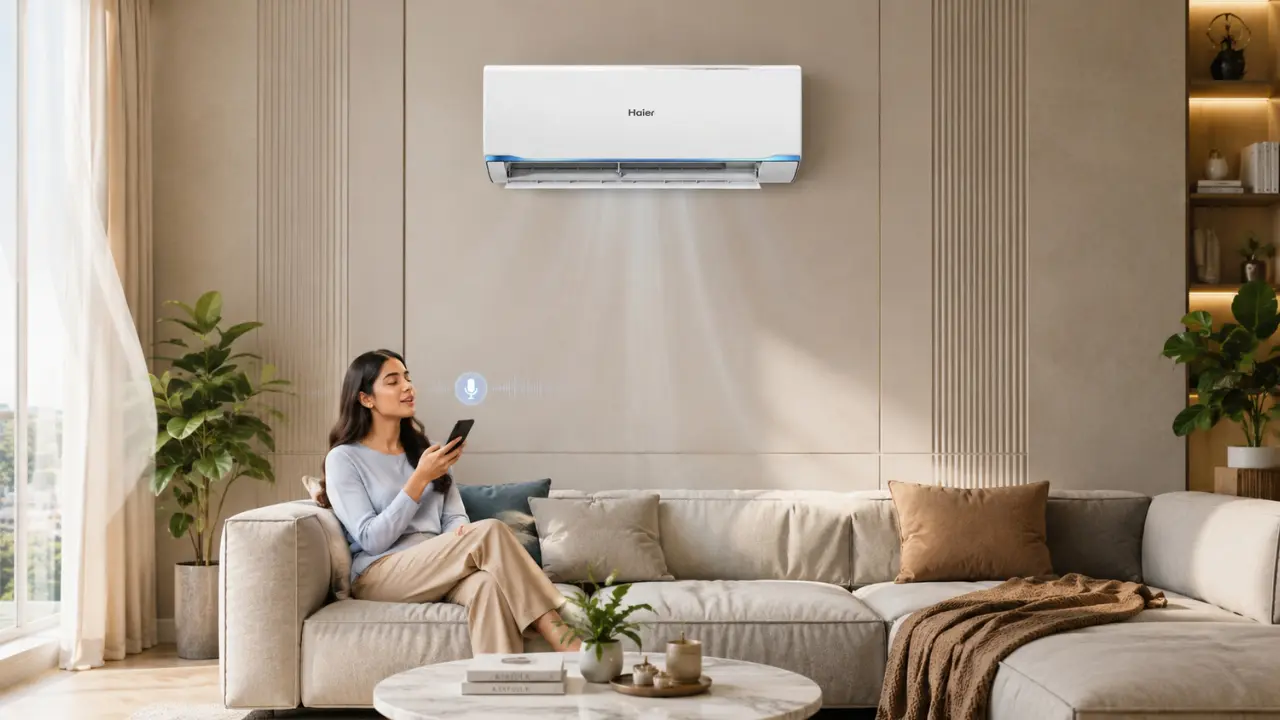

There is a funny thing about comfort.
Most people think they notice it when it’s present.Truth be told, you realize how important it is when it isn’t working.
When your conference room is too warm for an afternoon meeting call.
That 2 a.m. awakening when you suddenly realize your room feels stuffy.
How your living room is chilly by the AC, but warm as can be across the room.
Human comfort is actually complex. Way more complex than setting your air conditioner to 24° C and walking away.
Truth is, temperature isn’t the only factor at play.
Our bodies are constantly responding to airflow, humidity, how many people are in the room, outdoor weather conditions, heat load and so much more. It’s exactly why next-gen air conditioning is thinking beyond cooling, and getting smarter.
Introducing AI-powered comfort
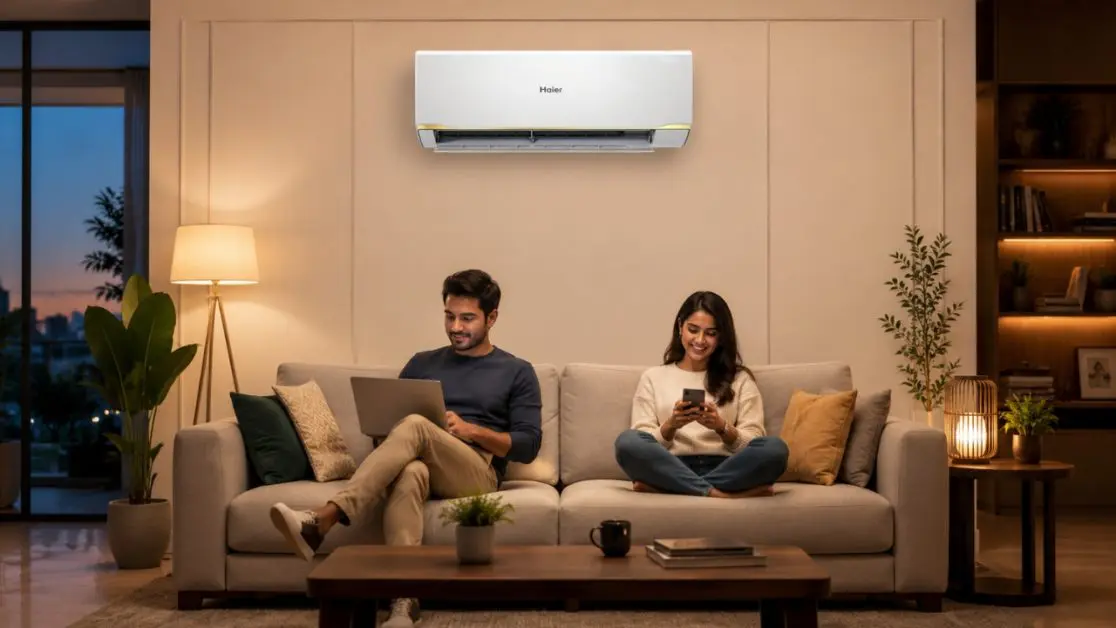
The human body is always adapting.
Why human comfort is more complex than you might realize
If you asked ten different people to describe how a comfortable room feels, you’d likely receive ten unique answers.
The family member who just got in from a hot commute might want max cooling power.
The kid doing homework may want a gentle fan.
Your elderly loved one may be cold when everyone else thinks the temperature is just right.
We experience these discrepancies because our bodies adapt to what’s happening around us. They constantly recalibrate what we perceive to be comfortable.
Here are a few things our bodies take into account:
- Temperature
- Airflow
- Humidity
- Time of day
- Outdoor weather conditions
- Individual preferences
Traditional air conditioners typically focus on one metric: temperature.
But comfort is never just about temperature.
And that is where Artificial Intelligence is beginning to redefine cooling experiences.
The Shift from Cooling to Intelligent Comfort
For decades, AC technology focused on a simple objective.
Cool the room.
Job done.
But modern households have changed dramatically.
Today, a single room may function as:
- A home office
- A study room
- A family entertainment zone
- A workout space
- A relaxation area
Each activity generates different cooling needs.
The challenge is obvious.
How can an AC understand changing comfort requirements without requiring constant manual adjustments?
The answer lies in AI-driven learning systems.
Rather than reacting only to thermostat settings, intelligent air conditioners can analyse patterns, monitor environmental conditions, and optimise performance automatically.
That’s exactly the direction Haier has taken with its latest AI-powered cooling innovations.
AI Learns What Humans Often Forget
Let’s be honest.
Most people rarely use all the features available on their air conditioner remote.
The common routine looks something like this:
- Turn AC on
- Lower temperature dramatically
- Wait until room gets too cold
- Increase temperature again
Repeat.
This constant adjustment isn’t efficient.
More importantly, it doesn’t always deliver consistent comfort.
Advanced AI systems are designed to reduce this cycle.
The Haier 1.7 Ton 5 Star Desert Rose Air Conditioner (HSA20DSD-NAI5NB-I) and Haier 1.7 Ton 5 Star Desert Rose Air Conditioner (HSA20DSD-GAI5NB-I) feature AI-ATMOX technology that analyses environmental conditions and learns user behaviour to create a smarter cooling experience.
Instead of simply following commands, the system continuously works to understand how comfort is experienced inside the room.
And honestly, that’s a much more human approach to cooling.
The Role of AI Human Detection
Here’s a question.
Why should an air conditioner cool an empty room?
It sounds obvious, yet traditional systems do exactly that.
Energy gets consumed even when nobody is benefiting from the cooling.
Modern AI technology is changing this through intelligent occupancy detection.
Haier’s AI Human Detection technology helps identify human presence, enabling more precise cooling while reducing unnecessary energy consumption.
The result?
Better efficiency
- Reduced energy wastage
- More targeted cooling
- Improved overall system performance
Smarter comfort
- Cooling when needed
- Adjustments based on room occupancy
- Reduced overcooling
It’s a small technological shift with a surprisingly large impact.
Weather Outside Affects Comfort Inside
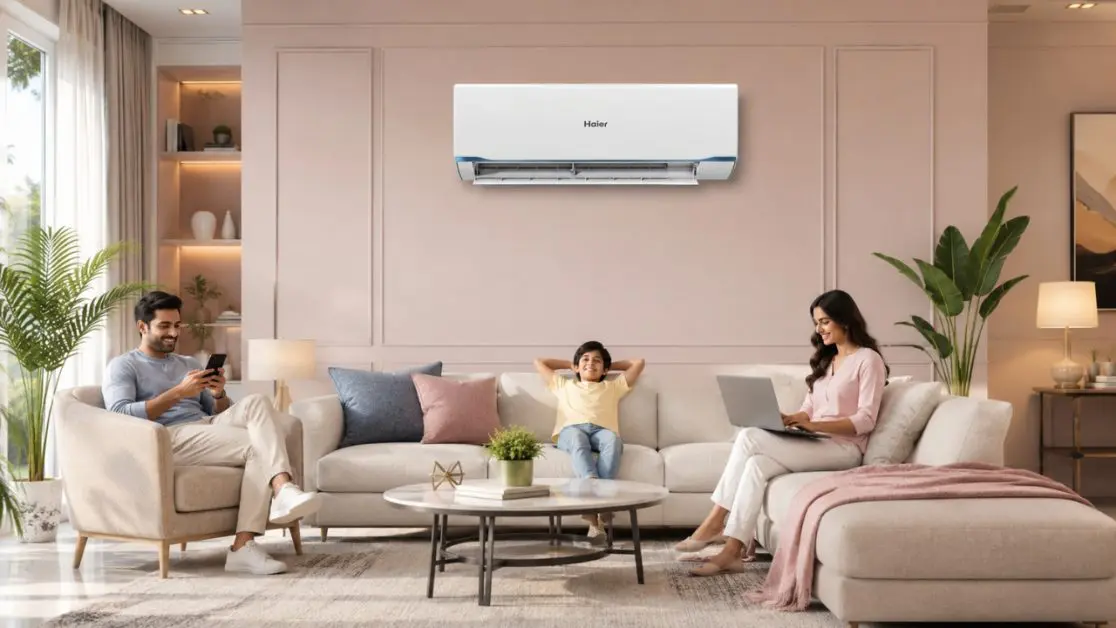
This part often gets overlooked.
Most people assume indoor comfort depends entirely on indoor temperature.
Not quite.
Outdoor weather continuously influences indoor conditions.
A humid monsoon afternoon feels very different from a dry summer evening even at the same temperature.
This is where AI becomes particularly valuable.
Haier’s AI for Comfort system analyses real-time weather conditions alongside indoor environmental data to automatically select the most suitable operating mode for comfort optimisation.
Think of it as a system that constantly asks:
“What does the room need right now?”
Not what it needed two hours ago.
Not yesterday.
Right now.
Comfort Without Compromising Energy Efficiency
Here’s where many homeowners face a dilemma.
They want powerful cooling.
They also want lower electricity bills.
Traditionally, these two goals often seemed to be in conflict.
More cooling usually meant more power consumption.
AI is helping bridge that gap.
Haier’s AI for Savings technology actively monitors energy usage patterns and can automatically shift into AI ECO mode when unnecessary consumption is detected. According to product specifications, this can deliver energy savings of up to 56% under suitable operating conditions.
That’s not simply about saving electricity.
It’s about creating cooling that feels responsible.
Because modern comfort isn’t just physical comfort.
Financial comfort matters too.
Why Fast Cooling Still Matters
Now, let’s address something every Indian household understands.
Coming home in May.
After being outside.
At 44°C.
Waiting patiently for gradual cooling?
No chance.
You want relief immediately.
This is where performance remains essential.
The Haier Desert Rose Series features Supersonic Cooling in 10 Seconds using KTS and PKC technology, delivering rapid cooling when immediate comfort is required.
For Indian summers, that’s not a luxury feature.
It’s practical.
Very practical.
The Science of Air Distribution
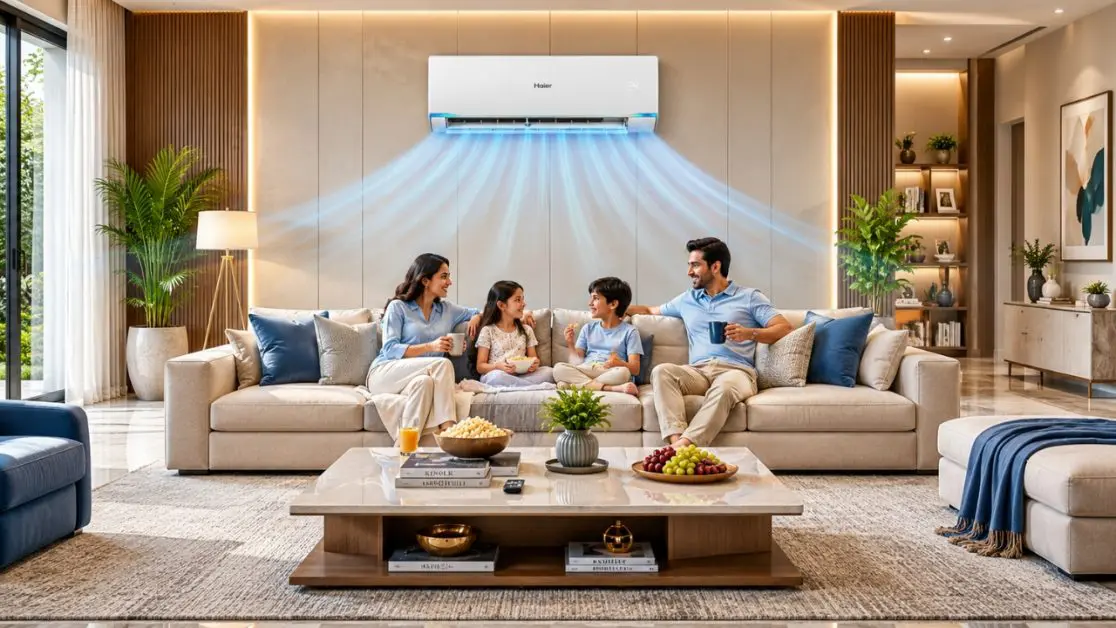
Cooling isn’t useful if it reaches only one corner of the room.
Uneven airflow creates hot spots and inconsistent comfort.
We’ve all experienced it.
One side of the room feels cold.
The other feels surprisingly warm.
Haier addresses this with long-distance airflow capability reaching up to 20 metres, helping distribute cool air more effectively across larger spaces.
The result is a more balanced indoor environment where comfort extends beyond the immediate vicinity of the indoor unit.
Adaptive Cooling for Real Life
Not every day demands maximum cooling capacity.
Some evenings are mild.
Some afternoons are brutally hot.
Usage requirements constantly change.
This is where convertible technology becomes valuable.
The Haier Desert Rose AI AC range offers Intelli Convertible 7-in-1 functionality, allowing cooling capacity adjustment from 40% to 110% depending on requirements.
Benefits include:
- Better energy management
- Greater flexibility
- Cooling tailored to occupancy levels
- Enhanced efficiency during moderate weather
It’s cooling that adapts instead of forcing users to adapt.
Built for Indian Climate Conditions
India presents unique cooling challenges.
Extreme heat.
Dust.
Humidity.
Long operating hours.
Voltage fluctuations.
The ideal air conditioner must perform consistently despite these conditions.
The Haier Desert Rose Series is designed to maintain cooling even at ambient temperatures of up to 60°C while incorporating technologies such as Hyper PCB protection, 100% grooved copper components, anti-corrosion blue fins, and a super anti-microbial filter.
These aren’t flashy features.
They’re durability features.
And durability often determines long-term satisfaction far more than people realise during the buying process.
Where AI Cooling Is Headed Next
Air conditioning is gradually evolving into an intelligent ecosystem.
The future isn’t about colder rooms.
It’s about understanding people.
Understanding habits.
Understanding changing environments.
And delivering comfort with less effort from the user.
Haier’s AI-powered approach, supported by features such as AI-ATMOX, AI Human Detection, AI Comfort, AI Savings, AI Service, Hexa Inverter technology, smart app control, and voice-enabled operation, reflects how cooling technology is becoming more responsive to real-life living.
Final Thoughts
The science behind human comfort has never been simple.
Our bodies react to far more than temperature alone.
Comfort depends on movement, environment, occupancy, weather conditions, and personal habits all interacting at the same time.
That is why AI-powered cooling feels like a natural evolution rather than a technological gimmick.
The Haier 1.7 Ton 5 Star Desert Rose Air Conditioner and Haier 1.7 Ton 5 Star Desert Rose Air Conditioner bring together intelligent learning, adaptive cooling, energy optimisation, smart controls, and powerful performance to create a cooling experience designed around how people actually live.
Because ultimately, the best air conditioner is not the one that cools the fastest.
It’s the one that understands comfort the way humans experience it.
Frequently Asked Questions
What does AI Human Detection actually do?
It detects whether people are present in the room and adjusts cooling accordingly, helping reduce unnecessary energy consumption in empty spaces.
What is AI-ATMOX technology?
According to the article, AI-ATMOX analyzes environmental conditions and user behavior to learn preferred comfort patterns and optimize cooling automatically.
What is AI for Comfort?
AI for Comfort continuously evaluates indoor conditions together with outdoor weather and automatically selects the most suitable cooling mode.
What is AI for Savings?
It monitors energy usage and can switch to an energy-saving operating mode when excessive consumption isn’t necessary.
What is Intelli Convertible 7-in-1 Cooling?
It allows users to adjust cooling capacity between lower and higher output levels depending on room occupancy and cooling requirements.