
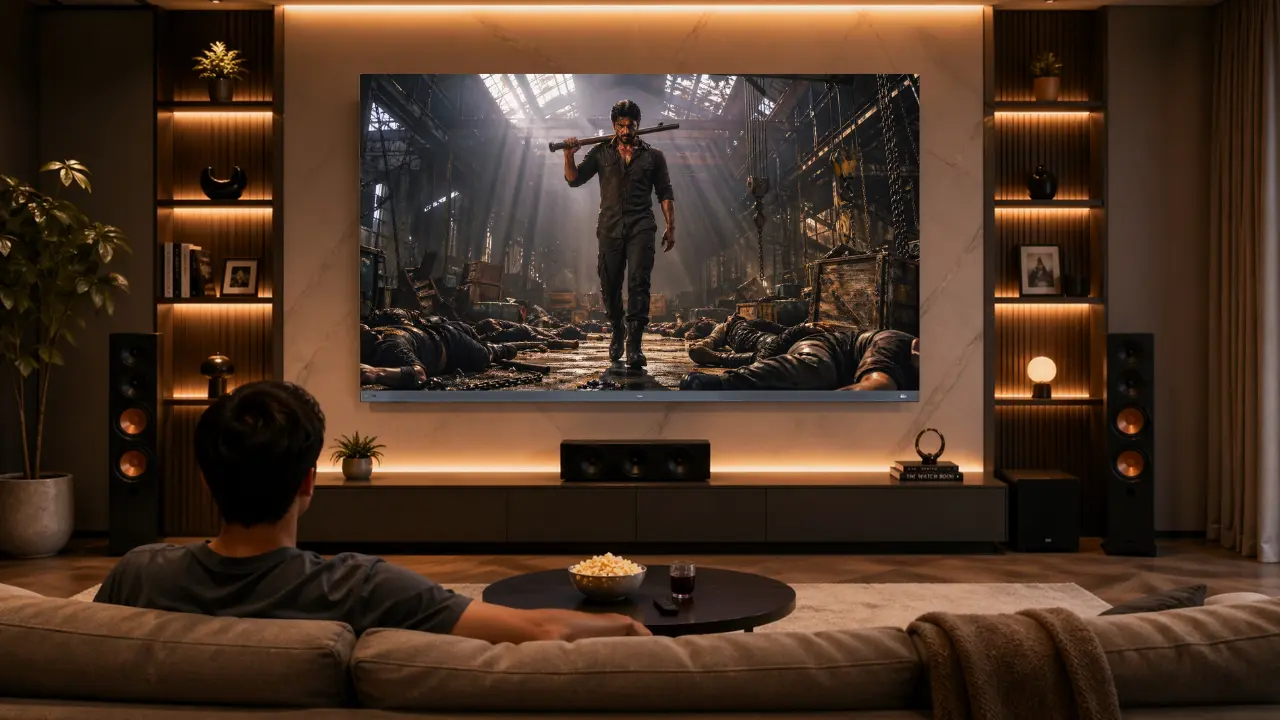

The best TV size depends on viewing distance, room purpose, and how you use the space. For most Indian homes, living rooms work best with 140cm (55) to 215cm (85), while bedrooms feel right with 32 to 140cm (55).
Bigger is not always better. The right size is the one that fits your space, not just your wall.
Why does TV size feel wrong even when it looks right?
Walk into a modern Indian living room.
A brand-new 189cm (75) TV dominates the wall.
It looks impressive. Guests notice it instantly.
But sit down.
The screen feels too close. Your eyes keep adjusting. Subtitles feel oversized. Fast scenes feel overwhelming.
Now switch to a bedroom.
A compact 32-inch TV sits neatly across the bed.
But when you lie down after a long day, you strain to read text.
This is the hidden truth.
TV size is not about . It is about distance, comfort, and purpose working together.
Most people buy based on what looks good in the store.
Smart buyers choose based on how it feels at home.
The Core Rule Nobody Explains Properly
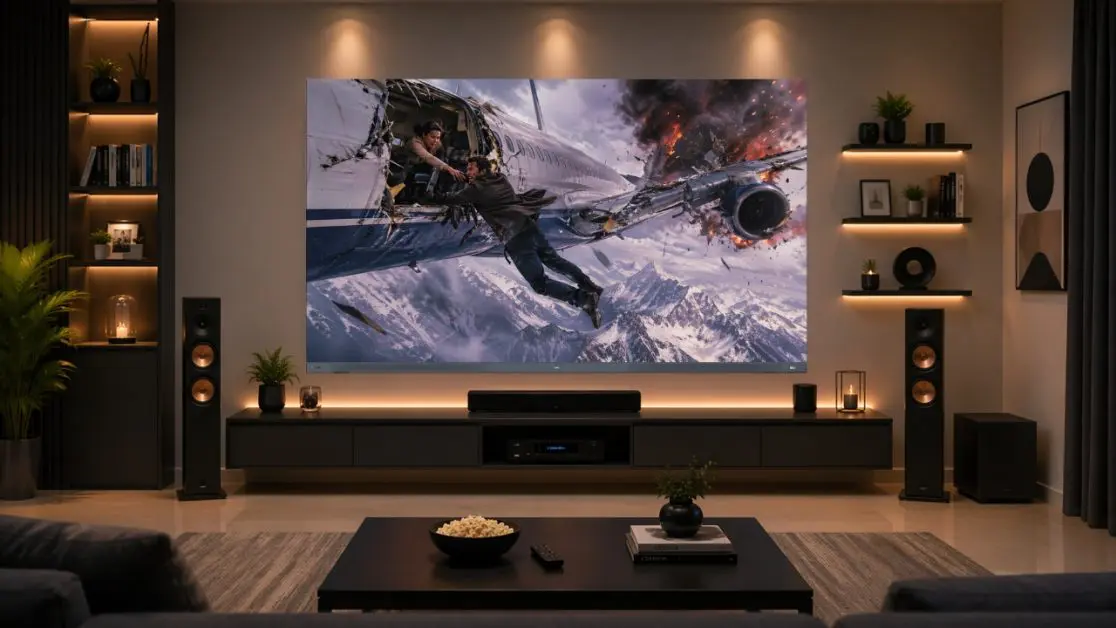
TV size is a function of distance, not desire
There is a simple system most people ignore:
- The farther you sit, the bigger your TV should be
- The closer you sit, the smaller it should be
- The sharper the resolution, the closer you can comfortably sit
This is why a 189cm (75) TV works beautifully in one home and feels excessive in another.
Living Room TV Size: Designed for Shared Experiences
What makes a living room different
A living room is not just for watching TV.
It is where:
- Families gather during IPL nights
- Guests come over during festivals
- Kids sit on the floor, parents on the sofa, someone watches from the dining table
The viewing distance is not fixed. It varies.
Which means your TV needs to accommodate multiple perspectives.
Best TV Size for Living Rooms in India
| Room Size | Viewing Distance | Ideal TV Size |
| Small (10×12 ft) | 6 to 8 feet | 43 to 140cm (55) |
| Medium (12×15 ft) | 8 to 10 feet | 140cm (55) to 165cm (65) |
| Large (15×20 ft or more) | 10 to 14 feet | 65 to 215cm (85) |
Three ways people choose living room TVs
One option is safe and practical
- 140cm (55) to 165cm (65)
- Works for most Indian apartments
- Balanced viewing from sofa distance
Cost: Moderate investment
Benefit: Comfortable for everyday use
The second option is immersive
- 75 to 215cm (85)
- Ideal for larger living rooms or open layouts
- Perfect for sports, movies, and gaming
Take the example of the Haier M80F Mini LED 189 cm 75 Google TV (H75M80FUX).
With Mini LED technology, Dolby Vision, and KEF-powered audio, it is built for cinematic viewing.
Cost: Higher upfront investment
Benefit: Theatre-like experience at home
The third option is statement-driven
- 215cm (85) and above
- Designed for premium spaces
The Haier M80F Mini LED 215cm (85) Google TV (H85M80FUX) pushes this further with immersive sound and motion clarity for sports.
And if space truly allows, the Haier M96 Series 254 cm 100 inch QD Mini LED AI Smart Google TV (H100M96FUX) transforms the room into a full-scale entertainment zone.
Cost: Premium
Benefit: Maximum immersion
What this means
A living room TV is not just a screen. It is a shared experience engine.
Choose bigger if your space allows.
But only if your seating distance supports it.
Bedroom TV Size: Designed for Personal Comfort
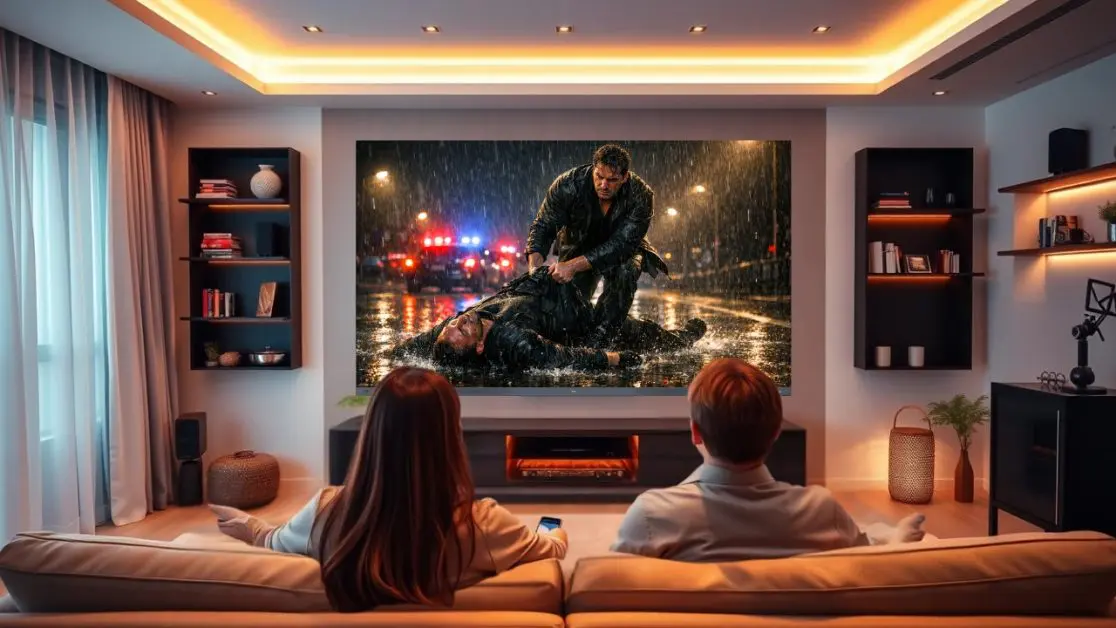
What makes a bedroom different
A bedroom is intimate.
- You watch from the bed
- The distance is shorter
- The viewing angle is often slightly tilted
This changes everything.
Best TV Size for Bedrooms in India
| Bed Distance | Ideal TV Size |
| 4 to 6 feet | 32 to 43 |
| 6 to 8 feet | 43 to 50 |
| 8 to 10 feet | 50 to 55 |
Three ways people choose bedroom TVs
One option is minimal
- 32 to 43
- Ideal for compact bedrooms
Cost: Economical
Benefit: Easy viewing without strain
The second option is balanced
- 43 to 50
- Most popular for modern homes
Cost: Moderate
Benefit: Comfortable for OTT, YouTube, and casual viewing
The third option is indulgent
- 50 to 140cm (55)
- For larger bedrooms with wall-mounted setups
Cost: Higher
Benefit: Cinema feel without leaving the bed
The hidden mistake
People often copy their living room logic into bedrooms.
It fails.
What feels immersive in a living room feels overwhelming in a bedroom.
The Science Behind Comfort
Why size affects your experience more than you think
Your eyes track motion across the screen.
- Bigger screens require more eye movement
- Closer distances amplify this effect
- Poor sizing leads to fatigue
Modern TVs like Haier Mini LED models improve this with:
- Higher brightness levels
- Better contrast control
- Smooth motion handling for sports
For example, features like Dolby Vision and advanced refresh rates reduce strain while improving clarity.
But even the best technology cannot fix a wrong size.
A Simple Formula You Can Actually Use
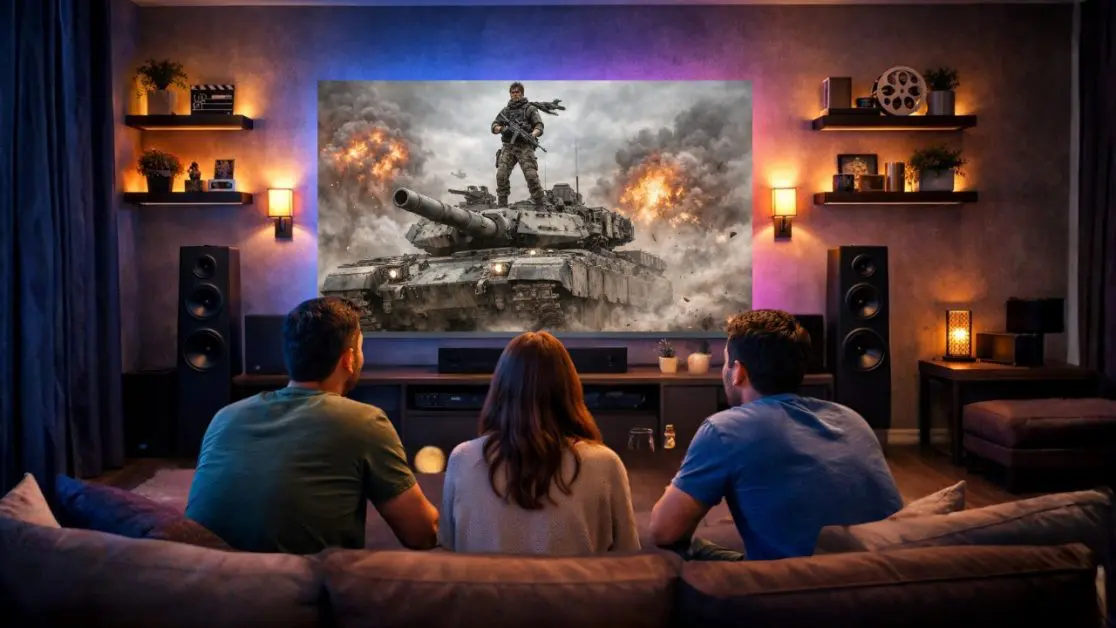
Measure this before buying
- Measure the distance from your seating to the TV wall
- Divide that number (in ) by 1.5 to 2.5
This gives you a comfortable TV size range.
Example
- Distance: 9 feet or 108
- Ideal size range: 43 to 72
This is why 140cm (55) or 165cm (65) work best here.
Living Room vs Bedroom: The Real Difference
| Factor | Living Room | Bedroom |
| Purpose | Shared viewing | Personal viewing |
| Distance | Variable | Fixed |
| Size Range | 140cm (55) to 215cm (85) | 32 to 140cm (55) |
| Experience | Immersive | Comfortable |
| Seating | Multiple angles | Single angle |
What Most People Get Wrong
They optimize for the wrong variable
They ask:
- “What is the biggest TV I can afford?”
Instead of:
- “What size fits my space and lifestyle?”
Three common mistakes
1. Buying too big for small rooms
Leads to discomfort and visual fatigue
2. Buying too small for large spaces
Leads to underwhelming experience
3. Ignoring usage patterns
Sports, movies, and daily viewing need different setups
Where Haier Fits Into This Conversation
This is where product design quietly matters.
Haier TVs are not just about size.
They are about experience matching context.
- Mini LED panels enhance contrast and brightness
- Dolby Vision and HDR technologies improve visual depth
- KEF sound systems reduce the need for external speakers
In larger living rooms, this creates immersion.
In bedrooms, it ensures clarity without strain.
The Bigger Insight
A screen is not furniture. It is behavior design.
The right TV size:
- Shapes how families gather
- Changes how you relax after work
- Influences how long you stay engaged
This is why the decision matters more than it seems.
So, What Should You Actually Do?
Use this decision framework
Step 1: Measure your viewing distance
This sets your range
Step 2: Define the room’s purpose
Shared or personal
Step 3: Choose within the range, not beyond it
Comfort beats size
If you want a shortcut
- Living room: 140cm (55) to 189cm (75) for most homes
- Bedroom: 43 to 50 for most homes
The Final Thought
People think bigger screens create better experiences.
They don’t.
The right size creates better experiences.
Because comfort is invisible when it works.
And impossible to ignore when it doesn’t.
Choose the size that disappears into your life.
That is when technology truly feels like it belongs.
Frequently Asked Questions
I feel like every TV looks good in the showroom. How do I know what size is actually right for my home?
Showrooms exaggerate space and viewing distance. At home, your seating distance is fixed. Measure it first, then choose a size within the recommended range (distance ÷ 1.5 to 2.5). Comfort matters more than visual impact.
Should I just buy the biggest TV I can afford?
No. Budget is only one factor. If the screen is too large for your distance, it causes eye strain and discomfort. The “right” TV is the one that disappears into your viewing experience not one that dominates it.
My living room is small but I want a cinematic feel. Can I still go big?
Only within limits. A slightly larger screen can feel immersive, but going too big in a small room quickly becomes overwhelming. Prioritize viewing comfort over “theatre ambition.”
I bought a big TV, but now it feels too close. Did I make a mistake?
Likely yes. When your eyes constantly scan the screen, it means the size exceeds your comfortable viewing angle. Downsizing or increasing distance fixes this not settings or picture tweaks.
Do features like Dolby Vision or Mini LED fix a wrong TV size?
No. Technologies like Dolby Vision improve picture quality, not viewing comfort. Even the best TV cannot compensate for poor size selection.
Are premium TVs like Haier M80F Mini LED TV worth it for living rooms?
Yes if your room size and seating distance support it. In large spaces, these TVs deliver a cinematic experience. In smaller rooms, they can feel excessive.
Do I need a big TV if I already have good sound?
Size and sound solve different problems:
Size = immersion
Sound = depth
You need the right screen size first, then audio enhancements.
Will AI or smart features help reduce eye strain?
They can optimize brightness and contrast, but they cannot fix poor sizing. Physical setup always comes first.