
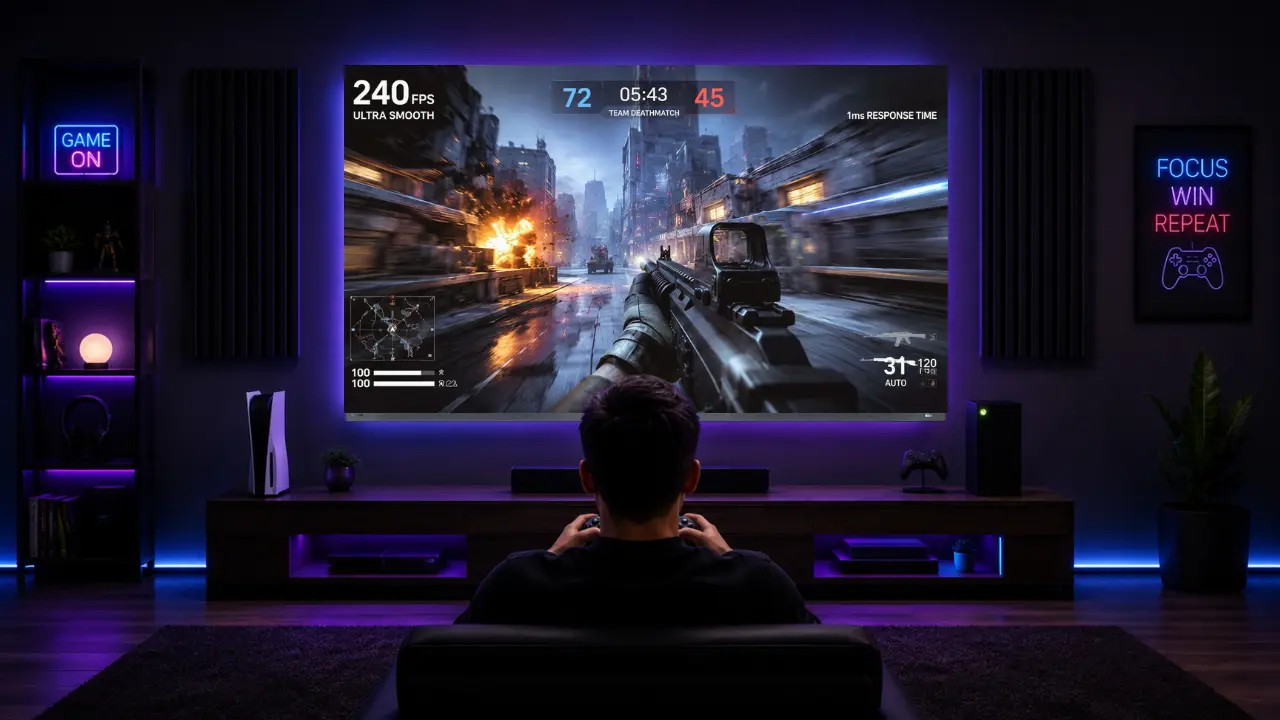

Gaming has changed.
Not gradually. Not quietly.
One day televisions were mainly for movies and cricket. From playing videos They became race tracks for simulators. Soccer fields for games. Explorable worlds. Multiplayer arenas.
And in between all that, one question began appearing:
“What’s the best refresh rate for gaming?”
Buyers hear numbers like 60Hz, 120Hz, and 144Hz. Throw in some VRR, ALLM, and even 240Hz gaming features and it can get even MORE confusing.
Let’s clear it all up.
Because understanding refresh rate is the difference between watching the action… and feeling like you’re IN the action.
What is the Refresh Rate? (Explained as Simply as Possible)
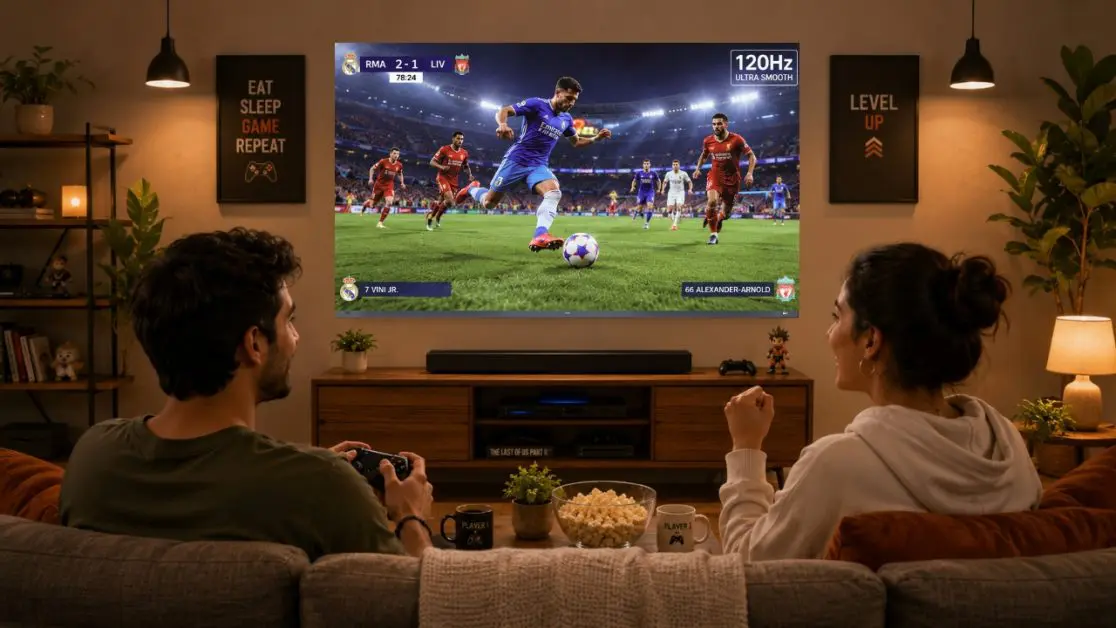
Your TV’s refresh rate is how many times per second your TV redraws the image on the screen.
A refresh rate of:
| Refresh Rate | Images Refreshed Per Second |
| 60Hz | 60 times |
| 120Hz | 120 times |
| 144Hz | 144 times |
The higher the refresh rate, the smoother motion appears on screen.
Now, does that automatically mean everyone needs the highest number available?
Not really.
And that’s where most buying advice becomes misleading.
Why Refresh Rate Matters More in Gaming Than Movies
Let’s be honest.
When you’re watching a drama series, a slower refresh rate rarely causes problems.
Gaming is different.
A racing car moving at full speed.
A football crossing the field.
A character turning instantly during combat.
A sniper shot requires a split-second reaction.
These situations generate rapid movement.
If the TV cannot refresh quickly enough, you may notice:
- Motion blur
- Judder
- Screen tearing
- Delayed visual response
- Less precise gameplay
It doesn’t ruin the game completely.
But once you’ve experienced smoother gaming, going back feels surprisingly difficult.
A bit like switching from fibre broadband to a slow connection. Technically everything still works. It just doesn’t feel right anymore.
Is 60Hz Good Enough for Gaming?
For casual gaming?
Yes.
For serious gaming?
Probably not.
A 60Hz TV can comfortably handle:
- Casual console gaming
- Story-based adventures
- Puzzle games
- Sports games played occasionally
- Family entertainment
However, modern gaming consoles and gaming PCs are capable of producing much higher frame rates.
When a TV is limited to 60Hz, it cannot fully display that additional performance.
The result?
You leave performance on the table.
Why 120Hz Became the New Standard
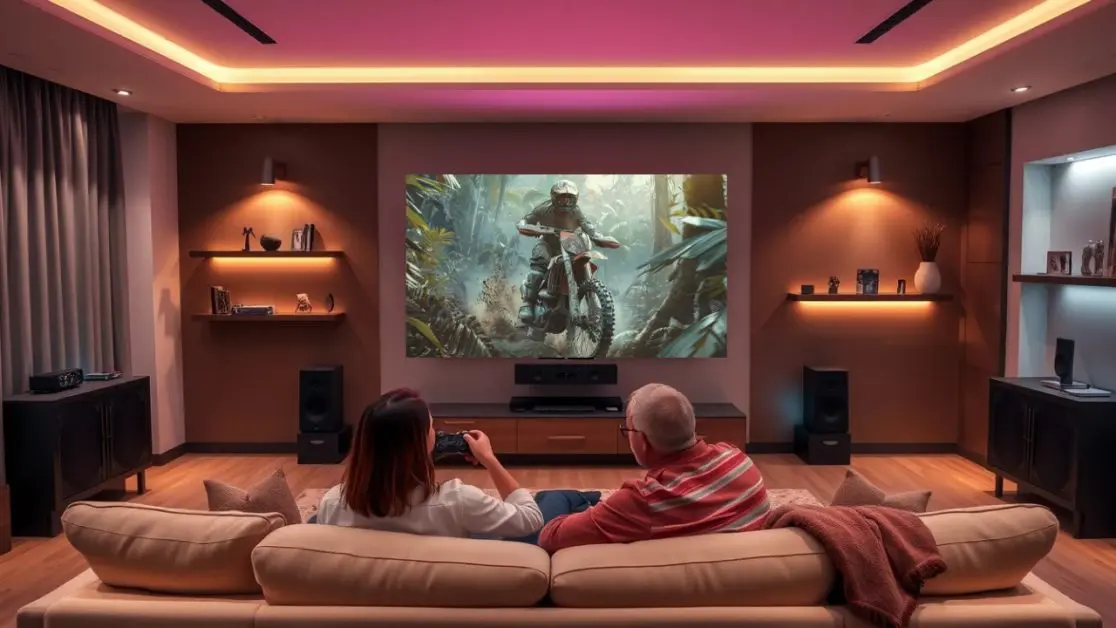
A few years ago, 120Hz felt premium.
Today, it has become one of the most important benchmarks for gaming displays.
Here’s why:
Benefits of 120Hz Gaming
- Noticeably smoother movement
- Better tracking during fast scenes
- Reduced motion blur
- More responsive feel
Improved compatibility with gaming consoles
Many gamers won’t need anything over 120Hz. 120Hz offers a noticeable upgrade from the standard refresh rate of 60Hz.
Truthfully, gamers will have a hard time noticing the difference between astronomical refresh rates above 120Hz if they’re not playing competitively.
Where does 144Hz come into play?
144Hz is typically reserved for gaming monitors. Now we’re seeing gaming TVs that offer that same buttery smoothness on a larger screen.
120Hz vs. 144Hz, on paper, the difference isn’t that massive.
Only 24 extra frames.
But in fast-paced content, those extra updates create smoother transitions and cleaner motion handling.
Especially during:
- Racing games
- First-person shooters
- Action adventures
- Competitive esports
- Sports simulations
The experience simply feels more natural.
Less processing. Less visual strain. More immersion.
And that is exactly why modern premium gaming TVs increasingly feature native 144Hz refresh rates.
What About 240Hz Gaming?
This is where marketing can confuse people.
Many televisions now offer gaming modes capable of achieving gaming experiences beyond the native refresh rate through specialised technologies.
The important thing to understand is:
Not all 240Hz claims are identical.
Some systems use gaming acceleration technologies designed to enhance responsiveness during supported gameplay scenarios.
The real question isn’t whether the number is bigger.
The real question is:
Does the entire gaming ecosystem support it?
Refresh rate works best when paired with:
- HDMI 2.1
- VRR
- ALLM
- Fast processors
- Low latency gaming modes
Without these supporting technologies, refresh rate alone cannot deliver the full gaming experience.
Beyond Refresh Rate: Features That Actually Matter
A surprising number of buyers focus only on refresh rate.
That can be a mistake.
Gaming performance is created by multiple technologies working together.
Look For These Features
VRR (Variable Refresh Rate)
VRR synchronises the TV’s refresh rate with the game’s frame output.
Benefits include:
- Reduced screen tearing
- Smoother gameplay
- Better visual consistency
ALLM (Auto Low Latency Mode)
Automatically switches the television into gaming mode.
Result?
Faster response during gameplay.
AMD FreeSync Premium Pro
Designed to deliver fluid gameplay with reduced stuttering and screen tearing.
For console and PC gamers, this can significantly improve immersion.
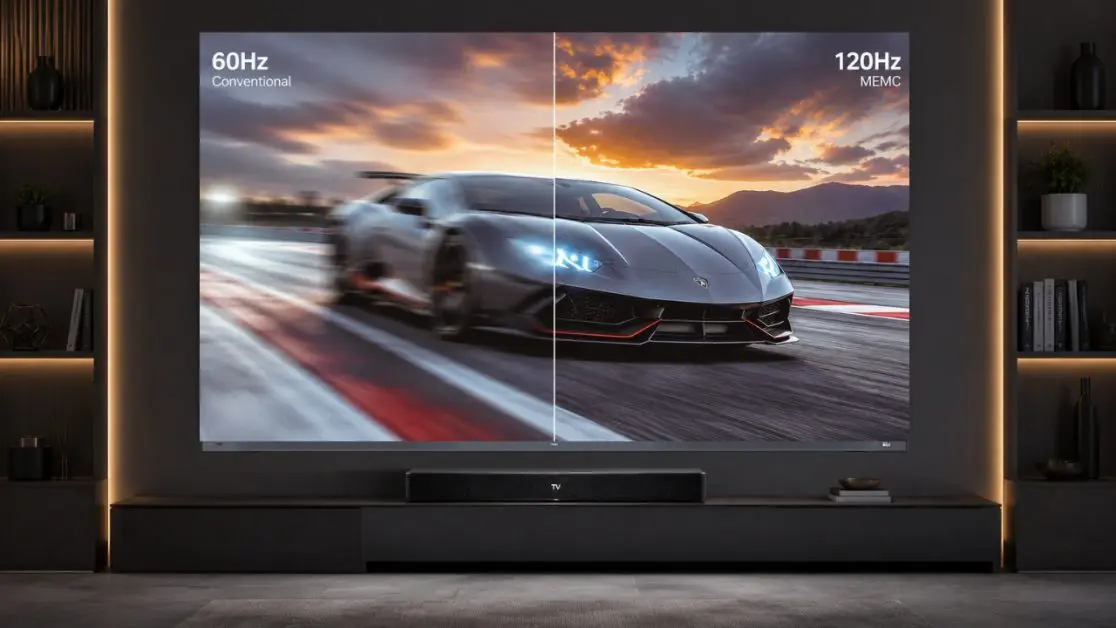
MEMC Motion Technology
Helps improve motion clarity during fast-moving scenes and sports content.
The Refresh Rate Most Indian Gamers Should Choose
Let’s make this practical.
If You Are A Casual Gamer
Choose:
- 60Hz or above
Suitable for:
- Mobile casting
- Casual console gaming
- Family entertainment
If You Play Regularly
Choose:
- 120Hz minimum
Suitable for:
- PlayStation gaming
- Xbox gaming
- Sports titles
- Racing games
If Gaming Is A Serious Hobby
Choose:
- 144Hz
Suitable for:
- Competitive gaming
- High-performance consoles
- Gaming PCs
- Esports enthusiasts
For many enthusiasts today, 144Hz represents the sweet spot between performance, responsiveness, and future readiness.
Why Modern Gaming TVs Need More Than Just Speed
Here’s something people often overlook.
Gaming isn’t only about responsiveness anymore.
A television also needs to deliver:
- Deep contrast
- Bright HDR highlights
- Accurate colours
- Powerful audio
- Immersive screen size
Because gaming today is cinematic.
Open-world adventures look closer to blockbuster films than traditional video games.
That’s why leading gaming televisions now combine refresh rate technology with AI processing, Mini LED backlighting, advanced HDR systems, and immersive sound systems.
Haier M92 Series: Built For Modern Gaming
For gamers looking beyond basic specifications, the Haier M92 Series QD Mini LED AI Smart Google TV brings together multiple gaming-focused technologies in one package.
Available in:
- Haier M92 Series 164cm (65) QD Mini LED AI Smart Google TV (H65M92FUX)
- Haier M92 Series 189cm (75) QD Mini LED Smart AI Google TV (H75M92FUX)
The series combines:
Gaming-Focused Features
- Native 144Hz Refresh Rate
- Gaming Mode up to 240Hz
- VRR Support
- ALLM
- AMD FreeSync Premium Pro
- HDMI 2.1 eARC
- AI Ultra Sense Processor
- Game Menu Optimisation
These features work together to create smoother gameplay, sharper motion, and lower latency during fast-paced gaming sessions.
Gaming Should Look Spectacular Too
Performance matters.
But visuals matter just as much.
The Haier M92 Series pairs gaming capabilities with:
- QD Mini LED technology
- Dolby Vision IQ
- HDR10+
- AI Scene Detection
- AI Motion Enhancement
- Dolby Atmos
- Sound by KEF
This combination helps create a viewing experience that feels equally impressive whether you’re gaming, streaming movies, or watching live sports.
For Those Who Want The Ultimate Gaming Display
Some users don’t just want a gaming TV.
They want a statement piece.
The Haier M96 Series 254cm (100) QD Mini LED AI Smart Google TV (H100M96FUX) pushes the experience even further with:
- 144Hz Refresh Rate
- AI Ultra Sense Processor co-developed with MediaTek
- AMD FreeSync Premium Pro
- Dolby Vision IQ
- HDR10+
- KEF Audio System
- 6.2.2 Channel Speaker Configuration
- Dolby Atmos
For large-screen gaming, sports, and premium home entertainment setups, it delivers a truly immersive experience that transforms the living room into a dedicated entertainment zone.
Final Verdict
If you’re still choosing between refresh rates, here’s the simple answer.
For modern gaming in 2026:
- 60Hz is adequate.
- 120Hz is good.
- 144Hz is where premium gaming begins.
More importantly, refresh rate should never be viewed in isolation.
The best gaming televisions combine high refresh rates with AI-powered processing, VRR, ALLM, advanced HDR technologies, immersive audio, and gaming optimization tools.
That combination, not just a number on a specification sheet, is what creates truly responsive gameplay.
And for Indian gamers seeking that balance between performance, picture quality, and next-generation entertainment, Haier’s M92 and M96 QD Mini LED AI Smart Google TV lineup offers a compelling gaming-ready solution built for the way modern households play, stream, and experience entertainment today.
Frequently Asked Questions
Is 60Hz Still Enough for Gaming in 2026?
Yes, if you play casually, enjoy story-driven games, or only game occasionally. However, you’ll miss the smoother motion and responsiveness that modern consoles and PCs can deliver at higher frame rates.
Is 120Hz Really Worth Paying Extra For?
For most gamers, yes. The jump from 60Hz to 120Hz is noticeable, especially in racing games, shooters, sports titles, and fast-action games.
Will I Actually Notice the Difference Between 120Hz and 144Hz?
Casual gamers may not notice much difference. Competitive gamers and people sensitive to motion smoothness can appreciate the extra fluidity and responsiveness.
What’s the Best Refresh Rate for PlayStation and Xbox Gaming?
A 120Hz TV is generally the sweet spot because modern consoles support high-frame-rate gaming modes that benefit from higher refresh rates.
If I Only Play on Weekends, Should I Buy a 144Hz TV?
Probably not necessary unless you want future-proofing or premium gaming performance. A good 120Hz TV will satisfy most weekend gamers.