
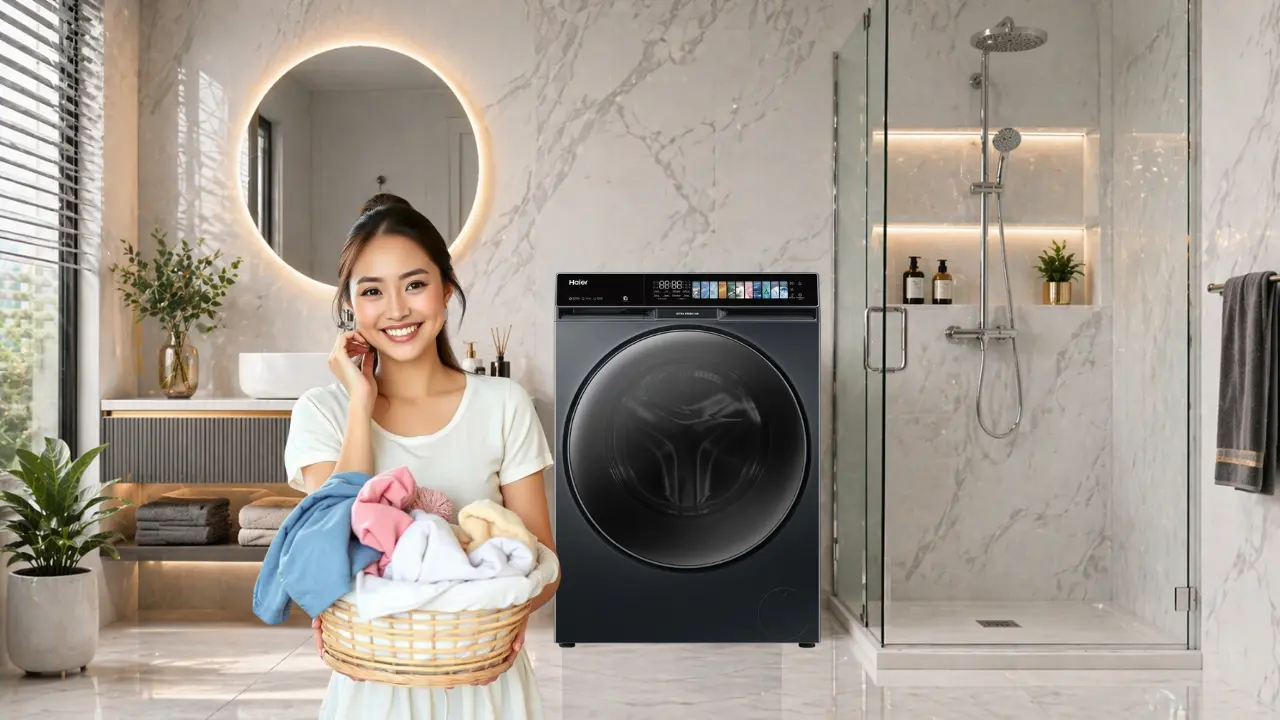

Fresh air circulation in washing machines matters because it prevents moisture buildup, reduces odor, limits bacterial growth, and keeps clothes fresh even after the wash cycle ends.
It transforms washing from a one-time process into a continuous freshness system.
The real problem is not washing. It is what happens after.
It is a familiar moment.
You run a late-night wash.
You feel efficient.
You go to sleep.
Morning arrives. You open the machine.
The clothes are clean. But not fresh.
Something feels… trapped.
This is where most washing machines fall short. Not during washing. But while waiting,
Clean is instant. Freshness is sustained.
Why do clothes lose freshness inside the machine?
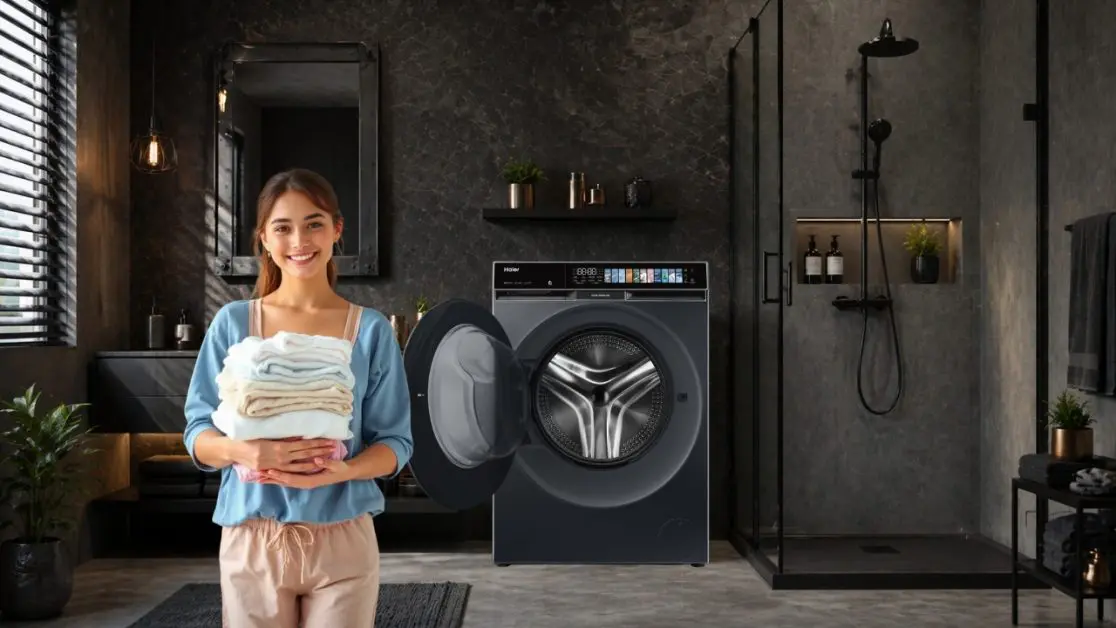
The hidden system inside every drum
Once a wash cycle ends, three things happen:
- Moisture stays inside
- Warmth remains trapped
- Airflow stops completely
This creates the ideal environment for odor and bacteria.
Think of it like leaving damp clothes in a closed cupboard.
No ventilation. No circulation. No freshness.
According to appliance hygiene insights, bacteria can begin multiplying in damp environments within hours, especially in humid Indian conditions.
Still air creates staleness. Moving air prevents it.
What does fresh air circulation actually do?
It keeps freshness alive after washing ends
Fresh air circulation is not about cleaning better. It is about protecting what cleaning achieves.
Instead of shutting down after the cycle, the machine continues working.
Here is what happens:
- Air flows continuously inside the drum
- Moisture is gradually reduced
- Odor-causing bacteria lose their environment
- Clothes remain fresh and breathable
Systems like those in the Haier 12 Kg F11 Front Load Washing Machine (HW120-DM14F11BKU1) use 360° micro-pressure airflow at regular intervals, refreshing the drum repeatedly for up to 12 hours after washing.
The wash cycle removes dirt. Airflow protects freshness.
Three ways people handle post-wash freshness
One problem. Three approaches. Very different outcomes
One option is: Immediate removal
- Take clothes out instantly
- Dry them right away
Cost: Requires perfect timing
Reality: Rarely practical
The second option is: Ignore the delay
- Leave clothes inside for hours
- Rewash if odor develops
Cost: Extra water, electricity, and effort
Hidden cost: Fabric wear
The third option is: Use a system that manages it
- Let the machine maintain airflow
- Clothes stay fresh even if delayed
Cost: Slightly higher upfront investment
Benefit: Time freedom and consistency
The best systems remove dependency on perfect timing.
Because real life rarely runs on schedule.
Why fresh air circulation matters more in Indian homes
Context makes the difference
Fresh air circulation becomes essential when you consider everyday realities:
- Humid weather conditions
- Night-time washing habits
- Mixed loads with different fabrics
- Busy mornings and unpredictable routines
Without airflow, moisture lingers. And lingering moisture leads to odor.
Let’s make this real:
| Situation | Without Air Circulation | With Air Circulation |
| Night wash | Damp smell in morning | Fresh clothes |
| Monsoon laundry | High odor risk | Controlled freshness |
| Mixed loads | Uneven drying smell | Balanced outcome |
| Delayed unloading | Rewash needed | No action required |
The environment shapes the result. Airflow controls the environment.
What makes modern air circulation systems different?

Not passive. Active. Intentional.
Older machines rely on waiting.
Modern machines act.
In advanced systems:
- Air is circulated at intervals
- The drum is refreshed every few minutes
- The process continues for hours
In the Haier 12 Kg F11 Front Load Washer & Dryer Washing Machine (HWD120-DM14F11BKU1), this translates into up to 12 hours of maintained freshness after the cycle ends, even if clothes are left inside.
This is not just convenience.
It is flexibility engineered into the appliance.
The invisible benefit: Less thinking
Convenience is mental, not mechanical
But thinking about laundry is not.
- When should I remove clothes?
- Will they smell if I delay?
- Do I need to run another cycle?
These questions disappear with fresh air circulation.
You start the wash.
You move on with your day.
The machine handles the rest.
True convenience reduces decisions.
How fresh air circulation protects your clothes
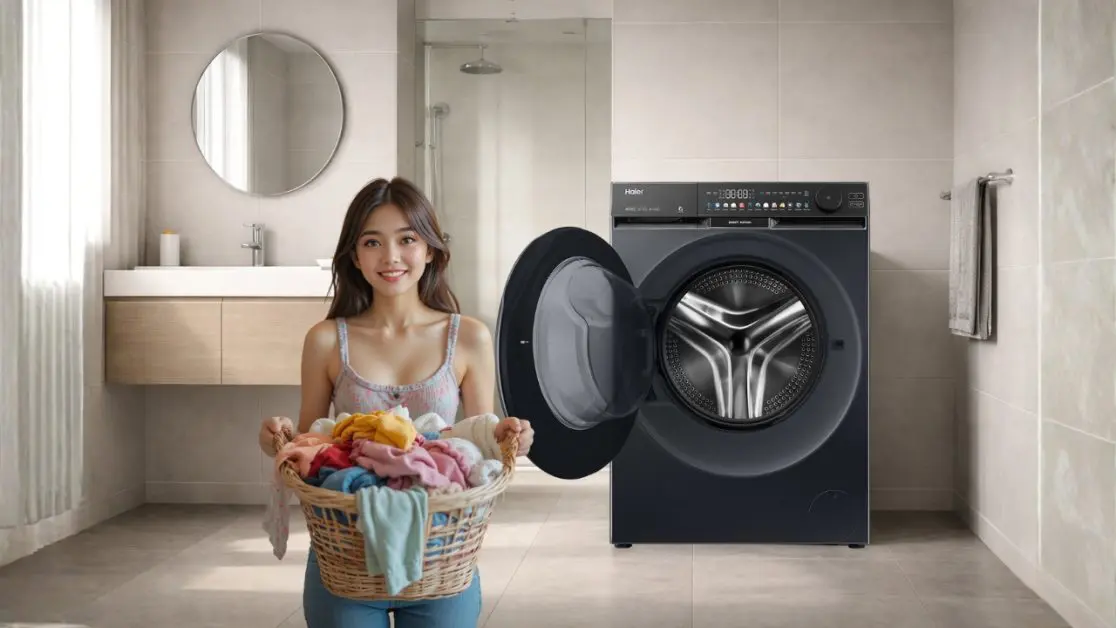
It goes beyond odor control
When moisture stays trapped:
- Fabrics weaken
- Odor settles deeper
- Colors fade faster
Airflow prevents this.
It keeps fabrics breathable.
It protects texture.
It extends garment life.
Combine this with features like targeted rinsing and detergent dispersion, and you get a complete hygiene system, not just a wash cycle.
Good washing cleans. Smart systems preserve.
What to look for in a washing machine with fresh air circulation
A simple decision framework
If freshness matters, focus on these:
- Continuous or interval-based airflow
- Duration of post-wash freshness support
- Drum ventilation design
- Integration with hygiene features
- Automation that requires no manual input
The Haier 12 Kg F11 Front Load Washing Machine (HW120-DM14F11BKU1) and the Haier 12 Kg F11 Front Load Washer & Dryer Washing Machine (HWD120-DM14F11BKU1) combine these into a single system, where airflow works alongside AI-led washing and fabric care features.
A feature adds convenience. A system builds reliability.
The bigger shift: From washing to freshness systems
This is how appliances are evolving
Earlier, washing machines had one role.
Clean clothes.
Today, they solve a broader need:
- Cleaning
- Hygiene
- Freshness
- Time flexibility
Fresh air circulation sits at the center of this shift.
It ensures that what the machine achieves does not fade after the cycle ends.
A simple way to think about it
Imagine cooking fresh food.
You leave it sealed, without airflow.
It was perfect when prepared.
But time changes it.
Laundry behaves the same way.
Freshness is not created once. It is maintained over time.
So, why does fresh air circulation matter?
Because life is unpredictable.
Because schedules change.
Because not every load can be handled immediately.
And because clean clothes should stay fresh, not just look clean.
The one insight worth remembering
Most people choose washing machines based on wash features.
Few think about what happens after.
But that is where the real experience lives.
The quality of a washing machine is defined not just by how it washes, but by how it protects freshness after washing.
Final thought
A basic appliance completes a task.
A thoughtful one continues working quietly in the background.
Fresh air circulation is that quiet system.
You do not notice it working.
You notice the absence of problems.
And in modern homes, that is what makes all the difference.
Frequently Asked Questions
Do I actually need fresh air circulation, or is it just a premium add-on?
If your schedule is unpredictable or you often leave clothes in the drum, it’s not a luxury, it’s practical. It removes the need for perfect timing and prevents rewash cycles.
I already wash my clothes properly. Why should I care about airflow after the cycle?
Because washing removes dirt, airflow protects freshness. Without it, moisture and odor build up even after a perfect wash.
Is it worth paying more for a machine with airflow features?
If you value time flexibility, fewer rewashes, and better fabric care, the long-term benefits usually outweigh the upfront cost.
I live a busy life. Will this feature actually make things easier for me?
Yes. It eliminates small but constant decisions like “Should I rewash?” or “Will my clothes smell?”
I left my laundry in the washer overnight. Do I need to rewash it?
If your machine lacks airflow, probably yes. Damp, still air promotes bacteria and odor within hours.
Why do my clothes smell even though they’re technically clean?
Because trapped moisture + warmth + no airflow = ideal conditions for odor-causing bacteria.
Is it unhygienic to leave clothes in the washing machine for hours?
It can be. In humid environments, bacterial growth can begin quickly without ventilation.
What does fresh air circulation in a washing machine actually do?
It keeps air moving inside the drum after the wash cycle, reducing moisture and preventing odor buildup.
How long do these systems work after a wash cycle ends?
Advanced systems (like in Haier 12 Kg F11 Front Load Washing Machine) can maintain airflow for up to 12 hours.
Does the machine keep running the whole time?
Not continuously. It operates in intervals, refreshing the drum periodically.
Is this feature automatic, or do I need to turn it on manually?
In modern machines, it’s fully automatic with no user input required.
Is airflow the same as drying?
No. It doesn’t dry clothes completely, it prevents them from becoming stale before drying.