
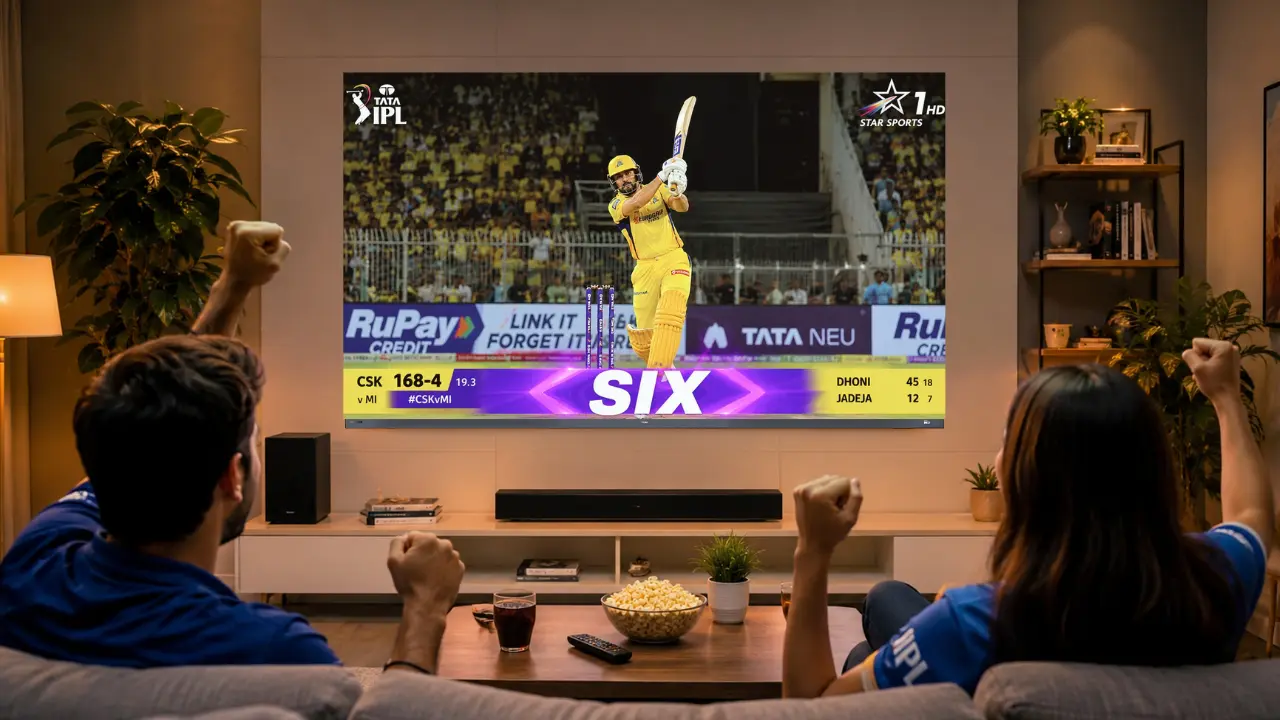

IPL viewing at home has evolved into a full-scale entertainment ritual
An IPL match in India rarely stays confined to the television screen.
It spills into the entire house.
Dinner gets delayed. Friends suddenly arrive “just for two overs.” Fantasy league discussions become louder than commentary. Parents who barely follow cricket start asking about strike rates during tense chases.
And somewhere in the middle of all this sits the television.
Not as furniture.
As the emotional center of the room.
That shift changes everything about what people expect from a TV today.
Modern IPL viewing is not just about screen size anymore. It is about motion clarity during fast deliveries, immersive stadium sound, smooth streaming, bright visuals during afternoon matches, and an experience that feels effortless even when six people are fighting over the remote.
This is where Haier’s M80F Mini LED Google TV lineup quietly changes the experience.
The Haier M80F Mini LED Google TV series, available in 140cm (55), 165cm (65), 189cm (75), and 215cm (85) variants, is built around a simple idea: sports should feel immersive, not interrupted.
Because the best technology during the IPL season is the technology you stop noticing.
Why cricket exposes weak TVs faster than movies do
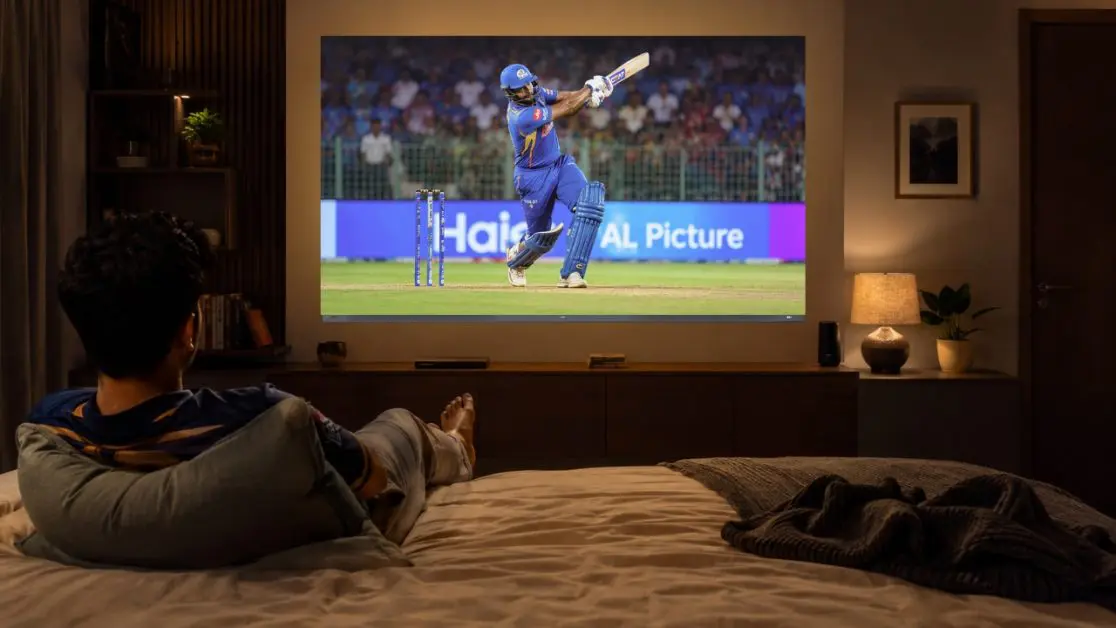
Most televisions look impressive during slow scenes.
Nature documentaries.
Talk shows.
Static landscapes.
IPL is different.
T20 cricket is chaos by design.
Fast camera pans. Bright stadium lights. Sudden motion changes. Split-second edges. Score graphics constantly updating. Replay sequences moving at extreme speed.
Sports reveal flaws instantly.
This is where many ordinary televisions struggle:
- Motion blur during quick deliveries
- Audio distortion during crowd-heavy moments
- Weak contrast under stadium lighting
- Lag during streaming transitions
- Poor daytime visibility
- Inconsistent clarity during replays
A television either handles motion intelligently.
Or the experience starts breaking apart.
Motion handling changes how cricket feels emotionally
The human eye notices motion problems faster than resolution problems.
That is the hidden system most buyers miss.
A blurry six feels less exciting.
A delayed replay feels disconnected.
A fast yorker losing sharpness weakens immersion immediately.
Haier M80F Mini LED Google TVs integrate MEMC technology that intelligently inserts additional frames between scenes to reduce motion blur and improve visual smoothness during fast-moving content.
The impact becomes obvious during the IPL.
The ball remains sharper during deliveries.
Camera pans feel smoother.
Action sequences maintain clarity instead of smearing into blur.
Technology works best when it disappears into emotion.
Good motion processing does exactly that.
Why larger screens suddenly make practical sense during IPL season
A few years ago, giant televisions felt excessive.
Now they feel normal.
Because viewing behaviour changed.
People no longer sit directly in front of the screen watching cable channels quietly. IPL viewing today is social, distracted, interactive, and communal.
Someone checks fantasy points.
Someone orders food.
Someone records reactions for Instagram stories.
Someone watches while working on a laptop.
A larger display solves a real-world problem: visibility from everywhere in the room.
The Haier M80F Mini LED Google TV lineup offers multiple screen sizes for different room experiences:
- Haier M80F Mini LED 140cm (55) Google TV Sound By KEF
- Haier M80F Mini LED 165cm (65) Google TV Sound By KEF
- Haier M80F Mini LED 189cm (75) Google TV Sound By KEF
- Haier M80F Mini LED 215cm (85) Google TV Sound By KEF
Interestingly, screen size adaptation happens fast.
People think a 215cm (85) TV will feel overwhelming.
Then one weekend later, every smaller screen starts feeling limited.
Comfort resets perception.
Brightness matters more during IPL than most people realise
IPL season overlaps with Indian summer.
Which means many matches are watched in brightly lit living rooms, not dark home theatre environments.
This creates a major challenge for ordinary televisions.
Poor brightness kills visibility.
Haier’s M80F Mini LED Google TVs feature Mini LED technology with up to 800 nits brightness designed to maintain vivid visuals and stronger contrast even in brighter environments.
That changes daytime sports viewing dramatically.
Instead of constantly adjusting curtains or manually tweaking brightness settings, the experience stays consistent naturally.
Small frictions ruin entertainment faster than people realise.
The smartest products quietly remove those frictions.
The sound of cricket matters as much as the picture
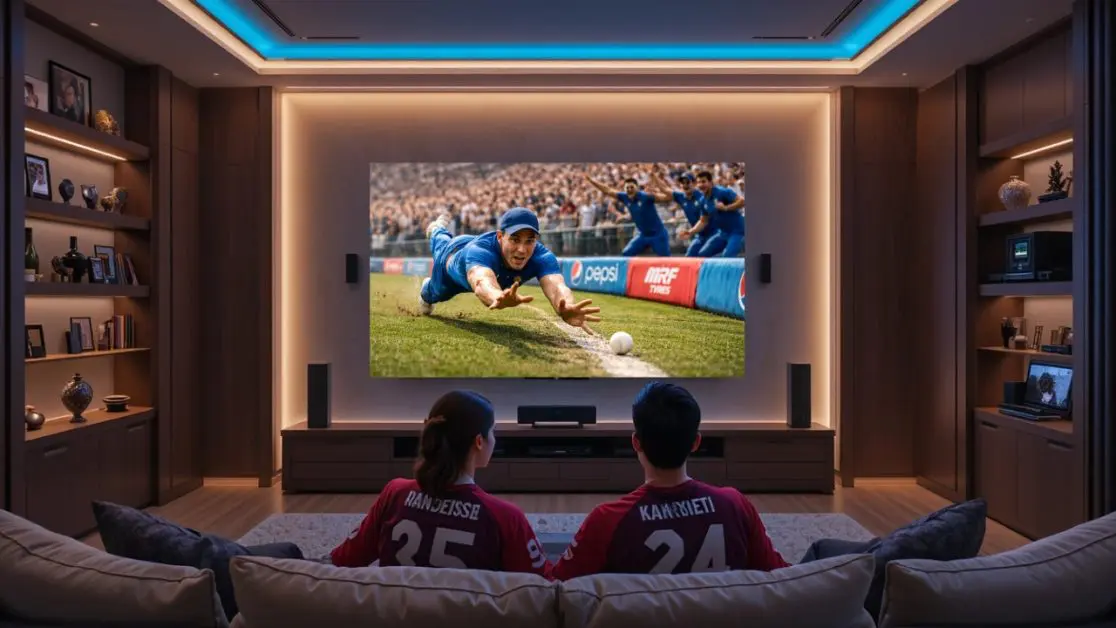
People underestimate sound quality.
Until they experience better sound.
Then they cannot go back.
Cricket is emotional because of audio layering:
- Crowd eruptions
- Commentary intensity
- Bat impact sounds
- Stadium ambience
- Replay music
- On-field chatter
Weak speakers flatten all of this into noise.
Haier M80F Mini LED Google TVs integrate Sound by KEF, Dolby Atmos, and a 2.1 Channel Woofer 50W speaker setup to create a fuller and more immersive audio environment.
The room feels larger.
The stadium atmosphere feels closer.
The comment sounds clearer.
Good visuals show the match.
Good sound recreates the atmosphere around it.
Smart TV software now matters more than hardware alone
The modern entertainment problem is not lack of content.
It is overloaded.
Too many apps.
Too many subscriptions.
Too many remotes.
Too many menus.
The hidden role of a smart TV is reducing decision fatigue.
Haier’s Google TV platform centralises streaming apps, recommendations, voice search, and content discovery into one smoother ecosystem.
That matters during the IPL.
Nobody wants to troubleshoot apps during the toss.
Nobody wants HDMI confusion during the final over.
Convenience is no longer a luxury feature.
It is infrastructure.
Hands-free voice control changes family behaviour subtly

Every cricket household experiences the same ritual.
The remote disappears exactly when someone needs it most.
Technology increasingly moves toward voice because voice removes interruption.
Haier M80F Mini LED Google TVs include hands-free voice control for operating the TV, accessing content, and managing smart functions more naturally.
It sounds minor.
Until multiple people are watching together.
Then simplicity becomes surprisingly valuable.
Mini LED technology changes contrast in ways sports fans immediately notice
Cricket broadcasts contain difficult lighting conditions.
Bright floodlights.
Dark crowds.
Fast scene switching.
High-contrast replays.
Mini LED technology improves local dimming and contrast precision dramatically compared to many traditional LED televisions.
The Haier M80F Mini LED Google TV lineup includes advanced dimming zones across different variants:
- 144 dimming zones in the 140cm (55) model
- 180 dimming zones in the 165cm (65) model
- 264 dimming zones in the 189cm (75) model
- 360 dimming zones in the 215cm (85) model
That translates into:
- Better black levels
- Stronger highlight separation
- More realistic stadium visuals
- Improved depth perception
The difference becomes obvious during night matches.
The stadium feels alive instead of flat.
IPL viewing and gaming culture are quietly merging
This is another behavioural shift many brands miss.
Sports culture and gaming culture increasingly overlap.
Especially among younger audiences.
Many users now move directly from IPL streaming to console gaming or multiplayer sessions with friends.
Haier M80F Mini LED Google TVs support gaming-focused technologies like VRR, ALLM, HDMI 2.1, and Game Mode optimisations for smoother gameplay experiences.
Which means the television adapts across different entertainment identities instead of serving only one purpose.
That flexibility matters in modern homes.
The real product is not the television. It is the atmosphere.
This is the deeper insight.
People do not buy large televisions purely for specifications.
They buy them for moments.
For hosting friends during playoffs.
For late-night Super Overs.
For family reactions during finals.
For shared rituals that make homes feel alive.
Technology becomes meaningful when it amplifies human behaviour instead of interrupting it.
That is what the Haier M80F Mini LED Google TV lineup understands particularly well.
Not just sharper visuals.
Not just a stronger sound.
Not just bigger screens.
But systems designed around how Indian households actually experience entertainment.
And IPL season exposes those patterns more clearly than almost anything else.
Because cricket in India is never just a sport.
It is the atmosphere.
Frequently Asked Questions
Is a bigger TV really worth it for watching IPL matches?
Yes. IPL viewing is often a group activity involving family and friends. Larger screens improve visibility from different parts of the room, making scorecards, replays, and live action easier to follow.
Which Haier M80F Mini LED TV size is best for my living room?
It depends on room size and viewing distance. The lineup offers:
140cm (55″)
165cm (65″)
189cm (75″)
215cm (85″)
Larger rooms and frequent group viewing generally benefit from the 75″ or 85″ models.
Why does cricket expose TV performance issues more than movies?
Cricket broadcasts contain fast-moving balls, rapid camera pans, score updates, replays, and changing lighting conditions. These reveal weaknesses like motion blur and lag much faster than slower-paced content.
What is MEMC and why does it matter during IPL?
MEMC (Motion Estimation and Motion Compensation) inserts additional frames between scenes to reduce blur and improve smoothness during fast action, helping deliveries, catches, and replays appear clearer.
Why does the ball sometimes look blurry on some TVs?
TVs with weaker motion processing struggle to keep fast-moving objects sharp, causing motion blur during deliveries and aerial shots.