


It can be confusing to notice a small puddle next to your refrigerator or see moisture inside the refrigerator when everything else seems to be working normally. If you notice your fridge is starting to collect more water in its compartments, the location and timing of the moisture can give you useful clues.
It is helpful to first note if the water is appearing on shelves, under the drawers, by the door or under the appliance. By taking a good look at these signs, it is easier to understand what might be going on before moving on to the possible causes and fixes.
Before we get to the fixes, it does help to understand what might be causing the water to collect inside the refrigerator in the first place.
Why Can Water Appear Inside or Under a Refrigerator?
Water around a refrigerator can show up in different ways, from light moisture inside the cabinet to a puddle underneath the appliance. We recommend looking first at where the water appears and how often it returns, as this can help narrow down what needs attention.
- Moisture can form during normal refrigerator use. When warm, humid air enters the refrigerator, it comes into contact with much colder surfaces. This can leave behind small droplets, particularly when the door is opened frequently or humidity levels are high.
- Water can collect if the drainage path is restricted. Refrigerators need to move defrost water away through a drainage system. If that path becomes blocked or does not drain properly, water may begin collecting below drawers or at the bottom of the compartment.
- A puddle underneath may point to a separate water source. If water is appearing below the refrigerator rather than inside it, we would also consider areas such as the drain pan, visible water connections, or dispenser-related components on models that use a water supply.
- Where the water appears can guide the next check. Moisture on an inner wall, water beneath a crisper drawer and water pooling under fridge units do not always have the same cause.
Why Is Water Collecting Inside My Refrigerator?
Moisture is being generated faster than it can drain or evaporate. The most common cause of this is a blocked defrost drain. Instead of draining away as it should, this can cause water to pool at the bottom of the compartment or leak out from under the drawers.
Another possible cause is too much condensation inside fridge compartments. Frequent door openings allow warm air to enter; moisture can enter through a poorly sealing door, and uncovered food or warm dishes can all increase the moisture levels inside. If the problem keeps recurring, it’s not just a matter of a simple spill, but it’s worth checking the drainage path as well as the door seal.
Why Is There Water Under My Fridge?
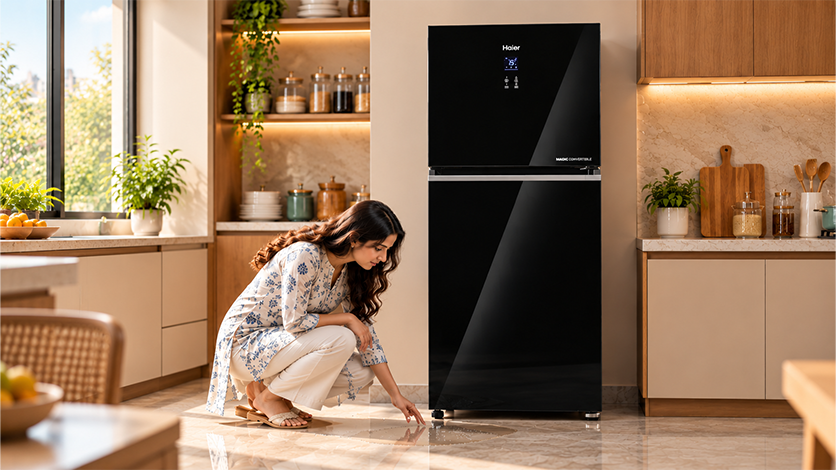
Water under refrigerator units can be caused by something other than the moisture that appears inside the cabinet. Sometimes a puddle underneath can be from a leak in the drain pan, a drainage problem or a water connection that you can see is not sealed right.
If your refrigerator has a water dispenser or has a connected supply, it’s worth checking to see if any of the available hose or fitting is showing signs of moisture. If the water under the fridge keeps coming back after you check the visible areas, then it may need a more in-depth inspection instead of a simple wipe down.
How Can You Fix a Fridge Water Leak at Home?
Once the obvious sources of a fridge water leak are eliminated, a few other practical checks can help. These are concerned with the positioning, cooling and use of the refrigerator, rather than the usual checks of drain and seal.
- The refrigerator should be standing upright. If the fridge is uneven, the water may circulate differently within the internal drainage system. Ensure that the appliance is level and installed in accordance with the installation instructions for your model, and not significantly leaning to one side.
- Remove any food blocking the cooling vents. Normal airflow can be restricted by containers pushed against the vents or rear interior wall. Leaving a small area around these places allows the cold air to circulate more evenly and can reduce the local buildup of moisture or ice.
- Check the temperature setting if the cabinet feels unusually cold. If the setting is too cold, there can be heavier frost or ice in some places. Set your refrigerator to the recommended normal everyday storage setting, and don’t automatically keep it at the lowest temperature.
- Thoroughly dry the affected area; watch where water flows back first. When the water is cleaned up, wipe surrounding surfaces dry thoroughly. This makes it much easier to see where moisture first starts to reappear so that a one-off spill can be differentiated from a continuing refrigerator le
What Can Help Reduce Condensation and Water Build-Up?
Even if your refrigerator is working perfectly, the amount of moisture that builds up inside can be affected by the way you store items each day. Small adjustments can help prevent condensation inside fridge compartments from becoming more obvious over time.
- Don’t keep the door open while you’re figuring out what to remove. A longer door opening lets in more volume of warm, humid air. Before you open the refrigerator, consider what you need to help reduce the amount of outside moisture coming into the cabinet.
- Keep very moist foods separate from drier foods where feasible. Foods with high natural water content may also release more moisture in storage. Special areas or putting them in the right containers can stop that moisture from getting on nearby shelves and food.
- Do not put containers against very cold inside surfaces. Droplets will sometimes form when one surface meets another, such as containers seated tightly against a wall or panel that is colder. A small area can help to reduce localised moisture.
- Inspect stored items regularly for hidden moisture. A leaking bottle or moist food pack or container with trapped condensation can add water slowly, not apparent initially. A quick check in your regular cleaning might help to discover these small sources early.
When Does a Refrigerator Water Leak Need Professional Attention?
A fridge leaking water requires professional attention if the problem keeps coming back even when the basic checks have been done, or when the source is not easy to identify from the outside. If water is leaking from an internal valve, supply component or sealed part of the appliance, it is best inspected by a trained technician rather than trying to fix it yourself.
It’s also worth arranging service if the leak is accompanied by poor cooling, recurring frost or ice build-up, unusual noises or electrical concerns. These can be signs of a larger issue than simple condensation or a minor spill, and getting the refrigerator checked out early can help prevent the problem from getting out of control.
How Haier Refrigerators Support Consistent Cooling and Everyday Storage

Keeping the temperature low is not the only factor in consistent cooling. On select Haier refrigerators, we combine airflow, inverter technology and flexible storage to make various areas of the fridge work more efficiently for your daily needs.
1> Magic Cooling helps us to keep the cooling more even
Our Magic Cooling technology is designed to cool automatically throughout the refrigerator, helping to reduce uneven temperature zones around your food. This is especially useful if the refrigerator is opened often during the day and the cooling system is still trying to restore more stable conditions inside.
2> Triple Inverter & Dual Fan Technology control airflow throughout compartments
The Triple Inverter & Dual Fan Technology in select models combines inverter control and dual fans to help cool various areas of the refrigerator. This allows better airflow through the compartments, and the inverter system adjusts operation based on the cooling demand.
3> Dedicated storage areas allow us to be more efficient in organising fresh food
Some refrigerators also have separate storage compartments for fruits and vegetables. A separate compartment for fresh produce can help make everyday organisation easier, reduce crowding on the main shelves and help users keep different food categories more clearly separated.
4> The Haier 358L Frost Free Double Door Refrigerator has all of these features
Our Haier 358L Frost Free Double Door Refrigerator Display Panel Black Glass 3 Star is a top-mounted frost-free design that comes with Magic Cooling, Triple Inverter & Dual Fan Technology and 10-in-1 Convertible modes. It’s a good example of how we combine the cooling performance and the flexible storage instead of having them as two separate parts of the refrigerator.
Conclusion
Some moisture in the refrigerator is normal, but don’t ignore persistent water buildup or puddles. It could be as simple as condensation from warm air or could be a blocked drain, door seal issue, drain pan or water connection.
Just locating where the water is coming up can help to clarify the problem considerably. If it’s a small problem, you may be able to fix the leak with some basic cleaning and storage changes. If the leak persists or you see it with poor cooling, weird frost, or water coming in the house, it’s best to have a professional look at it.
FAQs
Why is my fridge leaking water?
Your refrigerator may leak water if the drain pan is damaged or displaced, or if a part of the water supply is leaking. Your refrigerator may leak water if the defrost water is not drained properly. A water line or inlet valve attached to the dispenser may be leaking. Often the cause depends on where the water first appears.
What causes condensation inside a fridge?
Warm, humid air enters the cool refrigerator compartment, and moisture condenses out on the cool surfaces. The door is opened often, the weather is humid, food is uncovered, the door seal is poor and warm food is put inside; all of these increase condensation. A little water is normal, but if you see constant dripping or pooling water, have it checked out.
How do I unblock a fridge defrost drain?
First, unplug the refrigerator and look for a model that has a drain opening that you can reach. Clean visible dirt or food particles as instructed by the appliance instructions. Do not open or dismantle internal parts; this can damage the drainage channel. If the blockage cannot be safely accessed, professional servicing is the better option.
Is water in the fridge drain hole normal?
There should be a little moisture around the drain hole, as it’s normal for the refrigerator to drain defrost water through there. If water does not drain, repeatedly overflows or backs up into the compartment, the drain may be partially or completely blocked.
When should I call a technician for a leaking fridge?
If you’ve done the basic checks and the leak is still there, or water appears to be coming from inside a valve or supply part, or the fridge has other issues with cooling, heavy frost, odd noises or repeated ice buildup, call a technician. Have a pro check the interior plumbing and electrical components.