
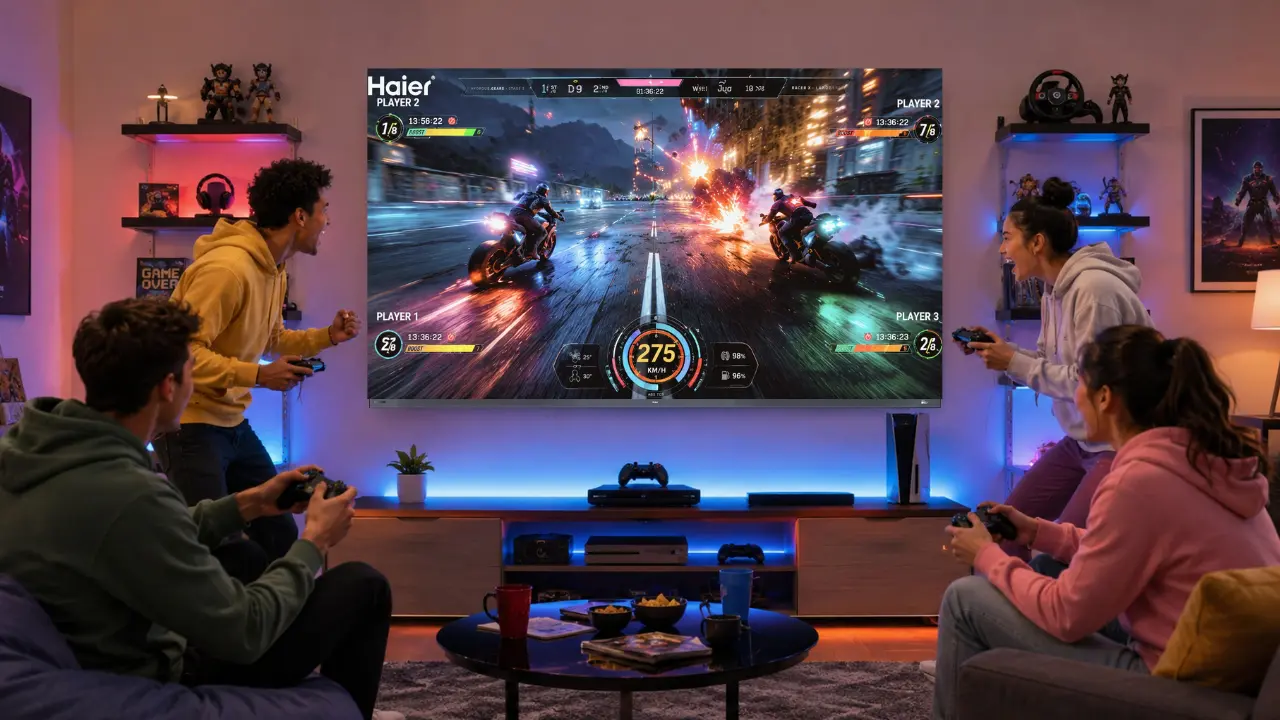

Gaming feels incomplete without good sound.
You can play on a large screen with smooth visuals and fast refresh rates, but if the sound feels flat, the experience collapses quietly. Footsteps lose direction. Explosions lose weight. Racing games lose adrenaline. The world on screen stops feeling real.
Sound is not background decoration in gaming.
It is information. Emotion. Timing. Immersion.
And modern Indian homes are starting to understand this shift faster than ever.
The best gamers are often listening before they are reacting.
Watch someone play a competitive racing game or battle royale title closely.
Their eyes are not doing all the work.
They are listening for:
- Enemy footsteps
- Vehicle direction
- Reload sounds
- Environmental movement
- Distance cues
- Sudden silence
Gaming sound works like instincts in a crowded market.
You may not see the chaiwala immediately. But you hear the kettle whistle before you turn around.
That is how directional gaming audio works.
Which explains something most people misunderstand.
Gaming is not just visual entertainment anymore.
It is a spatial experience.
Why flat TV speakers weaken gaming immersion
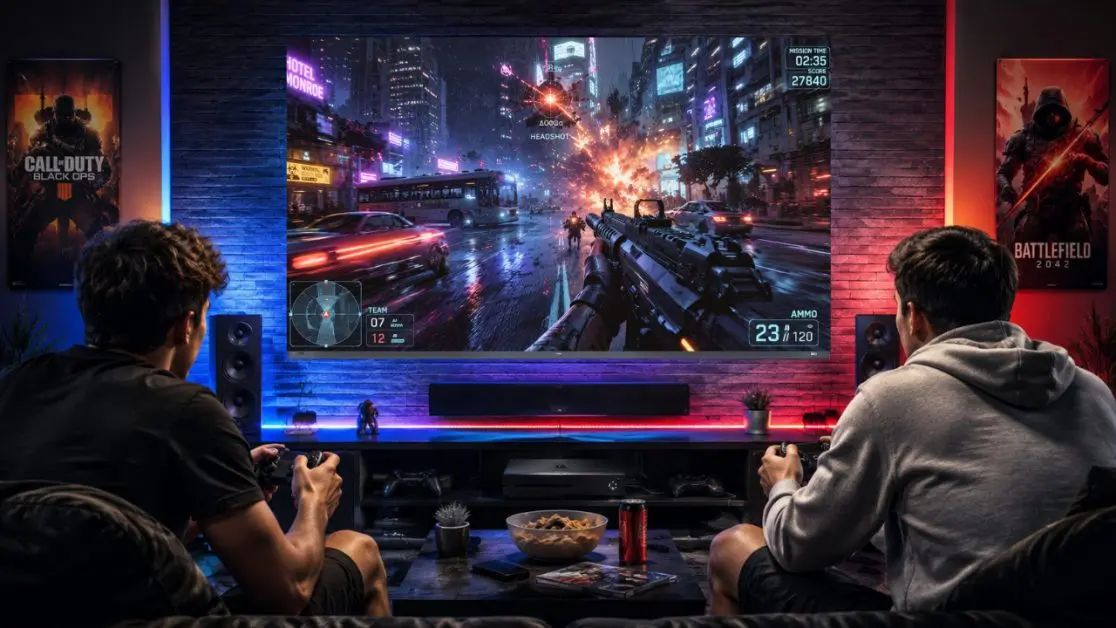
Most older televisions treat sound like an afterthought.
The display gets upgraded.
The processor improves.
The brightness increases.
But the speakers remain small and compressed.
The result:
- Dialogue sounds thin
- Gunfire feels weak
- Background music disappears
- Directional movement becomes confusing
- Long gaming sessions feel tiring
This is why many gamers instinctively buy headphones.
Not because they love isolation.
Because they are compensating for missing sound depth.
A weak audio system forces your brain to work harder.
And tired brains react slower.
That changes gameplay more than people realise.
Gaming sound is built on layers, not loudness
Many people still judge TV sound with one question:
“How loud does it get?”
Wrong metric.
Good gaming audio is not about maximum volume.
It is about separation.
Can you distinguish rain from footsteps?
Can engines feel distant before they approach?
Can explosions feel heavy without drowning dialogue?
That layering changes immersion completely.
The three layers that shape gaming audio
1. Positional audio
This tells you where something is happening.
A car approaching from the left.
An enemy climbing stairs behind you.
Helicopters moving overhead.
Without positional sound, gaming becomes visually reactive instead of instinctive.
2. Dynamic range
This controls contrast.
Quiet moments stay subtle.
Loud moments feel explosive.
A horror game becomes terrifying because silence suddenly breaks.
Not because everything stays loud constantly.
3. Bass response
Bass creates physicality.
You do not just hear a collision.
You feel the impact.
That physical sensation changes emotional engagement dramatically.
Why Dolby Atmos changed gaming inside living rooms
For years, cinematic sound belonged to theatres.
Gaming changed that.
Technologies like Dolby Atmos introduced spatial audio that places sound around the listener instead of pushing everything directly forward.
The difference feels immediate.
Rain sounds above you.
Vehicles move across the room.
Dialogue stays centered while environmental chaos spreads outward.
It creates psychological depth.
And depth changes immersion.
Haier’s QD Mini LED Google TVs, including the Haier H75M92FUX QD Mini LED Smart AI Google TV and Haier H65M92FUX QD Mini LED AI Smart Google TV integrate Dolby Atmos alongside Sound by KEF and 2.1 channel speaker systems designed to create fuller audio depth for entertainment and gaming experiences.
That matters because modern gaming is no longer confined to small monitors in isolated bedrooms.
It now happens in shared living rooms.
Family lounges.
Studio apartments.
Weekend gatherings.
The TV became the new gaming arena.
A racing game teaches the hidden truth about sound
Take a Formula 1 game.
Most people focus on graphics first:
- Track reflections
- Motion smoothness
- Lighting
- Speed blur
But the emotional intensity comes from audio timing.
The engine pitch rises before turns.
Tyres scrape during aggressive cornering.
Crowd ambience builds pressure.
Without sound, the game becomes visual mathematics.
With sound, it becomes tension.
The same principle applies everywhere:
- Football games
- Open-world adventures
- Shooting games
- Horror titles
- Cricket simulations
Sound creates anticipation before visuals confirm reality.
That is how immersion works.
Why modern gaming TVs are becoming audio systems too
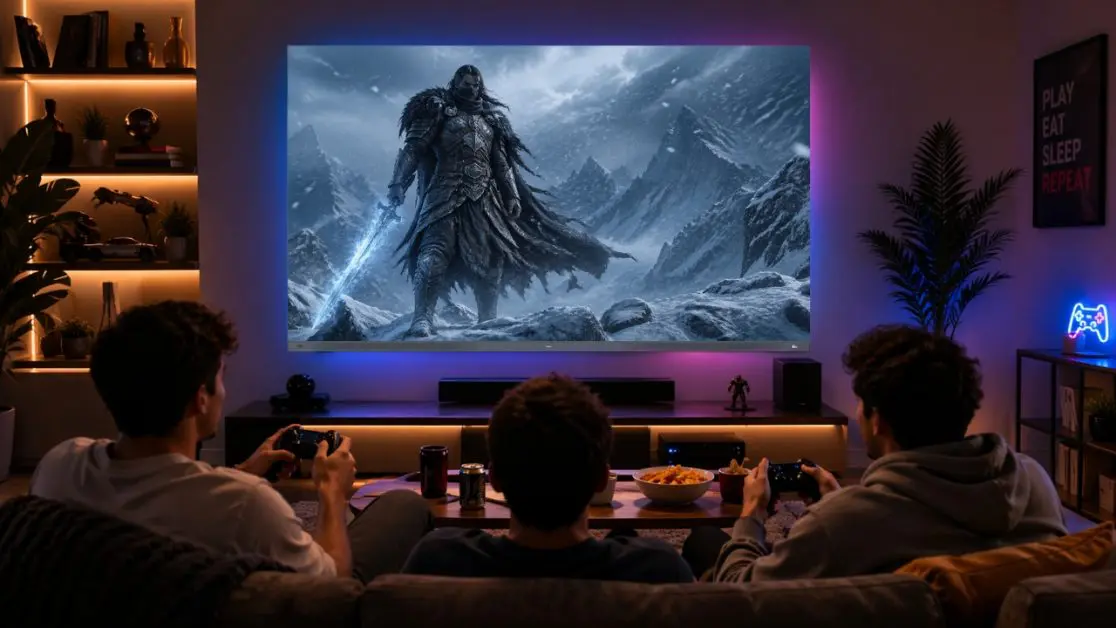
The old assumption was simple.
TV for visuals.
Soundbar for audio.
But modern smart TVs are changing that equation.
Especially premium gaming-focused televisions.
One reason is practical.
Indian homes increasingly prefer cleaner setups:
- Fewer wires
- Less clutter
- More multi-functional devices
- Better space optimisation
A television that delivers strong built-in sound removes friction.
Friction matters.
Because convenience shapes behaviour more than people admit.
What integrated gaming sound systems now include
Modern gaming-focused TVs increasingly combine:
- Dolby Atmos
- AI sound optimisation
- Dedicated subwoofers
- Spatial audio mapping
- Voice clarity enhancement
- Low latency audio processing
The goal is simple.
Reduce the gap between action and response.
Haier’s New M96 Series 254cm(100) QD Mini LED AI Smart Google TV features a 6.2.2 channel speaker setup with KEF audio integration and Dolby Atmos support, designed to create multi-layered three-dimensional sound.
That matters because large-screen gaming without corresponding sound depth feels strangely hollow.
Like watching fireworks through closed windows.
The hidden relationship between sound and fatigue
Poor sound does something subtle.
It exhausts people faster.
Compressed audio forces the brain to constantly interpret unclear information:
- Muffled dialogue
- Sharp volume spikes
- Missing directional cues
- Distorted bass
This increases cognitive load.
The same way noisy restaurants make conversations tiring.
Good sound reduces effort.
That changes long gaming sessions dramatically.
Three ways better sound reduces gaming fatigue
1. Clearer separation reduces mental strain
The brain identifies sounds faster.
2. Balanced bass prevents harshness
Strong bass matters.
But uncontrolled bass becomes tiring.
3. Spatial sound feels natural
Natural sound positioning reduces sensory overload.
This is why premium gaming audio feels relaxing even during intense gameplay.
Clarity is calming.
Why gaming families now care about sound differently
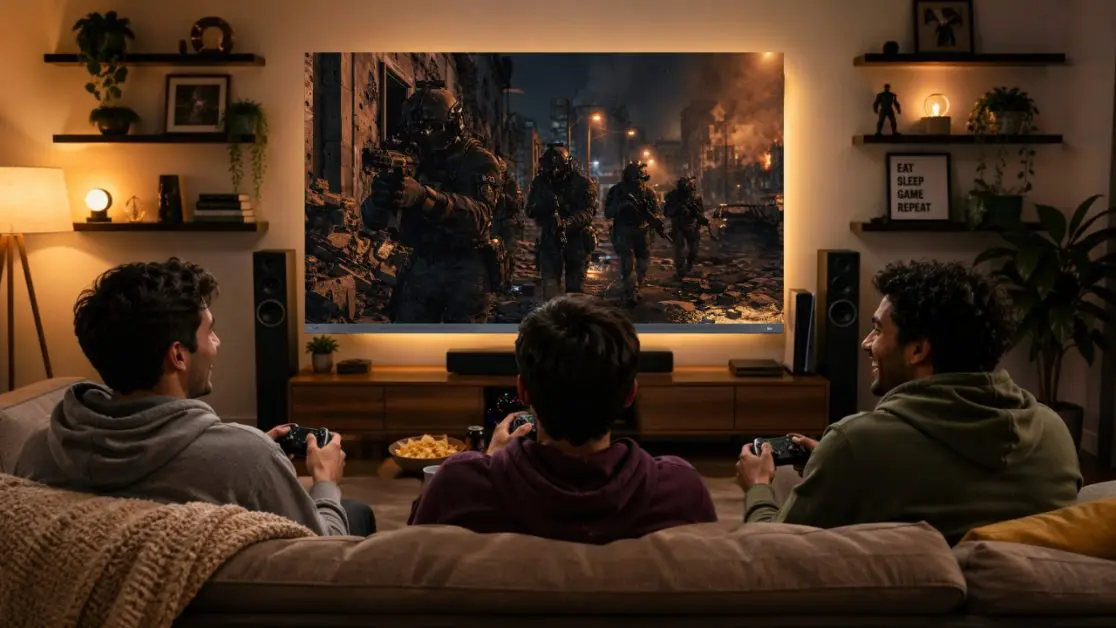
Gaming is no longer isolated teenage behaviour.
Indian households changed.
Today:
- Parents play racing games with children
- Couples stream games together
- Friends gather for FIFA tournaments
- Casual gaming happens during IPL breaks
- Smart TVs switch between OTT and gaming instantly
Which changes what people expect from entertainment systems.
One device now handles:
- Streaming
- Sports
- Gaming
- Music
- YouTube
- Family movie nights
That means sound quality matters across every activity.
Not just gaming.
Haier’s Ultra Sense AI ecosystem integrates sound, visuals, gaming, and entertainment optimisation together instead of treating them separately.
That systems-thinking approach matters.
Because people do not experience appliances feature-by-feature.
They experience them emotionally.
The smartest gaming setups remove effort
The future of gaming inside homes is not complexity.
It is seamlessness.
The best systems quietly handle:
- Motion smoothing
- Sound balancing
- Latency optimisation
- Brightness adjustment
- Voice control
- Connectivity
Without constant tweaking.
That shift mirrors something larger happening across consumer technology.
People increasingly value systems that disappear into daily life.
Not systems demanding attention every five minutes.
What gamers increasingly prioritise today
One option is raw performance.
High refresh rates. Competitive responsiveness.
The second option is cinematic immersion.
Large displays. Spatial sound. Emotional depth.
The third option is balanced living.
Gaming, OTT, family viewing, and smart home control in one ecosystem.
Modern smart TVs increasingly attempt to combine all three.
That is where AI-led optimisation becomes important.
Because different content requires different sound behaviour.
A racing game needs aggression.
A dialogue-heavy drama needs clarity.
A cricket match needs crowd atmosphere.
Adaptive sound systems recognise these shifts automatically.
Why silence matters as much as explosions
The most powerful gaming moments are often quiet.
A hallway in a horror game.
Wind moving through abandoned ruins.
A distant reload sound.
A heartbeat before combat.
Sound design creates emotional tension through restraint.
Not noise.
This is why premium audio systems focus heavily on detail retrieval instead of simple loudness.
Because emotional realism lives in subtlety.
Aphorism worth remembering:
The brain believes worlds that sound real before it believes worlds that look real.
That is the hidden architecture of immersion.
Gaming is becoming a living-room culture, not a bedroom hobby
Something bigger is happening beneath the technology.
Gaming moved into the centre of the home.
Not physically.
Culturally.
It now overlaps with:
- Sports culture
- Streaming culture
- Social gatherings
- Smart home ecosystems
- Family entertainment
And whenever culture shifts, technology follows.
That is why sound suddenly matters more than most people expected.
Because modern gaming is no longer just played.
It is experienced collectively.
Inside shared spaces.
Across long weekends.
During late-night unwind rituals after work.
The television becomes less of a device and more of an environment.
And environments are built as much through sound as through visuals.
That is the real shift.
The future of gaming will not belong to the loudest screens.
It will belong to the systems that make people feel present inside the experience.
Frequently Asked Questions
My TV already has good picture quality. Do I really need better sound for gaming?
Yes. Visuals show you what’s happening, but sound tells you where, when, and how intensely it’s happening. Better audio improves immersion, reaction speed, and overall engagement.
Is gaming audio more important than graphics?
They serve different purposes. Graphics create visual realism, while sound creates spatial awareness and emotional depth. Many gamers notice poor sound faster than slightly reduced visual quality.
Why do competitive gamers care so much about audio?
Because directional sound helps identify enemy positions, movement, reloads, and environmental cues before they appear on screen.
Should I buy headphones or rely on my TV speakers?
Headphones often improve audio detail, but modern TVs with advanced speaker systems, Dolby Atmos, and spatial audio can deliver immersive gaming experiences without requiring headphones.
Does louder sound automatically mean better gaming audio?
No. Audio quality depends more on clarity, separation, positional accuracy, and dynamic range than maximum volume.
Why do explosions sometimes sound loud but unimpressive?
Poor audio systems often lack depth and bass control, making sounds louder without delivering impact or realism.
What is positional audio in gaming?
Positional audio helps you identify where sounds originate, such as footsteps behind you or vehicles approaching from a specific direction.
Why do some games feel more immersive than others even on the same TV?
Audio design varies significantly between games. Systems that accurately reproduce spatial effects, ambient sounds, and dynamic range create deeper immersion.