
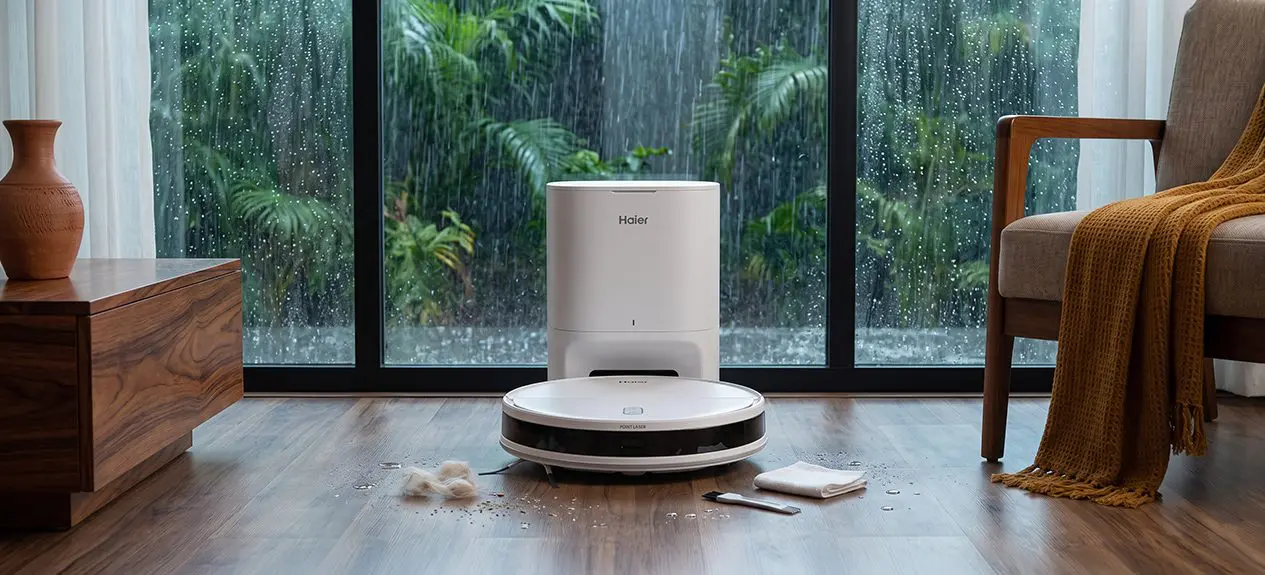

Sticky floors, clumped-up pet hair, and that weird, musty smell in the air; welcome to monsoon season. While you are enjoying the break from the summer heat, your smart vacuum is struggling.
High humidity causes everyday dust to trap moisture, making it incredibly easy for damp debris to clog up the system. Routine robot vacuum maintenance isn’t optional when it rains this much; it’s survival for your appliance.
To keep your device mapping accurately and pulling up dirt efficiently, you need to know how to clean the robot vacuum brush and protect the internal electronics from damp environments.
Why High Humidity Affects Robot Vacuums
Humidity changes the texture of the debris your vacuum collects every day. Damp dust gets heavy and paste-like, hair clumps tightly around spinning parts, and trapped moisture inside the dustbin can spark unpleasant, musty odors if left ignored.
Watch out for these common monsoon-driven issues:
- Hair and carpet fibers binding tightly around the rollers.
- Wet dust caking the interior walls of the dustbin.
- Fine moisture film clouding up the external sensors.
- Damp mopping pads developing mold or sour smells.
- Washable filters taking twice as long to air-dry.
Beating these issues is simple. It just requires adjusting your routine so that appliance care becomes a slightly higher priority during the wet season compared to dry summer months.
Maintaining the Brushes in Humid Conditions
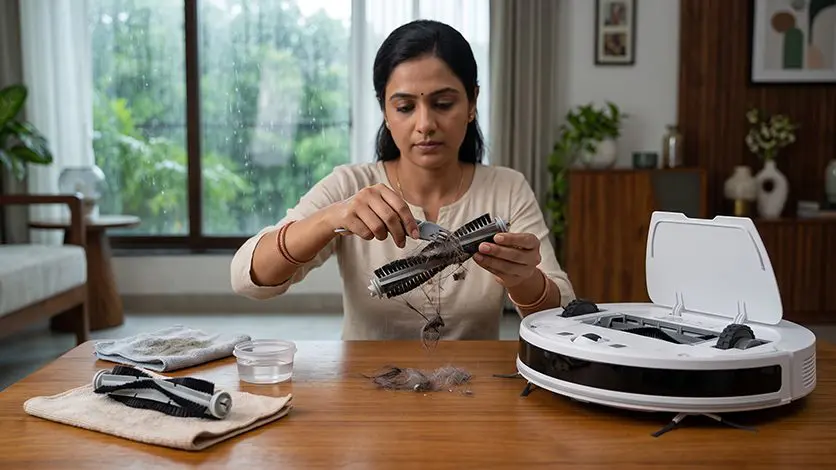
Your brushes do the heavy lifting by pulling dust, pet fur, and crumbs out of carpets and floor crevices. Keeping them free of debris directly preserves your vacuum’s daily cleaning efficiency.
1> Cleaning the Main Roller Brush
The central roller handles the bulk of the debris during a cleaning cycle. For effective robot vacuum brush maintenance, follow these quick steps:
- Shut off the power completely before handling.
- Unclip and remove the roller brush assembly from the underbelly.
- Snip away tangled hair and stubborn threads using the cleaning tool.
- Clear out wet dust packed around the tight brush bearings.
- Wipe down the plastic casing with a dry or barely damp microfiber cloth.
- Let the entire assembly dry fully before snapping it back into place.
Regularly clearing this roller prevents the motor from overheating and keeps your suction levels high.
2> Cleaning the Side Brushes
Side brushes act as brooms, sweeping corner dust directly into the path of the main intake. During high-humidity days, these bristles easily trap damp pet fur, long hair, and wet dust clumps.
Pop the side brushes off their mounts to clear away any wound-up fibers hiding around the base. Avoid pulling too hard on the bristles to prevent bending them out of shape. If the bristles look permanently warped or frayed after months of heavy use, swap them out for fresh replacements.
3> Removing Tangled, Damp Hair & Fibres
Wet hair stretches and wraps much tighter around spinning mechanisms than dry hair does. Every two to three cycles, take a quick look underneath your device. Snatch away wrapped fibers from the extreme ends of the brush before they dry, harden, and strain the drive motor.
4> Drying Brushes to Prevent Mould & Odour
Trapped moisture is an open invitation for bacteria. After cleaning out your brushes, give them a firm shake and leave them in a well-ventilated spot to air-dry completely. Reinstalling a damp brush introduces moisture straight into the internal vacuum gears, which can cause electrical issues down the line.
Read More: Robot Vacuum Cleaner Maintenance: Keeping It Running Smoothly
Maintaining the Sensors in Humid Conditions
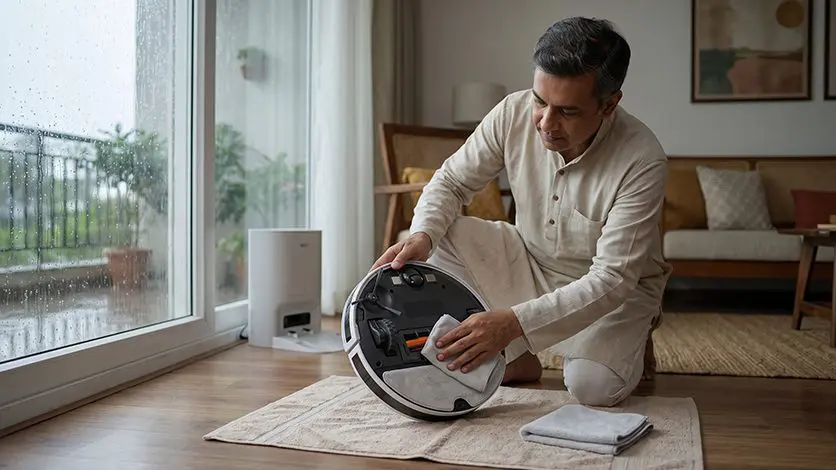
Every robot vacuum sensor acts as the eyes of your machine, preventing it from tumbling down stairs, smacking into walls, or getting trapped by furniture. Fingerprints, ambient moisture, and fine dust create a film that can easily blind these systems.
1> Wiping Cliff & Drop Sensors
Cliff sensors tell the vacuum when a ledge or staircase is approaching. To keep them functional:
- Turn off the power and flip the vacuum onto a soft towel.
- Locate the small, clear sensor windows lining the bottom edge.
- Buff them gently with a clean, bone-dry microfiber cloth.
- Never use harsh chemical sprays or dripping wet cloths directly on these areas.
2> Cleaning Optical / Laser (LiDAR) Navigation Sensors
Smudges and dust on the optical glass will cause major navigation errors. When cleaning them, stick exclusively to soft cloths. Using scratchy kitchen towels or abrasive scrubbers leaves permanent scuffs that degrade your robot’s precision over time.
3> Preventing Sensor Fogging & Condensation
Rapid temperature shifts can cause internal lenses to fog up. Store your machine in a climate-controlled indoor space rather than a damp utility area. If you notice internal fogging, let the device sit in a dry room to acclimatize naturally before starting a new job.
Humid Weather Maintenance Schedule
Here’s a simple humid weather maintenance schedule for your robot vacuum cleaner.
| Component | Maintenance Frequency | Action Required |
| Main Roller Brush | Every 2–3 cycles | Clear tangled hair and check bearings. |
| Side Brushes | Once a week | Remove wound-up fibers from the base. |
| Navigation Sensors | Once a week | Wipe with a dry microfiber cloth. |
| Dustbin & Filter | After every use | Empty debris; ensure filter is dry. |
How Haier Robot Vacuums Simplify Monsoon Maintenance
The Haier Robot Vacuum lineup is engineered to tackle everyday messes across diverse floor types, even during challenging monsoon conditions. Equipped with high-precision LiDAR navigation, responsive anti-fall sensors, and robust suction mechanisms, our models streamline your upkeep routine.
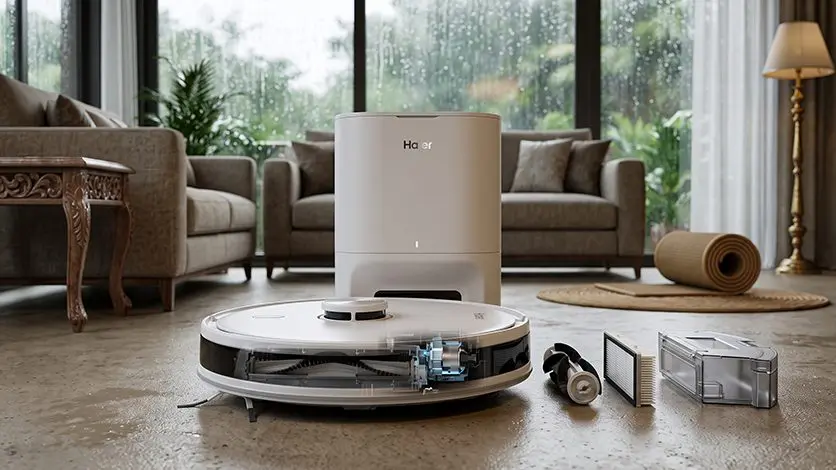
Features like easily detachable components, washable filters, and quick-release brush rolls ensure that cleaning your robot vacuum brush, wiping down a foggy robot vacuum sensor, and maintaining overall hygiene takes only a matter of minutes out of your day.
Read More: What to Look for in a Robot Vacuum Cleaner for Indian Homes
Conclusion
Dealing with monsoon humidity doesn’t mean you have to accept a drop in cleaning performance. Spending just five minutes on regular robot vacuum maintenance keeps the system ahead of the weather. Keep a close eye on the robot vacuum brush, wipe away any moisture film on the robot vacuum sensor, and make sure components are 100% dry before starting a cycle. A little consistency ensures your Haier appliance stays hygienic, powerful, and ready to handle daily messes all year round.