


You may be having your refrigerator running 24 hours a day, but are you eating and keeping food at the correct temperature?
Consider the milk you purchased the day before, or the dal that was left over from dinner last night or the vegetables that you bought at the supermarket last shopping. The key element for all of them is constant cooling.
But still, most homes don’t pay much attention to the refrigerator temperature. Many just leave it in place as it was when the appliance was installed.
The temperature of the fridge should be approximately 3°C to 4°C, and that of the freezer should be around -18°C. These conditions ensure optimal food quality, inhibit bacterial proliferation and slow down the deterioration of food for daily storage.
However, there is more to it, especially in Indian kitchens where the direct impact of the summer heat, air changes and the storage methods of food can affect the cooling system.
So, How Cool Is Too Cool for a Refrigerator and Freezer?

This will depend on the particular compartment used.
The Temperature of the Refrigerator Is 3 Degrees to 4 Degrees
The food safety guideline for refrigerator temperatures is 4°C or lower.
This range keeps most refrigerated foods from freezing while helping to retard the growth of harmful bacteria.
It’s suitable for storing:
- Milk, curd, paneer and other dairy products
- Cooked vegetables, dal and refrigerated leftovers.
- Fresh fruits and vegetables.
- Eggs and other perishable foods
- Food items that are sold in bottles or cartons, or provided in refrigerated holding units.
But the ingredients can have different storage requirements. Follow the information on packaging for all foods.
Freezer Temperature: -18°C
Ideal freezer storage temperature for long-term freezing of food should be -18°C or lower.
At this temperature the growth of microbes is effectively prevented and the food is still kept well frozen. But freezing is not always an effective method for destroying harmful microorganisms.
It is especially critical to keep the temperature at -18°C for:
- Foods such as frozen vegetables and ready-to-cook foods.
- Vegetation of meat, poultry or seafood
- Ice cream and frozen desserts
- Homemade frozen meals
- Foods made for longer-term storage
The key difference: Freezing foods will keep them safe, but will not restore foods that have already spoiled.
Why Is the Correct Refrigerator Temperature Important?
A refrigerator isn’t simply a cold cupboard. The temperature affects the storage time of your food.
Food Safety Comes First
Bacteria can grow rapidly if the refrigerator temperature gets too high or too low from the recommended range.
Do cooked rice or cooked curry. Refrigerating foods after they have been improperly stored will not change the damaging effects of improper storage.
Cool perishable foods quickly to 60C or under and 1 hour if the temperature is over 32C after cooking or when the temperature is above 32C.
Consistent Cooling Is Key to Freshness
If vegetables are not crisp or milk or milk products have an early expiration date, the storage may be improper.
Food texture may also be influenced by the changes in temperature.
For instance, once exposed to freezing conditions leafy vegetables might have watery and damaged leaves when thawed.
It’s not about the coldest possible temperature. That is, keeping the temperature at a proper level all the time.
Electricity Consumption Matters Too
Setting your refrigerator unnecessarily cold can increase electricity consumption.
It is not always a guarantee of better food preservation to reduce the temperature setting.
For the common household that uses a refrigerator all year round, it is a practical way of avoiding unearthly cooling needs by taking proper decisions on the settings.
Is It Advisable to Adjust the Temperature of the Refrigerator During the Indian Summers?
Imagine a typical May afternoon in Delhi.
The kitchen is warm, the door of the refrigerator has been opened several times and a large container of fresh food has just been put in.
Of course, there is still more heat to be extracted from the refrigerator.
But is there any need to switch the cooling to maximum?
Not necessarily.
A refrigerator that is working properly should be able to keep the specified refrigerated temperature under the specified operating conditions.
Don’t make decisions on weather conditions alone, but look at the inside temperature instead.
Which of the Following Can Impact the Cooling Process in Summer?
There are a number of daily activities that can affect the refrigerator’s performance:
- Warm air can flow in through the doors when doors are opened often.
- Overloading shelves can prevent air circulation within the building.
- Broken door seals permit heat to leak in.
- Heat dissipation can be compromised if adequate ventilation is not provided around the appliance.
- Hot food inside can cause an initial rise in internal temperature.
Check the temperature on the refrigerator more often during periods of very hot weather.
If it is still above 4°C after use, check the appliance’s manual or have the appliance serviced professionally.
What’s the Best Way to Determine If Your Fridge Is Cold Enough?

Don’t use the feel of a water bottle to determine its temperature.
A refrigerator thermometer will give a more reliable reading of the refrigerator’s internal temperature.
Put an appropriate thermometer in the main refrigerator compartment, preferably in the middle shelf. Let the reading be stabilized for a sufficient period.
Use a thermometer for sub zero temperatures for the freezer.
What to Do If the Temperature Is Wrong?
Follow these steps:
- Look at the setting for the refrigerator.
- Do minor adjustments as per the user manual.
- Give enough time for the internal temperature to return to normal.
- Retake the temperature.
- Inspect for cooling problems due to blocked vents, overloading or door seals.
Keep in mind that a digital temperature setting is the set temperature for the appliance. Actual temperatures may be different between compartments and in normal cooling periods.
If your refrigerator is a numbered dial, not all of the numbers necessarily represent a specific temperature.
Read the manufacturer’s directions.
Are Different Foods Allowed to Be Stored at Different Temperatures?
Yes, but most refrigerators have a common cooling area, some have separate storage areas.
This is where refrigerator design comes in handy.
It doesn’t have to be the same for fresh vegetables, chilled drinks and frozen foods.
Fresh Fruits and Vegetables
Most vegetables will benefit from appropriate humidity and even cooling.
But some produce, such as whole onions and potatoes, typically needs different storage conditions.
Dairy Products
Milk, paneer and curd should be kept in the main refrigeration compartment of the refrigerator at or below 4°C.
For dairy products that are highly perishable, do not use door compartments as they can experience more temperature swings.
Frozen Foods
Foods in the freezer should be kept at a temperature of -18°C or below.
Depending on the temperature, the amount of time it has been thawed, and if there are still ice crystals, food can be safely refrozen if it has thawed.
The Flexible Storage Feature of Haier Lumiere Is Made by How It Manages Temperatures
The flexibility of Haier Lumiere’s storage is achieved in how it manages temperatures.
A standard refrigerator has a separate fridge compartment and freezer. However, storage needs of Indian households do not necessarily remain the same from one season to another.
Extra refrigeration capacity can be especially useful during festivals, family or celebration events.
In other situations, families might want more space for their freezers.
This evolving demand is met by the Haier Lumiere 520L 3 Star French Door Refrigerator with its flexible storage options.
The Lumiere series offers a choice of Mauve Pink (HRB-600MP), Pearl White (HRB-600PW) and Rosetyte White (HRB-600RW) with a four-door design and flexible storage options.
90L Magic Convertible Zone
A unique aspect of the refrigerator is the Magic Convertible Zone with a capacity of 90 litres.
The temperature in this compartment can be adjusted from -20°C to 5°C, enabling users to set it to their preferred temperature based on their storage needs.
For instance:
- For conventional storage of frozen food, it is recommended to store them around -18°C.
- About -12°C for foods that need to be frozen for suitable products
- Approximately 2°C for cold drinks
- For general refrigerated storage, use about 3°C – 4°C.
The proper setting should always be based on the food stored and the recommended storage conditions.
This versatility can be particularly helpful when you have shifting storage needs within your home.
Convertible Fridge Space up to 85%
The capacity of the Haier Lumiere refrigerator is 520 litres.
The convertible design of the refrigerator can be expanded to about 440 litres of refrigerator space when used for extra fresh food storage.
Suppose you are making preparations for a Diwali celebration.
Sweets to refrigerate and ingredients for family meals and additional drinks for visitors.
The convertible arrangement offers more flexibility than trying to fit so much on already crowded shelves.
This can be done if more frozen storage is needed.
What Are the Other Functions of the Other Haier Lumiere for Everyday Food Storage?
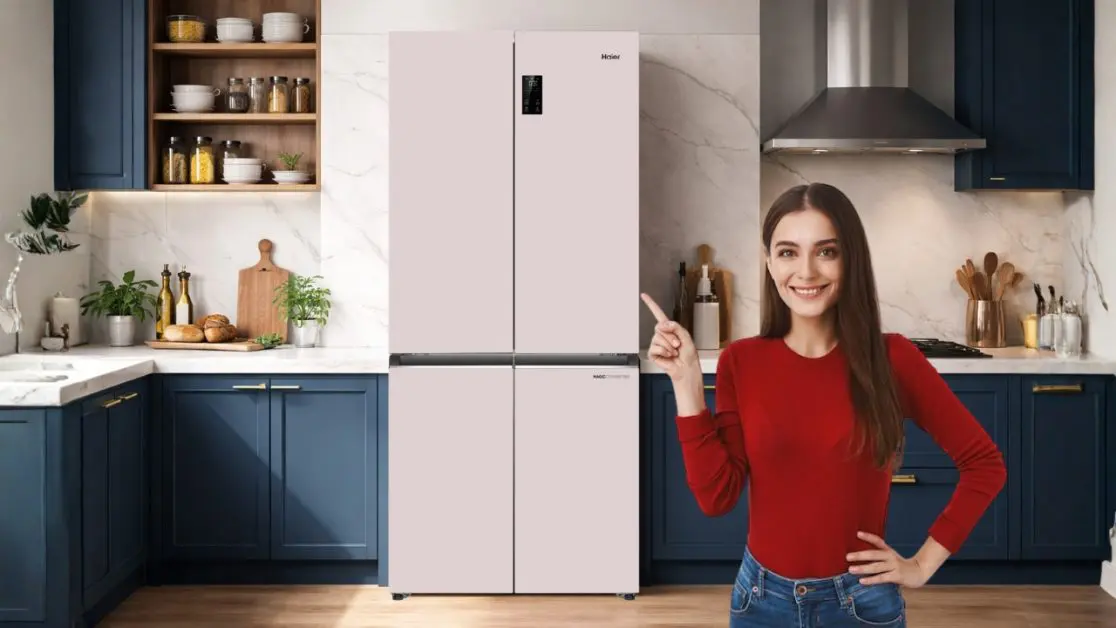
Along with temperature control, the organisation of the compartments and the temperature distribution of cooling can also have an impact on the ease of use of a refrigerator.
The Haier Lumiere series has a number of features that are aimed towards these needs.
360° Surround Cooling
The Magic Cooling system of Haier has 360° Surround Cooling technology, which can cool the refrigerator around the clock.
This allows for more uniform cooling in various storage areas.
But it is important to arrange the food properly. Do not block internal air passages.
Triple Inverter Technology
The Lumiere series also comes with Triple Inverter technology, optimised to help with temperature regulation and energy-efficient use.
If refrigerators are always on, efficient cooling technology is a factor to consider.
Deo Fresh Technology
No one likes to get into the fridge to discover that the smell of yester year’s curry is everywhere.
The Haier Deo Fresh Technology is used to remove odours and impurities, and keeps the refrigerator fresh.
Regular cleaning and proper container sealing are still a must.
Adjustable Storage Shelves and Toughened Glass Shelves
Indian kitchens frequently consist of extensive utensils, steel containers, and a number of food preparations.
The Lumiere refrigerator has flexible storage solutions and hard glass shelves to suit the daily needs of the household.
It’s also 4-door which makes it easy to access various storage sections.
What Are the Refrigerator Temperature Pitfalls to Avoid?
Refrigerator preservation issues can be caused by daily activities.
There are a number of common pitfalls to be avoided.
Setting the Temperature Too Low
Colder isn’t always better.
Refrigerized food that is too cold will freeze delicate foods such as vegetables.
Do not use the highest cooling limit; instead, keep the recommended temperature range.
Completing All Spaces
Even if your fridge is packed with food, the food items can be crammed together so that the air doesn’t flow freely.
Allow for adequate air circulation.
The Door Is Opened but Not Closed
Facing a wide open refrigerator is not the best position from which to make decisions about what to eat.
Carry out only what is necessary and shut the door quickly.
Ignoring Power Cuts
In certain areas in India, power failures are common.
In the event of a power outage, if refrigerator/freezer doors must be opened, keep doors closed as much as possible.
The rule of food safety is that an unopened refrigerator can preserve food for about 4 hours. With the freezer door closed, a full freezer will hold food in good condition for 48 hours or about 24 hours if the freezer is half full.
The actual temperatures of foods vary; check the food temperature before making a determination as to whether perishable foods are safe.
Use Haier Lumiere to Ensure Food Is at the Correct Temperature
Proper food storage and premature spoiled food can sometimes be just a few degrees apart.
A safe guideline for refrigerating foods is to keep refrigerators at around 3°C – 4°C and freezers at -18°C.
However, flexibility is required for modern homes too.
The Haier Lumiere 520L 3 Star French Door Refrigerator combines convertible storage, 360° Surround Cooling and Triple Inverter technology with its large size of 4 doors.
It can be used as a storage unit that can be adjusted according to your requirements, whether it is for a weekly shop or for a family get-together.
Explore the Haier Lumiere 520L refrigerator range in Mauve Pink, Pearl White and Rosetyte White and find a more flexible way of daily food storage.
Frequently Asked Questions
1. Is 5°C Too Warm for a Refrigerator?
A refrigerator temperature of 5°C is above the commonly recommended food safety limit of 4°C. For everyday refrigerated food storage, aim for approximately 3°C to 4°C.
2. Is -18°C Cold Enough for a Freezer?
Yes. A temperature of -18°C is the standard recommendation for household freezers storing frozen food over extended periods.
3. What Is the Best Refrigerator Temperature in Indian Summers?
The recommended internal refrigerator temperature remains approximately 3°C to 4°C, even during summer. Monitor the actual temperature rather than adjusting settings solely according to outdoor weather.
4. Can I Use the Haier Lumiere Convertible Zone as a Freezer?
Yes. The Haier Lumiere 520L refrigerator features a 90-litre Magic Convertible Zone with adjustable temperatures from -20°C to 5°C, allowing it to accommodate different refrigeration and freezing requirements.
5. Should I Keep My Refrigerator at the Coldest Setting?
Not usually. Maximum cooling may freeze certain foods and increase electricity consumption. Select a setting that maintains the recommended internal temperature.
6. How Often Should I Check My Refrigerator Temperature?
Checking periodically with a refrigerator thermometer is sensible, particularly during hot weather, after changing settings or whenever cooling performance appears unusual.