


A split AC can feel like a great buy or a costly mistake, and the difference often has little to do with the brand. Poor installation, wrong sizing, and irregular servicing can turn a good AC into a constant headache. Get those things right, and the same system can deliver comfortable cooling for years with fewer problems. So, is a split AC really good or bad?
This guide breaks down the key pointers of what makes split ACs good or bad, without making the technology sound better than it is.
What Is a Split AC and How Does It Work?
A split AC has two different connected units, each of which performs a different part of the cooling process. The indoor unit sucks in warm room air and cools it, and supplies it back into the room. The compressor and heat removal work is done outside, where it is a lot noisier. The cooling fluid is carried between the two units by copper pipes, and a separate line drains off the collected water. A small wall opening is required for installation, and proper placement and pipework help the system deliver efficient and consistent cooling.
The real job of a split AC is to move heat outside; it doesn’t just make cold air. The indoor unit draws the warm air in the room and transfers the heat from that air to the refrigerant flowing through the coil. That hot refrigerant then goes outside to the compressor, which helps to expel the heat. The cooling continues, and the cycle repeats itself again and again. Modern ACs add sensors that adjust compressor speed based on room conditions, helping maintain temperature with less wasted electricity, though performance still depends on proper installation.
Is a Split AC Good or Bad: The Honest Verdict
For most Indian homes, a split AC remains the stronger choice when room size, installation, and servicing are handled properly. It works especially well in bedrooms, living rooms, and home offices where lower indoor noise matters. Choosing the appropriate capacity and ensuring professional installation can help the AC deliver its intended cooling performance and energy efficiency. Regular servicing further supports smooth operation and long-term performance.
Where it falls short has less to do with the machine and more to do with the setup around it. A split AC installed in a room too large for its tonnage will run constantly and still underwhelm. One placed with no outdoor airflow clearance loses efficiency within a season or two. The technology performs. Installation and upkeep decide whether that performance reaches your electricity bill and your comfort.
Advantages of a Split AC
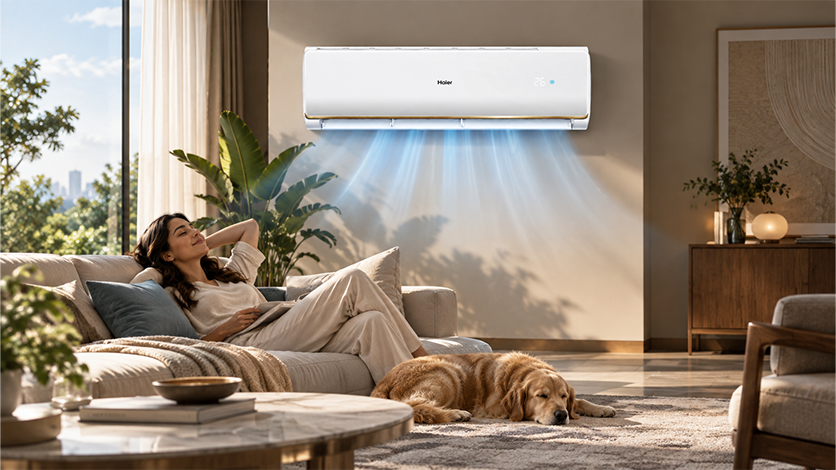
- Cooling Performance and Quiet Operation
Moving the compressor outdoors changes the indoor experience more than most buyers expect before their first night with one. Window units run their compressor inches from where you sleep. Split systems push that noise outside, so indoor decibel levels on lower fan speeds typically stay in the 20 to 30 range, closer to a library than a machine room. Mounted higher on the wall, the indoor unit also throws air across a wider angle and reaches corners a window unit, fixed low on one wall, often misses.
- Aesthetics and Room Coverage
A split indoor unit occupies a narrow strip of wall space and leaves the window completely free. Rooms with poor window placement get proper cooling, and natural light stays untouched. Tonnage options also span a wider range, from compact 1-ton models for small bedrooms up through 2-ton and larger units for open living areas.
Manufacturers have started treating the indoor unit as a design element rather than simply a functional appliance. Haier’s Gravity Series swaps the standard plastic shell for a fabric-textured, full-body colour finish, so the unit can complement the overall look of the room.
Installation and Setup for Best Split AC Performance
A split AC requires professional installation to ensure that the indoor and outdoor units are positioned correctly. The installation process includes creating the required pipe conduit, mounting brackets for both units, and selecting an outdoor location with suitable clearance for the condenser fan.
Correct installation helps support efficient cooling, airflow, and reliable operation. Professional setup is particularly important for ensuring that the refrigerant piping, drainage and electrical connections are handled correctly.
Split AC Maintenance for Consistent Performance
Regular maintenance helps keep a split AC operating efficiently and supports consistent cooling over time. The system includes indoor and outdoor components, refrigerant lines, filters, and drainage paths, all of which benefit from periodic inspection and cleaning. A regular maintenance routine can help preserve cooling performance, maintain airflow, and support the long-term operation of the AC.
Split AC vs Window / Portable / Tower AC
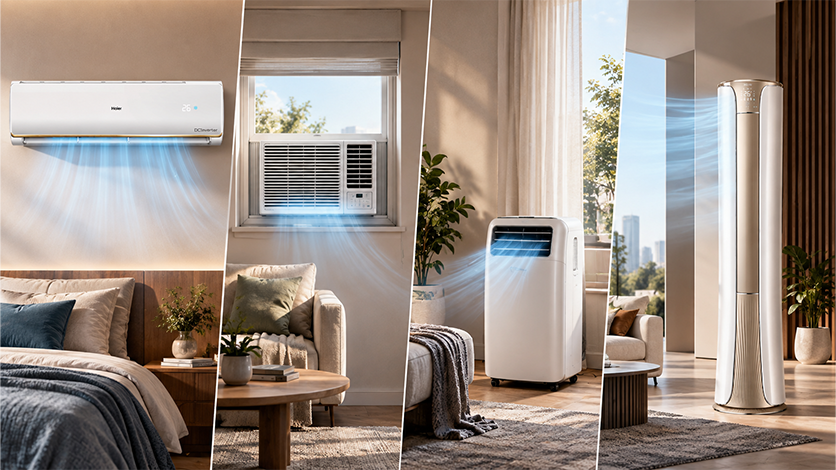
Comparing split AC vs window AC alongside portable and tower formats settles most of the “which one” confusion buyers walk in with.
| Factor | Split AC | Window AC | Portable AC | Tower AC |
| Indoor noise | Low | Moderate to high | Moderate | Low to moderate |
| Installation | Professional, wall-mounted | Simple, fits window frame | Minimal, plug-and-run | Professional, floor-standing |
| Ideal room size | Medium to large | Small to medium | Small, temporary setups | Large or open-plan spaces |
| Visual footprint | Compact, discreet | Bulky, blocks the window | Takes floor space | Visible, statement piece |
Split ACs are well suited to bedrooms, living rooms and other spaces where quiet operation and effective air distribution are important. Window ACs can be a practical choice for smaller rooms, while portable ACs can support temporary cooling requirements. For larger rooms or open floor plans, a tower AC such as Haier’s Spartan Series provides high-capacity, floor-standing cooling.
Split AC Performance: Getting the Best Cooling
1> Right Tonnage for Your Room
Undersized tonnage is the fastest way to shorten a compressor’s working life, since the unit runs flat out and never catches up to the set temperature. As a working guide, rooms up to 120 square feet generally suit a 1-ton unit, 120 to 180 square feet call for 1.5 tons, and anything beyond that needs 2 tons or more. Ceiling height and direct sun exposure can push that estimate up a notch.
Ceiling height, direct sunlight, occupancy and overall heat load can also be considered when selecting the appropriate AC capacity.
2> Filters and Airflow
Which filter is used in split AC systems comes up often, and most current models rely on a layered setup. A washable dust filter, positioned nearest the coil, catches larger particles on the first pass. Many newer units add a second, finer filter layer for smaller particulates. A coil clogged with leaves outdoors reduces airflow just as much as a dirty indoor filter does.
Keeping the indoor filter and outdoor unit clean helps maintain proper airflow and supports efficient cooling.
Split AC Maintenance and Servicing
- How Often to Service a Split AC
Once every three to four months covers typical household use through most of the year. During peak summer, monthly filter checks help maintain airflow between full service visits. Commercial spaces or units running near-continuously need a tighter schedule than a home bedroom would.
Commercial spaces or units operating for longer periods can benefit from a maintenance schedule suited to their usage intensity.
- What a Service Covers (and DIY Cleaning)
A proper split AC servicing appointment, and the core of any split AC maintenance guide, usually includes:
- Cleaning or replacing the washable dust filter
- Washing the indoor coil to clear dust buildup
- Clearing the drainage line to prevent water leaks
- Checking refrigerant gas pressure
- Cleaning the outdoor unit’s coil and fan blades
- Inspecting electrical connections and the capacitor
Between full visits, wiping down the outdoor casing and rinsing the washable filter every few weeks keeps airflow from degrading unnecessarily.
- Can You Service It Yourself?
Filter cleaning falls squarely into DIY territory. Turn off the unit, slide the filter out, rinse it under water, and let it dry before putting it back. Anything touching refrigerant gas, the compressor, or internal wiring belongs to a trained technician, since mishandling those parts risks damage and can void a warranty.
Want an AC that asks less of you between services?
Read this blog: AC Features That Reduce Long-Term Maintenance
Is a Split AC Right for You? (Checklist)
Run through these before deciding:
- Is your room medium to large, where even cooling matters most?
- Can your home accommodate professional installation and a proper outdoor unit spot?
- Do you value quiet indoor operation enough to justify the higher upfront cost?
- Are you willing to book servicing every few months without letting it slide?
- Does the indoor unit’s appearance factor into your decision at all?
Answer yes to most of these, and whether a split AC is good for home use stops being a question and becomes a straightforward decision.
Haier’s Approach to Smart, Reliable Cooling
At Haier, our split ACs are designed to respond to changing room conditions, rather than keep cooling at one fixed level. The AI Smart range continuously reads the surroundings and adjusts compressor power as needed. Once the room reaches the desired temperature, it reduces unnecessary cooling effort, helping maintain comfort while using power more sensibly during longer periods of operation.
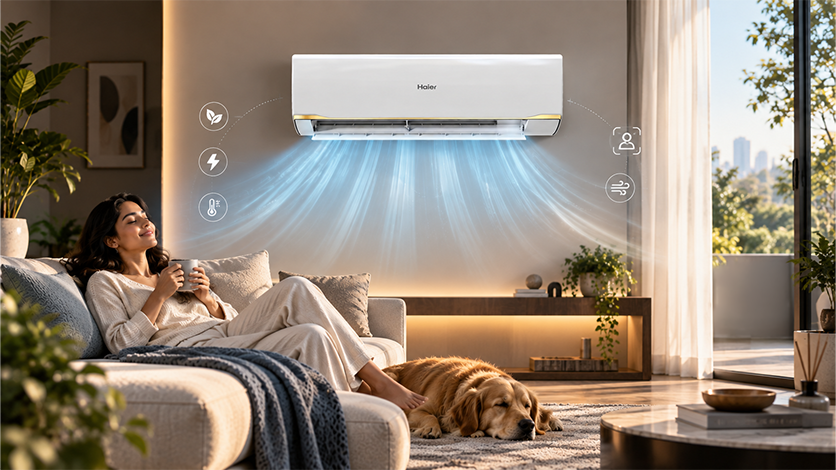
Our Desert Rose series carries this further with AI-ATMOX air technology paired with AI human detection, letting the unit sense whether someone’s present and redirect airflow accordingly. The Gravity Series takes a different route toward the same comfort goal, pairing 5-star energy efficiency with a fabric-finish body that fits into a room’s decor instead of standing out as hardware. For larger rooms where a single split indoor unit won’t cover the space evenly, our Spartan Series tower AC offers higher-capacity, floor-standing cooling built for that scenario. Every unit across our range carries extended product and compressor warranty coverage, because dependable cooling should hold up well past its first summer.
Conclusion
A split AC is not automatically good or bad, because its performance depends heavily on how you choose and maintain it. Pick the wrong capacity, install the unit poorly, or ignore servicing for too long, and cooling can suffer even with a reputed brand. Get those basics right, and the experience changes considerably. You get steady cooling, better comfort, and fewer avoidable problems over the years.
For Indian homes, that makes a split AC a practical long-term choice, especially when room size, installation quality, usage, and maintenance all receive proper attention from the beginning rather than being treated as minor details.
FAQs
Is a split AC good or bad?
It works well for most homes when sized correctly, installed by a professional, and serviced on schedule. Cooling performance holds steady for years under normal upkeep. Most complaints trace back to poor installation or skipped servicing, not the technology itself.
Is a window AC or split AC better?
It comes down to room size and priorities. Window ACs suit small rooms and tighter budgets, while split ACs handle medium to large spaces more evenly with noticeably less indoor noise. Split units also leave the window unobstructed.
How often should a split AC be serviced?
Roughly every three to four months for standard household use, shifting to monthly checks during peak summer with heavy daily use. Commercial spaces or units running near-continuously need more frequent attention to stay efficient.
Can I service my split AC at home?
Basic filter cleaning is safe to handle yourself every few weeks. Refrigerant checks, coil cleaning, and electrical inspections should go to a trained technician, since mishandling these parts can damage the unit or void the warranty.
What does an AC service include?
A standard visit covers filter cleaning, coil washing, drainage line clearing, refrigerant gas pressure checks, and cleaning the outdoor unit’s coil and fan blades. Electrical connections and the capacitor typically get inspected too.
Does a split AC have a heater?
Some split AC models include a heat pump function, often sold under Hot & Cold naming, which reverses the refrigeration cycle to produce warm air. Standard cooling-only models skip this feature, so it depends entirely on the specific model.