
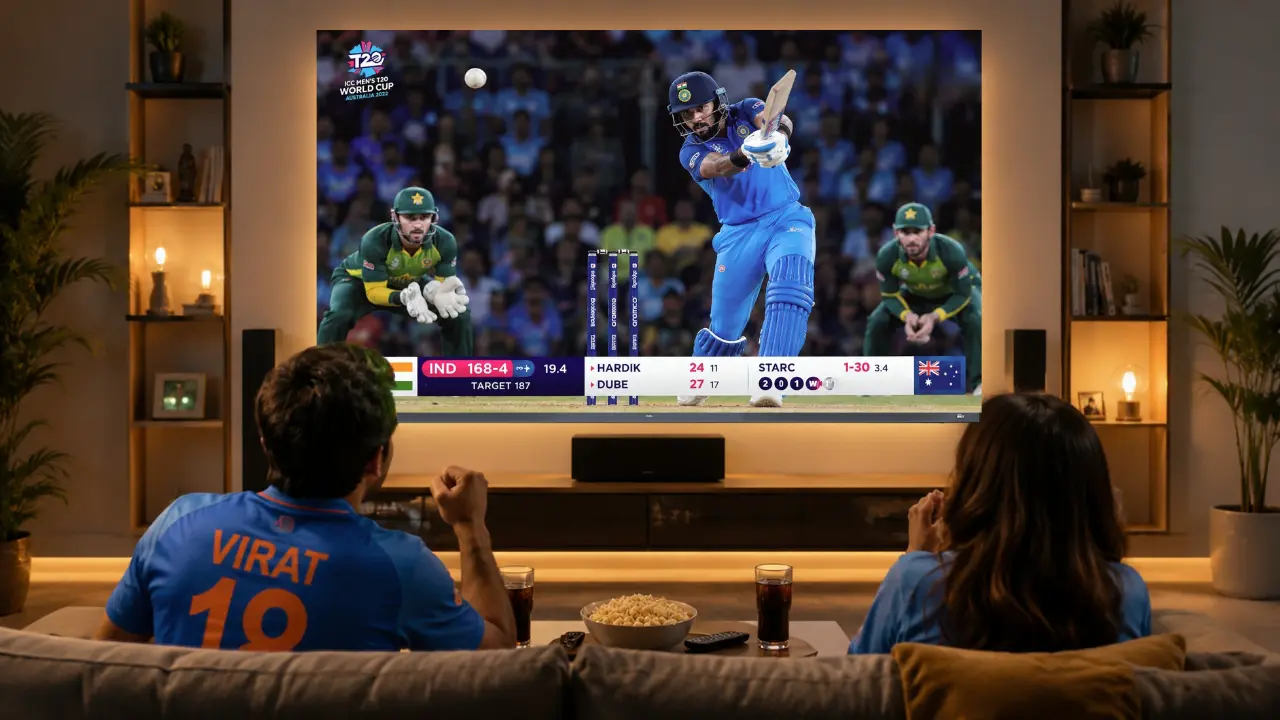

There is a moment in every big match that changes the atmosphere of a room.
Maybe it is the final over of a cricket chase. Maybe a last-minute goal in a football final. Maybe a stunning six that lands somewhere deep into the stands.
And almost instantly, everyone sitting in the room leans forward.
The funny thing is this: the excitement doesn’t come only from the match itself.
It comes from how you experience it.
A small screen shows the action.
A large screen pulls you into it.
That difference matters more than most people realise.
Today, live sports have become a shared family event once again. Friends gather for IPL nights. Families watch major tournaments together. Weekend matches often become the centrepiece of the evening.
Which raises an important question.
If sport is meant to feel larger than life, shouldn’t the screen be large enough to match the occasion?
Why Sports Content Demands Bigger Screens
Unlike regular television shows, sports are built around movement.
Fast movement.
A cricket ball travelling at high speed.
A football switching sides within seconds.
A Formula 1 car disappearing across the frame almost instantly.
On smaller televisions, details can easily get lost.
The crowd becomes a blur.
Player expressions become difficult to notice.
Field positioning becomes harder to follow.
A larger display changes that completely.
Instead of simply watching the match, viewers gain a wider perspective of the game.
You notice:
- Tactical formations
- Player movement
- Ball trajectory
- Stadium atmosphere
- Crowd reactions
- On-field details
The experience starts feeling closer to being inside the stadium rather than sitting in a living room.
And honestly, that’s what most sports fans want.
The Stadium Effect Starts With Screen Size
Think about the last time you attended a live sporting event.
The scale is what creates the emotion.
Massive crowds.
Huge playing surfaces.
Giant scoreboards.
The energy comes from immersion.
Large-screen televisions attempt to recreate that feeling at home.
The larger the display, the more natural the viewing experience becomes.
Instead of squinting to follow the action, your eyes relax.
Instead of focusing on individual details, you absorb the entire scene.
This becomes especially noticeable during:
Cricket
Watching field placements, bowling angles and boundary shots feels significantly more engaging.
Football
A larger screen allows viewers to track player movement across the pitch without constantly losing context.
Tennis
Fast rallies become easier to follow.
Motorsports
High-speed action appears more dramatic and cinematic.
The result?
Sports have become less like television and more like an event.
Size Alone Is Not Enough
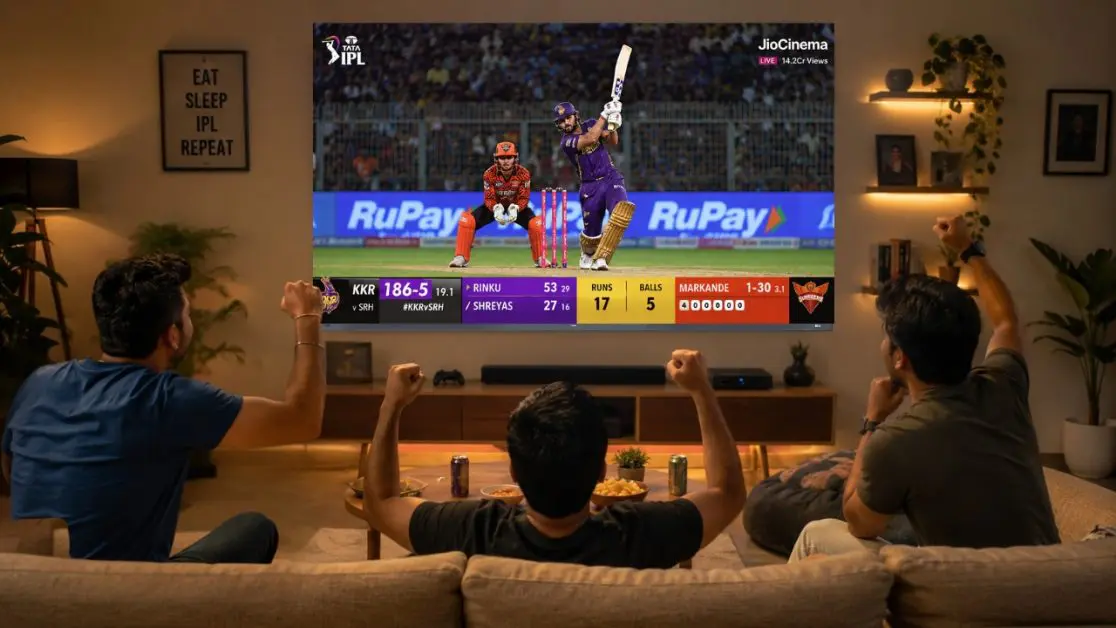
Now here’s where many buyers get it wrong.
A large screen without the right display technology can actually feel disappointing.
Bigger images expose flaws faster.
Poor contrast becomes obvious.
Motion blur becomes distracting.
Weak brightness becomes impossible to ignore.
This is why modern sports viewing requires more than just inches.
It requires display intelligence.
That is where technologies such as Mini LED and QD-Mini LED have become increasingly important.
Why Mini LED Technology Elevates Sports Viewing
When a match is being played under bright sunlight or stadium floodlights, picture quality matters.
A lot.
Mini LED technology helps create:
- Better contrast
- Deeper blacks
- Improved brightness
- Enhanced colour accuracy
- Greater detail visibility
The Haier M80F Mini LED Google TV Series is designed around this principle.
Available in large-screen formats including 189 cm (75) and 215 cm (85), it combines Mini LED technology with Dolby Vision support to create a viewing experience that feels vivid and immersive. The series also features Sound by KEF, Dolby Atmos support and Google TV integration for an enhanced entertainment ecosystem.
For sports fans, one feature stands out particularly well.
DLG 120Hz Motion Enhancement
Fast-paced content often exposes motion limitations.
The Haier M80F Series incorporates DLG 120Hz technology to help create smoother motion and reduced blur during sports broadcasts and action-heavy content.
That means:
- Cleaner ball movement
- Sharper player tracking
- Better fast-camera panning performance
- More natural motion perception
During high-pressure moments, every frame matters.
Sound Matters More Than Most Fans Realise
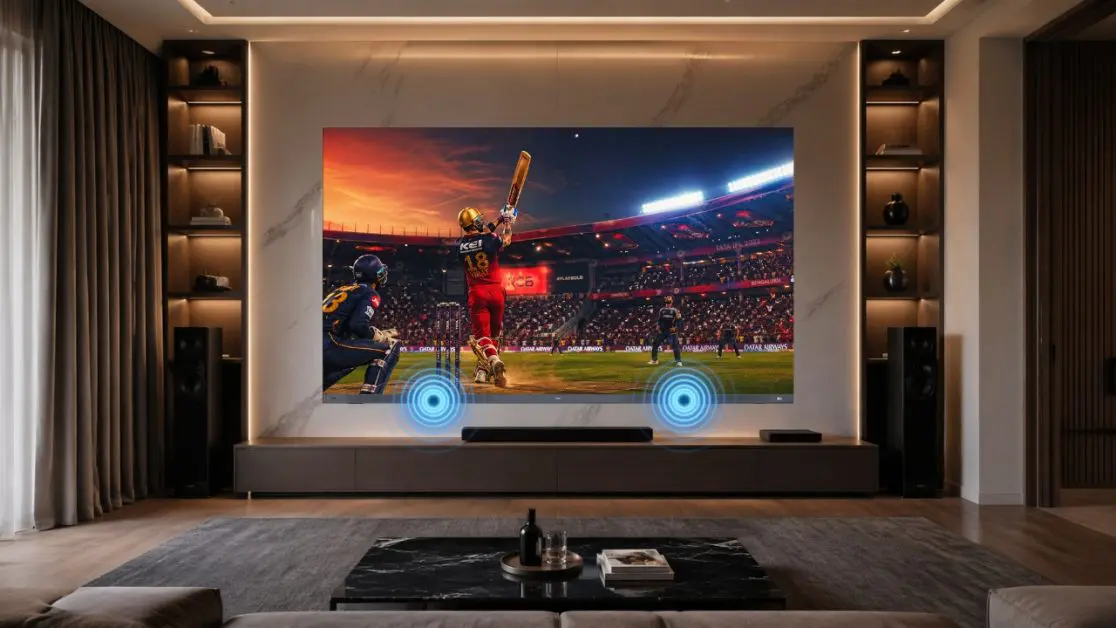
Let’s be honest.
Half the excitement of a match comes from what you hear.
The roar after a six.
The commentator’s voice rising in excitement.
The collective gasp of thousands of spectators.
Without quality sound, even the best picture feels incomplete.
This is why audio performance has become a major factor in premium television design.
The Haier M80F Mini LED Series features Sound by KEF along with a 2.1-channel speaker system delivering 50W audio output and Dolby Atmos support.
The outcome is a fuller soundstage that helps recreate stadium-like energy inside the home.
You don’t just watch the crowd react.
You hear it.
And that changes everything.
When Bigger Becomes Extraordinary
Then there are moments when “large” no longer feels large enough.
It feels epic.
This is exactly where the Haier M96 254cm (100) QD-Mini LED AI Smart Google TV enters the conversation.
A 254cm (100) television fundamentally changes the viewing experience.
The screen becomes the room’s focal point.
The boundaries between display and environment start to disappear.
For sports enthusiasts, the M96 introduces several technologies designed specifically for premium viewing experiences:
Key Highlights
- 254cm (100) QD-Mini LED display
- AI Ultra Sense Processor
- 144Hz Refresh Rate
- Dolby Vision IQ
- HDR10+
- Sound by KEF
- 6.2.2 Channel Audio System
- Dolby Atmos
- AMD FreeSync Premium Pro
- Google TV
The combination of these technologies creates a television designed for viewers who expect flagship-level performance.
Why Refresh Rate Changes Match-Day Viewing
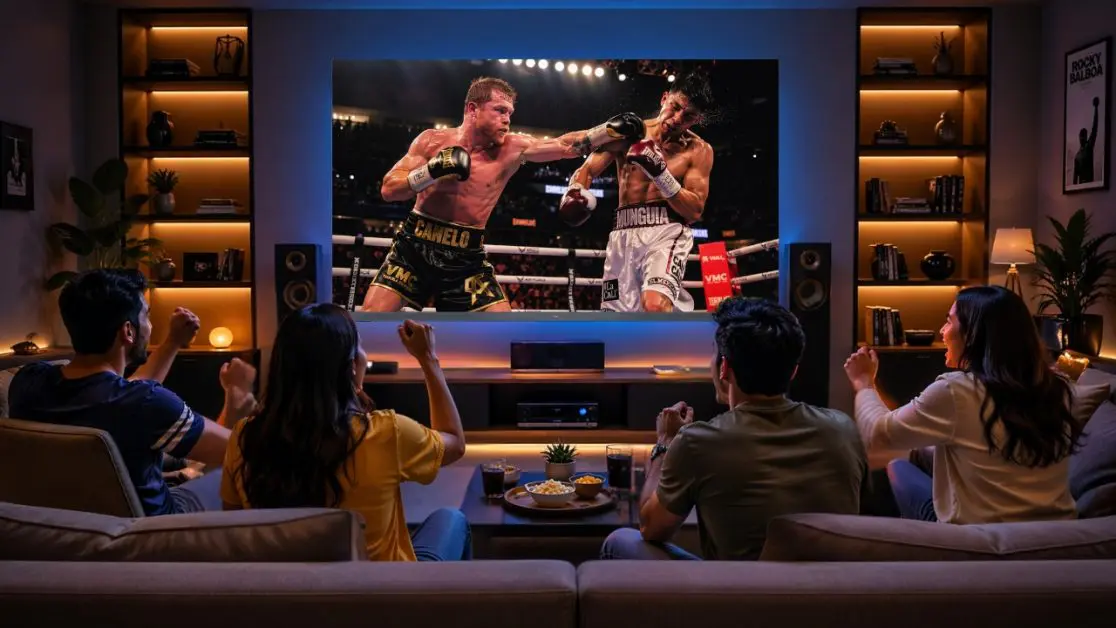
One of the biggest advancements in sports television performance is refresh rate.
Refresh rate determines how smoothly motion appears on screen.
A higher refresh rate helps reduce judder and blur during fast-moving scenes.
The Haier M96 features a 144Hz refresh rate, helping deliver smoother movement during sports broadcasts, gaming sessions and action-packed content.
For viewers watching:
- IPL matches
- Football tournaments
- Formula 1 races
- Tennis championships
The difference becomes visible almost immediately.
Motion appears cleaner.
Tracking feels easier.
The experience feels more natural.
AI Is Quietly Improving Every Match
Modern televisions no longer function as passive displays.
They actively process content.
The Haier M96 integrates an AI Ultra Sense Processor designed to optimise visuals, sound, gaming and entertainment experiences.
Rather than manually adjusting settings before every match, the television intelligently enhances the viewing experience in real time.
That means less tweaking.
More watching.
Exactly how technology should work.
Features Sports Fans Should Look For
Before purchasing a large-screen television, consider these essentials:
Picture Performance
- Mini LED or QD-Mini LED technology
- HDR support
- High brightness capability
- Strong contrast performance
Motion Handling
- High refresh rate
- Motion enhancement technologies
- Reduced blur performance
Audio
- Multi-channel sound systems
- Dolby Atmos support
- Premium audio tuning
Smart Features
- Google TV ecosystem
- Voice control
- Personalised recommendations
Viewing Experience
- Wide viewing angles
- Large screen sizes
- Anti-reflection capabilities
The best sports televisions balance all of these elements together.
The Future of Match-Day Entertainment Is Bigger
Televisions have evolved.
What was once a device for watching content has become the centrepiece of home entertainment.
And nowhere is that evolution more visible than during live sports.
A larger screen doesn’t simply make images bigger.
It makes emotions bigger.
Celebrations louder.
Tension stronger.
Victories sweeter.
For viewers looking to transform how they experience cricket, football, motorsports and every major sporting event in between, Haier’s premium television lineup offers compelling options.
Whether it’s the immersive Haier M80F Mini LED Google TV Series in 189 cm (75) and 215 cm (85) formats or the flagship Haier M96 254cm (100) QD-Mini LED AI Smart Google TV, these displays are engineered to bring fans closer to the action.
Because the most memorable matches deserve more than a screen.
They deserve a stage.
Frequently Asked Questions
Does a bigger TV really make sports more enjoyable?
Yes. A larger screen helps viewers see more of the action, follow player movement more easily, and feel more immersed in the atmosphere of the match. Sports often feel more engaging because details such as crowd reactions, field positioning, and ball movement become easier to notice.
Why do cricket and football look better on large-screen TVs?
Both sports involve constant movement across large playing areas. Bigger screens provide a wider viewing perspective, helping viewers track the ball, understand tactics, and appreciate the overall flow of the game without missing important details.
Will a larger TV make me feel like I’m at the stadium?
While no TV can fully replicate being there in person, larger screens create a more immersive experience by filling more of your field of vision and making the action feel closer and more lifelike.
Is screen size the only thing that matters when buying a TV for sports?
No. Screen size is important, but picture quality, motion handling, brightness, contrast, and audio performance are equally critical. A large screen with poor picture quality can actually make flaws more noticeable.
Why do some large TVs look better than others during sports?
Display technologies such as Mini LED and QD-Mini LED help improve brightness, contrast, colour accuracy, and detail visibility. These technologies are especially valuable during fast-moving sports content.
Can a large TV expose picture quality problems?
Yes. Motion blur, weak contrast, and poor brightness become more obvious on larger displays. That’s why advanced display technologies and image processing are important.