
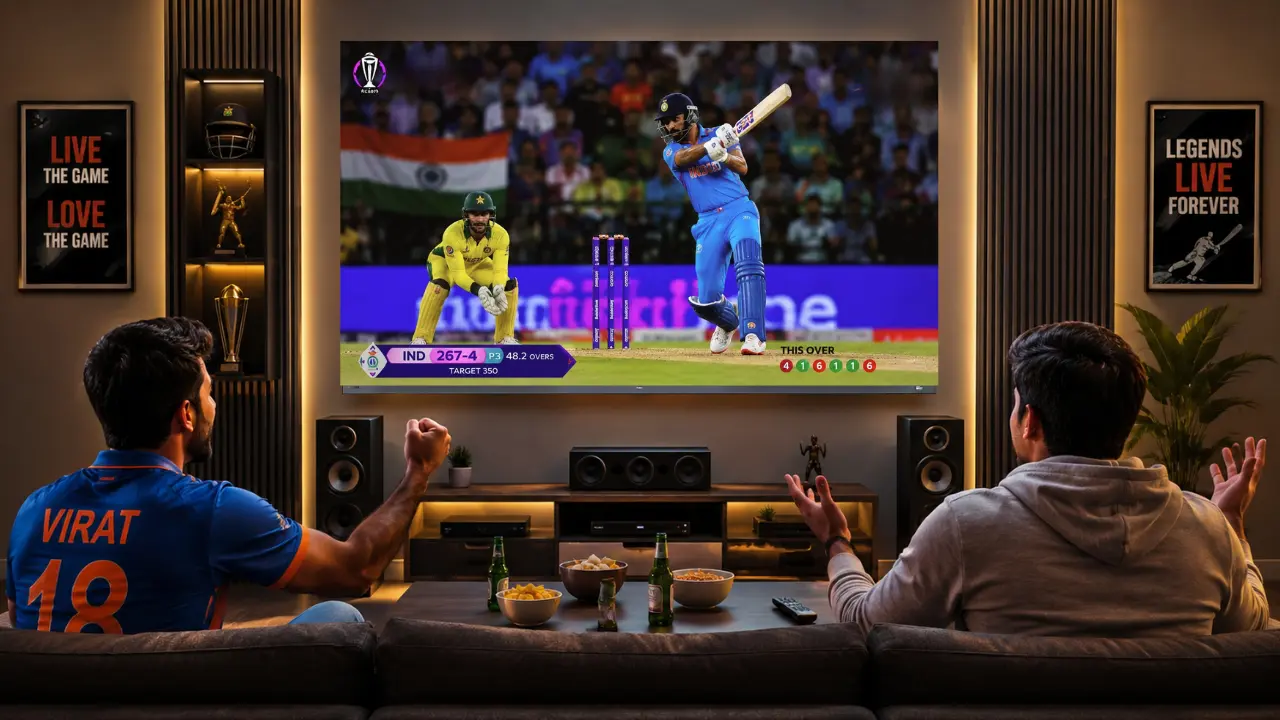

We’ve all felt it. That moment that every sports fan lives for.
The flash of a quick yorker smashing into the stumps.
That feeling when the footballer curls it into the top corner.
Seeing a Formula 1 driver pull off an overtake on the final lap.
You blink.
And suddenly your social media timelines are filled with video clips before the tv replay has even started.
The way we consume sports is drastically different now. Fans watch live games, catch highlights at their desk, re-live highlights on social media and watch condensed game recaps streamed 3 hours later.
But there’s one common element that subtly impacts every viewing.
Display quality.
Not the score.
Not the commentary.
Not even the internet connection.
It’s the difference between experiencing the moment and watching the moment happen.
But as Indian audiences increasingly flick between live sports matches on television, OTT streams, highlight packages and connected entertainment ecosystems at home, having the right television for the job has never been more critical.
Why watching sports is different from experiencing sports
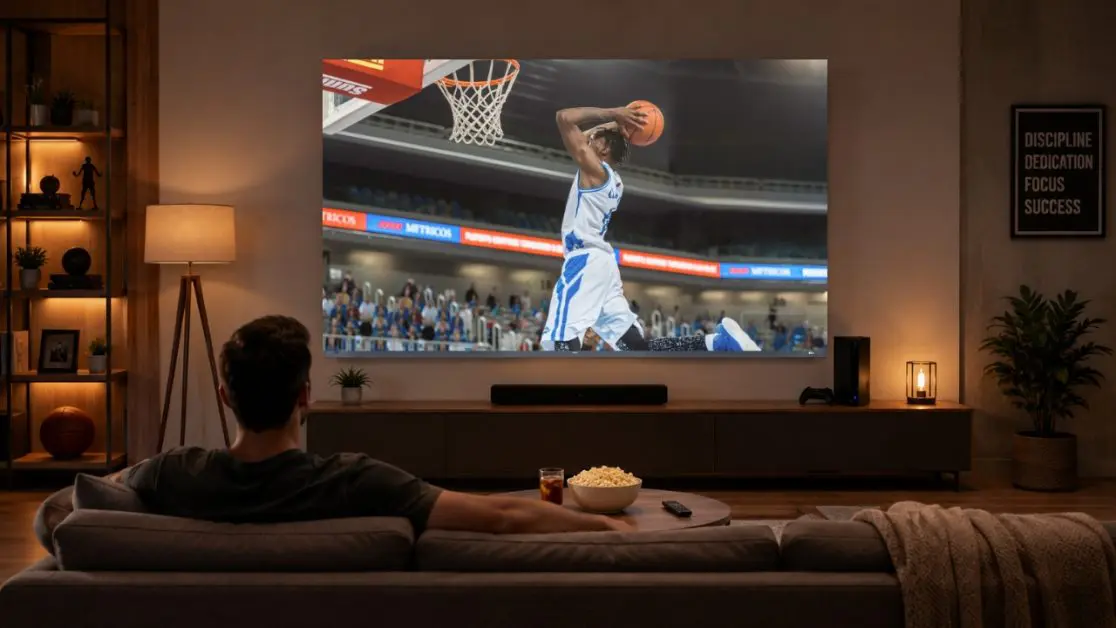
Cricket matches are a great example of this.
Take a fast bowler who sends down a delivery at excess of 140 kmph. The ball swings in a fraction of a second.
On a screen that doesn’t handle motion well, you’ll only see a blur.
The seam becomes difficult to track.
The action loses sharpness.
Now compare that to a television designed to process motion intelligently.
The delivery remains clear.
The player’s movement feels natural.
The crowd, stadium lighting, and field details stay intact.
The difference is immediate.
The same principle applies across:
- IPL matches
- International cricket tournaments
- Football leagues
- Tennis Grand Slams
- Kabaddi leagues
- Formula 1 racing
- Esports competitions
Fast-moving content exposes display weaknesses very quickly.
And that is exactly where premium display technologies make a noticeable impact.
Why Streaming Highlights Demand Even Better Processing
Interestingly, highlights can be more demanding than live broadcasts.
That sounds backward. But hear me out.
Most highlight clips go through multiple stages of compression before reaching viewers.
They are:
- Recorded
- Edited
- Compressed
- Uploaded
- Streamed
- Viewed across different devices
Every step can affect picture quality.
This often results in:
- Reduced detail
- Motion artefacts
- Colour inconsistencies
- Visible noise
- Loss of depth
A television equipped with advanced AI picture processing can intelligently analyse and optimise incoming content in real time.
Instead of displaying flaws exactly as they arrive, the TV works to improve the viewing experience.
This is becoming increasingly important because modern viewers spend almost as much time watching highlights as they do watching live matches.
What Actually Matters in a Sports-Focused TV?
Consumers often focus only on screen size.
Bigger is better.
Sometimes.
But display quality depends on a combination of technologies working together.
Motion Handling
Sports content is built around movement.
Without strong motion optimisation, viewers may notice:
- Blurring
- Judder
- Motion trails
- Reduced sharpness
A higher refresh rate helps maintain smoother visuals during fast-paced action.
Brightness Performance
Many Indian living rooms receive significant natural light.
A dim display can struggle during daytime viewing.
Higher brightness levels help maintain picture visibility even in bright environments.
Contrast Control
The ability to display deep blacks and bright highlights simultaneously creates greater visual depth.
Whether watching a night match or an evening football fixture, contrast influences realism significantly.
Colour Accuracy
Sports broadcasts rely heavily on colour.
Green fields.
Blue jerseys.
Bright stadium lighting.
Accurate colour reproduction makes content feel more natural and engaging.
Audio Quality
Sports are not only visual experiences.
Crowd reactions.
Stadium ambience.
Commentary.
Player interactions.
Strong audio contributes just as much as picture quality.
The Growing Role of AI in Sports Viewing
Televisions have become significantly smarter over the last few years.
Today’s premium TVs do not simply display content.
They analyse it.
Modern AI-driven picture engines can recognise scenes and optimise multiple aspects of viewing automatically, including:
- Motion
- Brightness
- Contrast
- Depth
- Colour balance
This removes the need for constant manual adjustments.
You switch from a cricket match to a football game.
The television adapts.
You move from sports highlights to a movie.
The television adapts again.
It feels effortless because most of the work happens in the background.
Why Mini LED Technology Is Becoming Popular Among Sports Fans
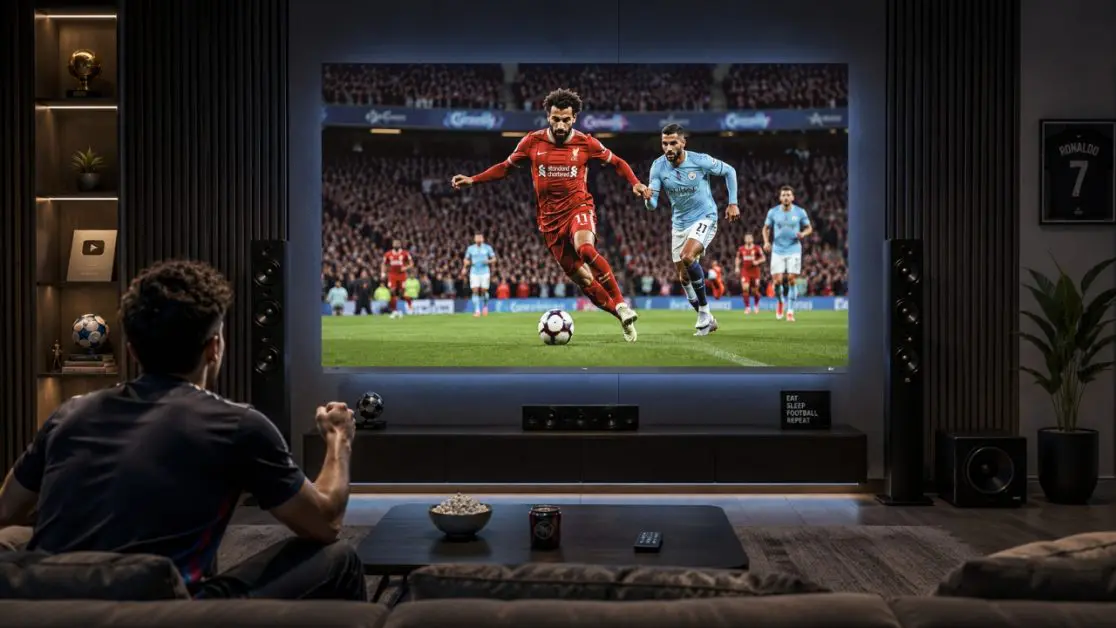
Sports viewing benefits greatly from improved brightness and contrast control.
This is where Mini LED technology has emerged as a preferred choice.
Unlike conventional LED displays, Mini LED technology uses significantly smaller LEDs, allowing for more precise control of lighting zones.
The result?
- Better contrast
- Improved shadow detail
- Enhanced brightness
- More controlled light distribution
- Greater picture depth
For sports fans, this translates into clearer visuals during both daytime and nighttime viewing.
The difference becomes especially noticeable during stadium broadcasts where lighting conditions change rapidly.
How Haier’s Mini LED TVs Enhance Sports and Streaming Experiences
Haier has focused heavily on combining advanced display technologies with intelligent processing to deliver a premium entertainment experience.
The Haier M92 Series and flagship M96 Series QD-Mini LED AI Smart Google TVs bring together several technologies specifically beneficial for sports and streaming enthusiasts.
Key Features That Matter for Sports Viewers
AI Ultra Sense Processor
The AI Ultra Sense Processor enables real-time scene recognition and intelligent optimisation for motion, colour, contrast, and depth. This helps maintain picture clarity during fast-moving sports content.
144Hz Refresh Rate
Fast action requires fast response.
With a 144Hz refresh rate, motion appears smoother and blur is significantly reduced during sports broadcasts and action-packed entertainment.
Dolby Vision IQ and HDR10+
Lighting conditions inside homes constantly change.
Dolby Vision IQ automatically adjusts picture performance based on ambient room lighting, while HDR10+ enhances brightness and contrast scene by scene.
Sound by KEF
Sports deserve atmosphere.
The collaboration with KEF helps deliver richer audio performance with enhanced clarity, bass response, and overall immersion. Combined with Dolby Atmos support, viewers experience more engaging stadium-like sound.
Recommended Haier TVs for Sports Enthusiasts
Haier New M92 Series 164cm (65) QD-Mini LED AI Smart Google TV (H65M92FUX)
Ideal for medium-to-large living rooms, featuring:
- QD-Mini LED display
- 144Hz refresh rate
- AI Ultra Sense Processor
- Dolby Vision IQ
- Dolby Atmos
- Sound by KEF
- Google TV ecosystem
Haier New M92 Series 189cm (75) QD-Mini LED Smart AI Google TV (H75M92FUX)
A larger immersive option for sports lovers who want stadium-like viewing at home.
Highlights include:
- QD-Mini LED technology
- 576 local dimming zones
- 144Hz refresh rate
- AI-powered picture enhancement
- KEF audio integration
- Google TV platform
Haier New M96 Series 254cm (100) QD-Mini LED AI Smart Google TV (H100M96FUX)
For those seeking a true premium home entertainment setup.
Features include:
- Massive 254cm (100) display
- AI Ultra Sense Processor
- Up to 2160 dimming zones
- High brightness performance
- 144Hz refresh rate
- 6.2.2 channel speaker system
- Sound by KEF
- Dolby Atmos
- Dolby Vision IQ and HDR10+
Live Match or Highlights? The Screen Still Matters
The debate between live sports and highlights will probably never end.
Some fans want every ball.
Others just want the sixes, goals, overtakes, and winning moments.
Both approaches are valid.
But neither experience reaches its full potential without a display capable of reproducing content accurately.
A great television doesn’t just show what happened.
It preserves the emotion behind it.
The tension before a penalty kick.
The roar of a packed stadium.
The split-second brilliance that changes an entire match.
As sports viewing continues to evolve across broadcasts, OTT platforms, social media clips, and streaming highlights, display quality has become far more than a specification on a product sheet.
It has become the difference between seeing the action and truly feeling it.
And with advanced technologies like QD-Mini LED, AI-powered picture processing, Dolby Vision IQ, immersive KEF audio, and high refresh-rate performance, Haier’s M92 and M96 Series TVs are built for exactly that purpose bringing every sporting moment closer to reality.
Frequently Asked Questions
Do live sports broadcasts usually look better than streaming highlights?
In many cases, yes. Live broadcasts often have higher source quality and less compression than social media clips or condensed highlights. However, a high-quality TV with advanced processing can significantly improve both live sports and streamed highlights.
Why do sports highlights sometimes look worse than the live match?
Highlights typically go through multiple stages of recording, editing, compression, uploading, and streaming. Each step can reduce image quality, resulting in softer details, motion artifacts, and reduced color accuracy.
If I mostly watch highlights instead of full matches, does TV quality still matter?
Absolutely. In fact, advanced display technologies and AI picture processing can be even more important for highlights because they help restore detail and improve compressed content.
Why does the cricket ball sometimes look blurry on my TV?
Fast-moving objects expose motion-handling weaknesses. Lower refresh rates and limited motion processing can make the ball appear blurred or difficult to track.
How does refresh rate affect sports viewing?
A higher refresh rate allows the TV to display more frames per second, making movement appear smoother and reducing motion blur during fast-paced action.
Is a 144Hz refresh rate useful for sports?
Yes. A 144Hz refresh rate helps improve motion clarity during cricket, football, Formula 1, tennis, esports, and other fast-moving content.