
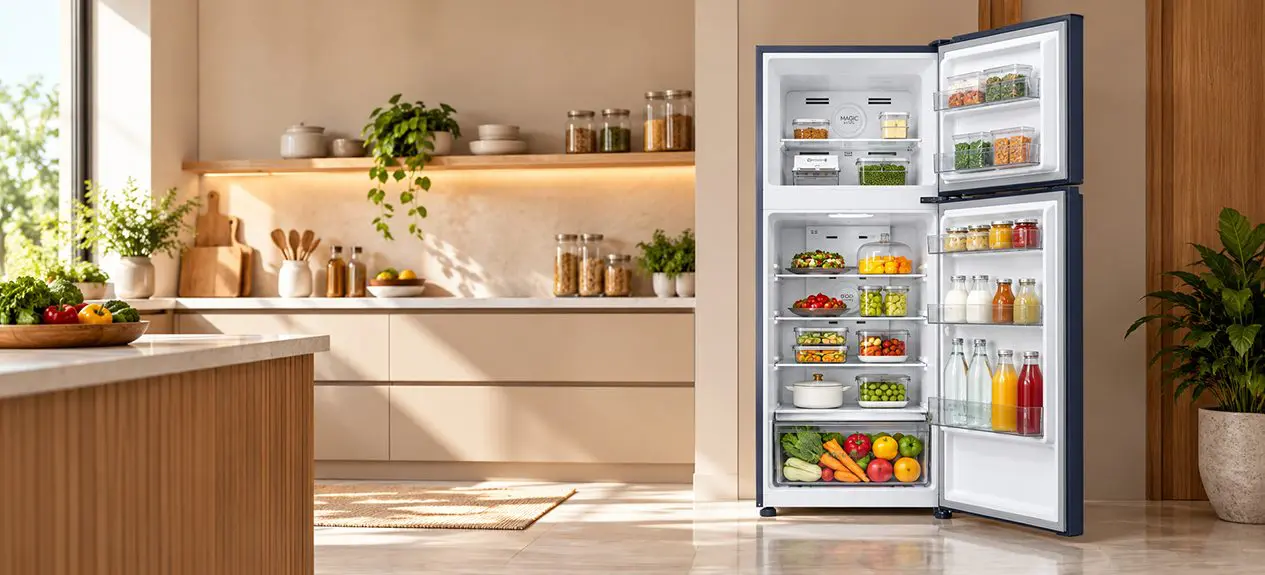

A refrigerator has a range of food items with different storage needs, ranging from fresh produce and dairy products to cooked meals and beverages. Even if you don’t change the temperature setting, some things may get abnormally cold while others don’t get as cold as you think they should. These differences can be especially prominent when the refrigerator is fully loaded.
In a bid to discover better ways of storing groceries without compromising on freshness, households are increasingly considering consistent refrigeration. An even cooling fridge is designed with this requirement in mind, so it is worth understanding what affects temperature differences inside a refrigerator.
One technology that is becoming increasingly important is multi-airflow cooling, but what does this mean?
What Is Multi Airflow Cooling and How Does It Work?
Multi-Airflow Cooling is a refrigeration technology that circulates cold air evenly throughout the refrigerator. The fridge side has several vents for several airflow systems to allow the cold air to circulate between the different shelves. This is in comparison to systems with localised cooling in certain locations. This means there are not many fluctuations in temperature, and cooling of food in different sections is better.
Some models have internal temperature sensors that can help monitor the ambient temperature and help with cooling, if necessary. They have fans built in to blow cold air around. When you open the refrigerator door, for example, warmer air enters the fridge, and the internal temperature rises for a short period.
How Does Even Cooling Technology Make a Difference to Everyday Food Storage?
How a refrigerator controls the temperature inside can impact how well food stays fresh over time. Because of the even cooling technology, a more uniform temperature is maintained between shelves, making it suitable for the storage of milk, dairy products, vegetables and cooked meals. This is particularly useful if you open the fridge a lot, or if you’re loading up the fridge with groceries for a few days.
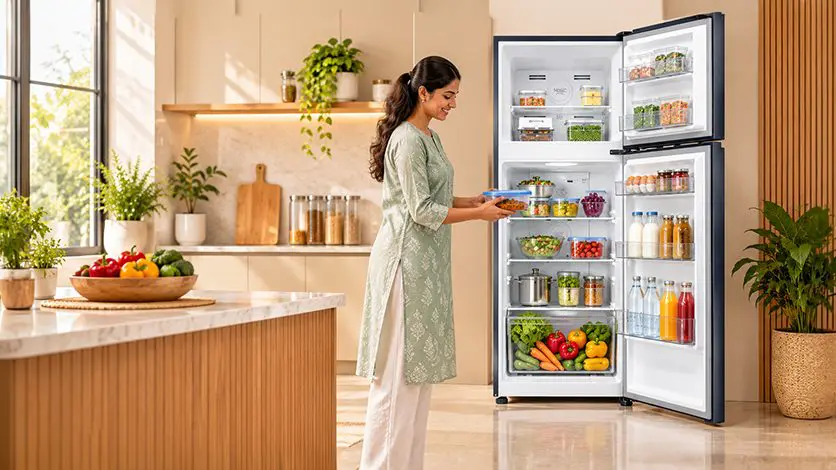
And steady cooling will also help to lessen the chances of food getting too cold in some spots. Sometimes, vegetables close to a cooling vent may freeze slightly, and this can impact their texture and quality. A better temperature distribution helps to minimise such differences, but it is still important that the food is in the right location. Even fridges that are not cooling can help maintain food preservation by reducing unnecessary temperature fluctuations and help households better use their groceries.
Multi-Airflow vs. Traditional Cooling: What’s the Difference?
Both standard and multi-airflow refrigerator systems are designed to keep food at the proper temperature, but they may differ in the way that cold air is distributed. Knowing the differences can help you determine what features are most important to the storage you use daily.
| Points of differences | Conventional Cooling | Multi-Airflow Cooling |
| Air distribution | Cooling is concentrated around certain areas | Multiple vents distribute chilled air across different sections |
| Temperature consistency | Temperature differences are more noticeable between shelves and compartments | Designed to maintain consistent temperatures throughout the storage space |
| Cooling across shelves | Some areas receive more cooling than others | Chilled air reaches different shelves through strategically positioned outlets |
| Fridge cold spots | Areas close to the cooling source become considerably colder than other sections | Improved circulation helps reduce the formation of excessively cold or warm areas |
| Temperature recovery | Recovery after frequent door openings depends on the cooling system and compressor operation | Fan-assisted circulation helps redistribute chilled air as the refrigerator returns to its set temperature |
| Food storage conditions | Storage conditions vary more noticeably depending on where food is placed | More consistent cooling supports suitable storage conditions across different shelves |
| Air circulation system | Rely on natural convection or a simpler fan-assisted arrangement | Uses multiple air outlets and fan-assisted circulation to distribute cooling throughout the compartment |
How to Help Your Refrigerator Cool More Evenly?
Modern refrigerators have advanced uniform-cooling technology, but certain everyday habits can affect how well a refrigerator holds its temperature steady. You will learn how it works and how to take care of it so it will be more reliable.
- Refrigerate hot foods after they are cool. If you put hot food in the refrigerator, the temperature in the refrigerator will go up for a while. Allow hot food to cool slightly before putting it in shallow covered containers.
- Don’t leave the refrigerator door open for long. You open the door, or leave the door open while you decide what to take out and warm air rushes in. Keep frequently used items close by to minimise door openings and temperature fluctuations.
- Ensure that the refrigerator is well ventilated. Store the refrigerator where the temperature will not drop below 60°F (16°C). Follow the manufacturer’s instructions for installation clearances. Avoid installing the refrigerator near ovens, radiators or other heat sources or in a location where it will be exposed to direct sunlight.
- Keep the area around the condenser clean. The condenser coils you can get to can get dust and dirt on them, making it harder for the refrigerator to get rid of heat.If the model includes condenser coils that can be cleaned, follow the manufacturer’s maintenance instructions.
Intrigued by AI features?
Read through: Multi-Airflow vs. AI Cooling: Which Technology Preserves Food Better?
How Haier Refrigerators Help Even Cooling and Better Food Storage
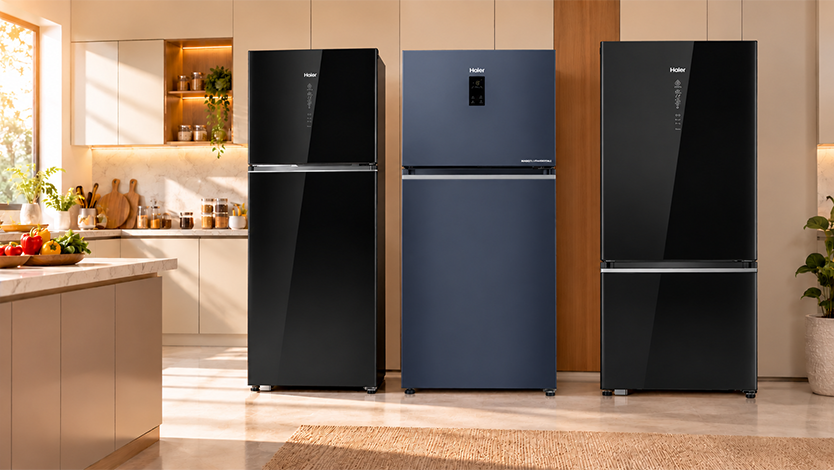
At Haier, we know that freshness is more than just temperature. We’ve built our range of refrigerators with the latest air circulation and temperature control, and offer flexible storage options to ensure consistent cooling and the right conditions for a variety of food items.
1> 360° Surround Cooling helps to keep temperatures flat
The 360° Surround Cooling system directs chilled air from multiple vents around the refrigerator for even temperature on every shelf. It works very well in the larger compartments where the cooling has to go through several storeys of storage. This technology is available in our Haier 475L 1 Star Black Glass Double Door Refrigerator to cool everyday groceries more consistently.
2> Our Magic Cooling Technology guarantees even storage conditions for your food
Our Magic Cooling Technology provides more consistent temperatures throughout the different parts of the fridge. This is useful for storing a mixture of dairy products, vegetables, drinks and cooked food. Our Haier 358L 2 Star Frost Free Refrigerator in Graphite Black adds to this tech with 10-in-1 Convertible Modes for extra flexibility to changing storage requirements.
3> With our Triple Inverter and Dual Fan Technology, you can control cooling
Our Triple Inverter and Dual Fan Technology combines the variable-speed compressor operation with fan-assisted air circulation. Inverter technology means the cooling is varied according to demand, and the fans help to control the flow of air through the fridge and freezer compartments. This Haier 355L 2 Star Black Glass Bottom Mount Refrigerator combines this technology with Magic Cooling and 14-in-1 Convertible Modes for more flexible food storage.
4> Our Dual Magic Zones – Take Control of Your Food Storage
We know that different foods need to be stored at different temperatures. Our Dual Magic Zones have their own temperature compartments (0°C to 4°C) to allow you to store items such as dairy products, beverages and fresh ingredients in the right conditions. This feature is found in our 475L 1 Star Haier Black Glass Double Door Refrigerator along with 360° Surround Cooling for flexible storage and better distribution of temperature.
Conclusion
Uniform cooling is more than how cold a refrigerator gets. The way food is preserved is affected by air distribution, temperature regulation and storage habits.
Modern multi-airflow systems help reduce temperature differences, while the right placement of food allows these to work as they are meant to. They work together to provide more reliable refrigeration for the day-to-day needs of the household.
FAQs
What is multi airflow cooling in a refrigerator?
Multi-airflow cooling is a fridge with lots of vents to circulate chilled air. This helps to equalise the temperature between shelves so that areas are less likely to get too cold or hot.
How do modern fridges cool evenly?
Modern refrigerators cool using a combination of air vents, circulation fans, temperature sensors and compressor controls. The fans blow cold air to cool the sections. Sensors allow the system to react to temperature variations.
Why are some parts of my fridg
Why are some parts of my fridge colder than others?
The temperature fluctuations may be due to the design of the refrigerator cooling, the location of the air vents or low circulation of the air. It can feel colder near cooling outlets, and you’ll get greater temperature fluctuations on door shelves.
What is even cooling technology?
Even cooling technology keeps the temperature in the storage compartment in a relatively constant range. Some models have several air outlets, as well as fans and electronic temperature controls to better distribute the cooling
Does multi-airflow keep food fresher?
Multi-airflow cooling keeps food fresher with consistent refrigeration temperatures. This is especially helpful when dealing with temperature-sensitive items such as dairy products, cooked meals and fresh ingredients. But true freshness is also a matter of humidity, packaging of the food, how long it has been stored and the condition of the food before it was refrigerated.
Which is the coldest part of a refrigerator?
The design of the refrigerator determines the coldest zone. In many models, areas closer to the cooling vents or toward the back of the compartment are cooler. In refrigerators, multi-airflow technology is an attempt to reduce these temperature differences.