
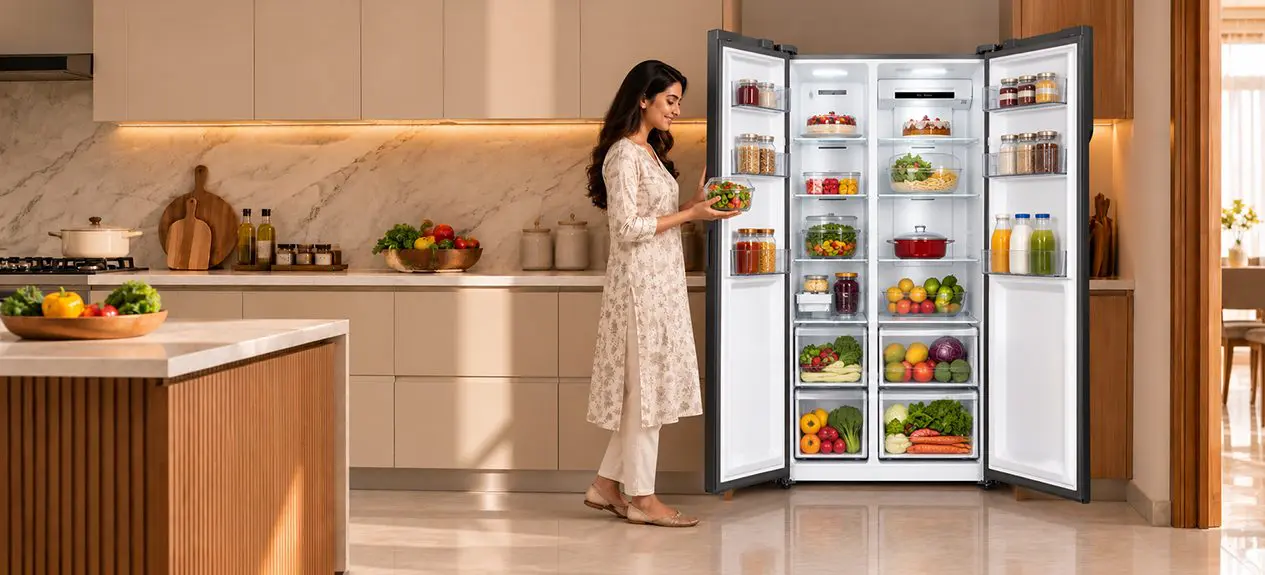

Every kitchen has its own arrangement, whether it’s a compact apartment kitchen, a parallel layout or a spacious open-plan design. The placement of appliances is an important part of getting that arrangement right, especially when several cabinets, drawers and work surfaces need to share the same space.
Refrigerators are no exception. Beyond deciding on the size and type, homeowners may also come across options such as a reversible door refrigerator while comparing different models. Although it might seem like a minor specification at first, it’s one of the details worth understanding when planning a new kitchen or upgrading an existing one.
Before we get into how door direction plays into your kitchen plans, it’s helpful to understand what makes a refrigerator door reversible in the first place.
What Is a Reversible-Door Refrigerator, and How Does It Work?
A reversible door refrigerator allows you to change the direction of the door opening. These models have compatible fittings to allow the door to be attached on either the left or right side, unlike refrigerators which have fixed hinges. So you can change the opening direction to suit the space available and the fridge’s location in your kitchen.
The mechanism is fairly simple. On models equipped with this feature, the hinges, brackets and door fittings can be moved to the other side, allowing the door to open in the other direction. A refrigerator with front hinges on the left side opens to the left when viewed from the front; a refrigerator with front hinges on the right side opens to the right. Not all refrigerators have this adjustment, however, so be sure to check the manufacturer’s specifications before you attempt to reverse the door.
Why Does Fridge Door Direction Matter for Your Kitchen Layout?
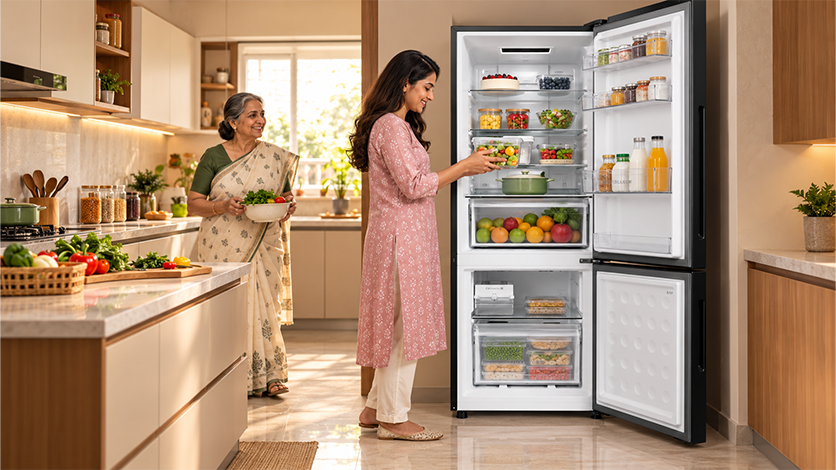
The opening of your refrigerator door can impact the overall look of your kitchen and the appliance’s fit. Besides location and size, there are some practical matters that come into play when you are deciding how the refrigerator will be used.
- Different users have different access. The direction of the opening of the door can affect the accessibility for family members to use the refrigerator. This is especially important in homes with children, elderly members or anyone who can find it difficult to move around a fully opened door.
- Freedom to organise the kitchen. A fridge with an appropriate door orientation gives you more freedom in terms of determining where to place other kitchen essentials, such as storage units, small appliances or freestanding furniture. It can also facilitate future layout changes more easily.
- Correct use of interior storage. Some refrigerator drawers, adjustable shelves and removable compartments need the door to open past a right angle. Even if the refrigerator fits in the space available, a bad hinge position can restrict access to these features.
- Lower risk of accidental damage. Getting bumped into a wall or hard surface on a regular basis can result in scratches, dents or damage to the handle of a refrigerator door. It is designed with an opening direction that helps to minimise such contact during normal use.
Which Side Should Your Fridge Door Open?
How a fridge door should open depends on the layout of your kitchen and the location of the refrigerator. If the main work space is to the right, you might find a left-opening fridge more convenient, as this means you can access the fridge without the open door getting in the way of the countertop. If the prep space is on the left, a fridge opening to the right may be very functional.
The placement of the surrounding walls and cabinets is just as important. If your refrigerator is pushed up against a wall, you can put the hinges on the wall side so the door swings out of the main kitchen area if there is room to do so. Corner units should also be checked to see that the door opens wide enough to allow easy access to the internal drawers and shelves.
What Should You Check Before Deciding on a Fridge Door Direction?
Before you decide on a left or right opening fridge, it is worth thinking about a few practical details other than the size of the refrigerator. These checks will help you to know if the chosen door orientation will be convenient after the appliance is installed.
- Check the position of electrical connections. The refrigerator power socket should be easily accessible without moving the refrigerator. Think about where the socket will go and where the appliance you will be placing will go. The power cord should be able to reach the socket without stretching or crossing a passage.
- Consider the weight and how the door is handled. Refrigerator doors can be heavy to open when packed with bottles, condiments and items used frequently. Think about whether you can hold the door and shut it easily, one-handed, especially when you’ve got groceries.
- Check the flooring and the installation surface. An uneven floor can change the way the refrigerator sits and how the door closes. Make sure that the installation area is level, and the adjustable feet on the bottom of your refrigerator are levelled properly to keep the doors aligned.
- Consider future kitchen use. As your household grows or your cooking habits change, you may find your kitchen needs change. Think about whether your choice of door direction will still be functional with the layout, if you intend to put in furniture, relocate appliances or renovate the area.
Still double-minded?
Read through: Choosing the Right Refrigerator Layout for Your Cooking Style
Can You Change the Direction a Fridge Door Opens?
Yes, the fridge door can be changed to open the other way, but only if the refrigerator has reversible hinges built into it. The door can be reversed from one side to the other in compatible models by moving the hinges, brackets and other necessary fittings. This comes in handy when moving into a new house or moving around in your kitchen, as you can just flip the way it opens without replacing the appliance.
However, not all refrigerators are processed the same way. Some models require special tools or extra parts, and some are fixed hinges that can not be reversed. Check the manual from the manufacturer before making any adjustments to see if the door is reversible. It is also recommended to seek the help of an authorised technician, as wrong installation can affect the alignment of the door, magnetic gasket seal, and the overall closing mechanism.
How Haier Refrigerators Offer Practical Options for Different Kitchen Layouts
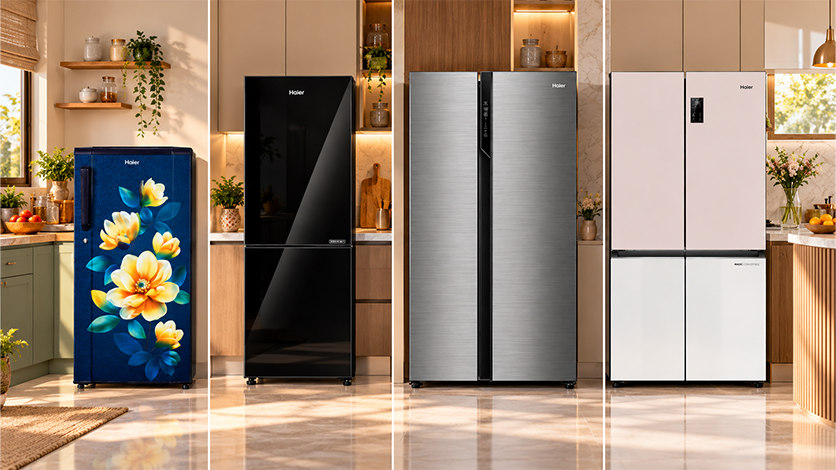
At Haier, we understand that the position of a refrigerator can affect the comfort of a kitchen. That’s why we have compact single-door models, bottom-mounted configurations and multi-door designs that fit different space needs and everyday storage needs.
1> Single-door refrigerators to fit in compact kitchen layouts
For kitchens with limited floor space, our 185L Marine Figo Single-Door Refrigerator is a practical option measuring 533 mm in width. The all-single-door design also means we recommend checking the position of the hinges and the available opening clearance, especially when placing it next to a wall or cabinet.
2> Easy access every day with our bottom-mount refrigerators
In our Jhukna Mat design, the fresh-food compartment is above the freezer so you don’t have to push down so much. If your kitchen is a little on the smaller side, then look at our 265L Black Glass Bottom-Mounted Fridge with 8-in-1 convertible cooling and 548 mm width.
3> Easy access to storage is provided by the 90° contour door design
On select side-by-side models, our 90° Contour Door design gives you access to interior drawers when the refrigerator doors are opened about 90 degrees. An example of this is our 570L Frost-Free Inverter Side-by-Side Refrigerator. This can be helpful in kitchens where door-swing space is limited, but we still recommend the specified installation clearance.
4> Separate compartment access on our Lumiere four-door refrigerators
Our Lumiere 520L Rosette White Four-Door Convertible Refrigerator offers four unique doors, recessed handles and a Convertible Magic Zone. That means you can access each compartment without opening the whole fridge. We recommend measuring the available space on both sides for comfortable door movement, with a width of 830 mm.
Conclusion
A good kitchen design is more than just stuffing appliances and stuff in the space you have. It’s also about making them comfortable to use on a daily basis.
Whether you opt for a reversible door refrigerator or a fixed-door model, the opening direction, the surrounding clearance and the nearby work surfaces are all things you need to think about. They can make a big difference to your kitchen experience.
FAQs
What is a reversible-door refrigerator?
A reversible-door fridge is a fridge that has hinges on both sides, so you can open the door to the left or right. This is especially useful in smaller kitchens or if you want to change the layout of the kitchen, as you can change the opening direction to suit the space.
Which way should a fridge door open?
Ideally, the fridge door opens to the side that provides easy access to adjacent countertops and food prep areas. It should also have enough room for people to move about easily. Your kitchen layout will determine the best direction. It will depend on the cabinets around it and where your refrigerator is located.
Can you change the direction a fridge door opens?
Yes. If your fridge has reversible door hinges, you can change the way the fridge door opens. Basically, it involves transferring the hinges and associated hardware to the other side. Not all models have this facility, however, and you should refer to the manufacturer’s instructions or seek the advice of an authorised technician.
How do I choose left or right door opening?
Consider where you will place your refrigerator, and which side will be more convenient. Walls, countertops. Adjacent cabinets, aisles. In a perfect world, the open door will not interfere with your access to the internal compartments. So, measure your clearance before you buy so you can make the right decision.
Does fridge door direction matter for kitchen layout?
Yes very important for accessibility and to control space in the kitchen is the direction of the fridge door. A bad entry way can block cabinets, restrict movement, or even make it difficult to pull out internal drawers.
Do all refrigerators have reversible doors?
No, not every refrigerator has reversible doors. Most side-by-side and multi-door refrigerators are fixed opening, although a few single-door and some double-door models are reversible. See if the refrigerator you’re considering allows you to reverse the door direction by checking its specifications.