
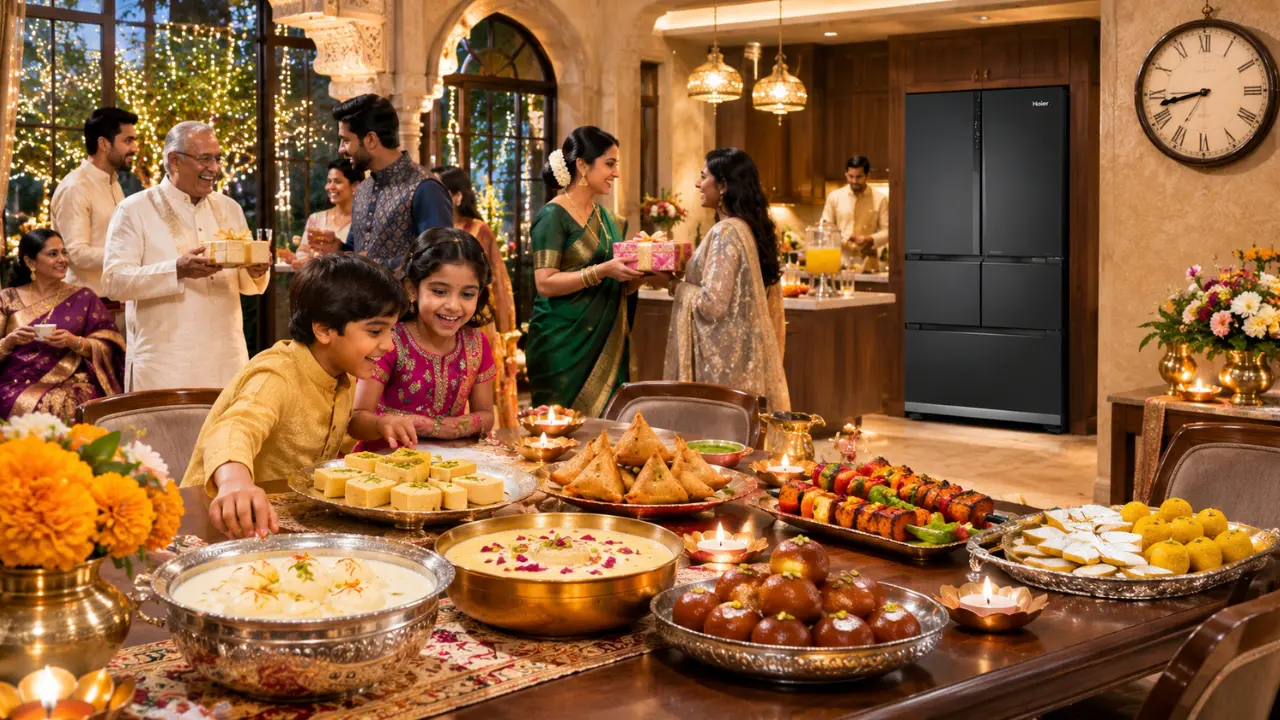

Now the guests have come, the fairy lights have lighted up, the dining table has been laid and kaju katli, gulab jamun, samosas, paneer tikka and freshly prepared festive dishes are ready. Another box of mithai is brought and the kids are already clamoring for their second box.
It’s just a very merry day. With one small exception.
The milk sweets have been on the table since the afternoon.
Often diwali food is kept out of the refrigerator longer than planned. Checking the time that snacks have been out is not really a priority between entertaining guests, exchanging gifts and preparing dinner.
However, food safety should be taken into consideration, particularly when cooking and serving perishable foods and snacks such as those containing dairy.
Then, how long can Diwali mithai and snacks be left out?
A good rule of thumb for all foods is that perishable foods should not be left at room temperature for more than 2 hours. In temperatures above 32 °C, that window decreases to 1 hour. The storage requirements will vary according to the ingredients, how the product was prepared and the temperature and environment it is stored in.
Recognising these differences can help you have a Diwali house party without having to sacrifice food safety.
The Days of Diwali Sweets and Snacks Outside the Fridge Are Numbered
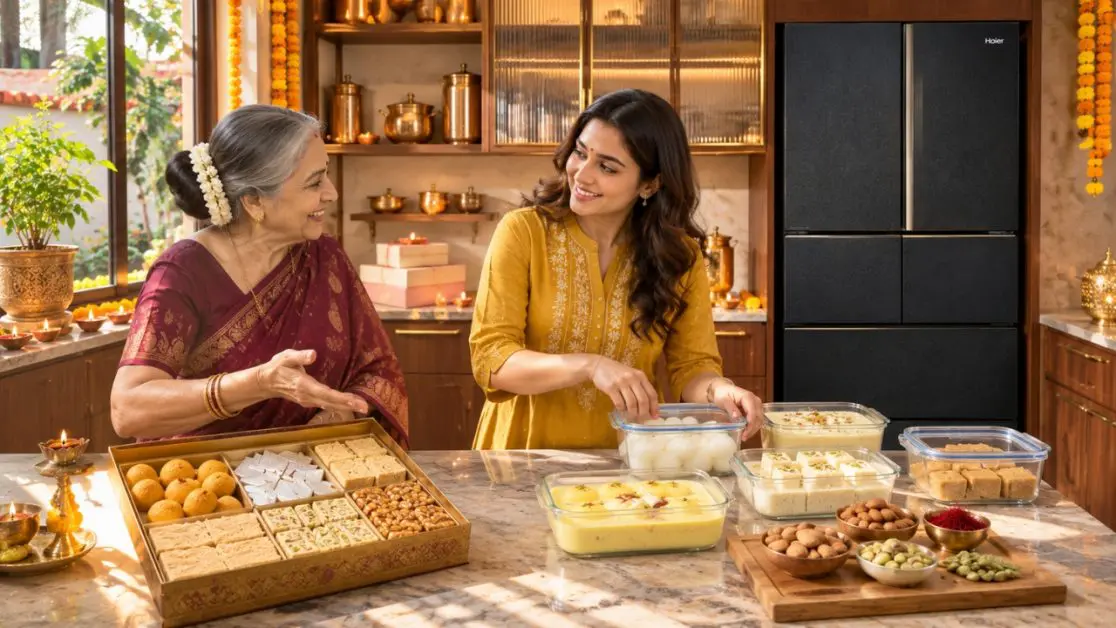
Some foods don’t require refrigeration during the holiday season. It’s not just that a dry besan ladoo tastes totally different from a chilled rasmalai, it also feels different.
The key difference is that the food contains substances which enable the growth of harmful microorganisms in a rapid manner.
Milkshake Mithai: Refrigeration Is the Key
Indian sweets are traditionally made with milk, khoya, cream and paneer etc.Milk, khoya, cream and paneer are some of the ingredients commonly used in traditional Indian sweets.
Popular examples include:
- Rasmalai and rabri
- Kalakand and milk cake
- Fresh khoya barfi
- Cream-filled mithai
- Chhena-based sweets
- Gulab jamun (as per preparation and storage instructions)
Many of these sweets have a lot of moisture and dairy ingredients and must be handled with care.
If sweets have to be refrigerated use the 2 hour rule. Refrigerate them within an hour if temperatures are particularly warm (above 32°C).
Not to mention, a sweet may look like it has just come from the oven, even if it’s past the expiration date.
Attractiveness or the pleasant odor cannot be used as a good indicator of food safety.
Dry Mithai: Does It Need Refrigeration?
Dry sweets typically have a longer shelf life and can be stored in a variety of ways.
Try these Diwali favourites:
- Besan ladoo
- Soan papdi
- Some types of dry fruit barfi
- Chikki
- Kaju katli is a term used for some types of kaju.
Most of the ready-to-eat dry sweet products can be kept at room temperature as per the instructions printed on the package.
Home-made versions, however, might contain fresh dairy, extra moisture or ingredients that impact the storage requirements.
For instance, kaju katli prepared with cashew nuts, sugar and water may require a different storage requirement than a kaju katli prepared with khoya.
The best way is to look at the ingredient list, use the manufacturer’s instructions, and refrigerate sweets if they don’t specify their storage directions.
What’s The Deal With Pakoras, Samosas and Other Party Snacks?
Picture this. Your guests arrive at 7 PM but Samosas are fried at 5 PM.
By 9 PM, all the remaining pieces are still by the chutney bowls.
Would you like to serve them?
Not without taking into account their storage.
Potato based cooked snacks with perishable ingredients such as paneer, meat, etc. should adhere to 2 hours guideline for room temperature, unless they are kept at a safe hot holding temperature.
Snacks That Require Additional Attention
There are certain party foods which during Diwali need specific care:
- Paneer tikka: Refrigerate immediately if not served hot.
- Dahi bhalla: This needs to be kept refrigerated due to its preparation using yoghurt.
- Vegetable sandwiches: Keep mayonnaise, dairy or other perishable ingredients in the refrigerator.
- Samosas and kachoris: Do not store cooked stuff at room temperature for longer than necessary.
- Chaat: Store yoghurt, boiled potatoes, cooked chickpeas and other perishable parts in the refrigerator until ready to serve.
The storage requirements for dry packaged snacks like namkeen, roasted makhana and some biscuits are usually different.
However, never exceed the recommended directions for use on the package.
Making the Largest Food Safety Error During Diwali Parties
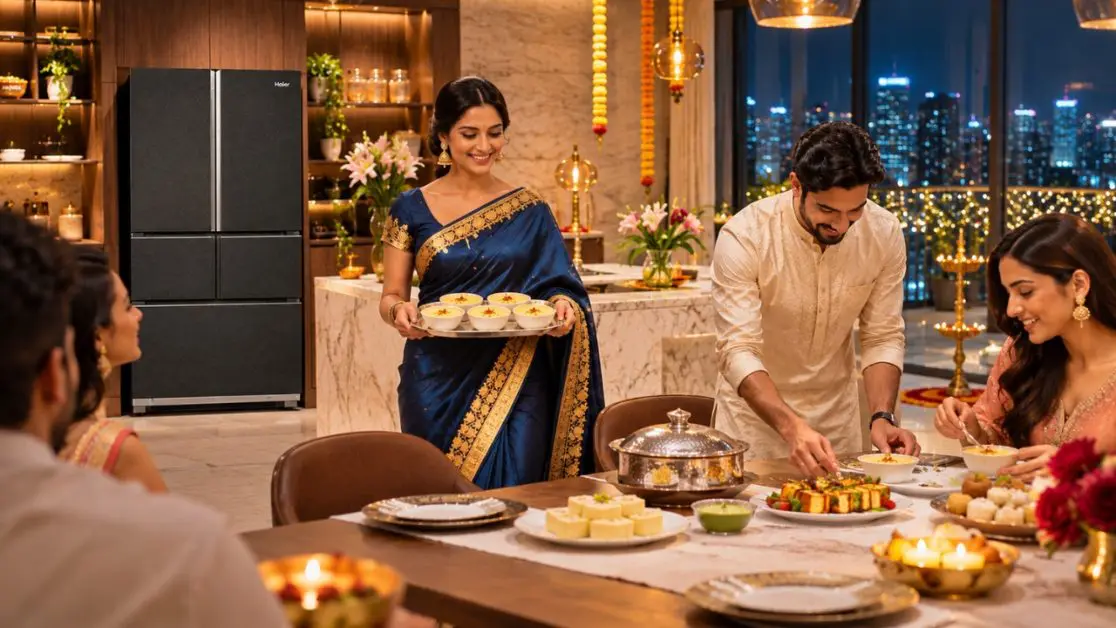
A frequent error is putting all the ready-made foods out on the dining table when the guests arrive.
It’s certainly a showy look
Sadly it’s also food spending time out of temperature controlled food storage before anyone eats.
Let’s say that the rasmalai is ready at 3 PM, served at 5 PM and served after dinner at 9 PM.
That’s four hours at room temperature, not to mention the time already invested in preparation.
Spontaneous microbial growth may have taken place, which does not happen when it is refrigerated afterwards.
Eat Smaller Portions of Food
Instead, an even more useful solution is to split the party food into little parts.
Here’s how:
- Store larger amounts of mithai, which is made from perishable ingredients, in the refrigerator.
- Take out only what visitors are likely to eat in a timely fashion.
- Fill up trays with fresh, cold food.
- Serve in separate serving utensils.
- Do not mix foods that have been out of the refrigerator with fresh foods.
- Throw away any foods that have been out of the safe temperature range.
This way, you can leave your entire party covered up while still keeping your dining table inviting.
It also ensures that there is no need for food wastage.
The Biggest Food Safety Mistake at Diwali Parties
The festive season puts a considerable strain on your average Indian refrigerator.
It has sweet boxes from the family, vegetables for supper, cold drinks, dessert, fruits and ingredients for breakfast the next day.
All of a sudden, there’s a lot less room.
If food items are piled up haphazardly, it is hard to ensure good hygiene and getting ingredients.
It is, therefore, not just about convenience when it comes to refrigerator organisation.
Helps to ensure perishables remain properly chilled, prevent cross contamination between raw food and ready-to-eat food and reduces idle time at the door.
Store Different Foods in the Proper Storage Areas
Organise your refrigerator with foods grouped together prior to the celebration.
- Keep any sweet that requires no preparation in clean covered containers.
- Store raw meat and seafood away from cooked food.
- Arrange fruits and vegetables in appropriate fresh food containers.
- Organise drinks for easy access without disturbing other foods.
- Don’t crowd shelves as cold air must circulate.
If refrigerated perishables, keep within 4°C or less. The typical freezer temperature is -18°C or colder.
Ensure actual storage temperatures are checked using a refrigerator thermometer as necessary.
Organise Your Festive Food Storage With Haier In-Vista
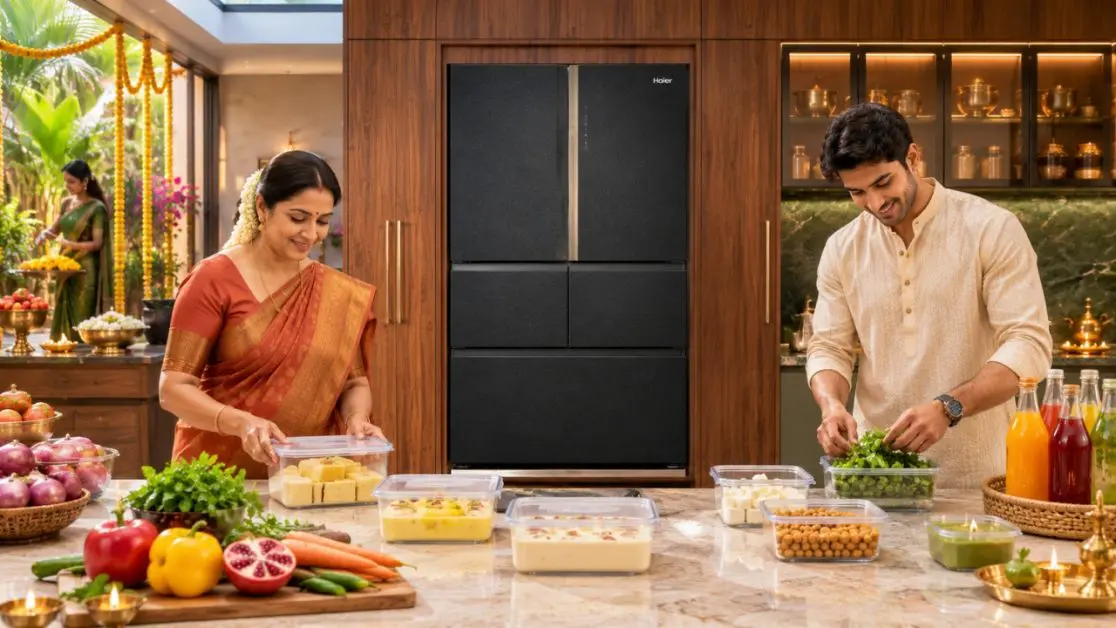
If you have to prepare meals for larger groups frequently, refrigerator capacity and storage flexibility can be a daily convenience.
Haier 552L In-Vista 5 Door Free Built In Side By Side Refrigerator (HRM-800P2OBU1) is a refrigerator that combines a large storage capacity, several compartments and convertible cooling power.
This refrigerator is ideal for Indian kitchens, and provides practical solutions for sorting out various types of food items while preparing for festivals or events.
There Are Five Doors and Five Storage Zones
Haier In-Vista has 5 doors and five storage zones, 12 storage sections.
This setup enables families to store fruits, vegetables, drinks, frozen foods and other food items in separate sections of the fridge.
You can use the space provided to divide up food categories during Diwali preparation instead of stacking them.
That extra organization can make a difference for households that are cooking multiple dishes at once.
66L Magic Convertible Zone for Flexible Storage
The menu for a festival seldom remains constant.
There was a time when you needed more space for frozen produce. In the next, you might require additional freezer space.
Haier In-Vista has a 66L Magic Convertible Zone which can be changed between refrigeration and freezing mode and can be used in the temperature range of -20℃ to +5℃.
This flexibility means you can customize the compartment to suit your storage needs.
For example, based on the set temperature, it can be programmed to serve acceptable chilled foods or frozen ingredients.
Always use the appropriate “Compartment” for each food item’s storage temperature.
This Is MRA Fresh Technology for Fruits and Vegetables
Fresh fruits, salads, and vegetables and garnishes are regular features of a Diwali menu.
In order to keep the humidity in the range of more than 90%, Haier’s MRA Fresh Technology is implemented, which is said to be the moisture retention ability 2 to 6 times higher than traditional storage methods, thereby extending the shelf life of fruits and vegetables.
This may be helpful when buying fresh produce in advance of a special occasion.
Moisture retention technology should not be used as a substitute for proper food handling or refrigeration, however.
ABT Pro Sterilisation and Smart Features
The fridge also has ABT Pro Sterilisation, which is an automated sterilisations cycle to help keep the fridge and freezer a more hygienic environment.
What’s more, the Haier Smart App comes with such smart functions as smart food management and ice-making/sterilising controls.
The automatic ice maker provides additional convenience in providing cold drinks for guests.
The In-Vista also fits in with modern kitchen design with its Ornate Black Stone Finish, sensor-activated ambient lighting and seamless built-in styling.
Check out the Haier 552L In-Vista 5 Door Free Built-In Side By Side Refrigerator to learn about its storage capacity and specifications.
Is It Possible to Convert Mithai After Some Hours?
This is a question that is frequently asked following the guests’ departure.
Some kalakand, some paneer snacks and a bowl of rabri were still remaining.
Discarding food is a wasteful act, especially when it’s a festival.
But, cool temperatures can’t fix the problem if food has been at an unsafe temperature for a long period of time.
Toxic substances may survive reheating if they are created by some harmful bacteria.
Therefore:
- Throw away perishable foods at room temperature after 2 hours.
- When the temperature is above 32°C, use the one hour rule.
- Do not use smell, taste or appearance as the sole indicator.
- Avoid reheating and cooling the same food over and over.
- Always refrigerate at shallow depths in covered containers.
- If the food has been stored correctly, adhere to the appropriate guidance for storage and use within the recommended storage time.
An Information Sheet on Food Safety During Diwali
A few tips ahead of the first guest can help avoid most common food storage pitfalls.
Before the Party
- Check refrigerator temperatures.
- Clear away loose items to get extra storage space.
- Chill milk food products and other perishables.
- Make separate containers for leftovers.
- Plan smaller serving portions.
During the Celebration
- Monitor the time of perishable food set outside.
- Fill up plates instead of showing them all at once.
- Use appropriate holding equipment to keep cold food at or below 4°C or hot food at or above 60°C.
- Use clean serving utensils.
- Cover food to protect from dust and insects.
After the Guests Leave
- Refrigerate eligible leftovers promptly.
- Throw away perishable food that has been past its “Safe Storage” date.
- Keep food of various categories in different locations.
- Wash food contact surfaces and utensils.
- Label leftovers if needed when refrigerated.
Last tip: before storing what is left after guests have repeatedly touched the food directly from a communal plate, remember that there may be an increased risk of food touching the plate.
No Need to Compromise on Food Safety During Diwali
In memory of Diwali, there are discussions, laughter, decorations and, of course, food.
No one wants to spend the night pondering whether the mithai is still safe to eat.
The answer is quite simple. Know what foods need to be refrigerated, how long perishable foods can be out and offer smaller portions throughout the event.
These chores can be easier to deal with when there is a well-organised refrigerator, particularly if there are several dishes and ingredients to prepare for the holidays.
The Haier 552L In-Vista 5 Door Free Built-In Side By Side Refrigerator (HRM-800P2OBU1) provides dedicated storage compartments, convertible cooling and smart features perfect for modern Indian families with their growing need for flexibility and space.
The idea of a wonderful spread for Diwali is not the only thing that matters. They are also concerned about making sure that everyone can enjoy it safely.
Frequently Asked Questions
How long can kaju katli stay outside the refrigerator?
Kaju katli storage depends on its ingredients and preparation. Some varieties can be kept at room temperature according to their packaging instructions, while versions containing perishable dairy ingredients may require refrigeration.
Can rasmalai be left outside during a Diwali party?
Rasmalai is a perishable dairy-based sweet. It should not remain at room temperature for more than two hours, or one hour when temperatures exceed 32°C. Keep it refrigerated until serving.
Should homemade samosas be refrigerated after frying?
Cooked samosas containing perishable fillings should be refrigerated within two hours if they are not being safely held hot. Allow them to cool sufficiently for safe handling, then refrigerate promptly in suitable containers.
What is the ideal refrigerator temperature for storing Diwali sweets?
Refrigerated perishable sweets should generally be stored at 4°C or below. Always follow any more specific storage instructions provided by the manufacturer or sweet shop.
Can spoiled mithai become safe after reheating?
No. Reheating does not reliably make spoiled or improperly stored mithai safe because certain bacterial toxins may survive heating. Discard sweets that have exceeded safe storage limits.