
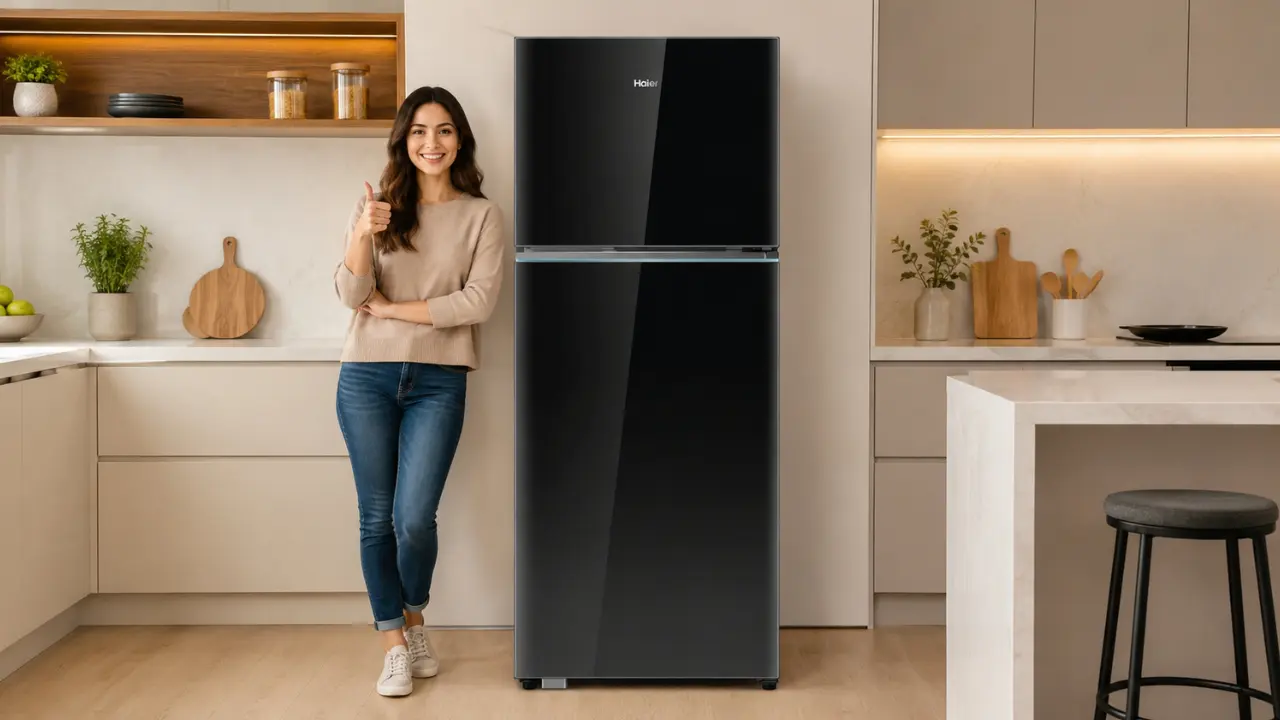

A refrigerator is not just a cooling appliance anymore.
Its design quietly shapes how Indian homes function every single day.
The shelf height changes grocery habits. The airflow system affects food freshness. The door angle decides whether cramped kitchens feel manageable or frustrating. Good refrigerator design reduces invisible friction. Bad design creates it repeatedly.
That is the real story modern buyers are beginning to notice.
Modern refrigerators are no longer competing on cooling alone. They are competing with ease.
And ease changes everything.
The refrigerator became the operating system of the kitchen.
Walk into a modern Indian home at 8 PM.
Someone is storing leftovers from dinner.
Someone else is searching for chilled water.
A child opens the freezer for ice cream.
Milk packets compete for space with meal prep containers.
Vegetables disappear behind stacked steel bowls.
The refrigerator handles far more decisions than people realise.
That is why refrigerator design matters.
Not because the design looks attractive in a showroom.
Because design determines how smoothly daily life moves.
A badly designed refrigerator wastes time in small moments. Small moments accumulate into daily stress.
That pattern is becoming more visible in urban Indian households where kitchens are shrinking while storage expectations are growing.
Convenience begins with layout, not capacity
Most buyers still start with litres.
300L.
475L.
600L.
But capacity alone explains very little.
Two refrigerators with similar storage can behave completely differently depending on internal design.
Why storage zones change behaviour
Think about Indian grocery habits.
Weekly sabzi runs.
Bulk dairy storage.
Frozen snacks for children.
Festival desserts.
Leftover curries in steel containers.
The challenge is not just storage.
The challenge is organized access.
One option is random shelving. Everything gets stacked together.
The second option is intelligent zoning. Different foods get different environments.
The difference feels small initially. It becomes massive after three months of usage.
Haier’s top-mounted refrigerator range uses concepts like Double Magic Zones that separate storage conditions for dairy, beverages, and non-vegetarian items.
That matters because Indian households rarely store one category of food.
Different ingredients require different cooling behaviour.
And when refrigerators adapt to food patterns, homes feel more organized automatically.
The best refrigerator designs reduce “search fatigue”
Most people underestimate how much time they spend searching inside refrigerators.
The hidden problem is visibility.
Food gets lost behind containers. Vegetables disappear under leftovers. Bottles block access to shelves.
Then food expires unnecessarily.
This is less about discipline and more about design systems.
Good design improves visual clarity
Modern refrigerator convenience often comes from:
- Wider shelves
- Better LED placement
- Transparent compartments
- Flexible storage racks
- Door bins designed for larger bottles
- Adjustable shelf systems
These features sound minor individually.
Together, they reshape daily kitchen flow.
Haier refrigerators include features like movable door racks, toughened glass shelves, and inside LED lighting designed to improve storage flexibility and visibility.
A refrigerator should not feel like a storage puzzle every morning.
It should feel intuitive.
Cooling design affects convenience more than people realise
Most people think cooling is binary.
Either the refrigerator cools or it does not.
Reality is more nuanced.
Uneven cooling creates invisible inconvenience:
- Vegetables spoil faster
- Ice formation increases
- Dairy freshness fluctuates
- Odours spread
- Food texture changes
The inconvenience appears slowly. Which makes it harder to diagnose.
Why airflow systems matter
Modern refrigerator design increasingly focuses on airflow engineering.
Haier’s 360 Degree Surround Cooling system aims to distribute cooling evenly across shelves.
That changes daily experience in practical ways:
- Fruits remain fresher longer
- Leftovers cool evenly
- Temperature recovery becomes faster after door openings
- Food placement becomes less stressful
The hidden insight is simple.
Good airflow creates flexibility.
People stop worrying about “where exactly” to place things.
And that reduces mental friction inside busy homes.
Indian kitchens demand smarter space behaviour
Most refrigerator design conversations still assume ideal kitchens.
Perfect layouts.
Wide movement areas.
Large utility spaces.
That is not how many Indian homes work.
Urban apartments increasingly operate within tighter spatial constraints.
Which means refrigerator design now affects:
- Door movement
- Kitchen traffic flow
- Accessibility
- Cleaning convenience
- Power backup compatibility
The importance of door design
This sounds small until real life happens.
A refrigerator door that opens awkwardly can disrupt the entire kitchen workflow.
Haier includes 95-degree anti-tipping door racks designed to keep bottles stable while improving usability in tighter spaces.
That matters in modular kitchens where every inch influences movement.
Good appliance design respects the architecture around it.
Not just the appliance itself.
Noise is a design feature too
People rarely discuss refrigerator sound during purchase decisions.
Then the refrigerator enters an open-layout apartment.
Suddenly the humming matters.
Modern homes combine:
- kitchen spaces
- dining spaces
- work-from-home corners
- living rooms
Which means appliance noise travels further into everyday life.
Why inverter technology improves comfort
Twin inverter systems are often discussed only through energy savings.
But convenience includes comfort too.
Haier’s Twin Inverter Technology focuses on quieter performance alongside efficient cooling.
That changes the emotional experience of a home.
Quiet appliances disappear into the background.
And invisible appliances often create the best user experiences.
Refrigerator design now includes energy psychology
Indian buyers have become deeply aware of electricity usage.
Not theoretically. Practically.
Summer electricity bills changed consumer thinking permanently.
That is why convenience now includes energy confidence.
Smart efficiency reduces behavioural stress
One option is constantly adjusting appliance settings manually.
The second option is intelligent optimization built into the system.
Features like Eco Mode and inverter compressors reduce the need for constant intervention. Haier’s Eco Mode is designed to help save energy during operation.
That matters because convenience is not only physical.
It is psychological too.
A smart refrigerator reduces the number of decisions people need to make daily.
And decision fatigue is real.
A refrigerator is now part furniture, part technology
This shift changed buying behaviour dramatically.
Earlier, refrigerators stayed hidden inside kitchens.
Now they often sit visibly within:
- open kitchens
- dining areas
- studio apartments
- integrated living spaces
Which means aesthetics matter more than before.
Design now communicates lifestyle
Glass finishes, recessed handles, minimalist panels, and clean silhouettes influence how modern homes feel visually.
Haier’s Graphite Black and Black Glass finishes reflect this transition toward appliance-led interior styling.
This is not superficial.
Visual calm affects emotional calm.
A cluttered-looking appliance creates visual noise.
A clean design creates spatial clarity.
People increasingly buy refrigerators not just for storage.
But for how the kitchen feels around them.
The hidden system: refrigerators shape household behaviour
This is the part most brands rarely discuss directly.
Appliances influence routines.
A well-designed refrigerator changes:
- grocery planning
- food wastage
- meal prep habits
- hydration behaviour
- kitchen organization
- late-night snacking patterns
Systems shape behaviour quietly.
That is why refrigerator design impacts convenience so deeply.
Not because of one dramatic feature.
Because dozens of small decisions compound daily.
Convenience is cumulative
A shelf that slides smoothly matters.
A bottle rack that stays stable matters.
Even cooling matters.
Quiet operation matters.
Smart zoning matters.
Individually, these feel small.
Together, they define whether a kitchen feels stressful or effortless.
That is the real evolution happening in modern refrigeration.
The smartest refrigerators are no longer trying to look futuristic.
They are trying to feel invisible.
Why modern Indian households are rethinking refrigerator design
The old buying logic focused on one question:
“How big is the fridge?”
The smarter question today is different:
“How well does this refrigerator fit the rhythm of daily life?”
Because convenience is not created through specifications alone.
It is created through alignment.
Alignment with:
- cooking habits
- grocery frequency
- apartment size
- family routines
- power conditions
- storage behaviour
- lifestyle aspirations
That is where modern refrigerator design becomes meaningful.
Not as technology for the sake of technology.
But as a quiet infrastructure for everyday living.
Haier’s recent refrigerator designs increasingly reflect this shift through organized storage systems, inverter cooling, airflow engineering, and user-friendly layouts built around how Indian homes actually function.
And perhaps that is the larger insight.
The best home appliances do not demand attention. They remove friction so life flows better around them.
That is what convenience really means now.
Frequently Asked Questions
Is refrigerator capacity more important than refrigerator design?
Not necessarily. Capacity determines how much you can store, but design determines how easily you can access, organize, and manage that storage every day. A well-designed 400L refrigerator can feel more practical than a poorly designed 500L model.
How do I choose a refrigerator that fits my family’s daily routine?
Look beyond litres and focus on factors such as storage zones, shelf flexibility, cooling consistency, door design, energy efficiency, and how frequently your family cooks, shops, and stores leftovers.
Why do two refrigerators with similar capacity feel completely different to use?
Internal layout, shelf spacing, door bins, visibility, airflow design, and storage organization can significantly impact usability even when total capacity is similar.
What refrigerator features are most useful for Indian households?
Features such as dedicated vegetable storage, flexible shelves, multiple cooling zones, inverter technology, large bottle storage, and efficient airflow systems often align well with Indian cooking and grocery habits.
Does refrigerator design affect food waste?
Yes. Better visibility, organized storage zones, and transparent compartments make it easier to track food items before they spoil.