
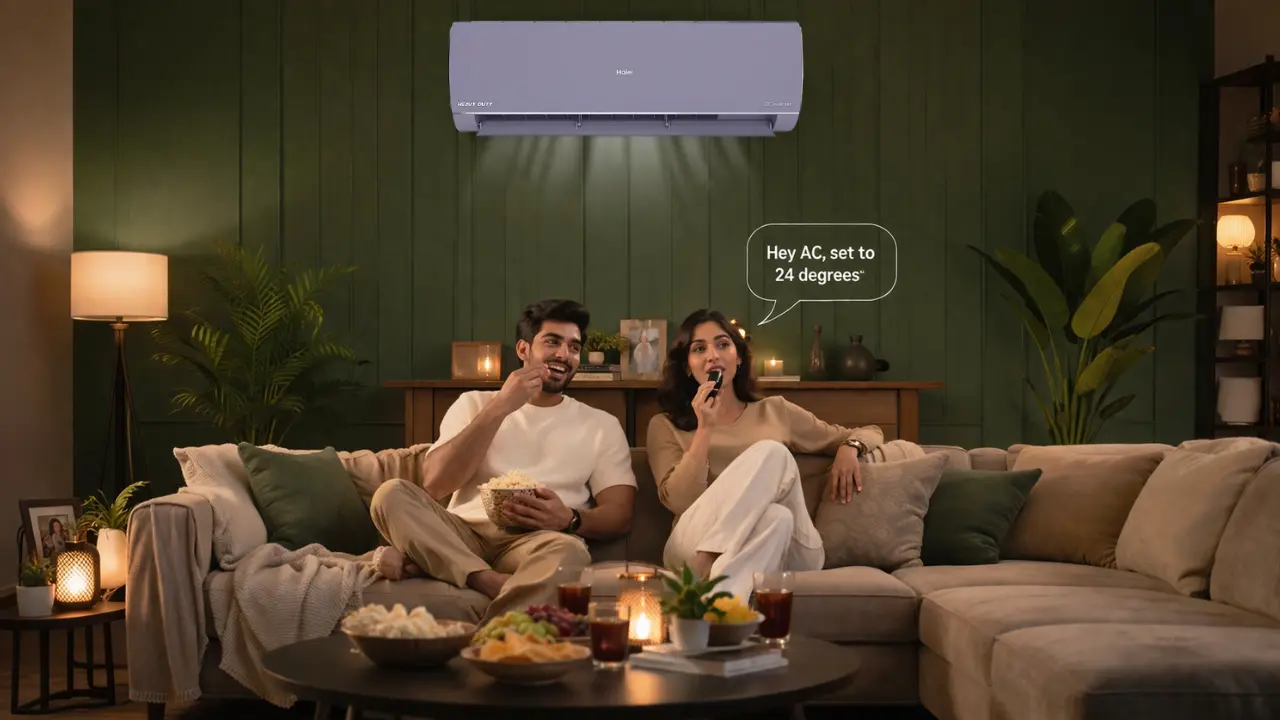

Smart ACs anticipate your daily routine by learning your habits, analyzing environmental conditions, and adjusting cooling automatically.
Instead of waiting for manual input, modern AI-powered air conditioners predict when you arrive home, detect room occupancy, optimize energy usage, and deliver cooling exactly where and when it is needed.
Comfort no longer begins when you press a button.
It begins earlier.
Sometimes before you even reach home.
A familiar evening in an Indian home.
It is 6:45 pm in Bengaluru.
Traffic finally loosens. The office laptop shuts down. Someone heads home after a long workday.
In many homes, the same small ritual begins.
The door opens. Shoes off. AC remote on.
The room is warm. Cooling takes time.
For decades, this sequence defined summer evenings in India.
But something subtle has changed.
Smart air conditioners now anticipate that moment before it happens.
The Shift from Reactive Cooling to Predictive Cooling
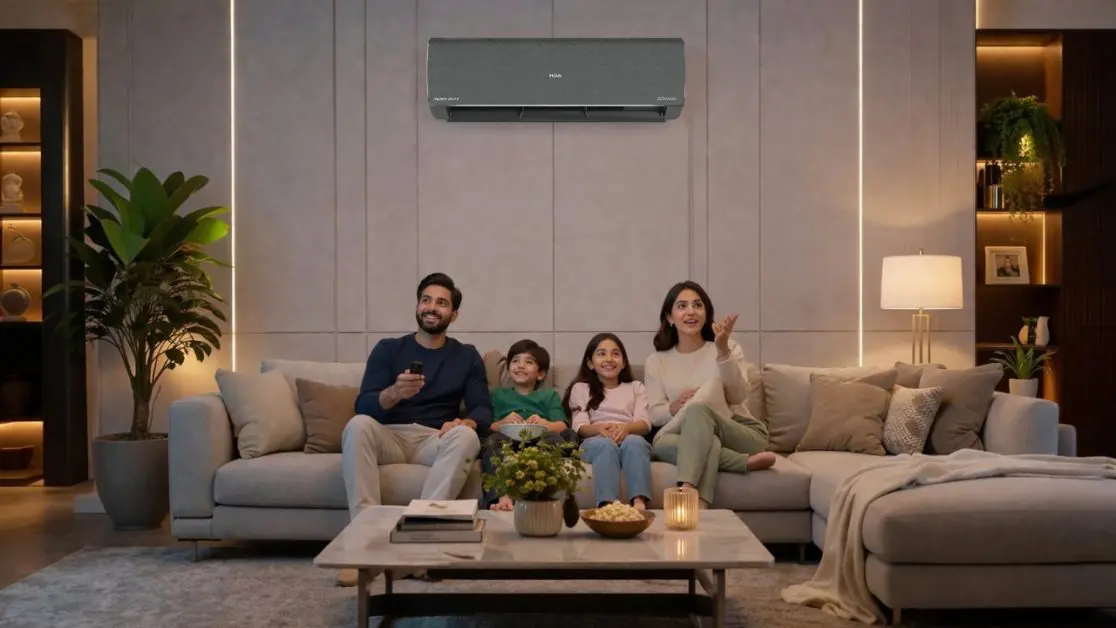
Traditional air conditioners follow a simple rule.
They react.
You turn them on. They cool the room.
Smart ACs follow a different rule.
They predict.
Instead of waiting for instruction, the technology observes patterns.
- When you usually return home
- How long cooling typically runs
- Which temperature you prefer at night
- Whether the room is occupied
Over time, the AC builds a small behavioral model.
Not technology.
Of your life.
That is the hidden technology behind smart cooling.
How Smart ACs Learn Your Daily Routine
Smart ACs rely on several AI-driven features that quietly study patterns and environmental signals.
Haier’s AI-powered climate technology, for instance, combines machine learning, sensors, and environmental data to adapt cooling automatically.
The technology analyzes multiple signals:
| Data Signal | What It Tells the AC |
| Time of day | When cooling is usually needed |
| Temperature changes | Outdoor heat patterns |
| Room occupancy | Whether someone is present |
| Usage duration | How long cooling typically runs |
| Power consumption | Energy efficiency patterns |
The result feels simple.
But the technology underneath is complex.
It learns. Adjusts. Improves.
And then it quietly disappears into the background.
Smart Cooling Begins Before You Arrive Home
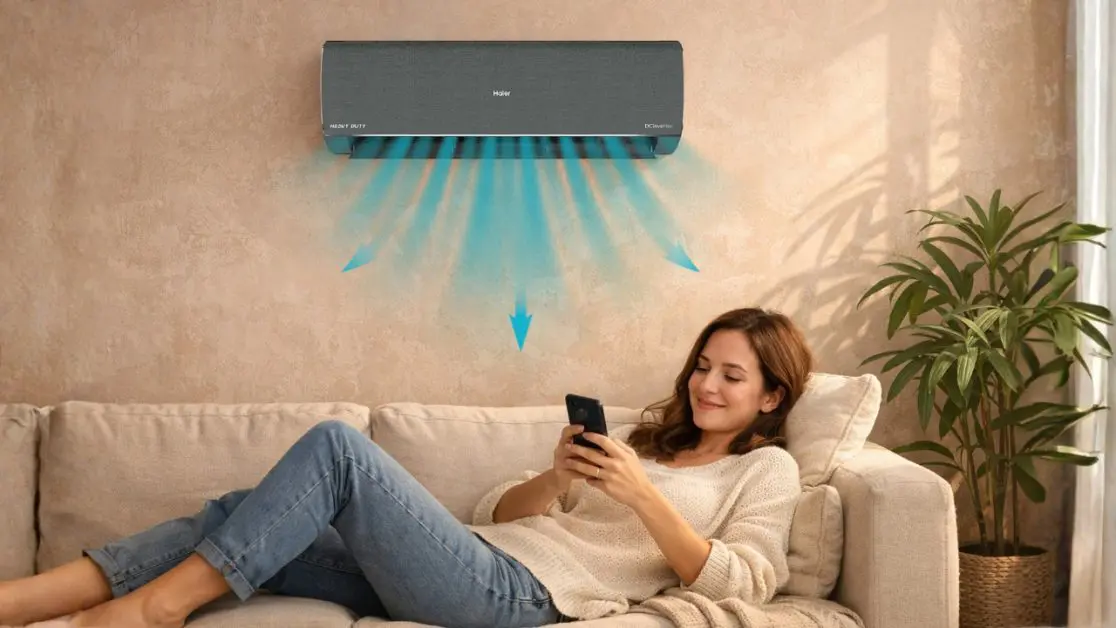
One of the most fascinating features of modern AI-powered air conditioners is pre-cooling.
Instead of waiting for you to switch the AC on, the technology anticipates your arrival.
For example:
- The AC detects when your smartphone enters a preset geofence near your home.
- The technology predicts room occupancy.
- Cooling begins automatically before you enter the room.
So when the door opens, comfort is already waiting.
According to Haier’s AI climate technology, AI pre-cooling predicts user arrival and automatically cools the room in advance, ensuring comfort without manual setup or timers.
This small change transforms the experience.
Comfort becomes proactive.
Targeted Cooling Instead of Wasted Cooling
Cooling an empty room wastes energy.
Cooling the entire room when only one corner is occupied wastes even more.
Smart ACs solve this through targeted airflow.
AI-powered technology analyzes room layout and airflow direction.
Then they send cooling exactly where it is needed.
For example:
- Toward the sofa during evening relaxation
- Toward the bed during sleep hours
- Toward a work desk during daytime use
According to the AI-Atmox technology, targeted cooling uses installation data and AI cloud analysis to deliver cooling directly to the desired area instead of the entire room.
The idea is simple.
Cool people.
Not empty air.
Human Detection Changes the Energy Equation
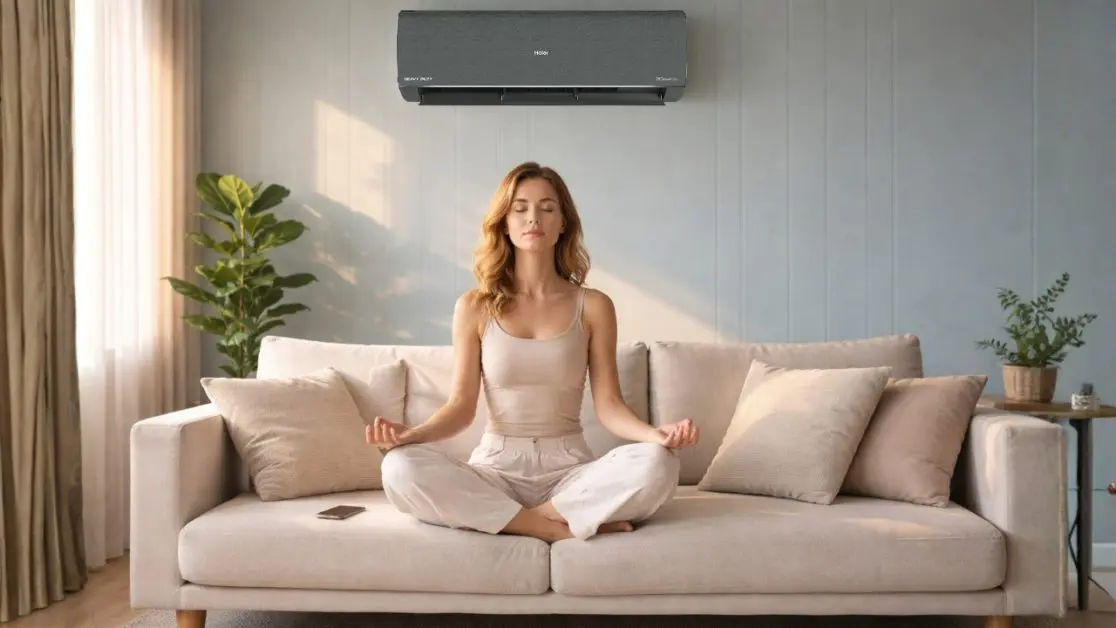
Here is a common scenario.
Someone turns on the AC.
Then leaves the room.
Traditional ACs continue running.
Smart ACs notice the absence.
AI-powered human detection sensors monitor movement inside the room.
If no activity is detected, the technology automatically adjusts cooling or powers down.
The benefit appears small.
But the impact accumulates.
According to Haier’s AI energy management technology, occupancy detection automatically reduces power usage when a room becomes empty.
Small automation. Large energy savings.
Three Everyday Situations Where Smart ACs Learn Your Routine
Patterns reveal themselves through repetition.
Smart cooling works best in everyday moments.
1. The After-Work Arrival Pattern
Most working professionals return home within a predictable window.
A smart AC observes this pattern.
Cooling begins slightly before the usual arrival time.
Benefit:
- Instant comfort
- No waiting for the room to cool
2. The Night Cooling Pattern
Sleep temperatures are usually different from evening temperatures.
Smart ACs learn preferred night settings.
Then they automatically shift to sleep-friendly cooling modes.
Benefit:
- Better sleep comfort
- Reduced overnight energy use
3. The Weekend Relaxation Pattern
Weekends follow different rhythms.
Later mornings. Afternoon naps. Movie nights.
Smart ACs adapt to these changes by learning weekend behavior separately.
Benefit:
- Cooling matches real life patterns
This is not automation for the sake of technology.
It is automation designed around human routines.
Electricity monitoring 2.0 Makes Cooling Visible
Another invisible benefit of smart ACs is awareness.
Traditional ACs hide electricity usage.
Smart ACs reveal it.
Advanced technology now track:
- Daily energy consumption
- Monthly cooling costs
- Eco vs normal operating time
- Custom energy-saving targets
According to Haier’s Electricity monitoring 2.0 technology, users can view energy consumption through graphical dashboards and calendar tracking for better awareness.
When people see usage patterns, behavior changes.
Energy efficiency becomes a visible habit.
Smart Cooling technology Balance Comfort and Savings
Most households believe they must choose between comfort and electricity savings.
That assumption is outdated.
AI cooling technology now balances both simultaneously.
They achieve this through three mechanisms:
- Environmental sensing
Sensors track room temperature, humidity, and outdoor conditions. - Machine learning models
The technology builds a personalized consumption model based on user habits. - Dynamic cooling adjustment
Cooling power adjusts continuously for optimal comfort and energy efficiency.
The technology essentially asks one question repeatedly.
What is the least energy required to keep this person comfortable?
Then it adjusts accordingly.
Why Routine-Aware Cooling Matters in Indian Homes
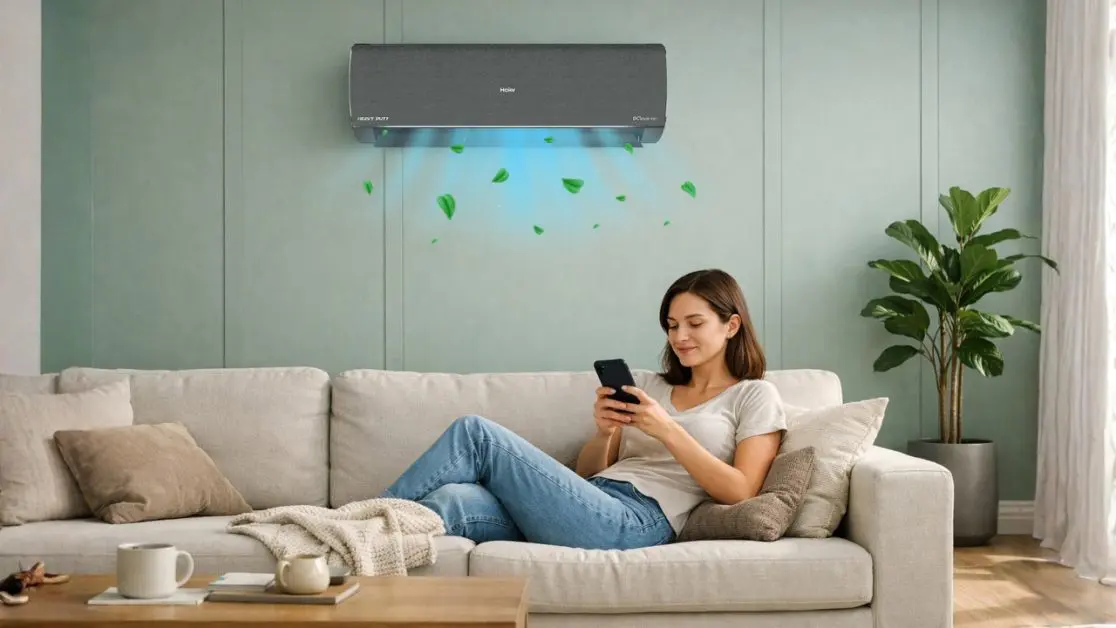
India’s climate creates unique cooling challenges.
- Long summers
- Rising electricity costs
- Urban apartments with limited ventilation
- Remote work and hybrid schedules
These factors increase AC usage.
Smart air conditioners solve this not by running harder.
But by running smarter.
Predictive cooling reduces unnecessary runtime.
Targeted airflow reduces energy waste.
Human detection prevents empty-room cooling.
Small efficiencies multiply across the year.
The Hidden technology Behind Smart Living
Smart homes are often described as futuristic.
But the real change is quieter.
Smart appliances remove friction.
They eliminate the small tasks we repeat every day.
Turning on cooling. Adjusting temperature. Monitoring electricity.
A smart AC anticipates these decisions.
And make them automatically.
The best technology behaves this way.
Invisible.
Reliable.
Quietly helpful.
Where Haier’s AI Climate Technology Fits In
Modern air conditioners such as Haier’s AI-powered cooling technology are designed around this philosophy.
The AI-Atmox platform integrates multiple intelligent features including:
- AI Climate Control
- AI Pre-Cooling
- AI Target Cooling
- AI Eco 2.0 energy optimization
- AI Human Detection
- Electricity monitoring 2.0 dashboards
Each feature solves a small everyday problem.
Together they form a technology that learns, adapts, and optimizes cooling automatically.
The Real Insight: Comfort Is Becoming Predictive
Cooling technology used to respond to commands.
Now it responds to patterns.
Your daily routine becomes the input.
Your comfort becomes the output.
And the AC quietly handles the rest.
That is the deeper shift.
The smartest appliances do not ask for attention.
They remove the need for it.
And when technology reaches that point, it stops feeling like technology.
It simply feels like home.
Frequently Asked Questions
Do I still need to manually turn on my AC every day when I get home?
Not really. Smart ACs learn your return patterns and can start cooling before you arrive, removing that daily decision entirely.
I’m tired of adjusting the temperature every night. Can a smart AC handle that for me?
Yes. It learns your preferred sleep temperature and automatically shifts settings at night for comfort and efficiency.
Will I lose control if my AC becomes ‘too smart’?
No. You can always override settings manually. The AI just reduces repetitive decisions, it doesn’t replace your control.
How does my AC know when I’ll be home?
It combines past usage patterns with smartphone location (geofencing) to predict your arrival.
What is targeted cooling and does it really matter?
Instead of cooling the whole room, the AC directs airflow to where you are saving energy and improving comfort.
Can I see how much electricity my AC is using daily?
Yes. Smart ACs provide dashboards showing daily/monthly usage and cost insights.
Is this actually AI or just marketing?
It’s real AI using machine learning models, sensors, and usage data to continuously improve performance.