
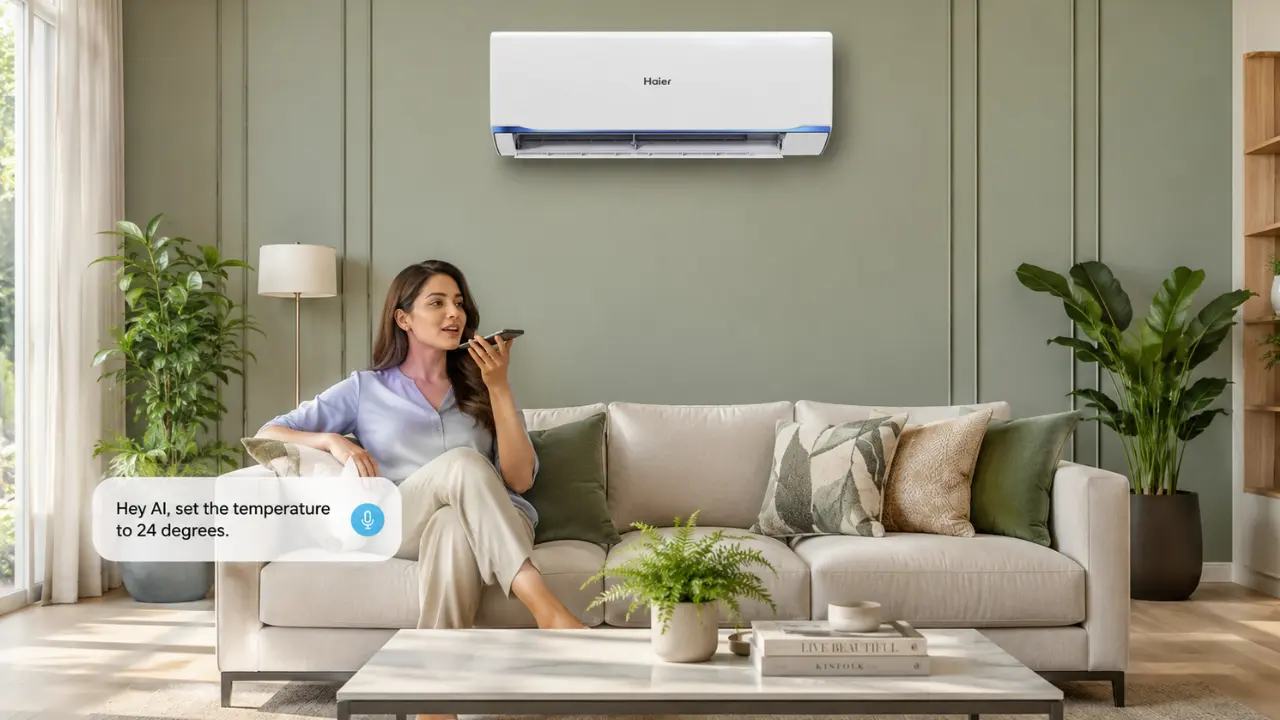

Personalized cooling is not about lowering temperature faster. It is about matching cooling behaviour to how people actually live.
Haier India delivers this by combining intelligent sensors, adaptive inverter technology, airflow design, and user-driven controls to create cooling that responds to room conditions, usage patterns, and individual comfort preferences.
Why does the same AC feel different in every home?
Walk into two identical bedrooms in May.
Same city. Same temperature outside. Same AC tonnage.
One feels perfectly comfortable. The other feels cold and uncomfortable.
What changed?
Not the machine. The system around it.
- Room size and ceiling height
- Sunlight exposure through windows
- Number of people inside
- Usage timing (day vs night)
- Humidity levels
Cooling is not a product. It is an interaction.
This is where most air conditioners fall short. They cool the air. They don’t understand the environment.
Personalization starts where standard cooling fails
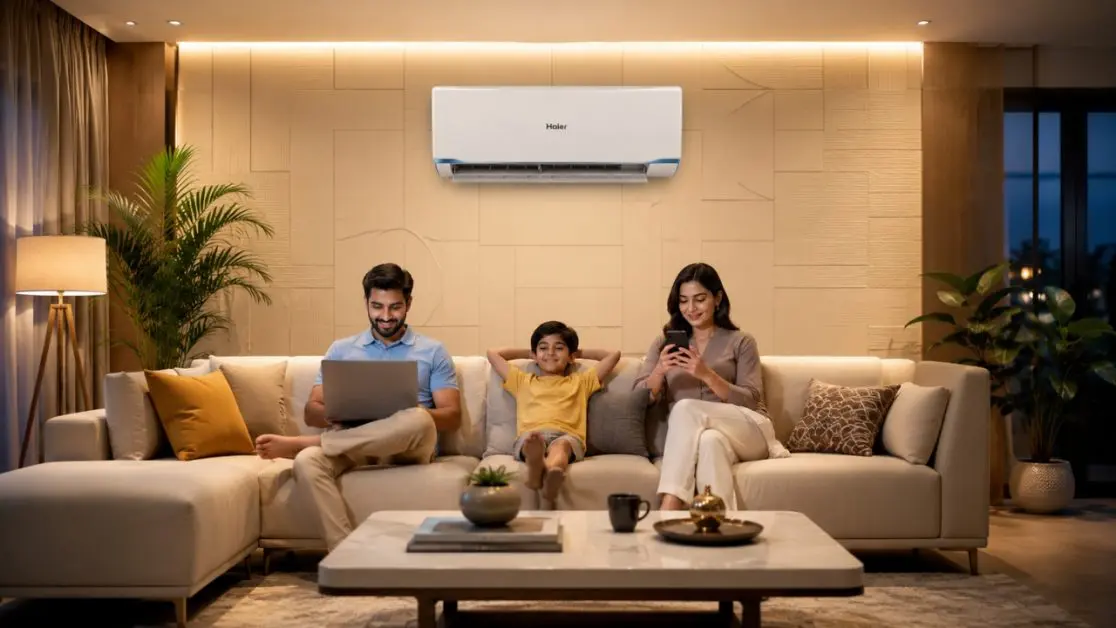
Traditional cooling works on a simple assumption: set a temperature, maintain it.
But real life doesn’t behave like a thermostat.
Three common gaps in traditional AC usage
- Overcooling at night
The room becomes too cold because the AC doesn’t adjust as your body temperature drops. - Uneven cooling across the room
One corner feels comfortable, the other remains warm. - Energy waste during low usage
The AC runs at full capacity even when fewer people are in the room.
That insight changes everything.
So how does Haier approach personalized cooling differently?
It treats cooling as a dynamic system, not a fixed output
Instead of asking, “How fast can we cool the room?”, the better question is:
“How should cooling behave over time?”
Four pillars behind personalized cooling
1. Adaptive Inverter Technology adjusts in real time
Most modern ACs use inverter compressors. But the difference lies in how intelligently they adjust.
- Compressor speed changes based on heat load
- Power consumption reduces during stable conditions
- Cooling remains consistent instead of fluctuating
Result: steady comfort without sudden temperature swings
2. Intelligent airflow design controls how air moves
Cooling is not just about temperature. It is about where the air goes.
- Multi-directional airflow spreads cooling evenly
- Wide-angle air flow ensures corner coverage
- Adjustable louvers help direct cooling where needed
Think of it like lighting a room. One bulb vs well-placed lights.
Same power. A completely different experience.
3. Smart modes adapt to lifestyle patterns
Different moments need different cooling behaviour.
One option is quick cooling
- Useful during peak summer afternoons
- Rapid temperature drop when entering the room
The second option is sleep mode
- Gradual temperature adjustment through the night
- Prevents overcooling and discomfort
The third option is energy-saving mode
- Maintains comfort with reduced power usage
- Ideal for long usage hours
Choice creates control. Control creates comfort.
4. Sensor-based intelligence reads the room
Sensors bring context into cooling.
- Temperature sensors monitor real-time conditions
- Humidity control ensures air doesn’t feel sticky
- Some systems detect occupancy patterns
What does this look like in real Indian homes?
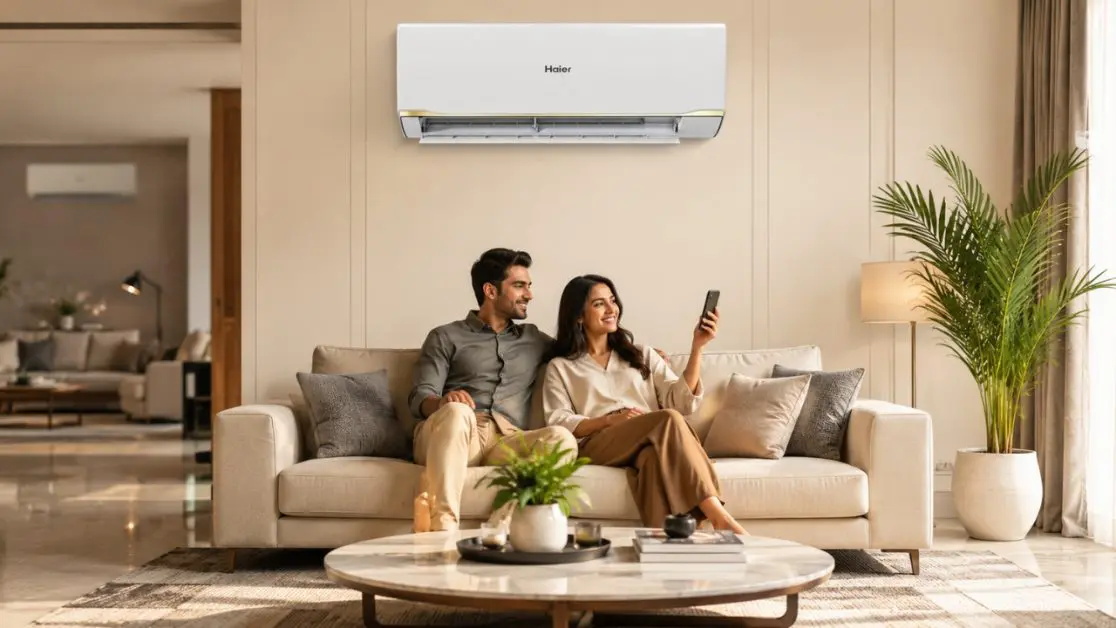
Scenario-based cooling is where personalization becomes visible
1. The late-night bedroom
You fall asleep at 11:30 PM.
At 2:00 AM, your body needs less cooling. A standard AC keeps blasting.
A personalized system adjusts gradually.
- Temperature increases slightly
- Fan speed reduces
- Noise levels drop
You don’t wake up. That’s the point.
2. The afternoon living room
Four people enter after stepping out in 40°C heat.
Immediate need: fast cooling.
- Turbo cooling activates
- Airflow spreads quickly across the room
- Temperature stabilizes faster
Then the system slows down.
Cooling responds to urgency.
3. The work-from-home setup
One person. Closed room. Long hours.
- Stable temperature matters more than speed
- Energy efficiency becomes critical
- Noise reduction improves focus
Personalized cooling shifts priorities.
The hidden system: balancing comfort and efficiency
Every cooling decision has a cost-benefit trade-off
| Cooling Approach | Benefit | Cost |
| Maximum cooling | Fast comfort | High energy usage |
| Constant cooling | Stable environment | Inefficient over time |
| Adaptive cooling | Balanced comfort | Requires smarter systems |
In cooling, excessive power often creates discomfort.
Why Indian homes demand personalized cooling more than ever
Because homes themselves are changing
Modern Indian homes are not uniform anymore.
- Open layouts instead of closed rooms
- Glass windows increasing heat load
- Higher ceilings in urban apartments
- Mixed usage spaces like living + work areas
A one-size cooling approach fails here.
Personalization is not a luxury anymore. It is a requirement.
Where Haier fits into this evolving system
It focuses on how cooling integrates into daily life
Instead of positioning features as specs, the shift is towards usability.
What this translates into practically
- Cooling that adjusts without constant manual input
- Systems that reduce electricity spikes
- Design that blends into modern interiors
- Quiet operation that supports rest and focus
Take models like the Desert Rose series. The design aligns with modern interiors, but the deeper value lies in how the system adapts to usage patterns across different times of the day.
What most buyers still get wrong
They optimise for tonnage, not experience
The common decision framework:
- Bigger AC = better cooling
- Lower temperature = more comfort
Both are incomplete.
A better way to think about it
Ask:
- How does the AC behave after 2 hours?
- Does it adjust at night automatically?
- How evenly does it cool the room?
- What happens to electricity usage over time?
The first 10 minutes of cooling are easy. The next 8 hours define the experience.
A simple framework to choose personalized cooling
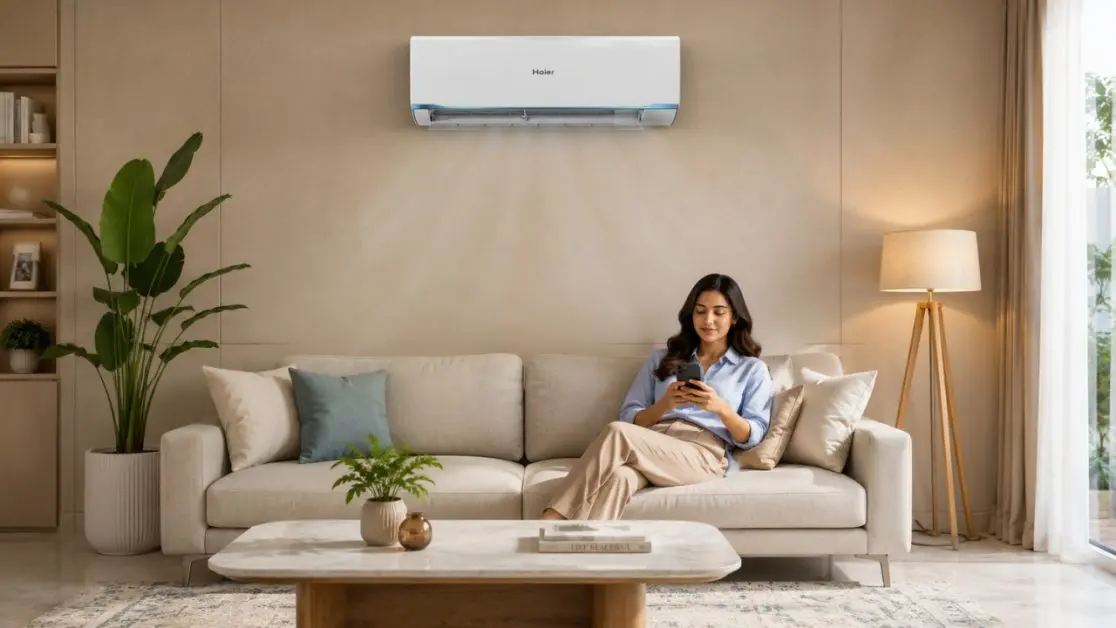
Look beyond specs. Evaluate behaviour.
1. Responsiveness
- Does the AC adapt to changing room conditions?
2. Stability
- Does it maintain consistent comfort?
3. Efficiency
- Does it reduce unnecessary power usage?
4. Control
- Can you switch modes easily based on need?
The larger idea: comfort is a system, not a setting
Most people think comfort comes from setting 24°C.
It doesn’t.
Comfort comes from how the system behaves around that setting.
- How fast it reaches there
- How it maintains it
- How it adjusts over time
Temperature is just a number. Experience is everything around it.
So what changes for you?
You stop chasing “more cooling”.
You start choosing better cooling behaviour.
That shift changes:
- How you sleep
- How you work
- How much you spend on electricity
- How your home feels throughout the day
Final thought
The future of air conditioning is not colder rooms.
It is a smarter environment.
And the brands that win will not be the ones that cool the fastest, but the ones that understand how people live inside those rooms.
That is where personalized cooling begins.
Frequently Asked Questions
What is adaptive inverter technology?
Adaptive inverter technology continuously adjusts compressor speed based on real-time cooling demand, improving comfort and energy efficiency.
How do sensors contribute to personalized cooling?
Sensors monitor room temperature, humidity, and other environmental conditions, allowing the system to make real-time adjustments.
What is the benefit of smart cooling modes?
Different modes optimize cooling for specific situations such as sleeping, rapid cooling, or energy-efficient operation.
Can an AC automatically adjust itself without constant manual changes?
Yes. Personalized cooling systems are designed to adapt automatically based on room conditions and usage patterns.
How does intelligent airflow improve comfort?
Intelligent airflow helps eliminate hot spots, improves room-wide temperature consistency, and directs cooling where it is needed most.
Why is humidity control important in air conditioning?
Humidity significantly affects perceived comfort. Managing humidity helps rooms feel cooler and more comfortable even at moderate temperatures.