
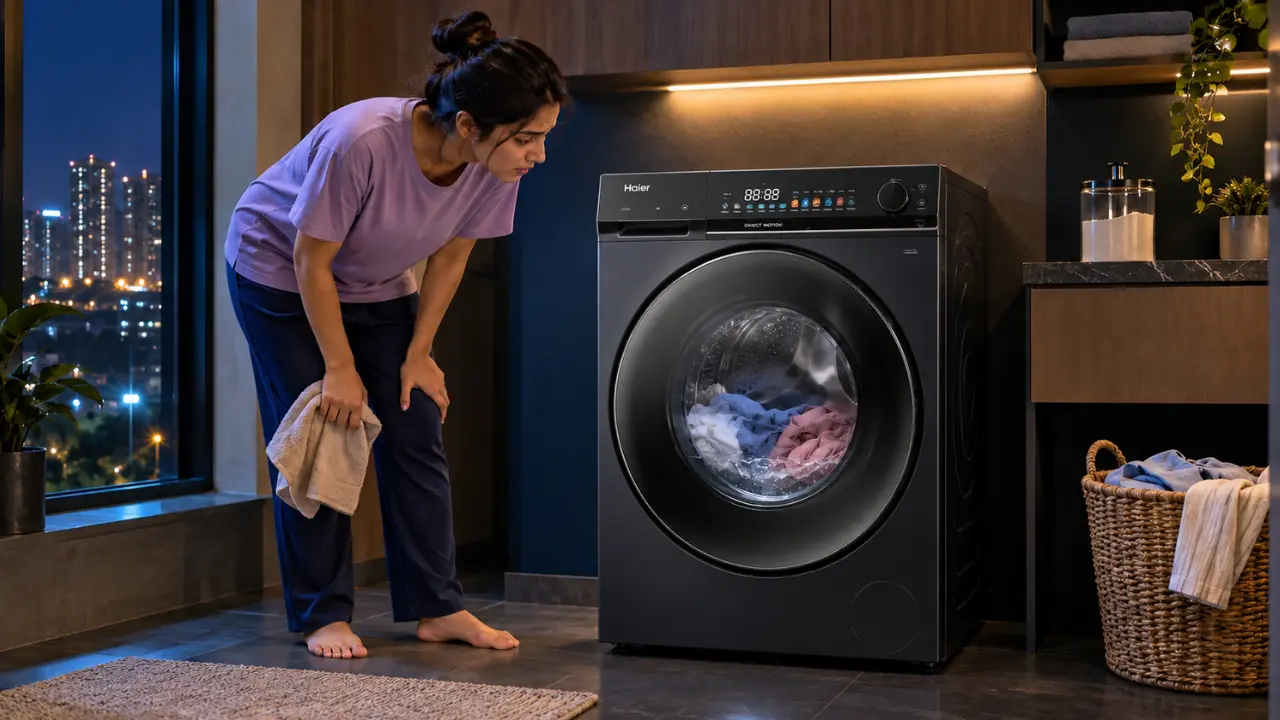

The washing cycle is now finished. The machine stops, the clothes are ready to come out, and then you notice something unusual. Water is still left at the bottom of the drum.
Perhaps it’s just a small puddle. Or perhaps there is sufficient water left to keep your clothes wet.
Regardless, water that stays in the washing machine after the wash is finished is definitely something you don’t want to overlook, especially if it occurs on a regular basis.
The reassuring part? This doesn’t always imply that your washing machine has to be repaired with an expensive repair service. The issue may be as simple as a clogged filter or a kinked drain hose.
Knowing how your washing machine works to get water out, and what could get in the way, can help you figure it out before it becomes a bother.
Why Does Water Stagnate in a Washing Machine?
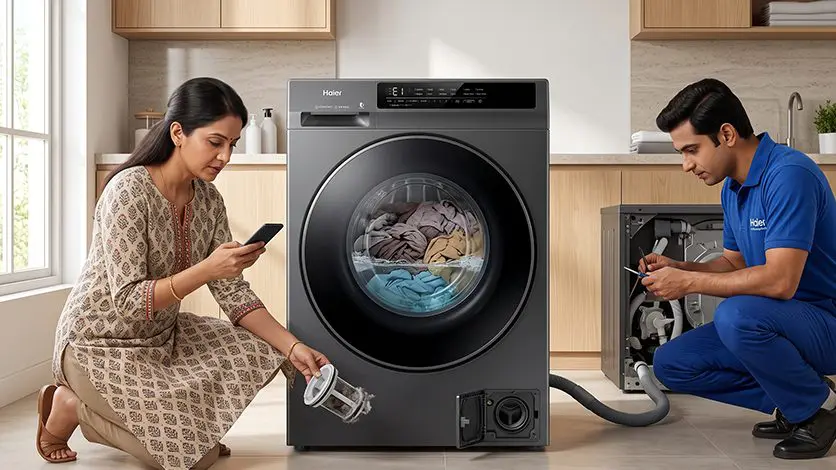
There may be water trapped within some of the parts of a washing machine after it is finished. This is typically part of the appliance’s drainage system.
But that’s a different story if you can see water in the drum at the end of the programme.
Your washing machine has a programme that drains the old water at certain points in the wash. Most front-load washing machines drain the water before spinning, allowing the clothes to be spun effectively.
If drainage is not performed properly, one might notice:
- Water accumulates at the bottom of the drum.
- Clothes being extremely damp after spinning.
- The washing machine ceases to run before the programme is finished.
- Drainage gurgling noises.
- Excessively slow water draining.
- A message on the control panel indicating an error.
These symptoms may help indicate a blockage in the drainage system, an interrupted cycle or a mechanical issue.
The important thing is to identify which one you’re dealing with.
6 Reasons Your Washing Machine Is Not Draining Water Properly
1. The Drain Hose Is Bent or Blocked
Consider the easiest possibility first.
The drain hose is used to drain used water from the washing machine into the household drainage system. When twisted, compressed or blocked, water may be prevented from flowing out.
This is especially important in Indian homes where washing machines are housed in small rooms, laundry balconies or narrow laundry areas.
The hose may be accidentally bent in some cases by pushing the appliance closer to the wall.
What should you look for?
- Check for obvious kinks or bends in the drain hose.
- Look to see if furniture or the appliance is touching it.
- Make sure the hose is installed as per the instructions.
- Check accessible connections for any obvious obstructions.
Avoid pulling the hose forcefully or disconnecting plumbing connections without taking the necessary precautions.
Sometimes, a simple positioning problem can account for water being in the drum.
2. The Drain Pump Filter Needs Cleaning
This is one thing many homes don’t consider.
Small items and fabric fragments can enter the washing machine during normal wash cycles.
Consider all the things that can fall into a washing machine without you noticing, such as coins, loose threads, hair, tissues and an occasional lost receipt.
These materials may build up around the drain pump filter over time.
If the filter gets clogged, the machine might not be able to remove water effectively.
If the washing machine has a user-accessible pump filter, clean it according to the manufacturer’s instructions.
Before beginning:
- Switch off the appliance and disconnect it from the power supply.
- Allow hot water to cool.
- Have towels and a small container on hand.
- Follow the manual’s instructions for releasing residual water.
- Remove accessible debris only as instructed.
Not all washing machines come with a similar filter system; do not dismantle any unfamiliar panels or components.
3. The Washing Machine Load Is Not Balanced
Think about washing one heavy bedsheet with only two lightweight T-shirts.
When the bedsheet absorbs water, its weight becomes quite large. During spinning, such an imbalance may impact the drum’s rotation.
Some washing machines compensate for imbalance by adjusting, decreasing or stopping the spin cycle.
This can result in damp clothing.
But it would be incorrect to assume that an unbalanced load indicates that the machine has not been draining. In addition, the drainage system should be inspected if any water is still in the drum.
To minimise load-related issues:
- Do not wash one heavy article along with only a few other clothes.
- Divide the laundry evenly inside the washing machine.
- Limit the load in accordance with recommendations.
- Select a suitable programme for bedding and heavier fabrics.
Also, a washing machine’s capacity is based on the recommended amount of dry laundry, not wet laundry.
4. The Drain Pump Is Not Working Properly
The drain pump is an integral component that is essential for the washing machine to get rid of dirty water.
During the drainage phase of the machine, the pump aids water flow through the outlet hose.
Drainage may cease or become intermittent if the pump becomes blocked, is damaged or is electrically defective.
These can be signs of:
- Water remains inside the washing machine after washing.
- Buzzing or rattling sounds during draining.
- Frequent stops of the machine before spinning.
- An error displayed during a drainage operation.
If the pump has a problem, it needs to be diagnosed correctly, as similar symptoms can also occur due to a blocked hose or filter.
If these simple checks do not help, have the pump serviced by a professional. Don’t try to dismantle it yourself.
5. The Household Drainage Outlet Is Blocked
However, the washing machine may not be to blame in some instances.
The household drainage outlet might be clogged.
This can happen when detergent residue, lint and other materials build up in drainage pipes.
If the washing machine outlet is connected to the same plumbing system as the bathroom or utility room, a restriction elsewhere in the plumbing system can impact the ability to discharge water.
The water might be backing up around the outlet or draining slowly.
Have the plumbing checked if the household drain is clogged. Do not put harsh chemicals in the washing machine to clean the drains.
6. The Wash Programme Was Interrupted
Not all incomplete drainage cycles are the result of blocked components.
The washing machine may be waiting to end the programme when a power failure occurs, the programme is accidentally paused or the wrong setting is selected.
Always make sure to check the control panel before assuming that something is broken.
Has the programme been fully completed? Does it have a pop-up message? Did the cycle stop?
If the machine has a separate drain or spin programme, follow the user guide to choose the correct programme.
For example, Haier’s F9 front-load washing machine range includes dedicated spin programmes, and the specific programmes offered depend on the model.
These settings may be helpful if a cycle has been interrupted, but they will not remove a physical drainage blockage.
What Should You Do After Water Has Accumulated Inside the Washing Machine?
If you find any standing water, do not repeat the same programme over and over.
Rather, take a logical troubleshooting approach.
Step 1: Check Whether the Programme Has Finished
Check the washing machine’s control panel.
If the cycle has been interrupted, refer to the manual before attempting to resume or restart it.
Step 2: Check the Drain Hose
Look for any apparent bends, compression or incorrect positioning.
Be sure to install the hose according to the instructions given for the appliance.
Step 3: Inspect the Pump Filter
If the model has a user-serviceable filter, clean it as per the manufacturer’s instructions.
Do not open a filter compartment when the machine is running or if hot water might still be in the compartment.
Step 4: Try the Appropriate Drain or Spin Programme
If your model supports it, use the relevant programme once any accessible obstructions have been ruled out.
Avoid repeating a cycle if the machine is leaking, making abnormal sounds or indicating a persistent fault.
Step 5: Contact an Authorised Technician
If water is still accumulating in the drum, it’s best to call a professional washing machine repair service.
If drainage issues occur again and again, it could be a problem with the pump, the sensors, electrical components or internal plumbing.
How Haier F9 Washing Machines Make Everyday Laundry Easier, More Convenient and Faster
If you know about the issues with drainage, it should make troubleshooting easier. Plus, the right washing machine for everyday laundry management will feature practical wash programmes and intelligent controls.
Haier India’s F9 front-load washing machine series combines intelligent washing features, various load capacities and well-thought-out functionality.
If you’re thinking of replacing your washing machine, there are three models that you should investigate.
Haier F9 9Kg Front Load Washing Machine (HW90-DM14F9BKU1)
The Haier F9 9Kg front-load washing machine features smart controls and several washing modes, making it suitable for households that need a 9 kg machine.
It has some remarkable characteristics, such as:
- One-Touch AI Wash, which automatically adjusts washing parameters according to the load and washing requirements.
- Direct Motion Motor for smooth and quiet operation with low vibration.
- AI Colour Panel for an intuitive washing interface.
- Maximum spin speed of 1400 RPM.
- 14 washing programmes, including Spin and Rinse+Spin.
- Night Wash for quiet laundry operation.
Useful flexibility in laundry management after an interrupted cycle can be obtained from the dedicated spin-related programmes.
Haier 10Kg Fully Automatic Front Load Washing Machine (HW100-DM14F9BKU1)
If laundry is done often in a household, it would be better to go for a 10 kg washing machine.
The Haier 10 Kg Fully Automatic Front Load Washing Machine provides intelligent features with practical programme selections.
These include:
- One-Touch AI Wash for automatic wash-setting adjustments.
- Direct Motion Motor for smooth and quiet operation.
- Smart washing functionality.
- Maximum spin speed of 1400 RPM.
- 16 washing programmes, including Spin and Self Clean.
- Extra Rinse functionality.
These features provide useful flexibility in washing clothes for families who wash their clothes regularly, including households managing children’s uniforms and larger quantities of laundry.
Haier 12 Kg F9 Front Load Washing Machine (HW120-DM14F9BKU1)
Often, there is a different laundry problem with larger households.
You could have more laundry to do, more bedding to deal with and less time between laundry days.
The Haier F9 Front Load Washing Machine meets these requirements with increased capacity and intelligent washing functions.
Key highlights include:
- 12 kg washing capacity.
- One-Touch AI Wash.
- Direct Motion Motor.
- AI Colour Panel.
- Maximum spin speed of 1400 RPM.
- Special Spin and Rinse+Spin programmes.
- Night Wash functionality.
- Smart connectivity features.
It is a larger-capacity machine and may be considered by people who have a heavy laundry load, provided they prepare laundry according to garment care labels and appliance instructions.
Importantly, intelligent washing functions do not remove the need for routine maintenance. Proper care of drainage components is still needed.
Simple Habits That Can Help Prevent Washing Machine Drainage Problems
Your washing machine doesn’t require a lot of effort to maintain.
There are a number of common practices that can minimise unnecessary drainage problems.
Check Clothing Pockets
Small objects and coins may get into the washing system and cause blockages.
It only takes a couple of seconds to do a quick check of pockets before loading.
Use the Recommended Detergent
Too much detergent can cause excess foam and residue.
Follow the recommended quantity of detergent to use and choose a detergent that is appropriate for your machine.
Don’t Overfill the Drum
More clothes in one cycle do not necessarily make for greater efficiency!
Overloading may result in washing performance and spinning load distribution problems.
Maintain Access to Drainage Areas
Do not force the washing machine against a wall if it bends or compresses the drain hose.
Follow the Recommended Cleaning Schedule
Follow the instructions in your washing machine’s manual to clean and maintain the filter.
Ongoing maintenance of easily accessible parts can help avoid the build-up of unnoticed debris.
Make Everyday Laundry Easier With Haier India
It’s a problem to handle everyday laundry in the home.
If there is water still in the washing machine, it is likely that there is something wrong: a blocked hose, an interrupted programme or a drain component that needs to be serviced.
Solve the problem early to avoid unnecessary inconvenience and support reliable washing performance.
The F9 front-load washing machines by Haier India come with a series of intelligent features like One-Touch AI Wash, Direct Motion Motor technology and dedicated washing programmes on 9 kg, 10 kg and 12 kg models for households looking to replace their old appliances.
Discover Haier India’s F9 washing machine range and select a model that meets your family’s laundry needs, space constraints and regular washing routines.
Frequently Asked Questions
Why Is the Washing Machine Waterlogged After It Has Finished a Cycle?
The usual reasons are that the drain hose is blocked, the pump filter is clogged, the drain pump is faulty or the wash programme is not completed. The first step is to check the programme status and accessible drainage components.
Can I Run a Spin Cycle If the Water Is Still in the Washing Machine?
If your appliance has a separate drain programme or a spin programme, you can follow the instructions provided by the manufacturer. If drainage is still not working, however, or there is an error, do not repeatedly start the machine again.
Why Are My Clothes Still Damp After the Washing Machine Has Drained?
Clothes can become overly damp if they are placed in the washing machine with an unbalanced load, if the wrong programme is used or if the washing machine cycle is interrupted. Inspect the chosen settings and redistribute the laundry if suggested by the manual.
How Often Do I Need to Clean My Washing Machine Drain Filter?
The frequency of cleaning depends on the model of the appliance and its use. If your washing machine has a filter, check it when you have drainage issues and follow your washing machine’s maintenance schedule.
Will a New Washing Machine Stop Water Drainage Issues?
Installing a new washing machine may provide newer controls and washing options, but there is no washing machine that is completely immune to drainage problems. Proper installation, loading and periodic maintenance continue to be crucial.