
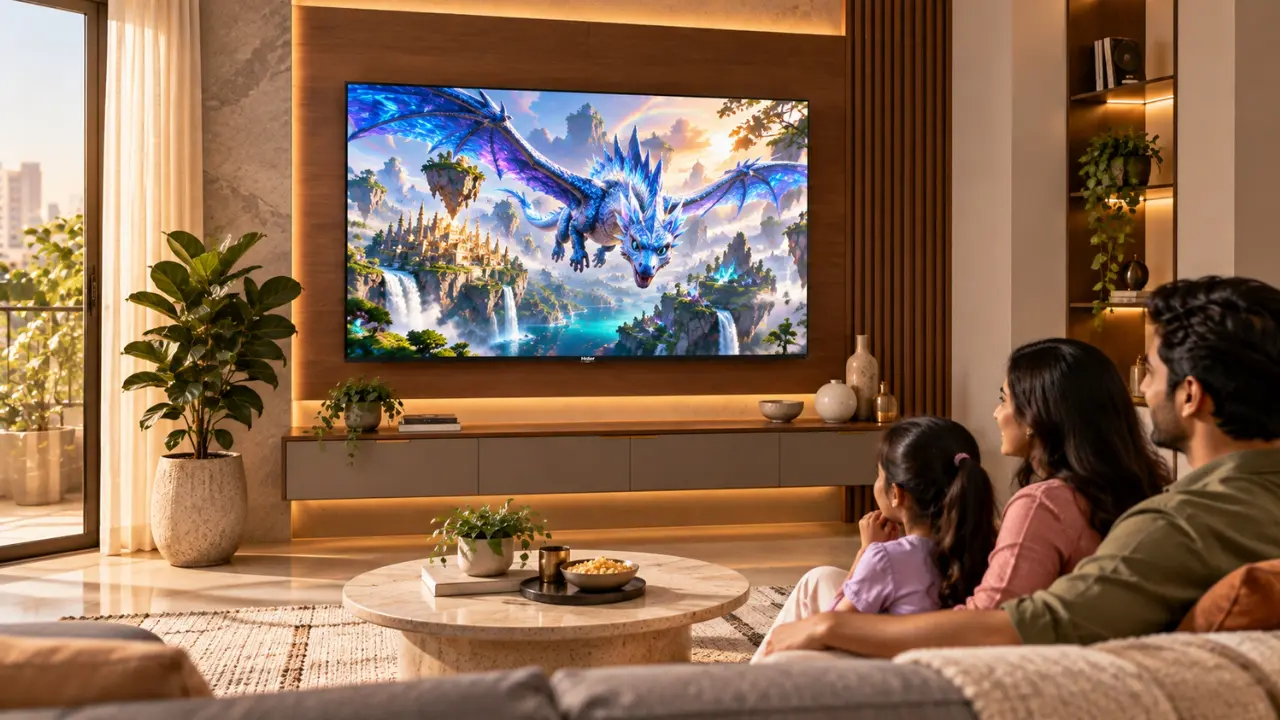

An attractive TV stand can make a significant difference in the look of your living room. However, homeowners sometimes discover too late that the unit is just right, the wall panels look great and the lighting is perfect, but the TV is too high, too small or in the wrong place.
This typically happens when the furniture is given more attention than the television itself.
The design of a TV unit should be planned to accommodate the television comfortably, provide adequate storage and complement the interiors of your home. For Indian households, there may also be another factor to consider: Vastu Shastra.
Whether you are furnishing a new flat or upgrading your home entertainment system, this guide explains how to select the right TV unit size, position your screen and incorporate traditional Vastu preferences while maintaining everyday comfort.
How to Pick the Proper TV Unit Size?
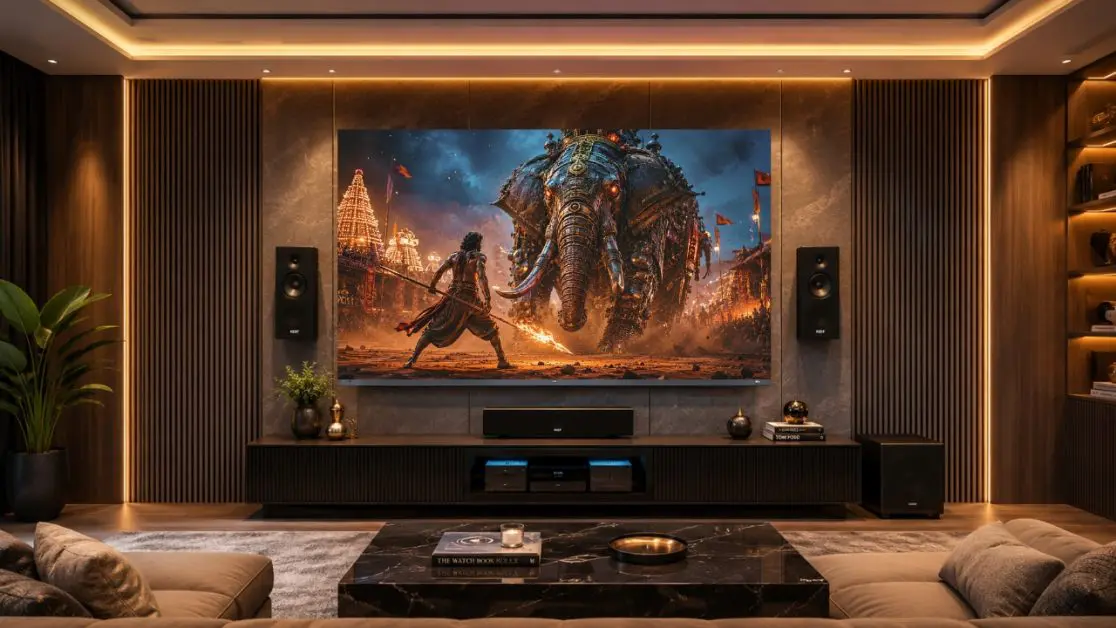
Begin with the TV, not the TV stand.
TV screens are measured diagonally, while TV units are measured horizontally. For example, a 165cm (55) TV does not need a 165cm (55)-wide cabinet.
This distinction is particularly important when ordering a customised wooden cabinet or planning a wall-mounted entertainment system.
Adjust the TV Unit Width to Your Screen
The ideal TV unit generally extends beyond both sides of the television. This helps provide visual balance and space for decorative accessories.
Here are some helpful suggestions:
- 109cm (43) TV: Use a cabinet approximately 48–55 inches wide.
- 165cm (55) TV: Choose a unit approximately 55–65 inches wide.
- 165cm (65) TV: Consider a unit approximately 65–75 inches wide or larger.
These are general furniture-sizing suggestions, not mandatory installation dimensions. Always check the actual width, stand footprint and available space of your television before finalising the cabinet.
The Haier S80G QLED 109cm (43) Google TV (H43S80GUX), for instance, measures approximately 95.7 cm wide, according to the supplied product specifications. It may be suitable for smaller living rooms where a compact entertainment setup is preferred.
The Depth of the TV Unit Is Important, Too!
Depth becomes particularly important when placing the television on a tabletop stand.
The cabinet must adequately support the TV stand without allowing the base to extend beyond its edges.
Consider the additional equipment you may need to accommodate:
- Set-top boxes and streaming devices
- Gaming consoles
- Soundbars and audio equipment
- Wi-Fi routers
- Remote controls and accessories
Although a shallow floating shelf may look attractive, it may not provide enough room for all your equipment.
What Is the Best Height for a TV?
One common mistake is mounting a television at the same height as a painting.
A television is designed to be viewed for extended periods, usually while sitting on a sofa. Therefore, the centre of the screen should generally be close to eye level when seated.
A seated eye height of approximately 95–110 cm from the floor can serve as an initial reference in many living rooms, although the ideal height depends on the sofa and the viewer.
How to Find the Correct Height
Before mounting the television:
- Sit on your sofa in your usual viewing position.
- Measure your eye level from the floor.
- Mark the measurement on the wall.
- Position the centre of the television close to that mark.
- Check the viewing angle before drilling or installing the wall bracket.
A slightly higher installation may work in certain rooms, but avoid placing the television unnecessarily close to the ceiling.
This also applies to mounting a TV above a tall decorative feature simply because the wall appears empty.
How Far Should You Sit From Your Television?
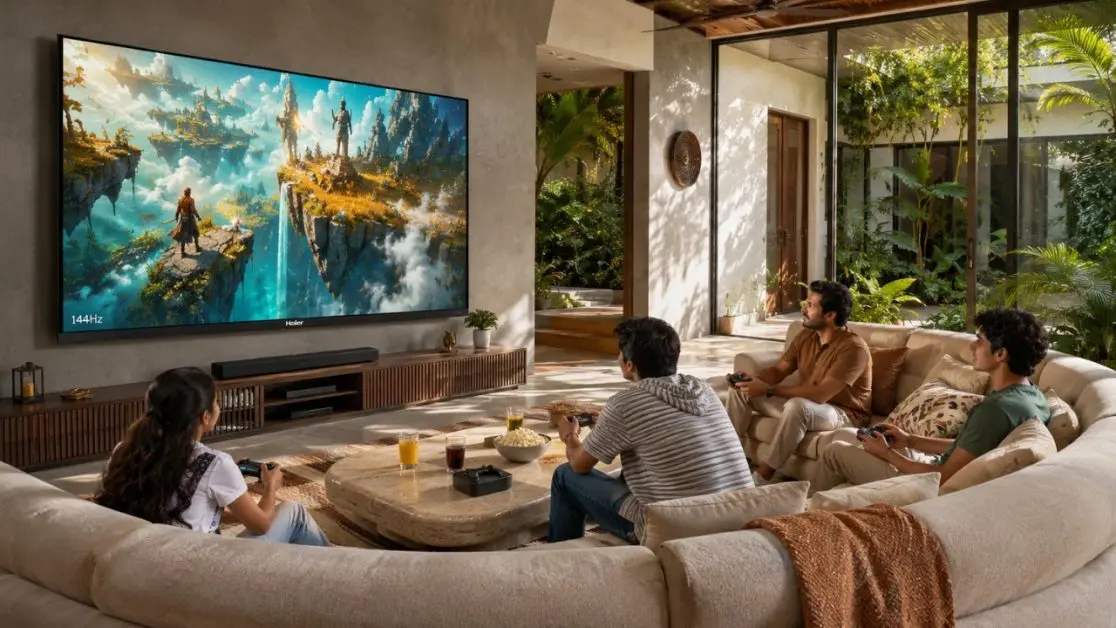
Viewing distance depends on screen size, resolution and personal comfort.
Modern 4K televisions allow viewers to sit closer to the screen than many older, lower-resolution televisions without noticing individual pixels as easily.
As a practical starting point:
- 109cm (43) TV: Approximately 1.3–1.8 metres.
- 165cm (55) TV: Approximately 1.7–2.3 metres.
- 165cm (65) TV: Approximately 2.0–2.7 metres.
These are suggested ranges rather than fixed rules.
If your sofa is approximately two metres from the TV wall, a 165cm (55) television may provide a comfortable viewing experience without requiring an unusually large living room.
The Haier S80G QLED 165cm (55) Google TV (H55S80GUX) offers a 4K UHD QLED display, HDR10 support, Dolby Audio and Google TV, according to the supplied product information.
The model also lists DLG 120 Hz and Variable Refresh Rate (VRR) features. These may be relevant to viewers interested in sports and gaming. Its listed native refresh rate is 60 Hz, so DLG 120 Hz should not be confused with the native refresh rate.
What’s the Best Wall for a TV in the Living Room?
The largest wall is not necessarily the best location for your television.
Choose a position that provides a clear view from the main seating area, minimises reflections and allows safe, convenient access to electrical connections.
Don’t Position the TV Directly Across From Large Windows
Balconies and large sliding doors bring natural light into Indian homes, making living rooms feel brighter and more welcoming.
However, direct sunlight and reflections can make television viewing uncomfortable.
Where possible, consider positioning the screen perpendicular to large windows. Curtains or blinds can also help control glare during the late afternoon.
Ensure Electrical Points Are Accessible
When designing an entertainment wall, plan convenient access to power outlets, HDMI connections and other essential ports.
Avoid permanently sealing cables or sockets behind fixed panels without providing access for maintenance.
If the television is wall-mounted, use a compatible wall bracket and ensure that the wall and fixings can safely support the TV’s weight.
Professional installation is recommended, particularly for larger televisions.
Which TV Unit Design Is Most Suitable for Indian Homes?
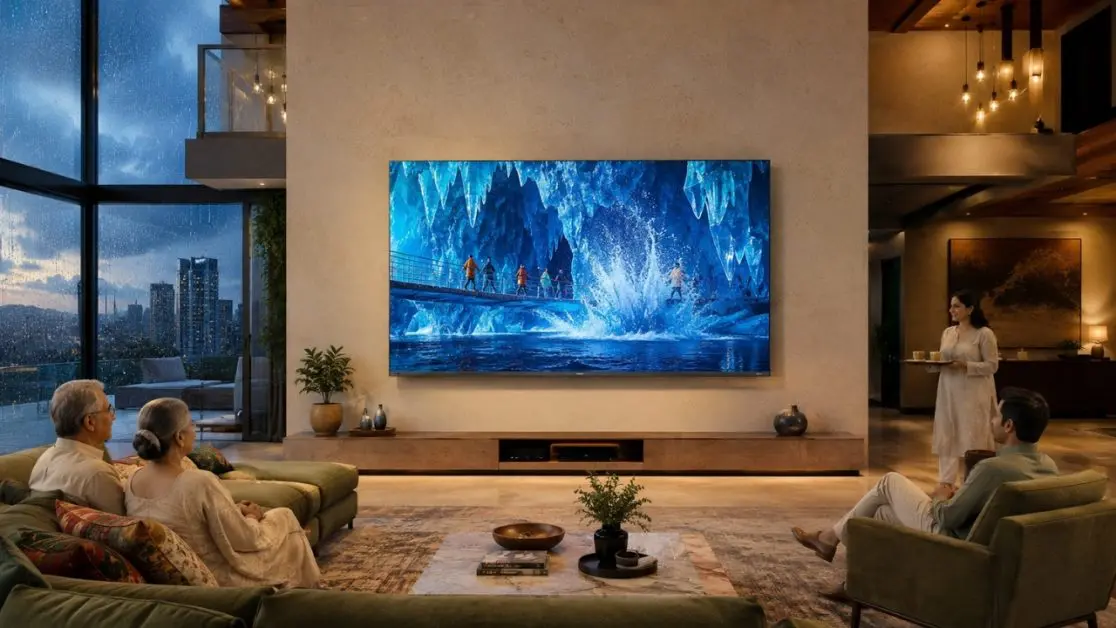
A TV unit should be proportionate to the room and meet the needs of the people using it. An elaborate design is not necessarily the best choice.
1. Floating TV Units for Compact Apartments
Wall-mounted floating cabinets leave the floor visible, helping smaller rooms feel more spacious.
They are particularly suitable for compact urban apartments, where too much furniture can make the living room feel crowded.
Choose a design with secure wall fixings and enough storage for your everyday equipment.
2. Full-Wall Entertainment Units for Large Living Rooms
A large living-room wall can become an attractive focal point with a full-length entertainment unit.
You can incorporate:
- Closed cabinets for accessories
- Open shelves for decorative items
- Concealed cable channels
- Dedicated spaces for audio equipment
- Subtle background lighting
Leave adequate ventilation space around the television and allow for future upgrades.
For a larger television such as the Haier S80G QLED 165cm (65) Google TV (H65S80GUX), careful planning is particularly important.
According to the product specifications, this model has a 165 cm diagonal screen size, 4K UHD QLED technology, HDR10 support and Dolby Audio.
Its larger dimensions make it especially important to check wall support, viewing distance and cabinet proportions before installation.
3. Modern TV Panels for Contemporary Interiors
Sometimes, a television does not need an elaborate entertainment unit to stand out.
A low cabinet or simple wooden panel can complement contemporary interiors without creating unnecessary visual clutter.
The Haier S80G range can be considered for a clean, modern entertainment wall. Choose a panel design that complements your interiors without overwhelming the screen.
What Does Vastu Shastra Say About TV Placement?
Many Indian households consider Vastu Shastra when installing furniture, particularly in newly built or renovated homes.
In traditional Vastu practices, the south-east direction is often associated with electrical appliances because of its connection with fire. Consequently, some Vastu practitioners recommend placing televisions in the south-east area of the living room.
Interpretations vary among practitioners. These recommendations represent traditional cultural beliefs rather than scientifically established requirements.
Common Vastu Tips for TV Units
If Vastu is important to your family, consider these traditional preferences:
- South-east direction: Often recommended for televisions and electrical appliances.
- Clean surroundings: Keep the entertainment area organised and clutter-free.
- Balanced furniture: Avoid oversized cabinets that dominate the room.
- Bedroom placement: Some Vastu traditions recommend keeping televisions away from bedrooms, particularly directly opposite the bed.
The key is to balance personal beliefs with practical installation requirements.
If a wall receives direct sunlight, creates an uncomfortable viewing angle or lacks safe electrical connections, another location may be more suitable.
How Can You Make Your TV Unit Look More Premium?
You do not necessarily need elaborate ceiling designs or expensive marble panels to create a premium-looking entertainment area.
Often, small design choices make the greatest difference.
Choose a restrained colour palette. Warm wood finishes, muted greys and neutral laminates complement many Indian living-room interiors.
Control the lighting. Soft background lighting can create a relaxing atmosphere during evening viewing. Avoid strong lights that reflect directly on the screen.
Manage visible cables. Even a well-designed entertainment wall can look untidy because of loose wires. Plan concealed cable routes while retaining access for maintenance.
Leave breathing space. Avoid overcrowding the television with decorative objects or blocking its ventilation openings.
Plan for future upgrades. If you intend to buy a larger television later, consider whether your current cabinet will accommodate it.
So, Which Haier TV Would You Choose for Your TV Unit?
Once you have determined your furniture dimensions and viewing distance, you can select a television that fits the room.
The supplied Haier India product documents cover three models in the S80G QLED Google TV range, catering to different room sizes and entertainment preferences.
Haier S80G QLED 109cm (43) Google TV: For Compact Spaces
The Haier S80G QLED 109cm (43) Google TV (H43S80GUX) is an option for smaller living rooms and bedrooms. Its compact screen size can work well when space is limited.
Its listed features include:
- 4K UHD QLED display
- HDR10 support
- Dolby Audio
- Google TV
- Google Assistant voice control
- Built-in Chromecast
- Variable Refresh Rate (VRR)
- 2 GB RAM and 32 GB ROM
According to the supplied product specifications, the television measures approximately 957 × 241 × 609 mm with the stand and 957 × 84 × 556 mm without the stand.
Check the installation guide for the exact support and clearance requirements before finalising the cabinet.
Haier S80G QLED 165cm (55) Google TV: For Everyday Family Entertainment
The Haier S80G QLED 165cm (55) Google TV (H55S80GUX) is a suitable option to consider for family movie nights, sports and everyday streaming.
Its listed features include:
- 4K UHD QLED display
- HDR10 support
- Dolby Audio
- Google TV
- Google Assistant voice control
- Built-in Chromecast
- DLG 120 Hz
- Variable Refresh Rate (VRR)
- 2 GB RAM and 32 GB ROM
The listed dimensions are approximately 1227 × 240 × 745 mm with the stand and 1228 × 83 × 718 mm without the stand.
The specifications list a native refresh rate of 60 Hz alongside DLG 120 Hz. These are distinct specifications and should be described separately.
Haier S80G QLED 165cm (65) Google TV: For Larger Entertainment Spaces
The Haier S80G QLED 165cm (65) Google TV (H65S80GUX) is worth considering for spacious living rooms where the viewing distance and wall support are suitable.
Its listed features include:
- 4K UHD QLED display
- HDR10 support
- Dolby Audio
- Google TV
- Google Assistant voice control
- Built-in Chromecast
- DLG 120 Hz
- Variable Refresh Rate (VRR)
- 2 GB RAM and 32 GB ROM
The listed dimensions are approximately 1445 × 290 × 876 mm with the stand and 1445 × 76 × 836 mm without the stand.
Because this model is larger, carefully check the wall’s load-bearing capacity, mounting compatibility, cabinet dimensions and viewing distance before installation.
The supplied product documents list a three-year warranty structure comprising one year of standard warranty and two years of extended comprehensive warranty. Confirm the applicable terms with Haier India before purchasing.
Before buying any model, verify its actual dimensions, installation instructions and compatibility with your chosen TV cabinet.
Design a Comfortable and Attractive Living Room
The best TV unit is not necessarily the most expensive or elaborate one. It is the unit that accommodates your television, fits your living room and supports your everyday needs.
Measure the wall, check the viewing distance and consider lighting, storage and installation before finalising your design.
Once your setup is planned, choose the Haier S80G QLED Google TV size that suits your room and entertainment preferences.
A well-designed entertainment area brings together comfortable viewing, practical storage and a style that complements your home.
Frequently Asked Questions
1. What should be the ideal size of a TV unit?
A TV unit should generally be wider than the television to create visual balance and provide space for accessories. Check the television’s actual dimensions and stand footprint before selecting the furniture.
2. Which direction is best for TV placement according to Vastu?
Some traditional Vastu recommendations favour the south-east direction for electronic appliances. However, these are cultural preferences, and practical factors such as glare, seating position and electrical safety should also guide placement.
3. Is wall mounting better than keeping a TV on a cabinet?
Both arrangements can work well. Wall mounting saves cabinet surface space, while tabletop placement offers flexibility. The right choice depends on wall strength, compatible mounting hardware, furniture stability and viewing comfort.
4. Can a 165cm (65) TV fit in a normal Indian living room?
Yes, provided there is adequate wall space and a comfortable viewing distance. A 165cm (65) 4K television can work in many living rooms, but room layout and seating distance matter more than room size alone.
5. What colour is best for a TV unit?
Neutral shades, natural wood finishes, beige, grey and muted colours are popular choices. Select a finish that complements your existing furniture and avoids distracting reflections around the screen.