
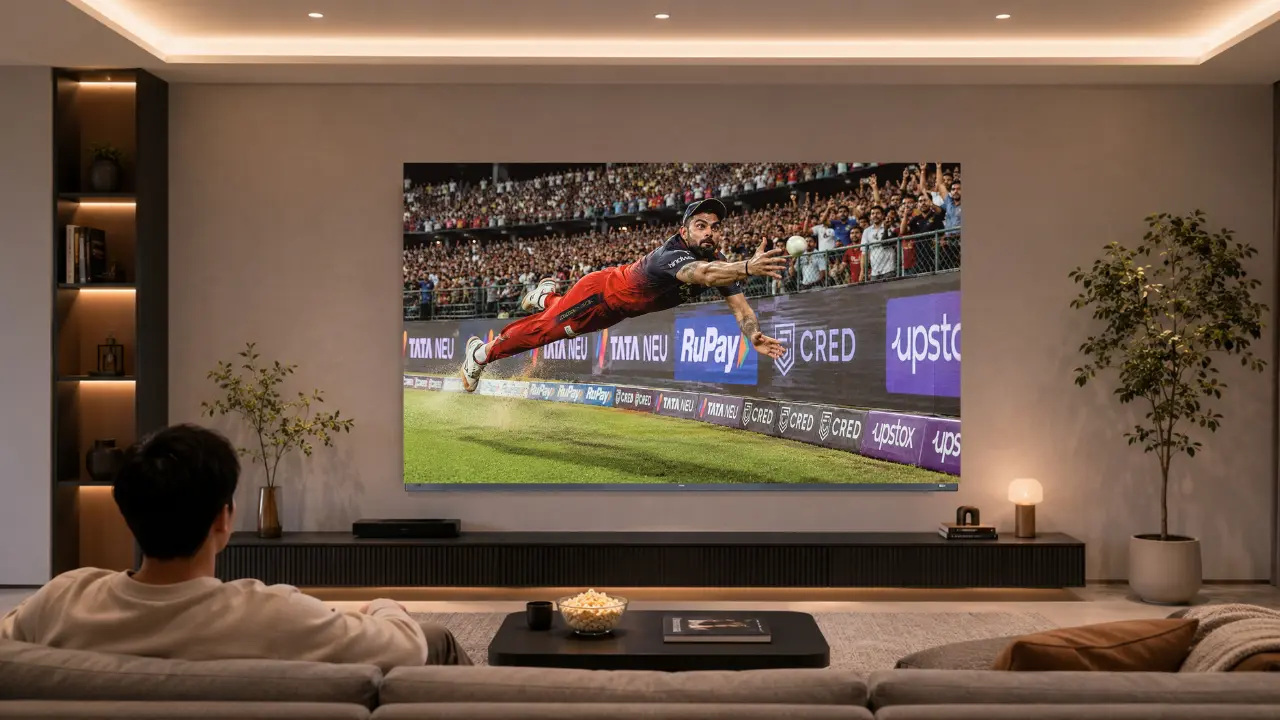

The ideal viewing distance for a big screen TV depends on screen size and resolution. For 4K TVs, sit at roughly 1 to 1.5 times the screen size.
For example, a 189 cm (75) TV feels best from about 6 to 9 feet, while a 254cm(100) screen works well from 8 to 12 feet. Closer enhances immersion. Too close strains the eyes.
Why does viewing distance matter more than screen size?
Picture this.
It is Sunday evening. India vs Australia. The snacks are ready. The room lights are dim. The TV is big.
But something feels off.
The ball looks too fast. The scoreboard feels cramped. Your eyes keep adjusting.
That discomfort is not about the TV. It is about distance.
A TV does not perform in isolation. It performs inside a room.
The hidden system here is simple:
- Screen size decides immersion
- Viewing distance decides comfort
- Resolution decides clarity
Ignore one, and the experience breaks.
What is the ideal viewing distance for big screen TVs?
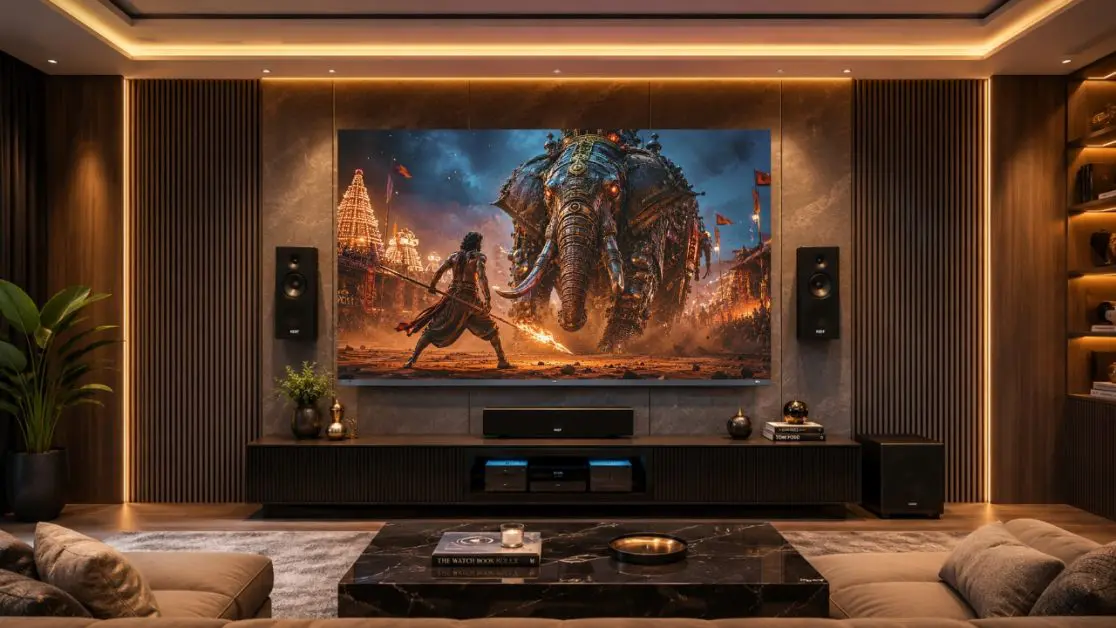
Let’s simplify it.
The basic rule most people follow
- Full HD TVs: 1.5x to 2.5x screen size
- 4K TVs: 1x to 1.5x screen size
Why the difference?
Because 4K has four times the pixels. You can sit closer without noticing pixelation.
More pixels reduce distance anxiety.
Quick viewing distance table
| TV Size | Ideal Distance (4K TVs) |
| 140cm (55) | 5 to 7 feet |
| 165cm (65) | 5.5 to 8 feet |
| 189cm (75) | 6 to 9 feet |
| 215cm (85) | 7 to 10 feet |
| 254cm(100) | 8 to 12 feet |
This is not a rigid rule. It is a starting point.
Your room, lighting, and usage patterns will refine it.
Why bigger screens need smarter placement, not bigger rooms
Most people assume one thing.
A big TV equals a big room.
Not always true.
A modern 189 cm (75) or 215cm (85) 4K TV actually works beautifully in Indian living rooms because you can sit closer without losing clarity.
Take the Haier M80F Mini LED 189cm (75) Google TV (H75M80FUX). Its 4K resolution and Mini LED technology deliver deep contrast and sharp visuals even at shorter distances .
Or step up to the Haier M80F Mini LED 215cm (85) Google TV (H85M80FUX), which offers wide viewing angles and immersive sound, making even mid-sized rooms feel like home theatres .
The insight is simple.
Big TVs are not about size.
They are about how intelligently you use space.
Three ways people get viewing distance wrong
Let’s break this down practically.
1. Sitting too far “to be safe”
This is the most common mistake.
People buy a large TV, then sit 12 to 15 feet away.
Result?
- Lost detail
- Reduced immersion
- Wasted screen real estate
If you sit too far, a big TV becomes a small experience.
2. Sitting too close without the right resolution
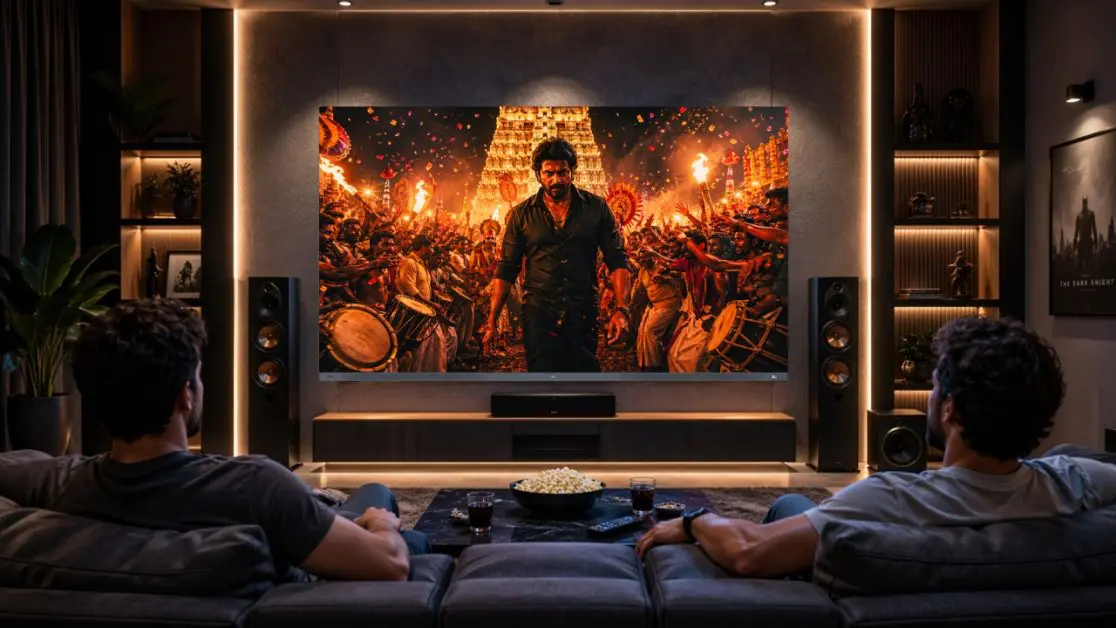
This shows up in older or lower-resolution TVs.
Symptoms:
- Visible pixels
- Eye fatigue
- Motion discomfort
With modern TVs like the Haier M96 Series 254cm (100) QD Mini LED AI Smart Google TV (H100M96FUX), high refresh rates and advanced processing reduce this issue significantly, even at closer distances .
Still, distance needs balance.
3. Ignoring seating layout completely
Indian homes are dynamic.
- One person watches from the sofa
- Another from the floor mattress
- Someone else from the dining table
If your TV placement works for only one angle, it fails the household.
Viewing distance is not one number. It is a range across people and positions.
How to choose the right viewing distance for your home
Forget formulas for a moment.
Think in scenarios.
One option is cinematic immersion
You sit closer.
- Distance: 1x screen size
- Best for: Movies, OTT, gaming
- Benefit: Feels like a theatre
- Cost: Slight eye strain if overdone
This works beautifully with large screens like 215cm (85) or 254cm(100) TVs.
The second option is balanced everyday viewing
You sit moderately far.
- Distance: 1.2x to 1.5x screen size
- Best for: Mixed usage
- Benefit: Comfortable for long hours
- Cost: Slightly less immersive
This is ideal for families.
The third option is relaxed background viewing
You sit farther.
- Distance: 1.5x to 2x
- Best for: News, casual watching
- Benefit: Minimal eye strain
- Cost: Reduced impact
This is common in larger living rooms.
The best choice depends on how you watch, not just what you watch.
What role does technology play in viewing distance?
Not all TVs behave the same.
Modern features actively influence how close you can sit.
1. Resolution
4K allows closer viewing.
- More pixels
- Less visible grain
- Better detail retention
2. Refresh rate and motion handling
Fast action needs clarity.
Features like DLG 120Hz reduce motion blur in sports and gaming .
Closer seating amplifies this benefit.
3. HDR and brightness
High brightness TVs maintain clarity even when you sit closer.
Mini LED panels, like those in Haier TVs, improve contrast and color depth significantly.
4. Audio experience
Distance also affects sound perception.
A TV with integrated audio systems like KEF sound tuning creates a more immersive zone around your seating area .
Visual distance and audio distance must align.
How Indian living rooms shape viewing distance decisions
Here is the reality.
Most Indian homes are not designed like Western home theatres.
They are:
- Multi-purpose spaces
- Furniture-heavy
- Constantly evolving
So your viewing distance becomes a negotiation.
Common Indian setup patterns
- Sofa 7 to 9 feet from TV
- Occasional chairs at angles
- Floor seating during gatherings
This makes one thing clear.
Your TV should adapt to your life, not the other way around.
A simple way to test your ideal viewing distance
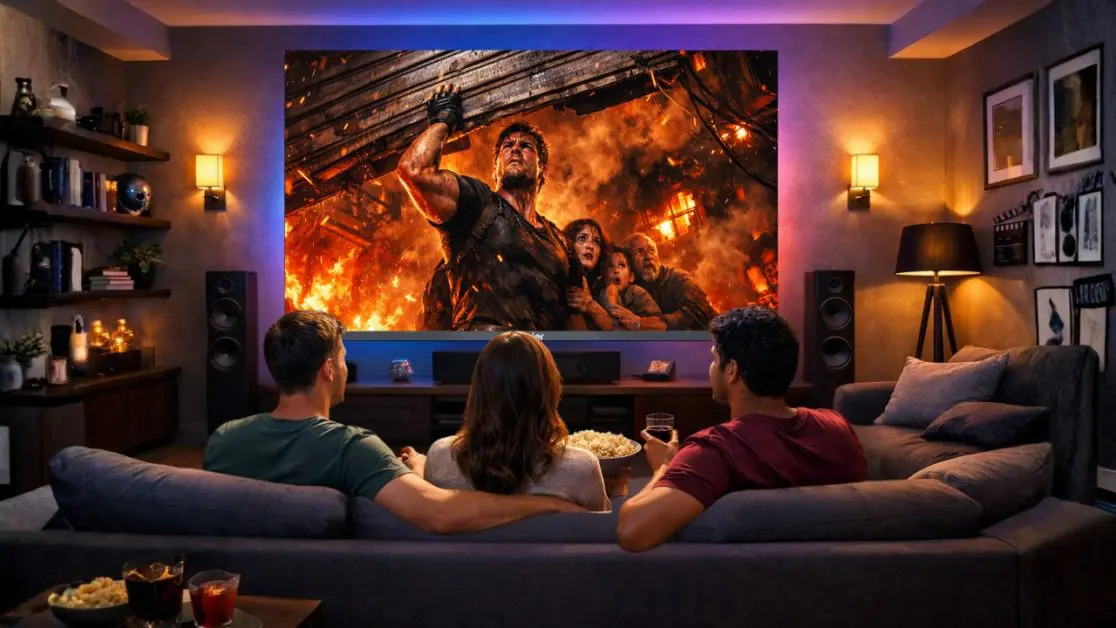
Before finalizing placement, try this.
- Sit at your usual spot
- Watch a fast-moving scene
- Watch a slow dialogue scene
- Notice eye movement and comfort
If you feel:
- Eyes scanning too much → Sit farther
- Details missing → Sit closer
- Perfect balance → You found your distance
Comfort is the most accurate metric.
What changes when you go really big, like 254cm(100)?
Everything.
A 254cm(100) TV is not just a bigger screen. It changes how the room behaves.
With the Haier M96 Series 254cm(100) TV, features like 144Hz refresh rate and AI-powered picture optimisation allow closer seating without compromising clarity .
But the real shift is psychological.
- The TV becomes a focal point
- The room becomes an experience zone
- Watching becomes intentional
At this size, distance is not just technical. It is emotional.
The hidden principle most people miss
Here is the truth.
Viewing distance is not about avoiding discomfort. It is about designing experience.
Think of it like this.
A theatre does not place seats randomly.
A bookstore does not arrange shelves randomly.
Every distance is intentional.
Your home deserves the same thinking.
So what should you actually do?
Keep it simple.
- Start with the 1x to 1.5x rule for 4K TVs
- Adjust based on your seating and habits
- Test with real content, not static screens
- Prioritise comfort over formulas
The takeaway that changes everything
A big TV does not make your room better. The right distance does.
You can have the best display.
Mini LED. Dolby Vision. Immersive sound.
But if the distance is wrong, the experience collapses.
Get the distance right, and even an ordinary evening feels cinematic.
That is the quiet power of thoughtful setup.
And that is where smart homes begin.
Frequently Asked Questions
My living room is small. Can I still buy a 215 cm TV?
Yes. Modern 4K and Mini LED TVs are designed for closer viewing. A well-placed 215 cm (85) TV can work beautifully even in medium-sized Indian living rooms.
Will a big TV overwhelm my room?
Not necessarily. What matters more is viewing distance and wall placement. Many people discover that a properly mounted large TV actually makes the room feel more immersive rather than cramped.
Why does sports content feel uncomfortable on my TV?
Fast-moving scenes like cricket or football expose poor viewing setup quickly. Sitting too close on a lower-quality TV can make motion feel overwhelming.
What is the most comfortable viewing distance for daily family watching?
For mixed usage like news, OTT, YouTube, and sports, sitting around 1.2x to 1.5x the screen size usually feels most natural.
My family watches TV from different places. How do I choose the right distance?
Focus on a viewing range instead of a single fixed seat. Good TV placement should support:
Sofa viewing
Side-angle viewing
Floor seating during gatherings
Does TV height affect viewing comfort too?
Absolutely. A perfectly sized TV can still feel uncomfortable if mounted too high.