
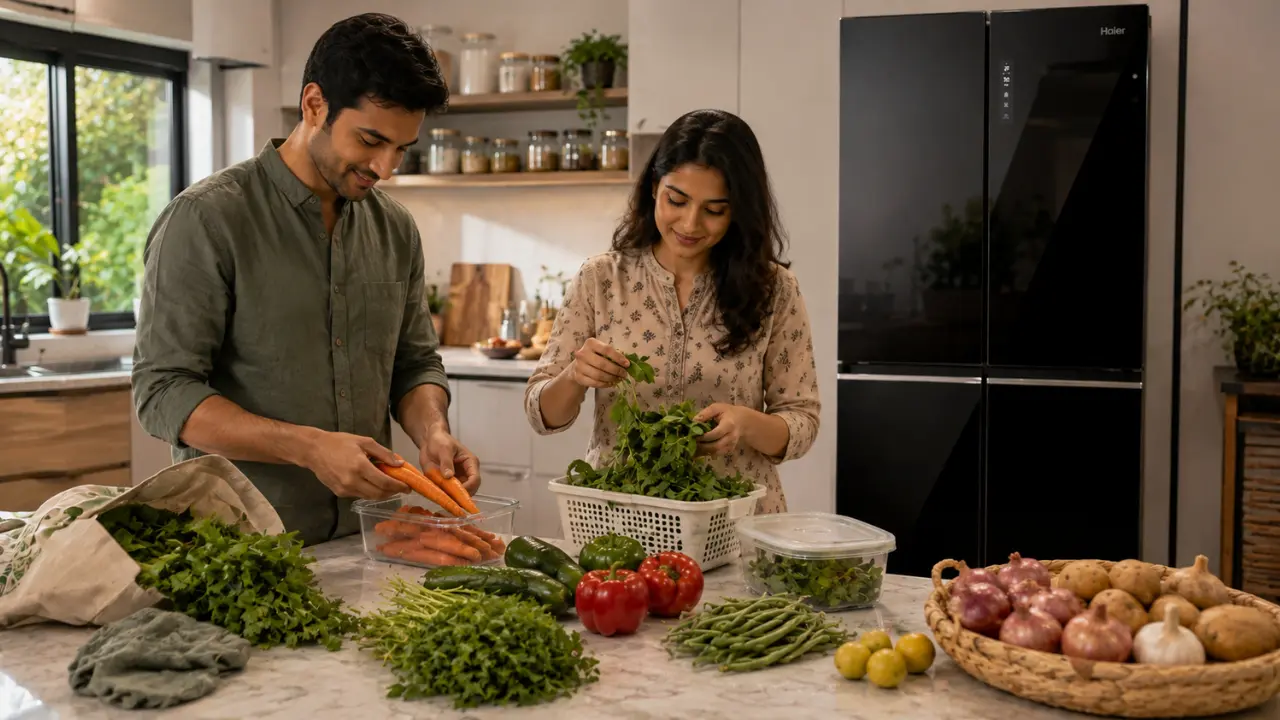

You bought fresh carrots, capsicum, coriander and cucumbers only a few days ago. They went straight into the refrigerator. Yet when it is time to cook, the carrots have lost their snap, the leafy vegetables look tired and that cucumber feels strangely soft.
Why do vegetables become soft in the refrigerator when refrigeration is supposed to keep them fresh?
Cold storage certainly slows many of the changes associated with deterioration, but temperature alone does not decide how well vegetables retain their texture. Moisture loss, storage conditions, airflow and even where produce is placed inside the refrigerator can make a noticeable difference.
For Indian households that routinely store everything from palak and methi to tomatoes, gourds, beans and weekly vegetable hauls, understanding these factors can help reduce unnecessary food wastage.
Soft Vegetables Usually Point to Moisture Loss
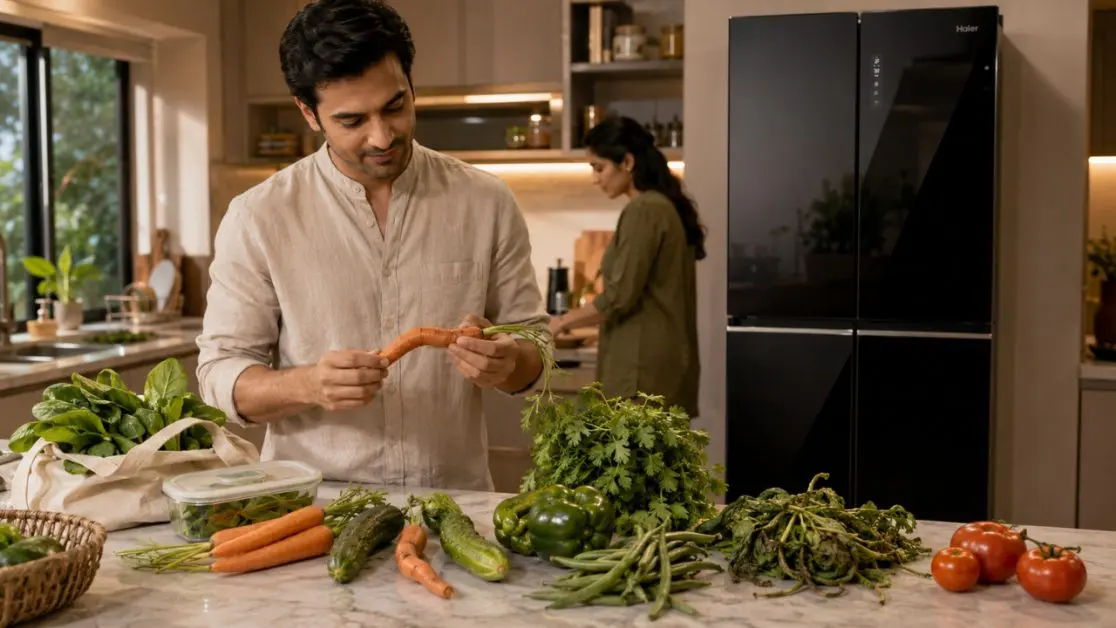
Fresh vegetables contain a considerable amount of water within their cells. That internal moisture helps create what we recognise as freshness: firmness, crunch and structure.
Once vegetables are harvested, however, they do not stop losing moisture.
As water gradually escapes from their tissues, the internal pressure that keeps plant cells firm reduces. The result is familiar:
- Carrots start bending instead of snapping.
- Leafy greens wilt.
- Beans lose their crispness.
- Cucumbers become limp.
- Capsicum may begin to wrinkle.
So, when vegetables become soft in a refrigerator, it does not automatically mean that the appliance is failing to cool properly. Often, the vegetable has simply lost too much moisture during storage.
That distinction matters.
The Refrigerator Is Cold. So Why Does Produce Still Dry Out?
A refrigerator creates a controlled cold environment, but refrigerated air can still encourage moisture to leave exposed produce.
Think about a bunch of coriander left completely uncovered. Its thin leaves offer a large surface area from which moisture can escape. A whole cabbage, by comparison, has tightly packed leaves and a protective outer structure. Naturally, the two will not respond to storage in exactly the same way.
Several everyday habits can accelerate softening.
Leaving Vegetables Uncovered
Placing vegetables directly on an open shelf may expose them to circulating refrigerated air. Delicate greens are particularly vulnerable.
Suitable produce bags, containers or designated vegetable compartments can help create a more appropriate storage environment.
Washing Everything Before Storage
That Sunday vegetable-cleaning session is convenient, but storing produce while it is still wet can create another problem.
Excess surface moisture and internal hydration are not the same thing.
If vegetables are washed before refrigeration, they should generally be dried properly before being stored. Leafy vegetables, in particular, benefit from careful handling rather than being packed away dripping wet.
Keeping Cut and Whole Vegetables Together
Once a vegetable is cut, its protective outer surface has been broken.
A whole capsicum and half a capsicum therefore have different storage needs. Cut vegetables should be kept properly covered in suitable food-storage containers instead of being treated exactly like intact produce.
Your Storage Location Matters More Than You May Think
Not every part of a refrigerator serves exactly the same purpose.
The main shelves are useful for a broad range of foods, while dedicated produce storage can provide a more suitable space for fruits and vegetables. This is why simply finding an empty corner and pushing a vegetable packet into it is not always the best approach.
A few practical habits help:
- Use the designated vegetable storage area for fresh produce.
- Avoid crushing delicate greens beneath heavier vegetables.
- Keep vegetables away from areas where they may accidentally freeze.
- Do not pack produce so tightly that organisation becomes difficult.
- Separate damaged vegetables from healthy ones promptly.
There is also a simple household rule worth following: use the older vegetables first.
It sounds almost too basic to mention, yet forgotten produce at the back of a crowded refrigerator is a common source of waste.
Not Every Soft Vegetable Has Spoiled
This is where texture can be misleading.
A vegetable losing some firmness does not necessarily mean it has become unsafe. Softness can result from dehydration and ageing, while spoilage may involve other visible or sensory changes.
Before using older produce, check its overall condition carefully. Significant discolouration, mould, unusual smells or obvious decomposition should not be ignored.
And yes, freshness still starts before the refrigerator door closes. Produce that has already spent considerable time losing moisture before purchase cannot magically return to its just-harvested condition because it has been refrigerated.
A Better Routine for the Indian Weekly Vegetable Shop
Buying vegetables for several days at once is common across Indian households. The problem usually begins when the entire shopping bag gets transferred into the refrigerator without sorting.
A better five-minute routine can make storage considerably more organised.
1. Sort Before Storing
Remove vegetables showing damage or deterioration instead of allowing them to sit against fresh produce.
2. Keep Produce Appropriately Dry
If vegetables have been washed, remove unnecessary surface water before refrigeration.
3. Separate According to Use
Leafy greens, sturdy vegetables, fruits and already-cut ingredients need not all share the same packet.
4. Use the Right Storage Area
Make purposeful use of the refrigerator’s vegetable case or dedicated produce zone rather than treating every shelf as interchangeable.
5. Rotate Your Stock
Move older vegetables forward after the next grocery run. It makes the first decision practically automatic.
Small habit, surprisingly useful.
When Refrigerator Design Starts Making a Difference
For households storing substantial quantities of fresh produce, the refrigerator itself needs to offer more than simply cold space. Capacity, flexible organisation and dedicated storage options become increasingly relevant.
This is where the Haier Lumiere 630L French Door Refrigerator (HRB-700KGU1) offers an interesting proposition for larger or storage-intensive households.
The Lumiere has a total capacity of 630 litres and includes a convertible section designed to provide flexibility between refrigerator and freezer requirements. Haier specifies up to 85% fridge space, with the product information also listing a 528-litre fresh-food capacity and 102-litre freezer capacity.
That flexibility can be useful when the week’s storage pattern changes. A refrigerator may need to accommodate considerably more fresh food after a large grocery run, while another week may call for additional frozen-food organisation.
Rather than forcing every household into one fixed storage arrangement, convertible space allows the appliance to respond more readily to changing requirements.
A Dedicated Setting for Fruits and Vegetables
One feature particularly relevant to produce storage is My Zone.
My Zone includes preset modes for different storage categories, including Fruit & Veg, alongside options such as Cheese and Cool Drink.
The refrigerator also includes dedicated fruit and vegetable cases, according to its specifications.
For a household trying to organise several varieties of produce at once, these defined storage options can be far more practical than filling whichever shelf happens to be empty.
There is another consideration: odour.
Indian refrigerators frequently hold an interesting mix of chopped vegetables, dairy, leftovers, chutneys, fruits and strongly aromatic cooked dishes. Haier equips the Lumiere with ABT Pro Technology, which the product describes as absorbing odour and impurities while helping maintain freshness.
Smart Storage Is Also About Knowing What Is Inside
Sometimes vegetables become soft for the least technical reason possible: we forgot they were there.
Haier’s Smart Sense AI connects the Lumiere refrigerator with the Haismart app. According to the product details, users can input, track and optimize storage, create shopping lists and share those lists with family members. The system can also understand usage patterns and adjust temperature accordingly for energy saving.
For households managing large grocery loads, food management can therefore become part of the refrigeration experience rather than an entirely separate chore.
Keep the Crunch by Rethinking Storage, Not Just Temperature
Vegetables becoming soft inside a refrigerator is usually not explained by one single factor. Moisture loss, exposed storage, poor organisation, produce condition and the way different foods are handled all play a role.
The practical approach is equally multi-layered: buy fresh, sort carefully, manage moisture, use appropriate compartments and avoid forgetting what is already stored.
And when refrigerator choice itself enters the picture, storage flexibility deserves serious consideration.
With its 630-litre capacity, convertible configuration, dedicated fruit and vegetable cases, My Zone presets, ABT Pro Technology and Smart Sense AI, the Haier Lumiere 630L French Door Refrigerator is designed around a more adaptable approach to modern food storage. For Indian households where the refrigerator carries an ever-changing mix of fresh vegetables, fruits, beverages, leftovers and frozen foods, that flexibility can make everyday organisation considerably easier.
Frequently Asked Questions
1. Why do vegetables become soft in the refrigerator?
Vegetables can become soft because they gradually lose moisture after harvest. As water leaves their cells, they lose the internal firmness responsible for their crisp texture.
2. Does refrigeration prevent vegetables from becoming soft?
Refrigeration slows many processes associated with deterioration, but it does not completely stop moisture loss. Exposed produce, strong airflow, poor storage and unsuitable conditions can still cause vegetables to lose firmness.
3. Why do carrots lose their crunch in the fridge?
Carrots contain water that helps maintain their firm structure. When they lose moisture during storage, they can become flexible and less crisp instead of snapping when bent.
4. Why do cucumbers become soft in the refrigerator?
Cucumbers can lose moisture during storage, particularly when exposed to unsuitable airflow or storage conditions. As their tissues lose water, the cucumber can become limp and less firm.
5. Should vegetables be washed before putting them in the refrigerator?
Vegetables can be washed before storage, but excess surface water should be removed. Storing produce while it is dripping wet can create an overly moist environment and encourage deterioration.