
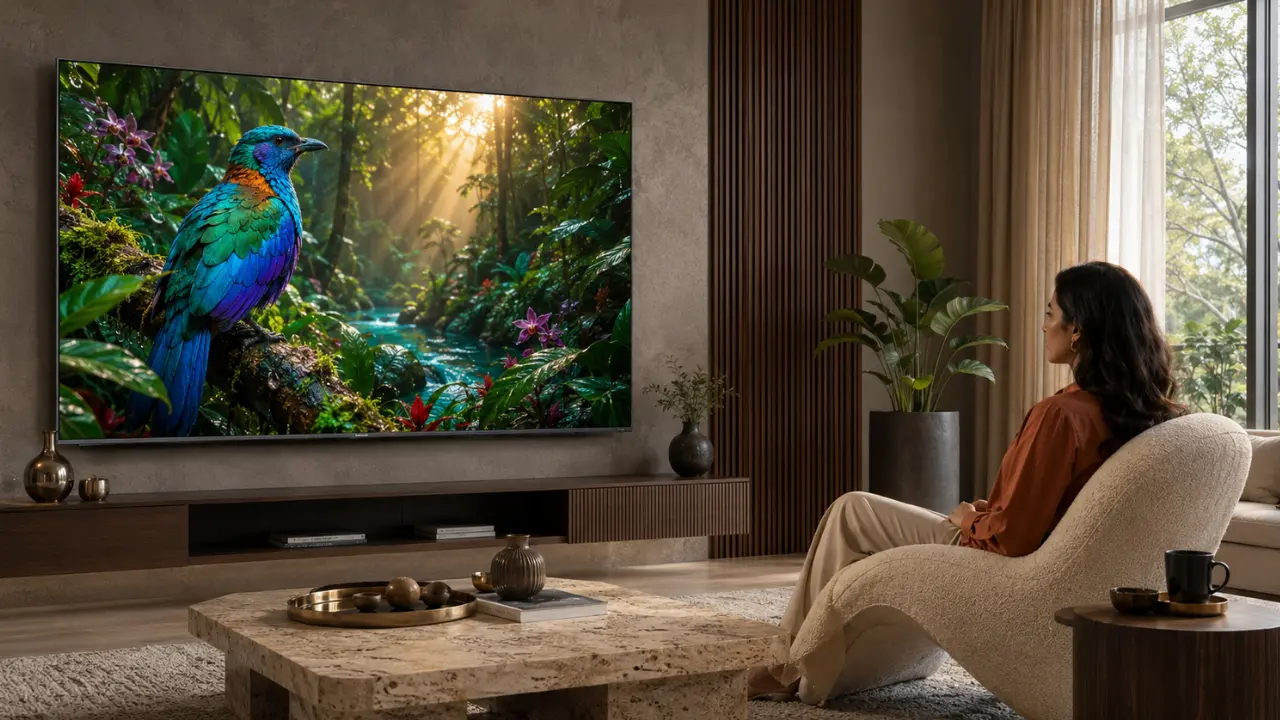

There’s a funny little moment that happens more often than we realise.
You pull out your phone after returning from a holiday in Kerala. The sunsets looked breathtaking in person. The ocean had that deep turquoise shade. The lush greenery almost glowed after the rain. Then you cast those same photos onto your TV and something feels off. The sky looks a little dull. The greens appear exaggerated. Skin tones don’t quite resemble what you remember.
It isn’t always because the picture is “bad.” More often than not, it’s because the television isn’t reproducing colours as accurately as they were originally captured.
And that’s where colour science quietly becomes one of the most important technologies inside a modern premium television.
After all, the best picture isn’t the brightest one. It’s the one that stays faithful to reality while still delivering incredible visual depth.
Colour Accuracy Isn’t About More Colours. It’s About Better Colours.
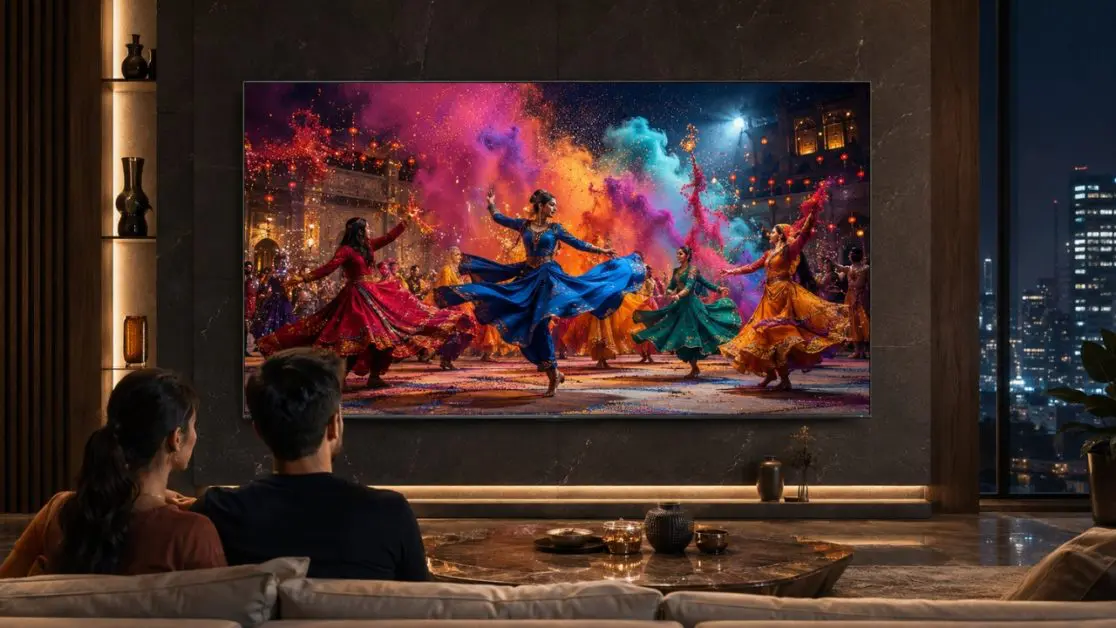
People often assume a television with more vibrant colours automatically delivers a superior viewing experience.
Not necessarily.
Imagine watching a cricket match where the outfield appears fluorescent instead of natural green. Or a wildlife documentary where the tiger’s orange coat suddenly looks reddish. Even everyday content can start feeling artificial when colours drift away from their intended appearance.
Accurate colour reproduction focuses on something much more important:
- Maintaining natural-looking skin tones
- Preserving subtle colour transitions
- Displaying shadows without crushing details
- Keeping whites neutral instead of bluish
- Showing consistent colours across different scenes
When filmmakers, photographers and content creators finish their work, they spend hours carefully adjusting every colour. A television with good colour accuracy helps preserve those creative decisions instead of replacing them with over-saturated visuals.
That’s the difference your eyes notice even if you don’t immediately know why.
Why Your Eyes Notice Colour Before You Realise It
Human vision is surprisingly sensitive.
Our eyes don’t simply detect red, green and blue. They compare surrounding colours, adapt to changing light and constantly judge whether something feels “right.”
That’s why inaccurate colours can become tiring during long viewing sessions.
You may not consciously think,
“The colour temperature looks slightly warm.”
Instead, you’ll probably say,
“Something about this picture doesn’t feel natural.”
Colour reproduction depends on several elements working together simultaneously:
- Light output
- Contrast
- Colour volume
- Black level performance
- Processing intelligence
- Display technology
Miss one of these, and even highly saturated colours may lose their realism.
The Journey Every Colour Takes Before It Reaches Your Eyes
Here’s something interesting.
Every frame you watch travels through multiple processing stages before appearing on the display.
That journey typically looks something like this:
Step 1: Content Is Decoded
Whether you’re streaming a movie, watching live cricket or enjoying a 4K nature documentary, the incoming signal first needs to be interpreted correctly.
Compressed content, lower-resolution videos and HDR formats all require different handling.
Step 2: The Processor Analyses Every Scene
Modern televisions no longer display every scene identically.
Instead, intelligent processors analyse individual frames to understand what’s actually happening.
For example:
- A football stadium demands different colour optimisation than an animated film.
- A close-up portrait requires more careful skin tone handling.
- Bright outdoor scenes need different highlight control compared to dark cinematic sequences.
This real-time optimisation helps maintain consistency rather than applying one fixed picture setting to everything.
Step 3: Light Meets Colour
Here’s where display technology starts making a noticeable difference.
Every colour you see is created by controlling tiny amounts of light extremely precisely.
If brightness cannot be controlled accurately
Colours lose depth.
If black levels aren’t deep enough
Dark shades begin blending together.
If highlights become overexposed.
Fine colour details disappear.
That’s why colour accuracy isn’t a single feature. It’s the outcome of multiple technologies working together.
Why QD-Mini LED Makes Such a Difference
Display technology has evolved significantly over the past few years.
One advancement that’s helping improve colour reproduction is QD-Mini LED.
Unlike traditional LED televisions, Mini LED technology uses significantly smaller LEDs to manage brightness more precisely across the screen.
This improves several aspects of image quality simultaneously:
- Better contrast between bright and dark areas
- Improved control over blooming
- Richer colour volume
- More detailed highlights
- Greater consistency across complex scenes
Quantum Dot technology complements this by expanding the colour gamut, allowing the television to reproduce a broader spectrum of colours with greater precision.
The result isn’t simply brighter pictures.
It’s more believable.
When AI Starts Helping Colour Science
Not long ago, televisions relied mostly on manual picture presets.
Today, AI has changed that conversation.
Rather than forcing viewers to constantly switch between Movie Mode, Sports Mode or Vivid Mode, modern processors can intelligently recognise different content and adjust picture characteristics in real time.
This doesn’t mean AI is “creating” colours.
Instead, it helps optimize how colours are displayed based on the incoming content.
The latest Haier India QD-Mini LED AI Smart Google TVs, including the Haier H65M92FUX, Haier H75M92FUX, and flagship Haier H100M96FUX, AI Ultra Sense Processor to bring together intelligent picture optimisation, entertainment, gaming and sound enhancements into one unified ecosystem. The processor also supports technologies such as AI Scene Detection, AI Colour Boost Pro, AI HDR Enhancer Pro, AI Motion and AI Depth, enabling real-time optimisation for sharper motion, richer colours, improved contrast and enhanced image depth.
Instead of treating every frame the same way, the television analyses what’s being displayed and refines colour, contrast and brightness dynamically.
And honestly that matters more than people think. Especially when you’re switching between OTT platforms, sports broadcasts, gaming sessions and YouTube content throughout the day.
Colour Isn’t Complete Without HDR
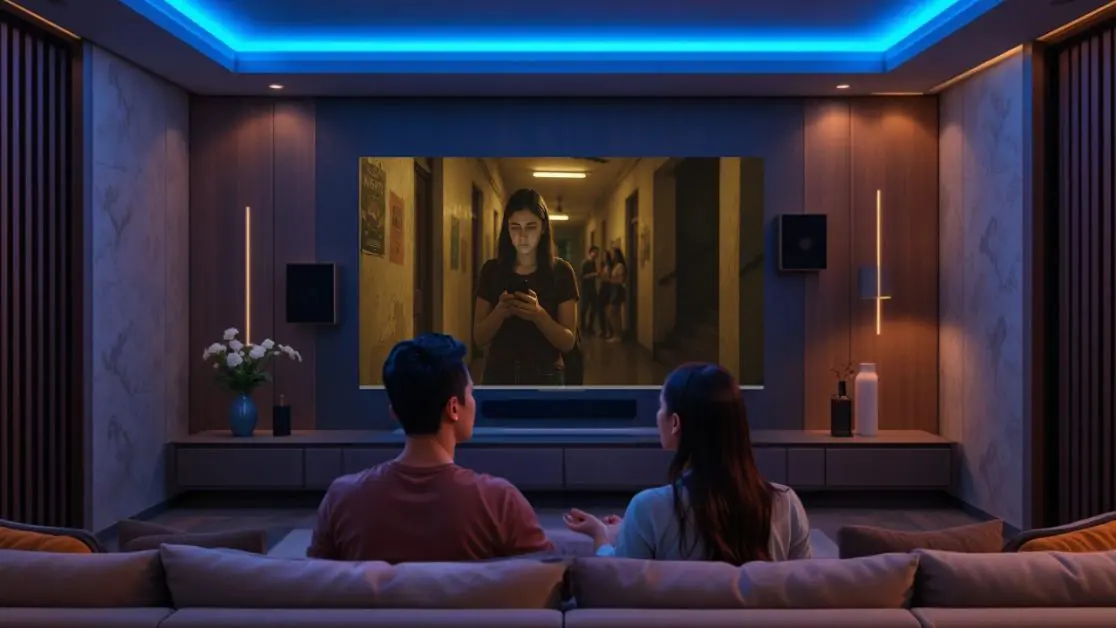
A colour can only appear realistic if the display has enough brightness and contrast to support it.
It is here that HDR technologies really help achieve accurate colour reproduction.
Dolby Vision IQ and Dolby HDR10+ optimize brightness, contrast and colour on a scene-by-scene basis and further adjust picture quality based on the room lighting conditions. Together with smart processing, they can keep colors looking as deep and detailed as intended, regardless of the time of day or night you’re watching. The M92 Series’ wide 94% DCI-P3 colour gamut also helps to ensure a more vivid and natural colour.
Ambient Lighting is also coloured
Here is something that many do not consider.
The same TV can feel like a different device at 2 PM as compared to 10 PM.
The amount of light that enters a room has an effect on the way colours are perceived. Similarly, viewing in darkness will also alter our perception of brightness and contrast. This is why, even if the display is properly calibrated, it may look slightly different in different environments.
This has been automated for modern televisions.
On Haier H65M92FUX, H75M92FUX and H100M96FUX QD-Mini LED AI Smart Google TV, AI Ambient Sense not only adjusts the brightness and colour temperature of the TV based on the ambient light, but it also adjusts HDR content further according to ambient light, with the assistance of Dolby Vision IQ. The TV automatically adjusts the picture settings for the changing conditions of a day, eliminating the need to manually change it at different times.
So, while you’re watching a cricket match on a Sunday afternoon or a late-night thriller, colours will still look balanced and comfortable to watch.
Colour Accuracy Benefits Every Type of Content
People often associate premium picture quality with blockbuster films.
But accurate colour reproduction improves almost everything you watch.
Movies
Each scene is carefully planned to evoke a certain mood by the directors. You can achieve faithful colour reproduction, capturing warm colours of the sunsets and cool colours of the night sequences, among others.
Sports
Live matches feel closer to being in the stadium due to natural-looking grass, authentic team jerseys and bright uniformity of the field.
Gaming
New games often include lots of fine details in the scene, including lighting and textures. Precise colors enhance the visual clarity and render virtual environments more immersive.
Nature and Travel Content
From coral reefs to mountain scenes to wildlife shows, more vibrant and well-rounded hues will show details that you might not otherwise see.
What Makes Premium Colour Performance Possible?
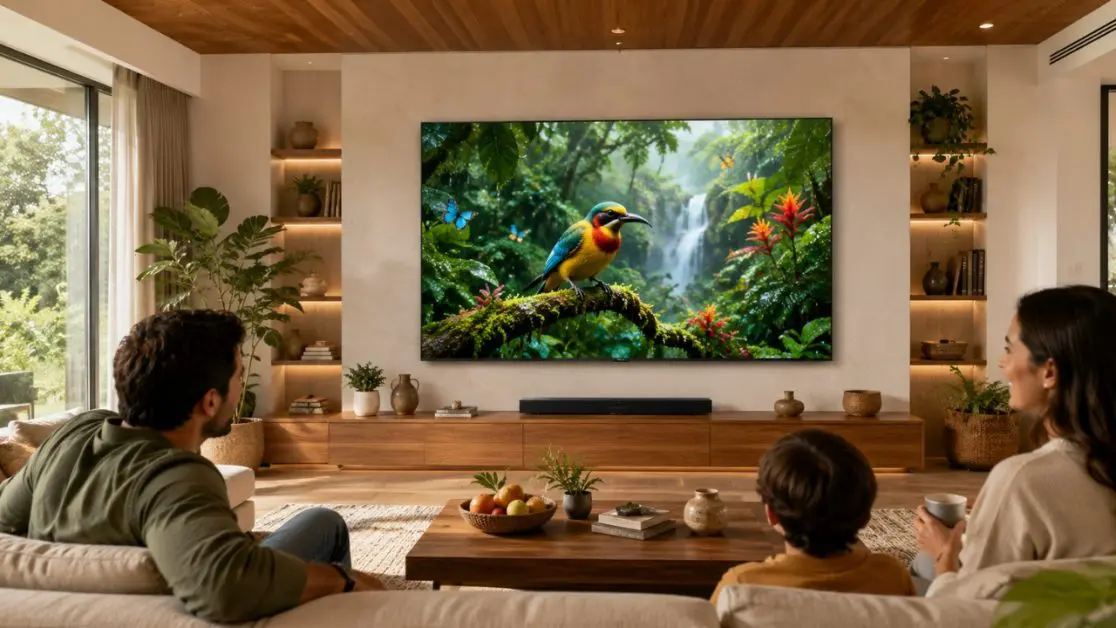
No single specification guarantees excellent colour accuracy.
Instead, it comes from several technologies working together.
Display Foundation
- QD-Mini LED display technology
- Wide colour gamut
- Precise local dimming
- Strong contrast performance
Intelligent Processing
- AI Scene Detection
- AI Colour Boost Pro
- AI HDR Enhancer Pro
- AI Motion optimisation
- AI Depth enhancement
HDR Optimisation
- Dolby Vision IQ
- HDR10+
- Intelligent brightness adjustment
Environmental Adaptation
- AI Ambient Sense
- Ambient light optimisation
- Comfortable viewing throughout the day
When these technologies operate together, the picture appears balanced rather than artificially boosted.
Why Haier India’s QD-Mini LED TVs Stand Out
A premium television should do more than simply produce colourful images. It should deliver colours that remain consistent, detailed and true to the original content while intelligently adapting to different viewing conditions.
That’s exactly where Haier India’s latest QD-Mini LED lineup brings meaningful innovation.
The Haier H65M92FUX and Haier H75M92FUX combine QD-Mini LED technology with the AI Ultra Sense Processor, Dolby Vision IQ, HDR10+, 144Hz refresh rate, Sound by KEF, Google TV and hands-free voice control to create a balanced entertainment experience that extends well beyond picture quality. The M92 Series also has a 94% DCI-P3 colour gamut to help reproduce a wider colour gamut with greater fidelity.
For those seeking a more cinematic experience at home, the flagship Haier H100M96FUX QD-Mini LED TV, AI Ultra sense Processor co-developed with MediaTek, Dolby Vision IQ, HDR10+ and 144Hz refresh rate, immersive KEF-powered 6.2.2-channel audio system, Google TV and premium gaming technology such as AMD Freesync Premium Pro are provided.
These TVs sense the scenes, adjust colours, enhance contrast and enhance depth automatically, eliminating the need to manually adjust settings each time. Hence, every time you switch content, it will feel like premium entertainment.
Colour Accuracy Is Something You’ll Appreciate Every Day
The beauty of accurate colour reproduction is that it doesn’t demand your attention.
You simply notice that movies feel more cinematic. Sports broadcasts appear more lifelike. Family photographs retain their natural warmth. Animated films become vibrant without looking exaggerated.
That’s the goal.
Not colours that shout for attention, but colours that feel believable.
If you’re planning to invest in a premium television, it makes sense to look beyond screen size alone. Intelligent picture processing, advanced display technology and accurate colour reproduction play an equally important role in shaping your everyday viewing experience.
Haier India’s latest QD-Mini LED AI Smart Google TVs bring these technologies together thoughtfully, helping every scene look closer to the way it was intended to be seen while delivering an immersive entertainment experience for modern Indian homes.
Frequently Asked Questions
1. What is accurate colour reproduction in a television?
Accurate colour reproduction refers to a TV’s ability to display colours as closely as possible to the original content. This includes maintaining natural skin tones, realistic landscapes, balanced contrast and smooth colour transitions without making images appear over-saturated or dull.
2. Does QD-Mini LED improve colour quality?
Yes. QD-Mini LED technology combines precise Mini LED backlighting with Quantum Dot technology, enabling improved brightness control, better contrast and a wider colour gamut. Together, these contribute to more detailed and realistic colour reproduction.
3. Why does AI matter for picture quality?
AI-powered processors can analyse scenes in real time and optimise colour, contrast, brightness, motion and depth automatically. This helps deliver a more consistent viewing experience across movies, sports, games and streaming content.
4. How does Dolby Vision IQ help colour accuracy?
Dolby Vision IQ adjusts HDR picture quality according to the lighting conditions in your room. This helps preserve colour balance, brightness and contrast, whether you’re watching during the day or at night.
5. Which Haier TVs offer advanced colour optimisation features?
Haier India’s H65M92FUX, H75M92FUX and flagship H100M96FUX QD-Mini LED AI Smart Google TVs include technologies such as AI Ultra Sense Processor, Dolby Vision IQ, HDR10+ and AI-based picture optimisation to deliver a more intelligent and colour-accurate viewing experience.