
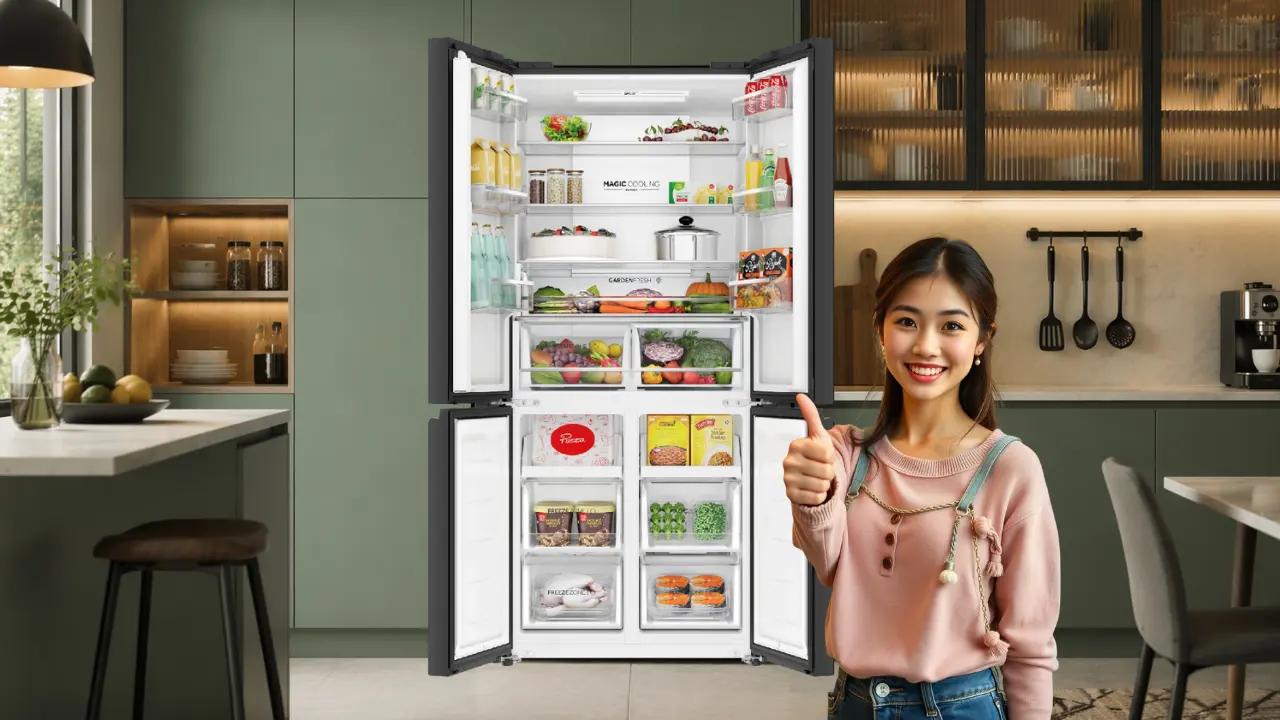

Storage flexibility matters more than ever because modern Indian homes deal with changing food habits, unpredictable schedules, and limited space.
A flexible refrigerator adapts in real time. It reduces waste, saves effort, and turns storage from a fixed problem into a responsive system that works around your life.
Why does your fridge feel full even when it isn’t?
It is a familiar moment.
You open the fridge after a grocery run. There is space. Technically.
But not the right kind of space.
A tall bottle does not fit. Leftovers compete with vegetables. Frozen items spill into fresh food zones.
The fridge is not full.
It is rigid.
And that is the real problem.
Modern storage is not about capacity. It is about adaptability.
The hidden shift in Indian households
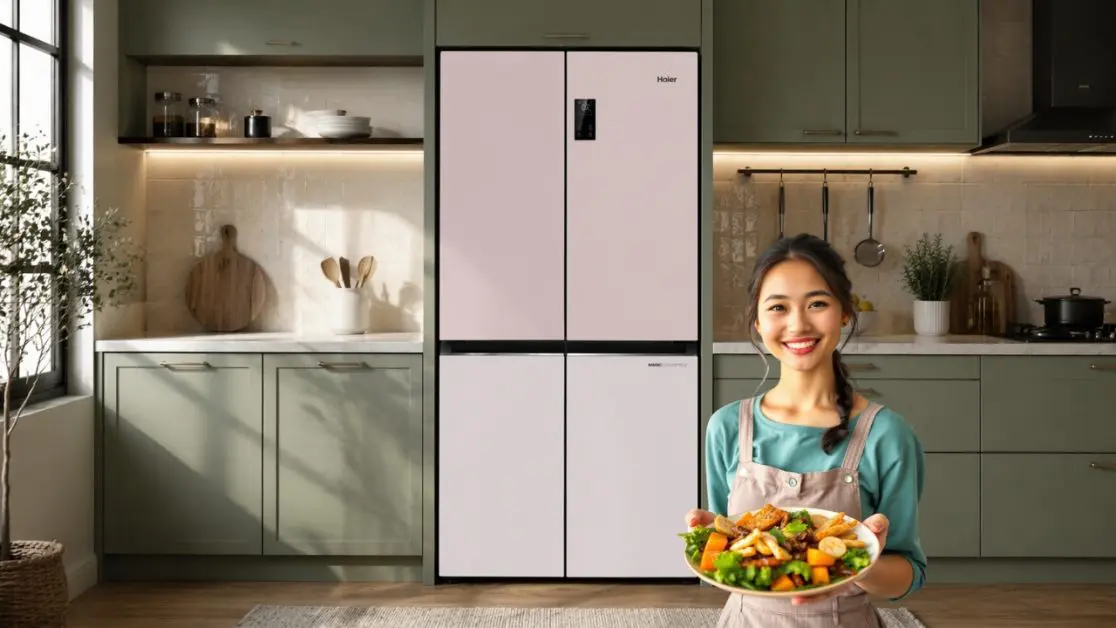
Indian homes are changing faster than most appliances.
Consider what a single week looks like:
- Monday: Meal prep for workdays
- Wednesday: Fresh fruits and quick snacks
- Friday: Takeaway leftovers
- Sunday: Bulk cooking and family meals
The same fridge handles all of this.
But traditional storage assumes one pattern. One structure. One fixed use.
That assumption breaks.
When life becomes dynamic, fixed storage becomes friction.
What storage flexibility actually means
Storage flexibility is not just “more shelves.”
It is a system that adapts to what you need today, not what the manufacturer decided last year.
Let’s break it down.
Three ways storage systems behave
- Rigid storage
- Fixed shelves and compartments
- Limited adjustment
- Works for predictable routines
- Fails during change
- Semi-flexible storage
- Adjustable racks
- Some customization
- Handles small variations
- Still constrained
- Fully flexible storage
- Convertible zones
- Multi-purpose compartments
- Real-time adaptation
- Designed for unpredictable living
Most households today need the third.
Because routines are no longer stable.
The real cost of inflexible storage
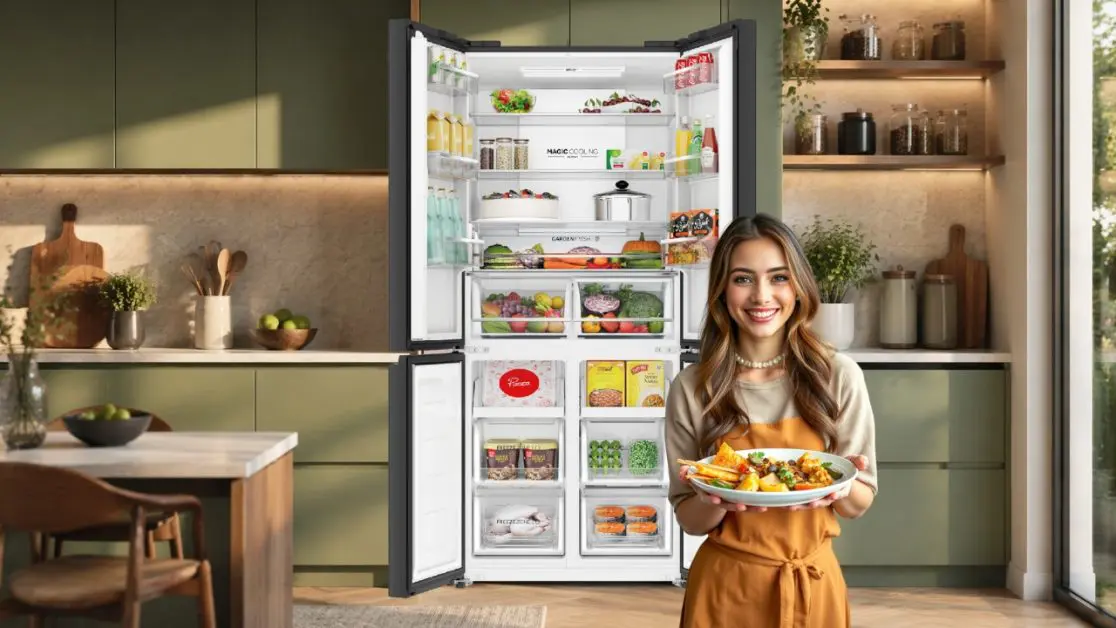
People think the cost of a fridge is electricity and price.
That is surface-level thinking.
The real costs are hidden.
What inflexible storage actually costs you
- Food waste due to poor organization
- Time spent rearranging items daily
- Duplicate purchases because items get lost
- Stress during festivals or bulk cooking
A study by the Indian Council of Agricultural Research estimates that nearly 40 percent of food waste in India happens at the household level.
A surprising contributor?
Poor storage systems.
When storage fails, food suffers.
Why flexibility becomes critical during peak moments
Regular days are easy.
Peak days reveal the truth.
Think of:
- Diwali shopping
- Wedding functions at home
- Weekend hosting
- Ramadan or festive meal prep
Suddenly, the fridge has to do more.
More space. More cooling. More organization.
A rigid system collapses under this pressure.
A flexible system expands.
How modern refrigerators are solving this
This is where design starts to matter.
Take the idea of convertible storage.
That single feature changes everything.
It turns storage into a decision.
Not a limitation.
What flexible storage looks like in real life
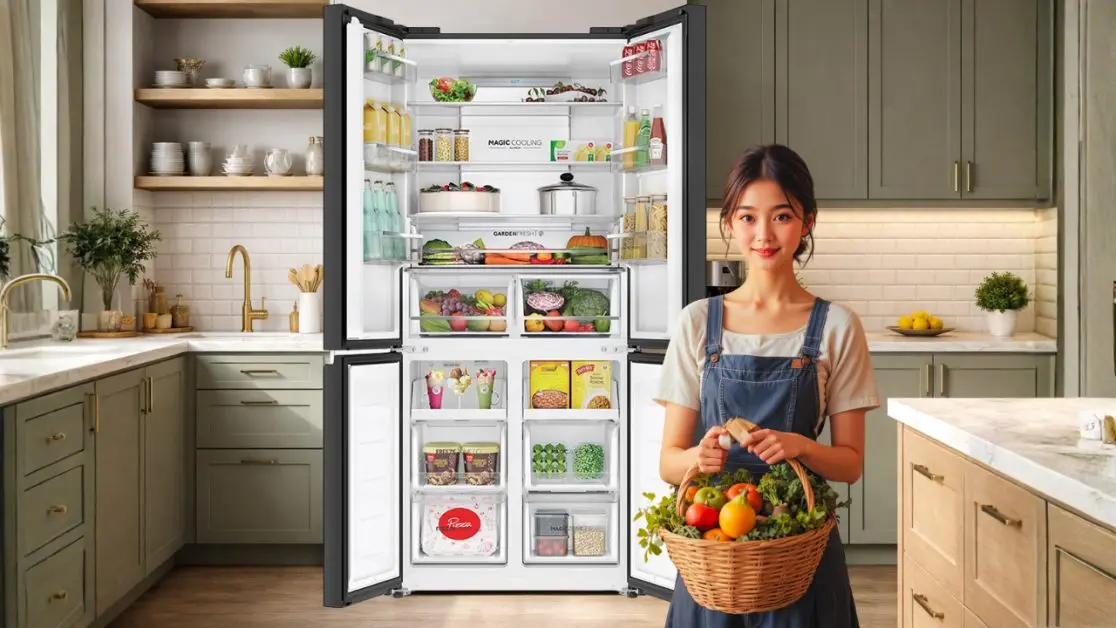
Let’s make it tangible.
Scenario 1: Weekly groceries
- More vegetables
- Bulk dairy items
- Ready-to-cook meals
What you need: Larger fridge space
What flexibility does: Converts freezer space into fridge space
Scenario 2: Party or hosting
- Beverages
- Desserts
- Extra cooked food
What you need: Organized zones
What flexibility does: Creates dedicated storage sections
Scenario 3: Minimal usage week
- Fewer items
- Less cooking
What you need: Efficient cooling
What flexibility does: Reduces unused space and energy load
The system behind better storage
Flexible storage is not just physical design.
It is a system.
Look at how modern refrigerators approach this:
Key elements of a flexible storage system
- Convertible zones: Switch between fridge and freezer
- Adjustable shelves: Fit large utensils and containers
- Multiple storage zones: Organized access to items
- Uniform cooling: Keeps everything fresh regardless of placement
For instance, systems like the Haier Vouge Lumiere 520L Series offer 10 dedicated storage zones and 360-degree cooling to ensure even temperature distribution across all compartments.
This is not convenient.
It is controlled.
Flexibility is also about visibility
Here is something people underestimate.
If you cannot see your food, you cannot use it.
Flexible storage improves visibility.
- Better lighting systems
- Organized compartments
- Clear zoning
Some modern designs like the Haier Vouge Lumiere 520L Pearl White 4 Door Convertible Refrigerator (HRB-600PW) use layered lighting systems that gradually brighten to ensure every corner is visible and accessible.
What gets seen gets used. What gets used does not get wasted.
Comparing rigid vs flexible storage
| Feature | Rigid Storage | Flexible Storage |
| Shelf design | Fixed | Adjustable |
| Freezer usage | Constant | Convertible |
| Space utilization | Limited | Optimized |
| Food organization | Manual effort | System-driven |
| Adaptability | Low | High |
The difference is not technical.
It is behavioral.
Flexible systems adapt to people.
Rigid systems force people to adapt.
Why this matters more in smaller urban homes
Urban Indian homes are getting smarter.
But also smaller.
- Compact kitchens
- Multi-use spaces
- Shared appliances
In such environments, every inch matters.
Flexible storage acts like a multiplier.
It gives you more function without needing more space.
The emotional side of storage
Storage is not just functional.
It is emotional.
Think about it.
- A well-organized fridge feels calming
- A cluttered one feels overwhelming
This is not accidental.
Humans respond to order.
Flexible storage creates that order.
Without effort.
The connection to energy efficiency
Here is an insight most people miss.
Better storage leads to better efficiency.
Why?
- Less door opening time
- Faster access to items
- Reduced cooling loss
Combine that with technologies like inverter compressors in models such as the Haier Vouge Lumiere 520L Rosette White 4 Door Convertible Refrigerator (HRB-600RW), and you get systems that are both flexible and energy efficient.
Efficiency is not just about power. It is about behavior.
Three ways to think about your next fridge
Instead of asking “how big is it,” ask better questions.
One option is capacity-first thinking
- Focus on litres
- Works for large families
- Ignores flexibility
The second option is design-first thinking
- Focus on looks and finish
- Enhances kitchen aesthetics
- May miss functional depth
The third option is system-first thinking
- Focus on flexibility and adaptability
- Balances storage, efficiency, and usability
- Future-proofs your decision
The third option wins in the long run.
A simple framework for better decisions
When evaluating storage flexibility, look at three things:
- Can it adapt to changing needs?
- Can it reduce daily friction?
- Can it prevent waste over time?
If the answer is yes to all three, the system works.
The bigger picture
Storage flexibility is not just about refrigerators.
It reflects a larger shift.
From ownership to adaptability.
From fixed systems to responsive systems.
From products to experiences.
Homes are becoming dynamic ecosystems.
And appliances need to keep up.
The insight most people miss
People think they need more space.
They usually need better systems.
A 520-litre fridge with rigid storage feels small.
The same capacity with flexible storage feels abundant.
Space is not about size. It is about structure.
What this means for your home
The next time you open your fridge, notice something.
Not how much it holds.
But how well it adapts.
Because the future of storage is not bigger.
It is smarter.
It bends around your life.
And quietly makes everything feel easier.
Final thought
Flexibility is not a feature.
It is a philosophy.
A way of designing systems that respect real life.
And in modern Indian homes, where every day looks a little different, that philosophy is no longer optional.
It is essential.
Frequently Asked Questions
Why does my fridge feel full even when there is space inside?
Because the issue is often not capacity, but poor layout. Fixed shelves, rigid compartments, and limited zones make usable space feel smaller.
Should I buy a bigger fridge or a more flexible fridge?
A bigger fridge helps only if your storage needs are constant. A flexible fridge is better if your routine changes between meal prep, leftovers, groceries, and hosting.
I cook differently every week. What kind of refrigerator should I choose?
Look for convertible zones, adjustable shelves, multiple compartments, and uniform cooling so the fridge can adapt to changing food habits.
Why do vegetables, leftovers, and dairy get mixed up in my fridge?
Traditional fridges often lack dedicated zones, so different food types compete for the same space.
Can flexible storage reduce food waste at home?
Yes. Better visibility, zoning, and access make it easier to find and use food before it spoils.
I forget food at the back of my fridge. What feature helps with that?
Clear compartments, better lighting, and organized storage zones help make food more visible.
What does convertible storage mean in a refrigerator?
It means certain compartments can switch between fridge and freezer use depending on your needs.
Are adjustable shelves enough for modern storage needs?
They help, but fully flexible storage also includes convertible zones, multiple compartments, and uniform cooling.
Why are multiple storage zones useful in Indian homes?
They help manage varied items like vegetables, dairy, leftovers, sweets, beverages, and bulk-cooked food.